
Table of Contents
TL;DR:
- Proper holiday plant care involves preparing plants with thorough watering, grouping, and environmental adjustments before leaving. For trips up to two weeks, moisture systems like wicks and self-watering containers are effective, but longer absences require a trusted plant sitter. Species-specific care and avoiding environmental stress are essential to keep holiday plants healthy and vibrant.
Plant care during holidays is the practice of maintaining soil moisture, stable temperature, and appropriate light for your houseplants while you are away. Most houseplants tolerate a few days without serious stress, but absences longer than a week demand real planning. Tools like capillary matting, self-watering containers, and pebble trays make the difference between a thriving collection and a pile of wilted leaves. Popular holiday plants such as poinsettias, Christmas cactus, amaryllis, and cyclamen each have specific needs that become critical during the busy season.
How to prepare your plants before leaving for a holiday
Preparation is the single most effective thing you can do for holiday plant maintenance. A few targeted steps before you walk out the door will carry most houseplants through a week or more without any intervention.
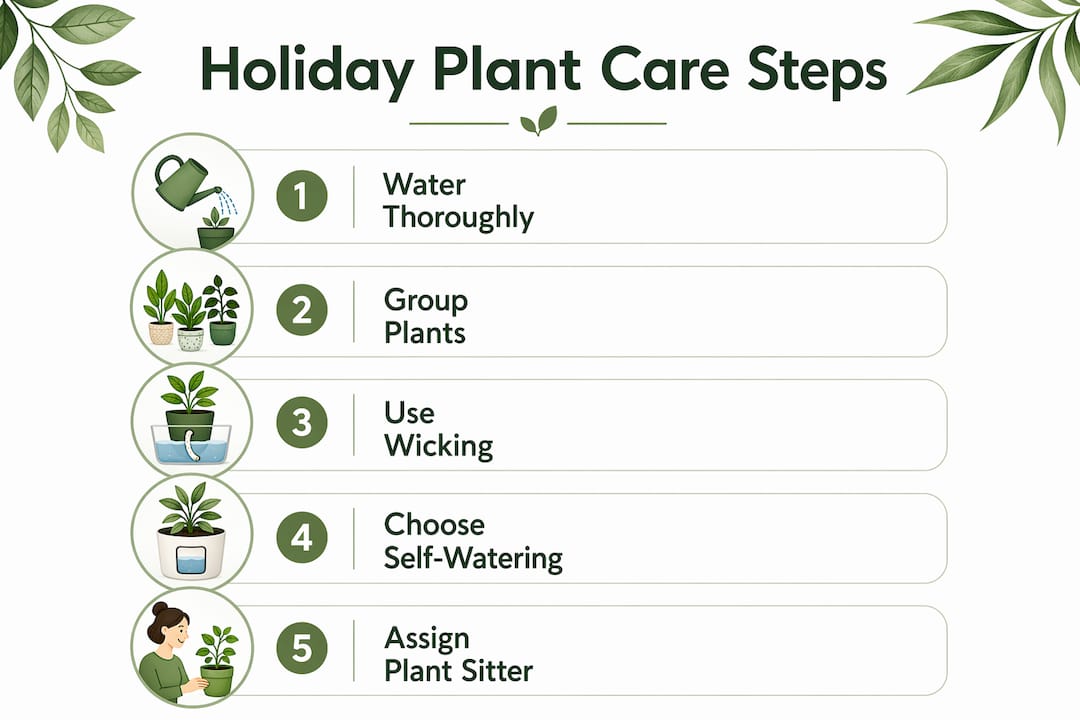
Water thoroughly before you leave. Give every plant a deep, slow drink the day before departure. For summer absences, when evaporation is faster, this pre-departure soak is especially important. Do not water again right before you leave if the soil is still wet. Soggy roots are more dangerous than dry ones.
Move plants away from direct sun. Placing plants in cooler spots with indirect light slows their water use significantly. A north-facing windowsill or the center of a room works well. This single step can extend the time between waterings by two or three days.
Here are the key preparation steps to complete before any trip:
- Group plants together on a tray filled with damp pebbles. Grouped plants raise the local humidity as they transpire, and the wet pebbles add a steady moisture buffer. This approach to indoor humidity is one of the most underrated travel tips for plant owners.
- Cover individual pots or a whole group with a clear propagator lid or a loose plastic bag. The trapped moisture recirculates and keeps the root zone from drying out.
- Move plants away from heating vents, radiators, and drafty windows. Temperature fluctuations and dry central heating air cause more holiday failures than underwatering does.
- Skip repotting. Changing potting systems just before a holiday stresses plants and disrupts the moisture balance you are trying to stabilize.
Pro Tip: Place a shallow tray of wet gravel under your grouped plants before leaving. The evaporating water creates a humidity pocket that benefits every plant in the cluster, not just the ones sitting directly on the tray.
What are the best ways to water plants when away?
Moisture management is where most plant owners either succeed or fail when caring for plants while traveling. The right system depends on how long you will be gone.
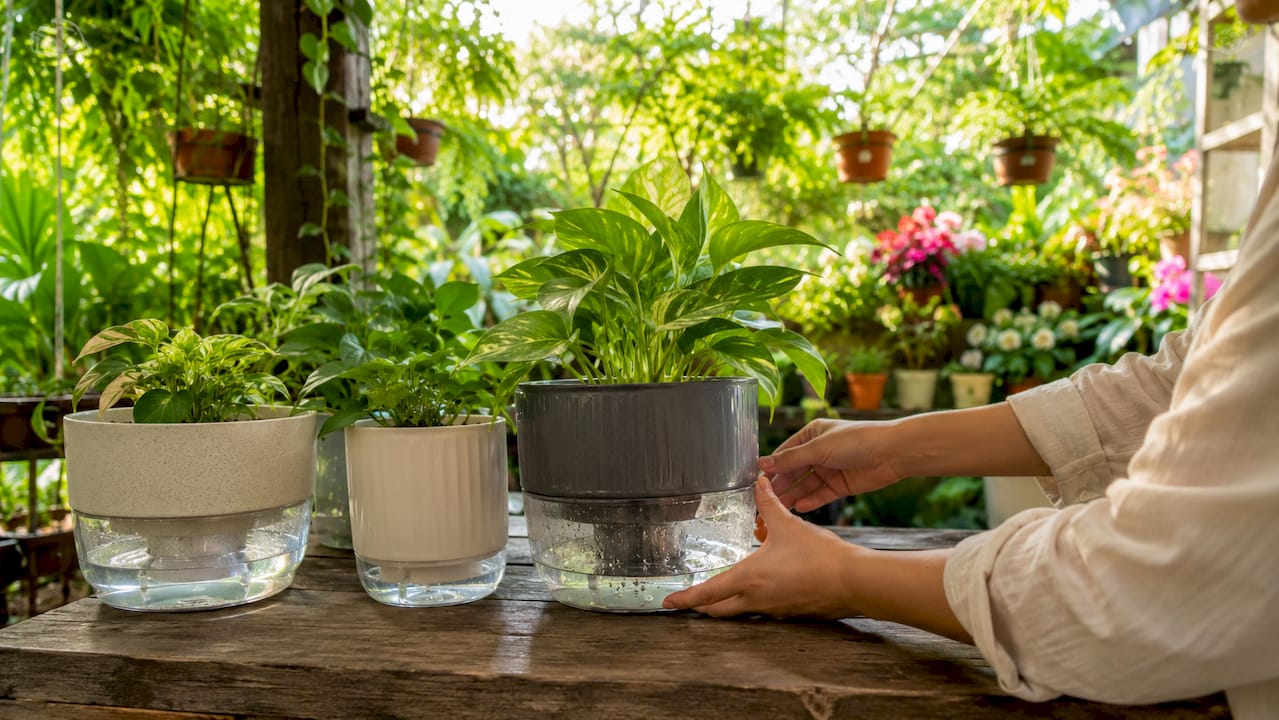
For absences up to two weeks, capillary wicking and self-watering containers are reliable. A capillary wicking system draws water from a reservoir through a cotton or nylon wick directly into the soil. The setup is simple, but one detail trips up most beginners: clay pots need thorough pre-watering before you connect the wick. Dry clay absorbs moisture slowly and blocks the system from working. Soak the pot, then attach the wick.
Self-watering containers with built-in reservoirs work well, but the RHS notes that self-watering containers are best used as permanent growing solutions rather than a last-minute holiday fix. Switching a plant into a self-watering pot the week before you leave creates more problems than it solves.
For absences longer than two weeks, a trusted person to water is the safest option. Longer absences require human care to prevent stress and damage that wicking systems simply cannot address. Leave clear written instructions, not verbal ones.
Here is a quick comparison of the main moisture methods:
| Method | Best For | Key Limitation |
|---|---|---|
| Capillary wicking | Trips up to 10 days | Wick can slip or dry clay blocks flow |
| Self-watering container | Long-term growing | Not ideal as a short-term holiday fix |
| Pebble tray and grouping | Any absence length | Humidity only, not a watering substitute |
| Drip irrigation kit | Larger collections | Requires setup; automated drip systems work well for multiple pots |
| Plant sitter | Absences over two weeks | Requires a reliable person and clear instructions |
For a deeper look at watering methods that work year-round, the watering houseplants guide at Lushygardens covers reservoir sizing, wick materials, and timing in detail.
Pro Tip: Before you leave, check each wick by pulling it gently. A loose wick will not draw water. Press it firmly into the center of the root ball, not just the surface soil.
How do you care for popular holiday plants?
Holiday plant care requires species-specific knowledge. Poinsettias, Christmas cactus, amaryllis, and cyclamen each behave differently, and treating them all the same is a reliable way to lose them.
Poinsettia
Poinsettias prefer bright indirect light and temperatures between 65°F and 75°F. Overwatering is the leading cause of poinsettia death during the holidays. Water only when the soil surface feels dry. Foil pot wraps, which come standard on most gifted poinsettias, trap water at the base and cause root rot. Remove the foil or punch drainage holes before the first watering.
For reblooming the following year, poinsettias need about 16 hours of uninterrupted darkness daily starting in late September or October. Most casual caregivers miss this step entirely and wonder why the bracts never turn red again. The Lushygardens poinsettia care guide covers the full rebloom process in detail.
Christmas cactus
Christmas cactus thrives in bright indirect light and needs scheduled watering rest periods from mid-September until buds form, and again from late January through March. These rest periods trigger flowering. Skipping them by watering on a regular schedule year-round produces a healthy plant that never blooms.
Amaryllis
Amaryllis performs best in rooms above 60°F. Water only when the top inch of soil feels dry. Amaryllis blooms about four weeks after sprouting and flowers reliably around the holiday season. Waxed amaryllis bulbs require no soil or watering at all, making them the best indoor plant for holidays when you want color without any maintenance commitment.
Cyclamen
Cyclamen prefers cool rooms between 50°F and 65°F and bright indirect light. Water from the bottom by setting the pot in a shallow dish of water for 20 minutes, then draining. Top watering causes crown rot. Keep cyclamen away from heating vents and drafts, which are common in holiday settings and will collapse the plant within days.
| Plant | Ideal Temp | Watering Rule | Key Risk |
|---|---|---|---|
| Poinsettia | 65–75°F | When surface is dry | Overwatering, foil wrap trapping water |
| Christmas Cactus | 60–70°F | Rest periods required | Skipping rest periods stops flowering |
| Amaryllis | 60°F+ | When top inch is dry | Overwatering during dormancy |
| Cyclamen | 50–65°F | Bottom watering only | Crown rot, drafts, heat vents |
What mistakes should you avoid with holiday plant care?
The biggest holiday plant failures are preventable. Most of them come from environmental stress, not neglect.
- Overwatering. This is the most common mistake. Soggy soil invites fungal rot and leaf drop, especially in poinsettias. Always check the soil before adding water.
- Drafts and temperature swings. Placing plants near frequently opened doors, single-pane windows, or heating vents causes rapid stress. A plant that was fine on Monday can drop all its leaves by Friday after repeated cold blasts.
- Low humidity. Central heating drops indoor humidity sharply in winter. Spider mites and powdery mildew both thrive in dry air. Grouping plants and using pebble trays addresses this without any extra products.
- Sudden environmental changes. Moving a plant from a bright window to a dark corner right before you leave, or repotting it the week before a trip, creates shock that no wicking system can fix.
- Ignoring the two-week limit. Wicking and self-watering systems are not indefinite. For trips beyond two weeks, arrange a plant sitter. Leave a written list with each plant’s name, location, and watering frequency.
“Environmental controls like grouping plants and managing humidity are more effective than increasing watering frequency alone to prevent stress and disease.” — RHS Christmas-Flowering Houseplants
For a full troubleshooting reference, the Lushygardens guide to common houseplant problems covers symptoms and fixes for overwatering, pests, and environmental stress in one place.
Key takeaways
Successful plant care during holidays depends on preparation, the right moisture system, and species-specific knowledge rather than simply watering more.
| Point | Details |
|---|---|
| Prepare before you leave | Water thoroughly, move plants to indirect light, and group them on pebble trays before departure. |
| Match the method to your absence | Use wicking or self-watering setups for trips up to two weeks; arrange a plant sitter for longer absences. |
| Know your holiday plants | Poinsettias, Christmas cactus, amaryllis, and cyclamen each need specific light, temperature, and watering rules. |
| Avoid environmental stress | Drafts, heating vents, and sudden moves cause more damage than missing a single watering. |
| Skip last-minute repotting | Changing pots or soil right before a trip destabilizes moisture and stresses roots at the worst time. |
What i have learned from years of holiday plant care
The advice I give most often surprises people: stop focusing on watering and start focusing on the environment. Every year I hear from plant owners who set up elaborate wicking systems, only to come home to a poinsettia with crispy leaves because it sat next to a drafty window the whole time. The wick worked perfectly. The environment failed the plant.
The second thing I have learned is that grouping plants is underrated. When you cluster six or eight pots together before a trip, they create their own microclimate. The humidity stays higher, the temperature swings are smaller, and the plants genuinely do better than isolated ones with perfect wicking setups. It costs nothing and takes five minutes.
My honest advice on holiday plants like Christmas cactus: buy one with the intention of keeping it for years, not just for one season. Once you understand its rest periods, it becomes one of the most reliable bloomers you can own. The same goes for amaryllis. A waxed amaryllis bulb is the perfect gift for a busy plant owner because it asks for nothing and delivers a spectacular bloom anyway.
The beginner houseplant guide at Lushygardens is a good starting point if you are still figuring out which plants suit your home and lifestyle before the next holiday season.
Keep learning with Lushygardens
Lushygardens has everything you need to build a reliable plant care routine that holds up through every season, including the holidays. The gardening basics guide covers foundational care practices that apply to every plant in your home. For ongoing seasonal support, the plant care routine checklist gives you a practical daily and seasonal framework covering watering, light, and humidity management. If you want to go deeper on year-round care, the seasonal plant care tips guide includes specific advice for holiday periods and travel absences. Your plants do not need to suffer while you enjoy the holidays.
FAQ
How long can houseplants survive without watering?
Most houseplants tolerate a few days without serious stress, but absences longer than a week require moisture management tools like wicking systems or pebble trays to prevent damage.
Are self-watering pots good for holiday plant care?
Self-watering containers work well as permanent growing solutions but are not ideal as a last-minute holiday fix. Switching a plant into a new self-watering pot right before you leave can create waterlogging issues rather than solving them.
What is the easiest holiday plant to care for while traveling?
Waxed amaryllis bulbs are the lowest-maintenance option. They require no soil or watering and still produce a full bloom, making them ideal for busy caregivers or anyone going away during the holiday season.
How do i stop my poinsettia from dying over the holidays?
Water only when the soil surface is dry, remove any foil pot wrap to allow drainage, and keep the plant away from drafts and heating vents. Overwatering and cold drafts are the two leading causes of poinsettia failure during the holidays.
When should i arrange a plant sitter instead of using a wicking system?
Arrange a plant sitter for any absence longer than two weeks. Wicking and self-watering systems are reliable for shorter trips, but extended absences require a person to check soil conditions, adjust watering, and catch problems early.
Recommended
- Seasonal plant care tips: year-round guide for gardeners – Lushy Gardens
- A Guide to Caring for Your Poinsettia and Making It Bloom
- Solve common houseplant problems: tips for healthy plants – Lushy Gardens
- Houseplants for beginners: easy care tips (68% saved) – Lushy Gardens

I’m Eleanor, a seasoned gardener with over three decades of experience tending to Mother Nature’s creations. Through Lushy Gardens, I aim to share my wealth of knowledge and help fellow plant enthusiasts uncover the wonders of gardening. Let’s dive into this journey together, one leaf at a time.


