
Table of Contents
TL;DR:
- Epsom salts only benefit plants when a soil test confirms a magnesium deficiency exists. Most soils do not need additional magnesium, and misuse can cause more harm than good.
Epsom salts are defined as magnesium sulfate, a mineral compound that can benefit plants only when a confirmed magnesium deficiency exists in the soil. Most gardeners reach for this white powder expecting a universal fix, but the science tells a more specific story. Most garden soils are not magnesium-deficient, which means Epsom salts usually do nothing for plant growth or health. Understanding why use Epsom salts for plants starts with understanding what magnesium actually does and when your soil genuinely needs more of it.
What are the benefits of Epsom salts for plants?
Magnesium is a core building block of chlorophyll, the molecule that makes photosynthesis possible. Without enough magnesium, a plant cannot produce chlorophyll efficiently, and growth stalls. Sulfur, the other element in magnesium sulfate, supports protein synthesis and enzyme function. So when a plant genuinely lacks magnesium, adding Epsom salts can produce real results.
The key phrase is “genuinely lacks.” Magnesium deficiency symptoms include yellowing between leaf veins, a pattern called interveinal chlorosis, along with stunted growth. These symptoms appear most often in sandy, acidic soils where magnesium leaches away quickly. If your soil fits that profile and a test confirms low magnesium, plants like tomatoes, peppers, and roses can respond well to supplementation.
Plants that are heavy feeders and grown in containers are also more likely to show magnesium shortfalls. Container soil loses nutrients faster than garden beds because of frequent watering and limited soil volume. For these situations, a targeted application of magnesium sulfate can restore leaf color and support healthy growth.
The benefits of Epsom salts for plants are real but narrow. They apply to a specific nutrient gap, not to general plant care. Treating Epsom salts as a broad tonic misses the point entirely.
- Confirmed magnesium deficiency: Epsom salts correct interveinal chlorosis and restore chlorophyll production.
- Sandy or acidic soils: These conditions cause magnesium to leach quickly, making supplementation more likely to help.
- Container plants: Limited soil volume and frequent watering deplete magnesium faster than garden beds.
- Heavy-feeding crops: Tomatoes, peppers, and roses have higher magnesium demands and show deficiency symptoms more readily.
Pro Tip: Before buying Epsom salts, look at your plant’s older leaves first. Interveinal chlorosis that starts on older, lower leaves is a classic magnesium deficiency signal. If the yellowing starts on new growth instead, you are likely dealing with a different nutrient problem entirely.
Common misconceptions about Epsom salts in gardening
The gardening world is full of confident claims about Epsom salts that do not hold up to scrutiny. Knowing which ones are myths protects your plants and your time.
- Epsom salts control pests. Epsom salt is not a registered pesticide, and using it as one is ineffective. In some areas, applying an unregistered substance as a pesticide is illegal. Slugs and beetles are not deterred by magnesium sulfate.
- Epsom salts prevent blossom end rot. Blossom end rot in tomatoes and peppers is caused by calcium deficiency, not magnesium deficiency. Excess magnesium actually inhibits calcium uptake, which means adding Epsom salts to a plant with blossom end rot can make the problem worse. Consistent watering is the real fix.
- Epsom salts improve seed germination. No credible research supports this claim. Seed germination depends on moisture, temperature, and seed viability. Magnesium sulfate does not accelerate or improve that process.
- Epsom salts reduce the need for fertilizer. Magnesium sulfate provides two nutrients: magnesium and sulfur. A complete fertilizer provides nitrogen, phosphorus, potassium, and a range of micronutrients. These are not interchangeable. Replacing fertilizer with Epsom salts creates nutrient gaps.
- More Epsom salts means healthier plants. Overuse causes salt injury, which damages root cells and disrupts water uptake. The plant ends up worse off than before.
“Gardening advice based on anecdote may encourage unnecessary use of Epsom salts and distract from real care practices. Experts stress focusing on watering consistency and nutrient balance over unproven additives.” — Country Living, citing horticultural experts
These gardening myths persist because Epsom salts are cheap, widely available, and associated with a long tradition of home remedies. That tradition is not evidence of effectiveness.
How to use Epsom salts for plants safely and effectively
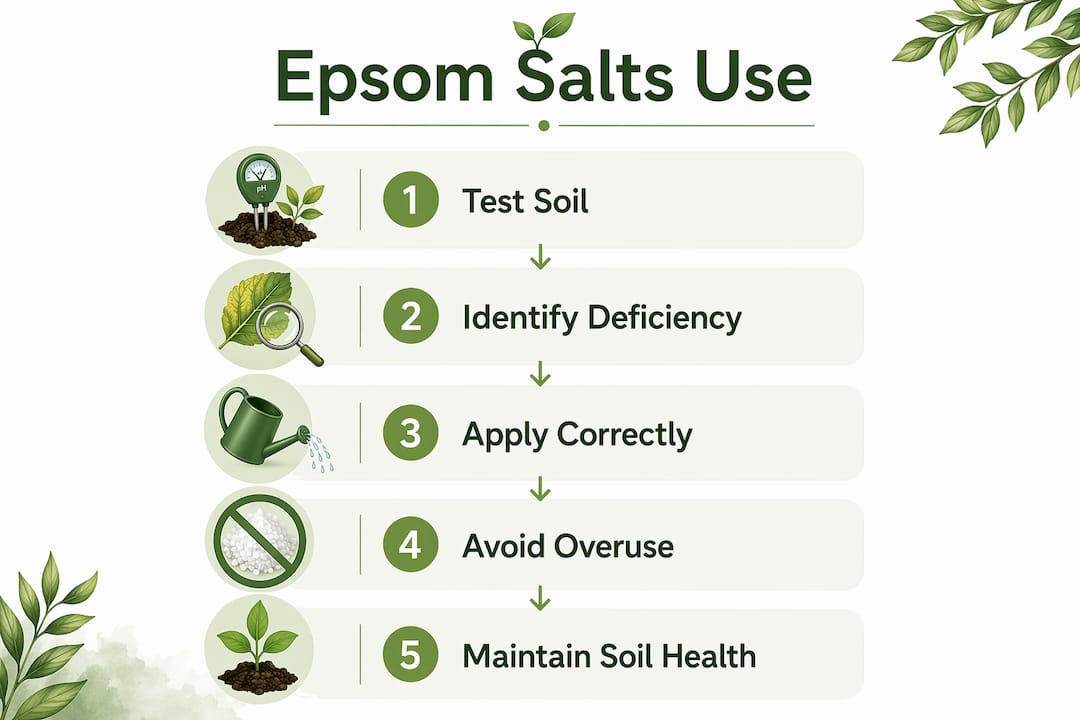
The only responsible starting point is a soil test. A soil test is the only reliable way to confirm whether your soil actually needs more magnesium. Blind application can cause harm, and most extension services and university horticulture programs agree on this point. You can get a professional test through your local cooperative extension office or use a quality DIY kit from a garden center.
Understanding soil testing also means paying attention to soil pH. Magnesium becomes less available to plants as soil pH drops below 6.0. In acidic soils, raising the pH with agricultural lime often resolves magnesium availability without adding any Epsom salts at all.
If a test confirms low magnesium, here are the standard application approaches:
- Foliar spray: Dissolve 1 tablespoon of Epsom salts per gallon of water and spray directly on leaves. This delivers magnesium quickly and is useful for correcting visible deficiency symptoms.
- Soil drench: Dissolve 1 tablespoon per gallon of water and apply at the base of the plant. This method works more slowly but reaches the root zone directly.
- Dry application: Work Epsom salts into the soil before planting at the rate recommended by your soil test results. Do not guess at quantities.
Pro Tip: Apply foliar sprays in the early morning or late afternoon. Midday sun can cause the solution to evaporate too quickly or scorch leaves, reducing effectiveness and potentially causing damage.
For gardeners who want a more lasting solution, adding compost and building organic matter in the soil addresses magnesium deficiency more sustainably. Organic matter improves nutrient retention across the board, not just for magnesium. It also supports soil biology in ways that a mineral salt cannot.
| Approach | Best for | Lasting effect |
|---|---|---|
| Epsom salts (foliar spray) | Quick correction of confirmed deficiency | Short term |
| Epsom salts (soil drench) | Root zone delivery when deficiency is confirmed | Short term |
| Compost and organic matter | Long-term soil health and nutrient retention | Long term |
| Agricultural lime | Raising pH to improve magnesium availability | Long term |
What are the risks of overusing Epsom salts in your garden?
Overuse of magnesium sulfate creates a cascade of problems that are harder to fix than the original deficiency. Excess magnesium inhibits the uptake of calcium, boron, iron, and potassium, triggering secondary deficiencies even in soils that started out well balanced. A gardener trying to green up their tomatoes can end up with blossom end rot, weak stems, and poor fruit set.
Salt injury is a direct physical threat. High concentrations of any soluble salt in the root zone pull water out of root cells through osmosis. The plant wilts even when the soil is moist. Roots turn brown and lose their ability to absorb water and nutrients. Recovery is slow and sometimes impossible.
The environmental risks extend beyond your garden bed. Magnesium sulfate leaches quickly from soil and can run off into nearby water bodies during rain events. This contributes to nutrient loading in streams and ponds, which disrupts aquatic ecosystems. Routine application of Epsom salts, especially on soils that do not need them, is an environmental liability.
Pro Tip: If you suspect salt injury, flush the soil thoroughly with plain water over several days. This dilutes and moves excess salts below the root zone. Then wait before adding any more amendments until you have retested the soil.
| Risk | Cause | Effect on plants |
|---|---|---|
| Calcium deficiency | Excess magnesium blocks calcium uptake | Blossom end rot, weak cell walls |
| Salt injury | High soluble salt concentration in root zone | Wilting, root damage, poor water uptake |
| Secondary deficiencies | Magnesium competes with boron, iron, potassium | Chlorosis, poor growth, reduced yield |
| Environmental runoff | Rapid leaching of magnesium sulfate | Water body contamination |
Key takeaways
Epsom salts benefit plants only when a soil test confirms magnesium deficiency. Routine or blind application causes more harm than good in most garden situations.
| Point | Details |
|---|---|
| Soil testing is non-negotiable | Test before applying Epsom salts to confirm a real magnesium deficiency exists. |
| Benefits are narrow and specific | Magnesium sulfate helps plants with confirmed deficiency, not all plants in all soils. |
| Myths cause real damage | Using Epsom salts for pest control or blossom end rot worsens those problems. |
| Overuse harms soil chemistry | Excess magnesium blocks calcium, iron, and potassium uptake, creating new deficiencies. |
| Compost outperforms Epsom salts long-term | Organic matter builds lasting soil health that mineral salts cannot replicate. |
The tradition versus the evidence: a gardener’s honest take
I have been gardening long enough to remember when Epsom salts were treated as a near-magical fix. Every experienced gardener in my neighborhood swore by them for tomatoes. I tried them myself for years before I started paying closer attention to what the university extension research actually said.
The uncomfortable truth is that most of us were applying Epsom salts to soils that did not need them. Our tomatoes grew fine anyway, because tomatoes are resilient and we were also watering consistently, amending with compost, and giving them full sun. We credited the Epsom salts. The real credit belonged to the basics.
What I have found is that evidence-based gardening produces better results than stacking unproven additives on top of good fundamentals. A soil test costs less than a bag of Epsom salts and tells you exactly what your garden needs. That information is worth far more than any folk remedy.
My advice: spend your energy on consistent watering, building organic matter, and getting a soil test every few years. If that test shows low magnesium, then reach for the Epsom salts with confidence. If it does not, put the bag back on the shelf and focus on what your soil actually needs.
Lushygardens resources for smarter plant nutrition
Getting plant nutrition right does not require a chemistry degree. Lushygardens covers the practical side of soil health, nutrient management, and plant care in plain language built for real gardeners. The magnesium deficiency guide walks you through every symptom and correction method in detail, so you can identify the problem before reaching for any amendment. For gardeners who want to build strong habits from the ground up, the gardening basics guide covers soil preparation, watering, and nutrient fundamentals in one place. Whether you are growing tomatoes on a patio or managing a full vegetable garden, Lushygardens gives you the science-backed guidance to make decisions that actually help your plants.
FAQ
What does Epsom salt actually do for plants?
Epsom salt supplies magnesium and sulfur to plants. It corrects magnesium deficiency symptoms like interveinal chlorosis, but only when a soil test confirms the deficiency is present.
Can Epsom salts hurt plants?
Yes. Overuse causes salt injury and blocks the uptake of calcium, iron, boron, and potassium, creating new nutrient problems even in otherwise healthy soil.
How do I know if my plants need Epsom salts?
A professional or DIY soil test is the only reliable method. Yellowing between leaf veins on older leaves is a visual clue, but a test confirms whether magnesium is actually low.
Do Epsom salts fix blossom end rot?
No. Blossom end rot is a calcium deficiency linked to inconsistent watering. Adding Epsom salts can worsen it by further blocking calcium uptake.
Are Epsom salts a good substitute for fertilizer?
No. Magnesium sulfate provides only two nutrients. A balanced fertilizer covers nitrogen, phosphorus, potassium, and micronutrients that Epsom salts cannot replace.
Recommended
- Magnesium Deficiency in Plants: Complete Guide – Lushy Gardens
- Common Plant Care Questions: Answers You Can Trust – Lushy Gardens
- Why Do Plants Need Drainage: Root Health Explained – Lushy Gardens
- How to Remove Salt from Softened Water for Plants – Lushy Gardens

I’m Eleanor, a seasoned gardener with over three decades of experience tending to Mother Nature’s creations. Through Lushy Gardens, I aim to share my wealth of knowledge and help fellow plant enthusiasts uncover the wonders of gardening. Let’s dive into this journey together, one leaf at a time.


