
Table of Contents
Many gardeners overlook the profound ecological benefits of native plants, mistakenly believing exotic species offer more visual appeal or require similar care. Native plants are species naturally occurring in your region, perfectly adapted to local conditions through thousands of years of evolution. They support sustainable gardening practices while reducing maintenance demands and environmental impact. Throughout this guide, you’ll discover how incorporating native species transforms your garden into a thriving ecosystem that conserves water, resists pests naturally, and supports essential pollinators. These practical benefits make native plants the cornerstone of truly sustainable home gardening.
Key Takeaways
| Point | Details |
|---|---|
| Biodiversity boost | Native plants boost biodiversity by supporting native pollinators and wildlife. |
| Water and maintenance savings | Native species are adapted to local conditions and require less irrigation and upkeep than exotic ornamentals. |
| Natural pest reduction | Diverse native plant communities attract beneficial predators and disrupt pest outbreaks without chemicals. |
| Pollinator corridors | Planting natives creates critical habitat and food resources that sustain native bees butterflies and hummingbirds and support crop pollination. |
Ecological and environmental benefits of native plants
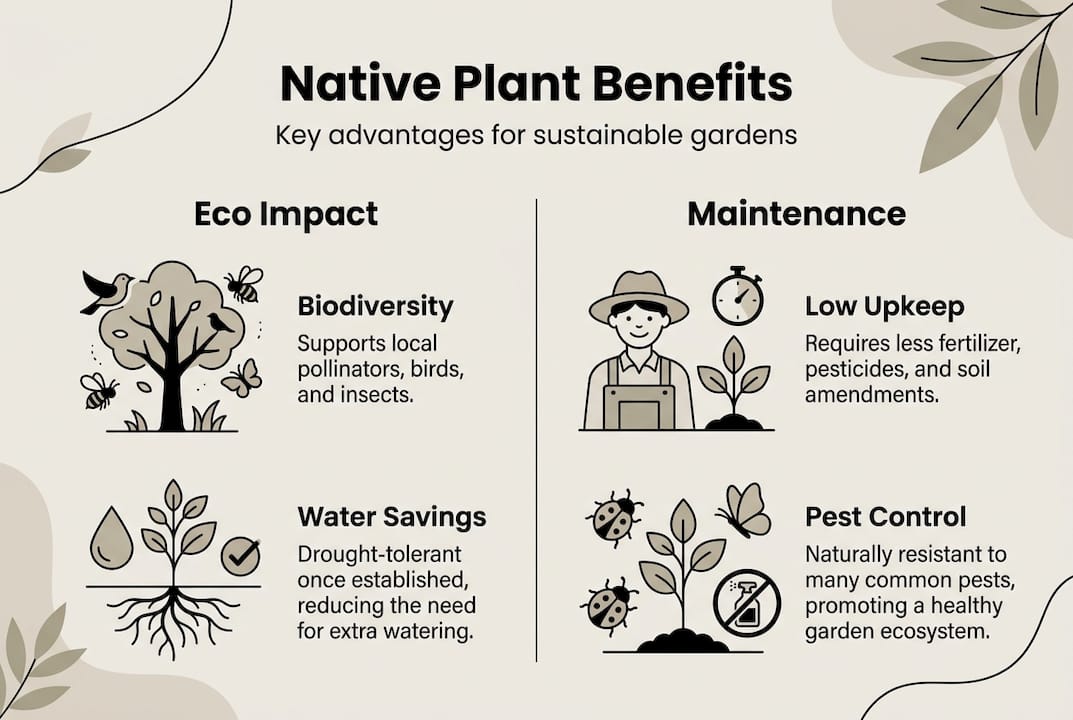
Native plants serve as the foundation of healthy local ecosystems, creating interconnected relationships that sustain wildlife populations and environmental stability. When you plant species that evolved alongside local fauna, you establish food sources and shelter that exotic plants simply cannot replicate. Native plants increase biodiversity by supporting native pollinators and wildlife through perfectly timed bloom cycles and appropriate nutrition profiles.
Pollinators like native bees, butterflies, and hummingbirds depend on specific plant species they co-evolved with over millennia. These relationships are so specialized that some pollinator species can only feed on particular native flowers. By incorporating these plants, you create vital corridors that allow pollinator populations to thrive even in suburban settings. This matters tremendously because pollinators are responsible for one-third of the food we eat, making their survival directly connected to agricultural productivity and food security.
The biodiversity native plants foster extends far beyond pollinators. Birds rely on native seeds and the insects these plants attract for feeding their young. Beneficial predators like ladybugs and lacewings find habitat in native plant communities, naturally controlling pest populations. This creates a balanced garden ecosystem where problems self-regulate without chemical intervention.
Pro Tip: Plant native species in clusters of three to five rather than single specimens to create more attractive foraging stations for pollinators and increase cross-pollination success rates.
Consider how native plants maintain natural ecological cycles that exotic species disrupt. They provide food at precisely the times local wildlife needs it most, supporting migration patterns and breeding cycles that have developed over thousands of years. This synchronization creates gardens that function as miniature nature preserves, contributing to regional conservation efforts.
Key ecological advantages include:
- Native plants support 4 times more caterpillar species than non-natives, providing essential protein for baby birds
- They create layered habitats from ground covers to canopy trees that shelter diverse species
- Native root systems form partnerships with beneficial soil fungi that exotic plants cannot replicate
- They maintain genetic diversity crucial for species adaptation to climate changes
- Native plant communities resist invasive species naturally through competitive exclusion
“Gardens planted predominantly with native species can support 50% more beneficial insect species than those dominated by exotic ornamentals, creating resilient ecosystems that require minimal human intervention.”
This ecological resilience translates directly into practical gardening benefits. Gardens with high native plant diversity experience fewer devastating pest outbreaks because predator populations keep potential problems in check. Disease spreads more slowly through diverse plantings compared to monocultures of exotic species. You’ll spend less time troubleshooting problems and more time enjoying a garden that largely manages itself through natural processes.
Water conservation and soil health advantages
Native plants deliver remarkable water savings because they’ve adapted to your region’s natural precipitation patterns over thousands of years. While non-native ornamentals often demand consistent irrigation to survive, native plants typically require less irrigation due to their adaptation to local conditions, promoting water conservation. This adaptation becomes increasingly valuable as water restrictions and drought conditions affect more regions.
The secret lies in their root systems. Native plants develop extensive, deep roots that access moisture far below the surface, allowing them to survive extended dry periods without supplemental watering. These roots can extend 10 to 15 feet deep compared to the shallow 6 to 12 inch roots typical of lawn grasses and many exotic ornamentals. Once established, most native perennials and shrubs thrive on rainfall alone, eliminating irrigation costs and reducing your environmental footprint.
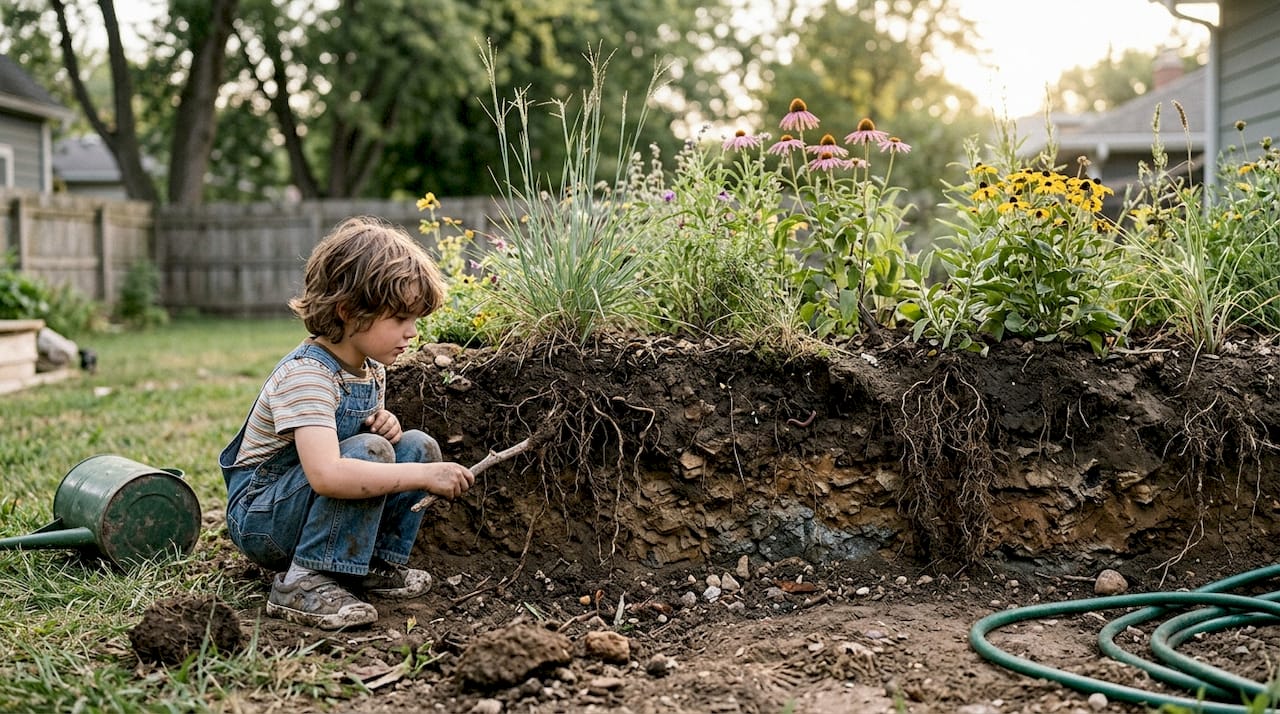
Pro Tip: Water native plants deeply but infrequently during their first growing season to encourage deep root development, then gradually reduce watering as they establish.
Beyond water conservation, these deep root systems transform soil quality in ways that benefit your entire garden. Native plants improve soil quality by enhancing organic matter and supporting beneficial soil organisms. As roots grow, die back, and regrow seasonally, they create channels that improve drainage and aeration while adding organic material throughout the soil profile.
Soil health improvements from native plants:
- Root exudates feed beneficial bacteria and fungi that make nutrients available to all plants
- Deep roots break up compacted soil layers that restrict water infiltration
- Seasonal root turnover adds carbon-rich organic matter at multiple soil depths
- Native root systems prevent erosion on slopes by holding soil particles in place
- Improved soil structure increases water retention during dry periods
The relationship between native plants and soil microorganisms deserves special attention. Many natives form mycorrhizal associations with fungi that extend their effective root systems by hundreds of feet. These fungal networks transport water and nutrients to plants while receiving carbohydrates in return. This partnership allows natives to access resources unavailable to plants without these relationships, explaining why they thrive in poor soils where exotic species struggle.
| Soil Benefit | Native Plants | Non-Native Plants |
|---|---|---|
| Root depth | 10-15 feet | 6-12 inches |
| Organic matter contribution | High, throughout profile | Low, surface only |
| Erosion control | Excellent | Moderate to poor |
| Water infiltration | Increases over time | Often decreases |
| Microbial diversity support | Very high | Limited |
These soil improvements create a positive feedback loop. As soil health increases, plants grow more vigorously with less input. Better soil structure means water penetrates deeper rather than running off, reducing irrigation needs further. The organic matter added by native roots increases the soil’s capacity to hold both water and nutrients, making your garden more resilient during both droughts and heavy rains.
Established native plant gardens can reduce water usage by 50 to 75% compared to traditional landscapes while supporting healthier, more productive soil. This combination makes them ideal for sustainable gardening that works with natural processes rather than against them.
Pest resistance and maintenance benefits of native plants
Native plants possess natural defenses against local pests and diseases developed through evolutionary pressure, reducing your need for chemical interventions dramatically. Native plants reduce the need for pesticides by attracting beneficial insects and being more pest-resistant. This resistance stems from chemical compounds in leaves, stems, and roots that deter herbivores while remaining safe for beneficial insects and pollinators.
The maintenance advantages extend well beyond pest resistance. Native plants require minimal fertilization because they evolved in your region’s native soil conditions. While exotic ornamentals often need regular feeding to maintain appearance, natives thrive in average soil without amendments. This eliminates fertilizer costs and prevents nutrient runoff that pollutes waterways.
Pro Tip: Avoid fertilizing native plants unless soil tests reveal specific deficiencies, as excess nutrients can actually weaken their natural pest resistance and encourage aggressive growth that requires more pruning.
Native plants also attract beneficial predators that provide free pest control services. Ladybugs, lacewings, parasitic wasps, and predatory beetles find habitat and alternative food sources in native plant communities. These beneficial insects keep potential pest populations below damaging thresholds naturally. When aphids appear on your roses, the ladybugs living in nearby native plants quickly discover and eliminate them without any action on your part.
| Maintenance Factor | Native Plants | Non-Native Plants |
|---|---|---|
| Watering frequency (established) | Minimal to none | Regular, often weekly |
| Fertilizer requirements | Rarely needed | Multiple applications yearly |
| Pesticide applications | Seldom necessary | Often required |
| Pruning needs | Minimal, seasonal | Frequent shaping needed |
| Replacement rate | Very low | Moderate to high |
| Overall time investment | 2-3 hours monthly | 8-12 hours monthly |
The comparison becomes even more favorable when you consider long-term costs. Native perennials and shrubs typically outlive exotic ornamentals by decades, eliminating frequent replacement expenses. They maintain attractive appearance through seasonal changes without constant deadheading or grooming. Many natives look best when allowed to grow naturally rather than being forced into unnatural shapes through intensive pruning.
Key maintenance benefits include:
- Native plants rarely require staking or support structures due to sturdy growth habits
- They resist common diseases without fungicide applications
- Seasonal dormancy is natural and attractive, not a sign of poor health
- Native groundcovers suppress weeds more effectively than mulch alone
- They tolerate neglect during vacations or busy periods without declining
This reduced maintenance translates to significant time savings. Gardeners report spending 60 to 70% less time on upkeep in native plant gardens compared to traditional landscapes. You’ll spend less time fighting problems and more time enjoying your garden’s natural beauty and wildlife activity.
The chemical reduction benefits extend beyond your property. By eliminating pesticide and fertilizer use, you protect groundwater quality and prevent toxic runoff into streams and rivers. This makes native plant gardening one of the most impactful environmental choices homeowners can make, with benefits that multiply across neighborhoods and watersheds.
How to incorporate native plants in your garden effectively
Successfully integrating native plants requires understanding your specific growing conditions and selecting species that naturally thrive there. Incorporating native plants thoughtfully can maximize ecological and aesthetic benefits in your garden. Start by identifying your USDA hardiness zone, soil type, sun exposure, and moisture levels across different garden areas.
Research which native plants naturally occurred in your region before development. Local native plant societies, university extension offices, and state natural resources departments maintain lists of appropriate species. Focus on plants native to your specific ecoregion rather than just your state, as conditions vary dramatically across large geographic areas.
Steps to successfully establish native plants:
- Assess your garden’s microclimates, noting areas that stay wet, dry quickly, or receive varying sun exposure
- Create a planting plan that groups natives with similar water and light requirements together
- Source plants from reputable native plant nurseries that grow local ecotypes rather than generic cultivars
- Prepare planting areas by removing aggressive weeds but avoid excessive soil disturbance
- Plant in fall when possible to allow root establishment before summer stress
- Water regularly during the first growing season, then gradually reduce as plants establish
- Apply mulch to suppress weeds and retain moisture, keeping it away from plant stems
- Be patient, as natives often focus on root growth initially before showing vigorous top growth
Pro Tip: Plant native species in odd-numbered groups of three, five, or seven to create natural-looking drifts that are more visually appealing than single specimens and provide better wildlife habitat.
Design considerations make the difference between a native plant collection and a cohesive garden. Layer plants by height, placing taller species toward the back or center with shorter plants in front. Include natives that bloom in different seasons to provide continuous color and wildlife resources. Mix textures and foliage colors to create visual interest even when plants aren’t flowering.
Do’s and don’ts for native plant gardening:
- Do start small with a manageable area you can maintain properly during establishment
- Don’t expect instant results, as natives prioritize root development over showy top growth initially
- Do leave seed heads standing through winter to feed birds and provide habitat
- Don’t apply lawn herbicides near native plantings, as drift can damage sensitive species
- Do accept some leaf damage as evidence of supporting caterpillars and other wildlife
- Don’t deadhead all flowers, as many natives produce seeds that sustain birds through winter
- Do divide and share plants with neighbors to expand native plant corridors
- Don’t mix aggressive non-native plants with natives, as they often outcompete slower-growing species
Phased implementation works better than attempting complete garden transformation at once. Begin with one bed or area, learn what thrives in your conditions, then expand gradually. This approach allows you to develop skills and knowledge while avoiding overwhelming maintenance demands or costly mistakes.
Consider starting with native groundcovers and perennials before adding shrubs and trees. Smaller plants establish faster and cost less, allowing you to experiment with placement and combinations. As you gain confidence, incorporate larger structural plants that provide year-round interest and habitat.
Local native plant sales hosted by conservation organizations and botanical gardens offer excellent plant sources and expert advice. These events typically feature species well-suited to your area and connect you with experienced native plant gardeners who can share practical insights.
Discover gardening resources and support at Lushy Gardens
Transitioning to native plant gardening becomes much easier with expert guidance and practical resources. Lushy Gardens provides comprehensive support for gardeners at every skill level who want to embrace sustainable practices. Our gardening basics for beginners guide covers fundamental techniques that apply perfectly to native plant cultivation, from soil preparation to proper planting depth.
Explore our simple garden design ideas to discover how to arrange native plants for maximum visual impact and ecological benefit. These design principles help you create beautiful, functional gardens that support wildlife while requiring minimal maintenance. You’ll find layout strategies, color combinations, and seasonal planning tips specifically suited to sustainable gardening approaches.
Maintaining your native plant garden through the seasons becomes straightforward with our seasonal garden maintenance step by step guide. This resource walks you through timing for pruning, dividing, and caring for native species so they thrive year after year with minimal intervention.
Frequently asked questions
What are native plants?
Native plants are species that naturally occur in a specific geographic region without human introduction, having evolved there over thousands of years. They are perfectly adapted to local climate patterns, soil conditions, and native wildlife, forming the foundation of natural ecosystems. These plants thrive without the intensive care that non-native species often require.
Why do native plants need less water than non-native species?
Native plants evolved deep root systems and drought-tolerance mechanisms specifically suited to your region’s natural rainfall patterns and dry periods. They developed these adaptations over millennia of exposure to local climate conditions, allowing them to access moisture deep underground. Once established, most natives survive on rainfall alone without supplemental irrigation.
How do native plants support pollinators?
Native flowers provide pollen and nectar with nutritional profiles perfectly matched to native pollinators’ dietary needs and bloom when these species are actively foraging. Many pollinators have specialized relationships with specific native plants developed through co-evolution. Native plants also provide essential nesting materials and larval host plants that complete pollinator lifecycles.
Can native plants reduce garden pests without chemicals?
Yes, native plants possess natural chemical defenses against local pests while attracting beneficial predatory insects that control pest populations naturally. They support diverse insect communities where predators keep potential pests below damaging thresholds. This biological pest control eliminates the need for chemical pesticides in most situations while creating healthier garden ecosystems.
What’s the best way to start planting native species in my garden?
Begin by researching native plants suited to your specific growing conditions and ecoregion through local native plant societies or university extensions. Start with a small, manageable area where you can properly maintain plants during their establishment period. Purchase plants from native plant nurseries that offer local ecotypes, and plant in fall when possible to allow root development before summer stress.
Recommended
- Drought tolerant plants for sustainable gardens in 2026 – Lushy Gardens
- Understanding the Benefits of Native Plants for Your Garden – Lushy Gardens
- 7 Best Drought Tolerant Garden Plants for Hot Climates – Lushy Gardens
- Essential Sustainable Gardening Practices for Every Home – Lushy Gardens

I’m Eleanor, a seasoned gardener with over three decades of experience tending to Mother Nature’s creations. Through Lushy Gardens, I aim to share my wealth of knowledge and help fellow plant enthusiasts uncover the wonders of gardening. Let’s dive into this journey together, one leaf at a time.


