
Table of Contents
Aloe vera is one of the most recognized houseplants on the planet, but it carries a lot of baggage from overblown claims. You may have heard it called a miracle air purifier, a cure-all skin remedy, or even a natural detox tool. Some of that is exaggerated. The truth is, aloe vera earns its place on your windowsill for far more practical, everyday reasons. This guide cuts through the noise and focuses on what aloe vera actually delivers indoors, from its genuine first-aid value to its surprisingly easy propagation, so you can decide if it belongs in your home.
Key Takeaways
| Point | Details |
|---|---|
| Practical household uses | Aloe vera gel treats minor burns and skin irritations without a trip to the store. |
| Easy care and low fuss | Aloe thrives indoors with occasional watering, bright light, and simple soil needs. |
| Propagates for sharing | The plant produces offshoots you can replant or give away, expanding your indoor greenery easily. |
| Psychological benefits | Growing aloe vera indoors boosts mood and gives a sense of accomplishment. |
Why keep aloe vera indoors?
Aloe vera has a look that works in almost any room. Its thick, upright leaves with serrated edges give it a sculptural quality that pairs well with minimalist decor, bright kitchens, and sunny home offices. It does not sprawl or droop like many tropical houseplants, so it stays tidy without much effort from you.
Beyond looks, aloe vera is one of the most forgiving plants you can own. It stores water in its fleshy leaves, which means it tolerates neglect far better than most houseplants. You can skip a watering or two and it will not punish you for it. For busy households or first-time plant owners, that reliability is genuinely valuable. Explore the full range of aloe vera plant home benefits to see how it fits into different living spaces.
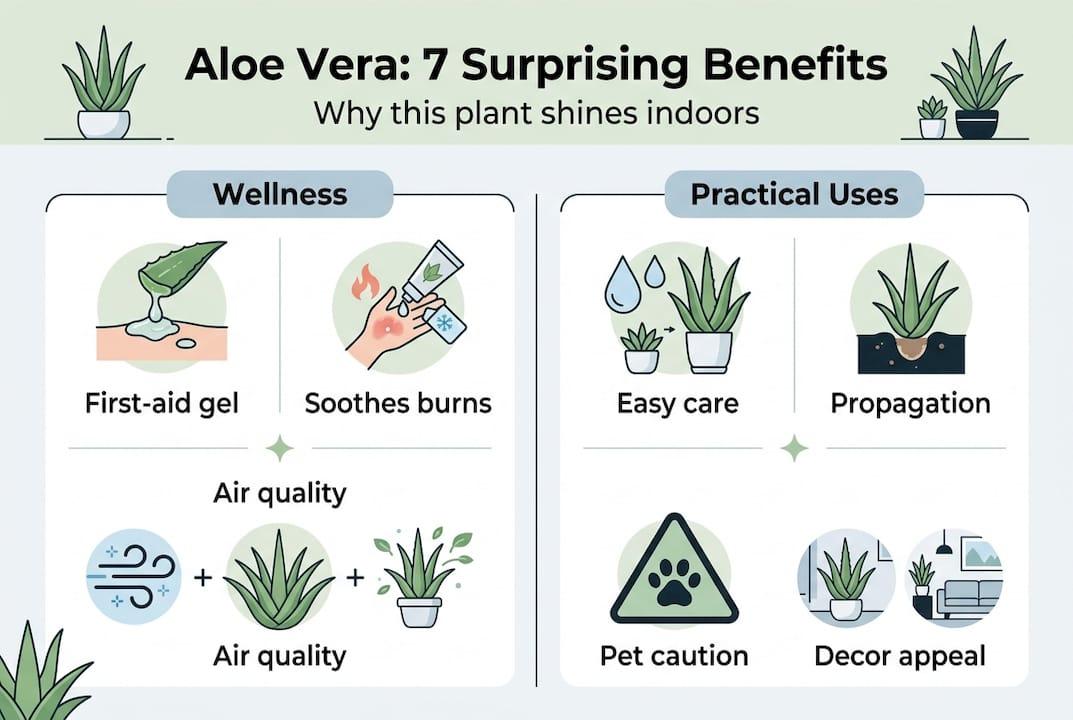
Now, about air purification. The NASA 1989 study showed aloe vera removes formaldehyde and benzene, but those tests were conducted in sealed laboratory chambers with no air exchange. Your living room is not a sealed chamber. In a real home with normal ventilation, the air purification contribution from a single aloe plant is minor at best. You would need dozens of plants to see measurable results.
That said, aloe vera does offer practical indoor benefits that hold up in real life, including medicinal gel, low-maintenance care, and genuine aesthetic appeal. The air purification benefit exists, it is just modest.
- Thrives in bright, indirect light near windows
- Needs watering only every 2 to 3 weeks
- Stays compact and does not outgrow small spaces quickly
- Provides accessible gel for minor skin issues
- Adds visual texture to shelves and countertops
Aloe vera contributes minor air purification benefits in home settings, but its real indoor value comes from low-maintenance care, medicinal gel, and the psychological lift of keeping a living, useful plant nearby. Expecting it to clean your air the way a HEPA filter does will leave you disappointed.
Healing and first-aid uses from your own plant
Beyond looks and easy care, aloe vera’s gel unlocks real value for hands-on home gardeners. The clear gel inside the leaves contains polysaccharides, vitamins, and anti-inflammatory compounds that soothe minor burns, cuts, and skin irritations. This is not folk medicine. These properties are well-documented and the reason aloe gel appears in countless commercial skincare products.
Harvesting gel from your own plant is simple, but a few steps make a real difference in both safety and effectiveness.
- Choose a mature outer leaf. Younger inner leaves contain less gel. Pick a thick, firm outer leaf that is at least 6 to 8 inches long.
- Cut cleanly at the base. Use a clean, sharp knife and slice the leaf off close to the stem.
- Stand the leaf upright for 10 minutes. This allows the yellow latex layer, called aloin, to drain out. Aloin sits just under the skin and can irritate skin or cause digestive problems if consumed.
- Slice off the skin. Lay the leaf flat and carefully remove the top and bottom green layers to expose the clear gel inside.
- Scoop or slice the gel. Use a spoon or knife to collect the gel into a clean bowl.
- Apply directly to the affected area. Smooth a thin layer onto minor burns, sunburn, or dry patches and let it absorb naturally.
For best results, use the gel from medicinal plants at home within a few hours of harvesting. Fresh gel is most potent and least likely to cause irritation.

Pro Tip: Store leftover aloe gel in an airtight container in the refrigerator for up to one week. The cool temperature also adds a soothing effect when you apply it to sunburned or irritated skin.
Avoid applying aloe gel to deep wounds or serious burns. It is a first-aid supplement, not a replacement for medical treatment. And never ingest raw gel directly from the plant without removing the aloin layer first.
Propagation: How aloe vera keeps giving
Aloe’s value multiplies, literally, through easy propagation. Mature aloe vera plants regularly produce small offsets called pups. These are baby plants that grow from the base of the mother plant, sharing the same root system until you separate them. Once a pup is about 3 to 4 inches tall, it is ready to be removed and potted on its own.
To remove a pup, gently dig around the base of the mother plant and locate where the pup connects. Use a clean knife to cut it free, making sure the pup has at least a few roots attached. Let it dry for a day or two before planting to reduce the risk of root rot. Then pot it in well-draining cactus mix and place it in bright indirect light. You can find detailed guidance on how to grow aloe vera and choosing the best pot for aloe plant to give each pup the best start.
| Approach | Cost | Time to mature plant | Difficulty |
|---|---|---|---|
| Propagating from pups | Free | 1 to 2 years | Easy |
| Buying a new plant | $5 to $20 per plant | Immediate | None |
| Growing from seed | Very low | 3 to 4 years | Moderate |
Propagation is one of the most satisfying parts of owning aloe vera. You can expand your own collection, fill empty spots on shelves, or give pups as gifts to friends and family. Many gardeners find that sharing plants builds a sense of community around the hobby. Browse plant propagation techniques if you want to apply the same approach to other houseplants.
Here are a few tips to make propagation go smoothly:
- Wait until the pup is at least one-third the size of the mother plant before separating
- Always use clean tools to avoid introducing bacteria
- Do not water a freshly potted pup for the first week
- Place new pups in bright light but avoid direct afternoon sun until established
- Air purification overhyped claims aside, each new plant still adds humidity and psychological benefits to your space
Caring for aloe vera: Simple tips for healthy growth
Once you’ve multiplied your aloe vera plants, keeping them thriving is rewarding and straightforward. Aloe vera is one of those plants that suffers more from too much care than too little. Overwatering is the number one killer, and it is entirely preventable.
Aloe vera thrives indoors with minimal intervention when given the right conditions: bright indirect light, fast-draining soil, and a pot with drainage holes. That is really the foundation of everything.
| Care factor | Ideal condition | Common problem |
|---|---|---|
| Light | Bright indirect, 6 hours daily | Leggy growth in low light |
| Watering | Every 2 to 3 weeks | Root rot from overwatering |
| Soil | Cactus or succulent mix | Soggy roots in regular potting mix |
| Pot | Terracotta with drainage holes | Waterlogged roots in plastic pots |
| Temperature | 60 to 80 degrees Fahrenheit | Leaf damage below 50 degrees |
Here is a quick care checklist to keep your plants healthy year-round:
- Place near a south or west-facing window for the best light
- Water deeply but infrequently, letting the soil dry out completely between sessions
- Use a terracotta pot to help moisture evaporate faster
- Repot every 2 to 3 years or when roots start circling the bottom
- Check for mealybugs or scale insects on the leaf bases every few weeks
If your plant starts to look off, common warning signs include drooping, browning tips, or mushy leaves. Learn what causes aloe plant drooping or why your aloe plant is turning brown before assuming the worst. Most issues are fixable, and you can often save an aloe plant with a simple soil change or adjusted watering schedule.
Pro Tip: If you are unsure whether to water, stick your finger 2 inches into the soil. If it feels even slightly damp, wait another few days. Aloe vera always prefers dry over wet.
The real value of aloe vera as a houseplant: What most guides miss
Most articles about aloe vera lead with the NASA air purification study and then list a dozen impressive-sounding benefits. We think that approach misses the point entirely.
The real reason aloe vera deserves a spot in your home is not because it filters toxins or performs miracles. It is because it is genuinely useful on an ordinary Tuesday when you nick your finger in the kitchen or get a sunburn on a weekend hike. That kind of practical, immediate value is rare in a houseplant.
There is also something quietly empowering about growing a plant that gives back. New gardeners especially benefit from aloe because it is hard to kill, easy to propagate, and produces something tangible. That first time you harvest your own gel and use it on a burn, you feel like a capable, self-sufficient person. That psychological reward is real, even if it does not show up in a research paper.
If you want plants that genuinely improve indoor air quality, there are better options. But for a plant that earns its keep every single week through usefulness, resilience, and the joy of sharing pups with people you care about, aloe vera is hard to beat.
Get more from your indoor gardening journey
Aloe vera is a great starting point, but it is just one piece of a rewarding indoor garden. At Lushy Gardens, we have put together trusted, practical guides to help you build on what you have learned here. Whether you want to enhance air quality safely with the right plant choices, brush up on indoor plant care basics, or go deeper with a step-by-step propagating houseplants guide, we have resources built specifically for home gardeners like you. Growing your indoor plant collection does not have to feel overwhelming. With the right guidance, every new plant becomes a confident, enjoyable addition to your space.
Frequently asked questions
Can you eat aloe vera gel straight from the plant?
Aloe vera gel can be used topically with confidence, but eating it raw is not recommended. The aloin latex layer just under the skin can cause serious digestive upset and should always be drained before any use near the mouth.
How long does it take for an aloe vera pup to mature indoors?
Aloe pups typically take 1 to 2 years to grow into mature, gel-producing plants when kept in bright light with proper watering. Consistent care speeds up the process noticeably.
Is aloe vera safe for pets?
Aloe vera can be toxic to pets if ingested, causing vomiting and lethargy in cats and dogs. Keep your plants on high shelves or in rooms your pets cannot access.
How often should I water my aloe vera indoors?
Water your aloe vera every 2 to 3 weeks indoors, always allowing the soil to dry out completely between waterings. Pot size and room temperature will affect how quickly the soil dries.
Does aloe vera reduce stress indoors?
Caring for aloe vera provides real psychological benefits, including reduced stress and improved mood, which research links to the act of nurturing living plants. It is a quiet but genuine benefit that goes beyond any air quality claim.
Recommended
- Aloe Vera Plant Benefits – Why Every Home Needs One – Lushy Gardens
- 7 Best Houseplants for Allergies Relief at Home – Lushy Gardens
- 7 Best Air Purification Plants for Healthier Indoor Air – Lushy Gardens
- 7 Medicinal Plants to Grow Naturally at Home – Lushy Gardens

I’m Eleanor, a seasoned gardener with over three decades of experience tending to Mother Nature’s creations. Through Lushy Gardens, I aim to share my wealth of knowledge and help fellow plant enthusiasts uncover the wonders of gardening. Let’s dive into this journey together, one leaf at a time.


