
Table of Contents
TL;DR:
- Soil pH is the most influential factor in nutrient availability, affecting whether plants can uptake essential elements. Most crops prefer a pH of 6.5 to 6.8, and testing guides proper adjustment to optimize growth. Effective pH management involves gradual amendments with lime or sulfur, appropriate timing, and understanding specific plant needs.
Soil pH is the measure of your soil’s acidity or alkalinity on a 0 to 14 scale, and it is the single most powerful factor controlling whether your plants can actually use the nutrients already in your soil. Most home gardeners focus on fertilizer, watering schedules, and sunlight, yet the role of pH in gardening quietly determines whether all that effort pays off. Nutrient availability depends on pH more than on total nutrient content, meaning a well-fed plant in the wrong pH range can still starve. The ideal range for most vegetables and berry crops sits between 6.5 and 6.8, and soil testing is the only reliable way to know where you stand.
How soil pH affects nutrient availability and plant health
Soil pH acts as a gatekeeper for every nutrient your plants need. When pH shifts outside the optimal window, nutrients do not disappear from the soil. They change chemical form and become physically inaccessible to plant roots. This distinction matters because adding more fertilizer to a pH-imbalanced soil is like pouring water into a locked container.
Phosphorus is the clearest example of this mechanism. Phosphorus uptake is optimal between pH 6.0 and 7.0 for most crops. Drop below that range and phosphorus binds tightly to aluminum and iron compounds in the soil, forming insoluble complexes roots cannot absorb. Push above pH 7.0 and phosphorus precipitates with calcium, again locking it out. The plant shows deficiency symptoms regardless of how much phosphorus you applied.
The pattern repeats across the nutrient spectrum:
- Nitrogen (N): Soil bacteria that convert organic nitrogen into plant-available forms work best near neutral pH. Acidic conditions slow this microbial activity, reducing nitrogen supply even in organically rich soils.
- Potassium (K): Availability drops noticeably below pH 5.5 and above pH 8.5, affecting cell function and drought tolerance in crops like tomatoes and peppers.
- Iron (Fe) and Manganese (Mn): These micronutrients become too available in highly acidic soils, reaching toxic concentrations that damage roots. In alkaline soils above pH 7.5, they lock up and cause interveinal chlorosis, the yellowing between leaf veins on young growth.
- Boron (B): Leaches rapidly from acidic soils and becomes deficient, causing distorted new growth in crops like broccoli and beets.
Symptoms you see above ground, such as yellowing leaves, stunted growth, or purple-tinged stems, often trace back to pH-imposed nutrient lock rather than a missing fertilizer. Effective pH management is a prerequisite before targeted nutrient application can succeed. Treating the symptom without fixing the pH is a cycle most gardeners repeat for years without realizing why their plants never fully recover.
What are the optimal pH ranges for different garden plants?
Most plants thrive between pH 6.0 and 7.5, but that range contains meaningful variation depending on the crop. Understanding where your specific plants fall helps you set a realistic pH target before you ever open a bag of lime or sulfur.
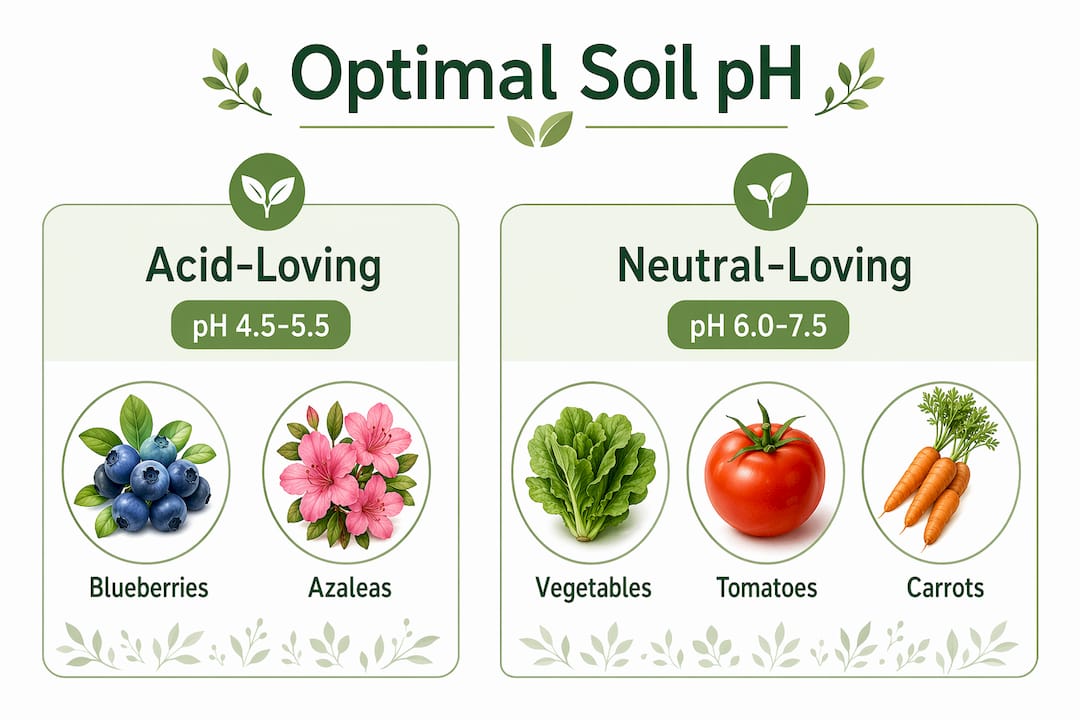
The table below summarizes pH preferences across common garden plant categories.
| Plant category | Preferred pH range | Examples |
|---|---|---|
| Vegetables (general) | 6.0 to 7.0 | Tomatoes, lettuce, beans, carrots |
| Acid-loving plants | 4.5 to 5.5 | Blueberries, rhododendrons, azaleas |
| Brassicas | 6.5 to 7.5 | Cabbage, broccoli, kale |
| Root vegetables | 6.0 to 6.8 | Potatoes, beets, radishes |
| Alkaline-tolerant plants | 7.0 to 8.0 | Lavender, asparagus, spinach |
Blueberries deserve special attention. They perform poorly above pH 5.5 and show severe iron and manganese deficiency in neutral soils, even when those nutrients are present. Gardeners who plant blueberries in unamended beds and then wonder why the plants look sickly almost always have a pH problem, not a fertilizer problem. The soil pH for vegetables guide at Lushygardens covers crop-specific targets in more detail if you are planning a mixed kitchen garden.
Reading a soil test report is straightforward once you know what to look for. A result of 5.8 means your soil is moderately acidic. For tomatoes, that is workable but suboptimal. For blueberries, it is close to ideal. For brassicas, it is too low and clubroot disease risk increases. The number only becomes useful when you match it against the specific plants you are growing.
How to adjust soil pH effectively
Adjusting soil pH is not complicated, but it requires the right material, the right dose, and realistic expectations about timing. The two directions of adjustment use completely different chemistry, and the tools are not interchangeable.
Raising pH with liming materials
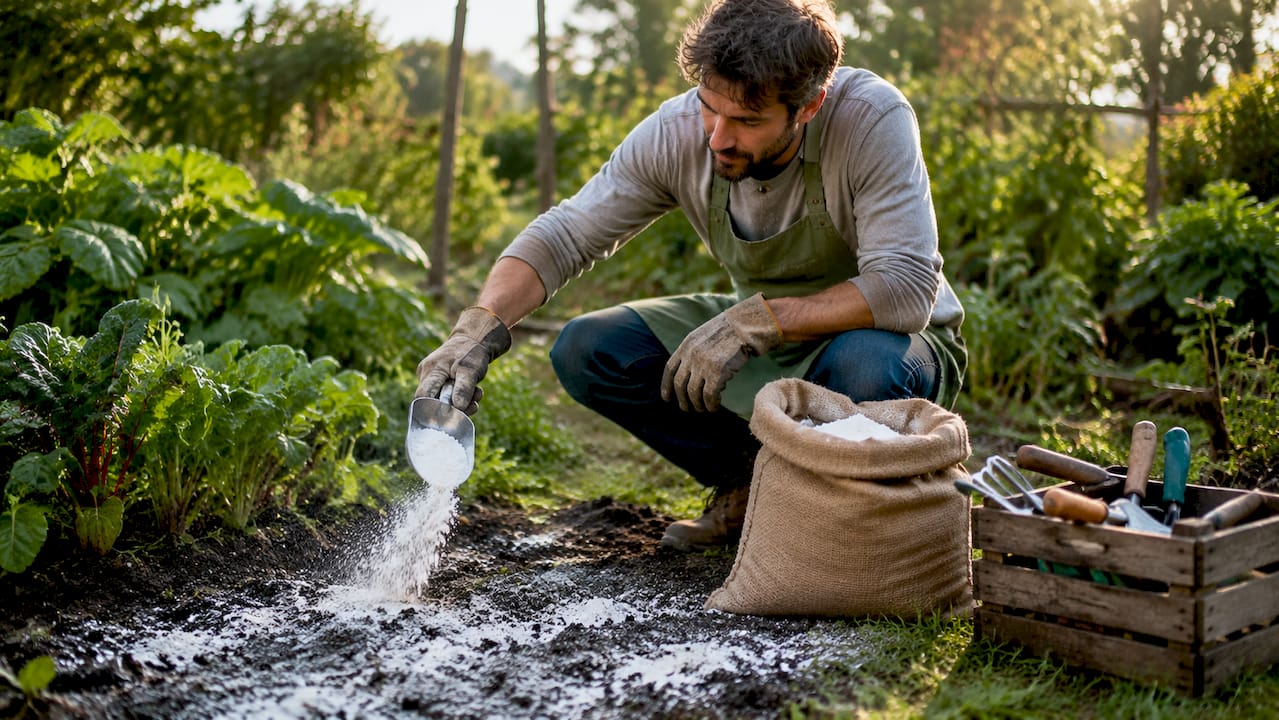
Lime is the standard tool for raising pH in acidic soils. The two most common forms are calcium carbonate (agricultural lime) and dolomitic lime, which supplies both calcium and magnesium. Liming improves pH by roughly 17.5% overall, though effectiveness varies by lime type, soil texture, and how well the material is incorporated. Dolomitic lime is the better choice when a soil test also shows low magnesium, which is common in sandy or heavily leached soils.
Full incorporation with tillage provides the fastest and most uniform pH adjustment. Surface applications react slowly because lime is not water-soluble and must physically contact soil particles to neutralize acidity. Tilling lime to a depth of 6 to 8 inches before planting gives you the most consistent results across the root zone.
Lowering pH with acidifying amendments
Elemental sulfur is the most reliable material for lowering pH. Soil bacteria oxidize sulfur into sulfuric acid, which gradually acidifies the surrounding soil. Clay soils need roughly 50% more sulfur than sandy soils to achieve the same pH drop, because clay has higher buffering capacity and resists change more strongly. The safe maximum is a 1.0 pH unit drop per growing season to avoid stressing plant roots.
Other acidifying options include aluminum sulfate, which acts faster than elemental sulfur but carries a risk of aluminum toxicity at high doses, and acidic organic mulches like pine bark or coffee grounds, which lower pH gradually over multiple seasons.
Key practices for safe and effective pH adjustment:
- Always base your amendment dose on a soil test result, not a general recommendation from a bag label.
- Split large applications into two or three passes over successive seasons rather than applying everything at once.
- Soil texture and organic matter content determine how much amendment you need. A clay-heavy bed requires significantly more lime or sulfur than a sandy bed for the same pH shift.
- Re-test your soil 3 to 6 months after any amendment to confirm the change and plan next steps.
- Never apply lime and sulfur at the same time. They neutralize each other and waste both materials.
Pro Tip: Contact your local cooperative extension service for region-specific lime and sulfur rate tables. Soil chemistry varies significantly by geography, and a generic online calculator may give you a dose that is off by 30 to 50 percent for your specific soil type.
Common pitfalls when managing pH in your garden
Most pH management mistakes fall into one of three categories: acting without testing, correcting too aggressively, or not waiting long enough to see results.
-
Fertilizing without fixing pH first. Nutrient application without correcting pH often fails because chemical fixation prevents uptake regardless of fertilizer dose. If your soil sits at pH 5.2 and you apply phosphorus, most of it binds to aluminum and iron within days. Test first, adjust second, fertilize third.
-
Over-liming. Excess lime causes zinc, manganese, iron, and copper deficiencies by pushing pH too high. Gardeners who lime every spring without testing often create alkaline conditions that produce the same yellowing symptoms they were trying to fix. The solution looks identical to the problem, which makes diagnosis confusing.
-
Expecting instant results. Elemental sulfur takes 2 to 3 months to lower pH because it depends on bacterial activity. Lime reacts faster but still needs 4 to 8 weeks for full effect. Pulling up plants because they look bad two weeks after amendment is a common and avoidable mistake.
-
Ignoring soil variability within the same garden. A raised bed filled with compost-heavy mix behaves differently from an adjacent in-ground bed with native clay. Test each distinct growing area separately rather than treating your whole garden as one unit.
Pro Tip: If you see signs of pH imbalance like interveinal chlorosis on new growth, test your soil before buying any product. The symptom pattern tells you which direction pH has shifted, but only a test tells you how far.
Key takeaways
Soil pH controls nutrient availability across the entire root zone, and correcting it before fertilizing is the single most effective step you can take to improve plant health and garden yields.
| Point | Details |
|---|---|
| pH controls nutrient access | Nutrients become chemically locked at wrong pH levels, regardless of fertilizer amount. |
| Optimal range for most crops | Most vegetables and berries perform best between pH 6.5 and 6.8. |
| Acid-loving plants need lower pH | Blueberries and rhododendrons require pH 4.5 to 5.5 for healthy growth. |
| Soil testing guides amendments | Always test before applying lime or sulfur to avoid over-correction and micronutrient deficiencies. |
| Adjust gradually over seasons | Limit pH changes to 1.0 unit per growing season and re-test after 3 to 6 months. |
Why pH is the first thing I check in any struggling garden
Most gardeners I talk to have a fertilizer problem. Or so they think. They have tried three different products, switched brands, gone organic, gone synthetic, and the plants still look off. When I ask whether they have tested their soil pH, the answer is almost always no.
The importance of soil pH is genuinely underestimated in home gardening culture. We talk about compost, watering technique, and companion planting constantly, but pH gets treated as an advanced topic for serious growers. That framing is backwards. pH is foundational. Everything else sits on top of it.
What I have found in practice is that gardeners who test their soil once and adjust accordingly see more improvement in one season than years of fertilizer experimentation produced. The soil pH complete guide at Lushygardens is a good starting point if you want to go deeper on the chemistry without getting lost in technical language.
My honest recommendation: buy a quality soil test kit or send a sample to your state extension lab before you plant anything new. The cost is minimal. The information is specific to your actual soil, not a generic average. And the results will tell you exactly which direction to move before you spend money on amendments that might not help.
Patience matters too. I have seen gardeners apply lime in March and dig up their beds in May convinced it did not work. Soil chemistry moves slowly. Trust the process, re-test in the fall, and adjust from there. The gardeners who stick with this approach consistently grow healthier plants with less input over time.
— Povilas
Explore more gardening resources at Lushygardens
Understanding pH balance in soil is one piece of a larger picture. If you are new to gardening or want to build a stronger foundation before your next planting season, the Gardening Basics for Beginners guide at Lushygardens covers soil preparation, plant selection, and nutrient management in one place. For gardeners already growing and looking to maintain momentum through the year, the seasonal garden maintenance guide walks through soil care tasks season by season. Lushygardens publishes practical, experience-backed content for gardeners at every level, from first-time growers to those refining years of practice.
FAQ
What is the ideal soil pH for most garden plants?
The ideal pH for most vegetable and berry crops is between 6.5 and 6.8. Within this range, macronutrients and micronutrients remain soluble and accessible to plant roots.
How does pH affect plant nutrient uptake?
Soil pH determines the chemical form of nutrients in the soil. Outside the optimal range, nutrients like phosphorus, iron, and manganese either bind to soil particles or precipitate out of solution, making them unavailable to plants regardless of how much fertilizer you apply.
How do I test soil pH at home?
You can use a home pH test kit, digital pH meter, or mail a soil sample to a university extension lab. Lab testing provides the most accurate results and typically includes amendment recommendations based on your specific soil type.
Can I fix soil pH too quickly?
Yes. Dropping pH by more than 1.0 unit per growing season with elemental sulfur stresses plant roots and disrupts soil microbial communities. Over-liming pushes pH too high and causes secondary deficiencies in zinc, manganese, and iron.
Do all plants need the same soil pH?
No. Acid-loving plants like blueberries and rhododendrons thrive at pH 4.5 to 5.5, while alkaline-tolerant plants like lavender and asparagus prefer pH 7.0 to 8.0. Matching your soil pH to your specific plants is more effective than targeting a single universal number.
Recommended
- Understanding the Importance of Soil Testing for Gardens – Lushy Gardens
- Soil pH Explained: Complete Guide for Gardeners – Lushy Gardens
- Soil pH for Vegetables: Complete Guide – Lushy Gardens
- Plant Problems in 2026: 65% Soil pH Imbalance Hinders Growth – Lushy Gardens

I’m Eleanor, a seasoned gardener with over three decades of experience tending to Mother Nature’s creations. Through Lushy Gardens, I aim to share my wealth of knowledge and help fellow plant enthusiasts uncover the wonders of gardening. Let’s dive into this journey together, one leaf at a time.


