
Table of Contents
TL;DR:
- Effective garden watering methods deliver water directly to the root zone to promote healthy growth and prevent waste.
- Drip irrigation and cycle-and-soak techniques are the most water-efficient options, saving up to 50 percent compared to conventional methods.
Watering techniques for gardens are the methods used to deliver the right amount of water to plants at the right time, supporting healthy growth while avoiding waste. The difference between a thriving garden and a struggling one often comes down to how, when, and how much you water. Precision irrigation technologies can reduce water consumption by 20–50% and improve crop productivity by 10–35% compared to conventional methods. That gap is significant, and it shows up in your water bill and your harvest. This guide covers everything from soil assessment to drip irrigation systems, so you can water with confidence and purpose.
What are the best watering techniques for gardens?
The best garden watering methods share one trait: they deliver water directly to the root zone, not the surface. Surface moisture evaporates quickly and does little for plant health. Deep watering, where water reaches 6 inches or more into the soil, encourages roots to grow downward and become more drought tolerant over time.
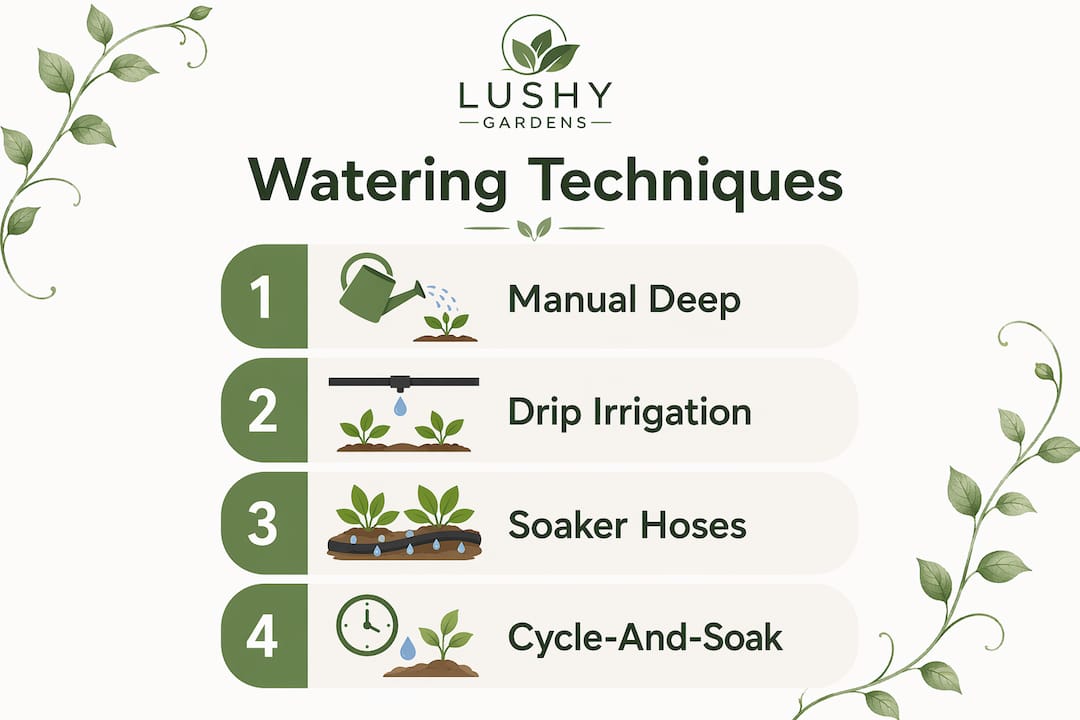
The four most effective methods are manual deep watering, drip irrigation, soaker hoses, and the cycle-and-soak technique. Each suits different garden types, soil conditions, and budgets. Choosing the right one depends on your specific setup, not on what looks easiest at the garden center.
Manual deep watering works well for small beds and container plants. You apply water slowly at the base of each plant until the soil is saturated to root depth. Check moisture at 6 inches by pushing a finger or a thin rod into the soil. If it comes out dry, keep watering.
Drip irrigation is the most water-efficient method for most home gardens. Drip systems use 20–50% less water than typical sprinklers, saving over 25,000 gallons annually for a household. Emitters deliver water directly to the root zone at a slow, steady rate, which also reduces fungal disease by keeping foliage dry.
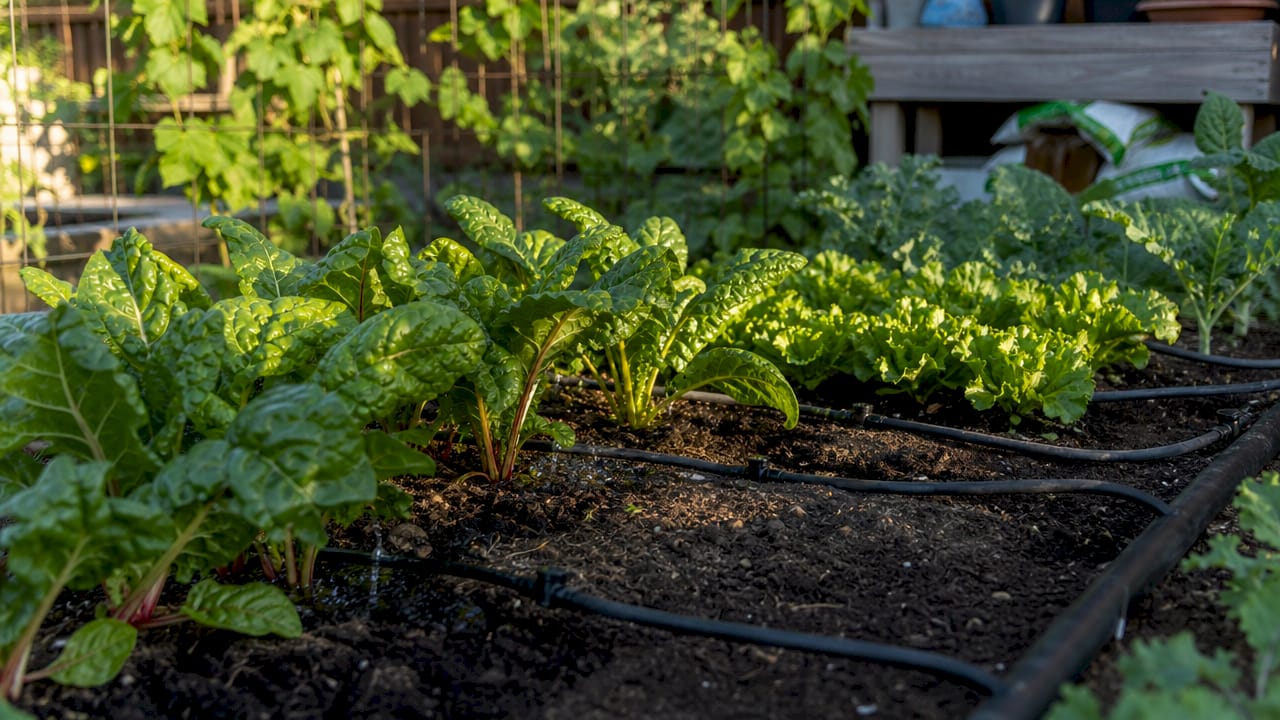
Soaker hoses are a lower-cost alternative to drip systems. You lay them along plant rows and connect them to a standard hose bib. Water seeps out along the entire length, soaking the soil gradually. They work best in straight garden rows and raised beds.
The cycle-and-soak method is the right choice for clay or compacted soils. Water for 8–10 minutes, pause for 45–60 minutes, then repeat. The pause lets water infiltrate before runoff occurs. This approach dramatically reduces wasted water on sloped or heavy soil.
Pro Tip: Group plants with similar water needs together in the same bed. This practice, called hydrozoning, lets you run one irrigation zone efficiently instead of overwatering drought-tolerant plants to keep thirsty ones alive.
| Method | Best for | Water efficiency |
|---|---|---|
| Manual deep watering | Small beds, containers | Moderate |
| Drip irrigation | Vegetable gardens, shrubs | High |
| Soaker hoses | Row crops, raised beds | High |
| Cycle-and-soak | Clay or compacted soils | High |
| Overhead sprinklers | Lawns, large open areas | Low to moderate |
What factors affect how much water your garden needs?
Soil type is the single biggest variable in any watering plan. Sandy soils drain fast and need more frequent watering. Clay soils hold water longer but can become waterlogged if you overwater. Loamy soil sits in the middle and is the easiest to manage. Knowing your soil type tells you how long water takes to reach the root zone and how often you need to reapply.
Plant species and growth stage also determine water demand. Seedlings need consistent moisture because their shallow roots dry out fast. Established perennials and native plants often need far less water than annuals or vegetables. A tomato plant in peak summer heat needs more water than the same plant in spring.
Environmental conditions shift daily. High temperatures, wind, and low humidity all increase evaporation and plant water demand. A garden that needs watering every two days in mild weather may need daily attention during a heat wave. Fixed calendar watering schedules are ineffective. Real-time adjustment based on conditions leads to better plant health and water efficiency.
- Check soil moisture before every watering session, not on a set schedule.
- Use the finger test: push your finger 2 inches into the soil. Dry soil means it is time to water.
- For more accuracy, soil moisture meters cost $10–$20 and remove all guesswork.
- Factor in recent rainfall. If your area received an inch of rain, skip your scheduled watering.
- Check sun exposure. South-facing beds dry out faster than shaded north-facing ones.
Pro Tip: Dig a small hole 6 inches deep near your plants after watering. If the soil at that depth is still dry, you are not watering long enough. Surface dampness is misleading.
Common watering mistakes and how to fix them
Overwatering kills more garden plants than drought does. Waterlogged soil suffocates roots by cutting off oxygen. Signs of overwatering include yellowing leaves, mushy stems, and soil that stays wet for days. The fix is simple: water less frequently and check soil moisture before reaching for the hose.
Underwatering shows up as wilting, dry and cracked soil, and brown leaf edges. The solution is not to flood the plant once a week. Water deeply and less often so roots chase moisture downward. That builds a stronger, more resilient root system over time.
High-pressure nozzles compact soil, damage roots, and strip mulch, harming plant health. A gentle setting mimics natural rainfall and allows water to absorb rather than run off. Use a watering wand or a nozzle set to shower or mist for flower beds and seedlings.
“Shallow surface moisture does not guarantee root zone hydration. Testing soil moisture at 6 inches depth is the only reliable way to confirm your watering is actually reaching the roots.” — UC Cooperative Extension
Leaks in hose connections and worn washers waste hundreds of gallons monthly. Walk your hose and irrigation lines once a month and replace any worn fittings. A $2 washer can save thousands of gallons over a season. Check your garden tool maintenance routine to catch these issues early.
Watering at midday is another common error. Heat and sun cause rapid evaporation, meaning much of the water never reaches the roots. Water in the early morning, ideally before 10 a.m. Evening watering works in a pinch, but wet foliage overnight increases the risk of fungal disease.
How do you plan and measure your garden watering schedule?
Most garden plants need about 1 inch of water per square foot per week, but that number shifts with soil type, plant species, and season. Use it as a starting point, not a fixed rule. The goal is to deliver that inch through a combination of rainfall and irrigation.
Measuring your actual water output takes five minutes. Place a tuna can or shallow container under your sprinkler or in your drip zone. Run the system for 15 minutes and measure the depth of water collected. Multiply to find how long you need to run the system to deliver 1 inch. Flow rate measurement using this tuna can method is the most practical tool a home gardener has for building an accurate schedule.
Mulch is one of the most underused tools in efficient watering. Mulching garden beds holds moisture, reduces evaporation, and stabilizes soil temperature. A 2–3 inch layer of wood chips or straw around your plants can cut watering frequency noticeably. It also suppresses weeds that compete for water. For more ideas on working with dry conditions, the Lushygardens guide on waterwise gardening covers practical strategies in detail.
- Measure your irrigation output using the tuna can method.
- Calculate weekly water needs based on plant type and current weather.
- Subtract any rainfall received that week from your irrigation target.
- Adjust run time to deliver the remaining amount.
- Reassess every two weeks as seasons and plant growth stages change.
| Season | Typical watering frequency | Key adjustment |
|---|---|---|
| Spring | Every 3–5 days | Reduce if rainfall is frequent |
| Summer | Every 1–2 days in heat | Increase during heat waves |
| Fall | Every 5–7 days | Taper as temperatures drop |
| Winter | Minimal or none | Water only during dry spells |
For a ready-made framework, Lushygardens has a detailed watering schedule builder that walks you through estimating needs by plant type and season.
Key Takeaways
Drip irrigation and the cycle-and-soak method are the most water-efficient techniques for home gardens, delivering water directly to roots while reducing waste by up to 50%.
| Point | Details |
|---|---|
| Deep watering beats surface watering | Always water to 6 inches depth to reach roots and build drought tolerance. |
| Drip irrigation saves the most water | Drip systems use up to 50% less water than sprinklers, saving 25,000+ gallons annually. |
| Soil type drives your schedule | Sandy soils need more frequent watering; clay soils need the cycle-and-soak method. |
| Mulch cuts watering frequency | A 2–3 inch mulch layer reduces evaporation and stabilizes soil moisture between sessions. |
| Measure before you water | Use a moisture meter or finger test at 6 inches before every watering session. |

What I have learned from years of watching gardens get watered wrong
Most gardeners water too often and not deeply enough. I have seen it in nearly every garden I have spent time in. The hose comes out for five minutes every evening, the surface looks damp, and the gardener feels satisfied. Meanwhile, the roots are sitting in dry soil six inches down, stressed and shallow.
The shift that changes everything is moving from a schedule to a system. You stop watering on Tuesdays and Thursdays because that is what you have always done. You start checking the soil, reading the plant, and responding to what you actually see. That adjustment alone produces visible improvement within two weeks.
Technology helps, but it does not replace observation. A soil moisture meter is worth every penny of its $10–$20 price. A timer on your drip system removes the forgetting problem. But neither replaces the habit of walking your garden, looking at your plants, and noticing when something is off. The gardeners who get the best results combine both.
Water conservation is not a sacrifice. A well-designed drip system or a consistent mulching habit means you spend less time watering and less money on water, while your plants perform better. That is not a trade-off. That is just good gardening. The Lushygardens hydration tips guide is where I send anyone who wants to go deeper on matching method to plant type.
Lushygardens resources to take your watering further
Lushygardens has built a library of practical guides for gardeners who want to move beyond guessing. The optimal watering guide covers hydration strategies matched to specific plant types, soil conditions, and seasons. If you are just getting started, the gardening basics guide lays out the fundamentals clearly, including watering, soil prep, and plant selection. For gardeners who want to stay on top of their plants year-round, the seasonal maintenance guide provides a step-by-step plan that adapts to every season. All three are free, practical, and written for real home gardens.
FAQ
How often should I water my garden?
Most garden plants need about 1 inch of water per square foot per week, but frequency depends on soil type, weather, and plant species. Check soil moisture at 6 inches depth before watering rather than following a fixed schedule.
What is the most water-efficient irrigation method?
Drip irrigation is the most water-efficient method for home gardens, using 20–50% less water than overhead sprinklers and saving over 25,000 gallons annually for a typical household.
What time of day is best to water plants?
Early morning, before 10 a.m., is the best time to water. It reduces evaporation and allows foliage to dry before nightfall, which lowers the risk of fungal disease.
What is the cycle-and-soak watering method?
The cycle-and-soak method involves watering for 8–10 minutes, pausing for 45–60 minutes, then watering again. It is designed for clay or compacted soils where water runs off before it can absorb.
How do I know if I am overwatering my garden?
Yellowing leaves, mushy stems, and soil that stays wet for several days are the main signs of overwatering. Use a finger test or moisture meter at 6 inches depth to confirm before watering again.
Recommended
- Top hydration tips for gardeners: optimal watering made easy – Lushy Gardens
- Watering Indoor Plants Made Easy: Your Step-by-Step Guide – Lushy Gardens
- Vegetable Garden Watering Systems – Expert Comparison 2025 – Lushy Gardens
- Waterwise Gardening Ideas for a Thriving Dry Garden – Lushy Gardens

I’m Eleanor, a seasoned gardener with over three decades of experience tending to Mother Nature’s creations. Through Lushy Gardens, I aim to share my wealth of knowledge and help fellow plant enthusiasts uncover the wonders of gardening. Let’s dive into this journey together, one leaf at a time.


