
Table of Contents
TL;DR:
- Check soil moisture two inches below the surface rather than relying on surface appearance or schedules.
- Deep, infrequent watering promotes healthier roots and better drought resistance.
- Water early in the morning using efficient tools like drip systems and mulch to reduce waste and disease risk.
Getting plant hydration right is one of the most frustrating puzzles in home gardening. Too little water and your plants stress out. Too much and you invite root rot, fungal disease, and slow growth. Most gardeners guess based on how the soil looks on the surface or water on a fixed schedule, and that guesswork quietly costs them healthy plants every season. Whether you grow vegetables, perennials, or container plants, a clearer strategy makes a real difference. This guide breaks down proven, practical watering tips you can start using today, no expensive equipment or complicated systems required.
Table of Contents
- Check soil moisture, not the calendar
- Deep and infrequent watering for healthier roots
- Time your watering for maximum benefit
- Use the right tools: drip irrigation and mulch
- adapt to your soil and plant types
- Why most gardeners overwater (and how to avoid it)
- Take your garden growth further with expert guidance
- frequently asked questions
Key Takeaways
| Point | Details |
|---|---|
| Check soil, not just leaves | Use a simple finger test to accurately gauge when your plants need watering instead of relying on appearance alone. |
| Deep, infrequent watering | Soak the soil thoroughly every few days, not daily, to foster deep, resilient roots. |
| Water early mornings | Watering at the start of the day reduces evaporation and helps prevent plant disease. |
| Choose the right tools | Combine drip irrigation, soaker hoses, and mulch for maximum hydration efficiency. |
| Adjust to your soil and plants | Tailor your watering frequency and methods to your garden’s unique soil type and plant needs for the best results. |
Check soil moisture, not the calendar
The most reliable signal for when to water is not the day of the week or a reminder on your phone. It is what is happening two inches below the surface of your soil. Most plants suffer because gardeners react to what they see at the surface, which is almost always dry regardless of what is happening deeper down.
The classic finger test is still the gold standard. Push your finger about two inches into the soil near the base of your plant. If it feels dry at that depth, it is time to water. If it still feels moist or cool, hold off. According to extension research, checking soil this way helps you avoid the two biggest watering mistakes: overwatering that suffocates roots and underwatering that stresses plants at critical growth stages.
One important thing to keep in mind: morning checks are the most accurate. In the afternoon, many plants wilt simply because heat increases transpiration faster than roots can supply water. That drooping you see at 2 PM is not always a cry for water. Check again in the early morning, and you will get a much truer picture of what your plants actually need.
Here is a quick list of what to monitor beyond just the soil:
- Color of leaves: Deep green is healthy. Yellow or pale green may indicate overwatering.
- Weight of containers: A dry pot feels noticeably lighter than a watered one.
- Surface cracking: Very dry soil pulls away from pot edges or cracks in garden beds.
- New growth: If new leaves look wilted in the morning, the plant needs water.
“The calendar is not a plant. Your soil is. Learn to read the soil, and you will always know what your plants need.”
If you want to go beyond finger testing, exploring a watering systems comparison can help you find tools that do the monitoring for you. And if you garden in a hot, dry region, tips on gardening in dry climates will help you adapt these techniques to tougher conditions.
Scheduled watering without soil checks creates a false sense of security. Plants change their needs week to week based on temperature, humidity, and growth stage. Stay attentive and trust what the soil is telling you.
Deep and infrequent watering for healthier roots
Once you know how to check moisture accurately, the next step is adjusting how you actually water. The most common mistake gardeners make is watering a little bit every day. It feels caring, but it trains roots to stay near the surface where water is available, making plants fragile and dependent on frequent irrigation.
Deep, infrequent watering is the better approach. When you soak the soil thoroughly, roots follow the moisture downward and grow deeper. Deep roots can access water and nutrients that surface roots never reach, and they handle dry spells much better. Research supports deep watering to soak soil 6 to 8 inches deep every 4 to 10 days, adjusting based on your soil type.
Here is how to build your deep watering routine:
- Water slowly so it absorbs rather than running off the surface.
- Check depth by pressing a wooden dowel or thin rod into the soil after watering. If it slides in easily to 6 or more inches, you have hit your target.
- Wait until the top 2 inches dry out before watering again.
- Track the interval loosely, adjusting when weather heats up or cools down.
Soil type matters a lot here. Sandy soils drain quickly, so you will water more often, closer to the 4-day end of that range. Clay soils hold moisture longer, so you can stretch intervals toward 10 days. You can also check out vegetable spacing tips to ensure that your plant layout allows water to reach each root zone effectively.
| Method | Root depth promoted | Water use | Disease risk | Best for soil type |
|---|---|---|---|---|
| Daily shallow watering | Surface (1-2 in.) | High | Higher | N/A |
| Deep watering every few days | Deep (6-8 in.) | Lower | Lower | All types |
Pro tip: Push a thin wooden dowel into the soil right after watering. Mark how deep it goes in easily. That is your moisture depth. Use it to gauge whether you actually reached 6 to 8 inches or just wet the top layer.
Time your watering for maximum benefit
Even the right amount of water can be wasted if you apply it at the wrong time. Water timing affects how much actually reaches your plant roots versus evaporating into the air, and it also affects plant disease risk.
Early morning watering is the clear winner. The air is cooler, wind is typically calm, and the water soaks in before the sun heats the surface. Your plant foliage also has time to dry off before evening, which reduces fungal disease risk significantly.
Evening watering is a common fallback for busy gardeners, but it comes with tradeoffs. When foliage stays wet overnight, it creates the perfect conditions for mildew and other fungal problems. If morning watering is not realistic every day, aim to water early enough that leaves are dry well before dark.
Midday watering is the least efficient. High evaporation rates during sunny, warm conditions mean a significant portion of your water never reaches the roots. It also risks leaf scorch on some plants when water droplets act like tiny magnifying glasses.
Here is a breakdown of each window:
- Morning (best): Low evaporation, foliage dries before evening, calm air, efficient water use.
- Evening (acceptable): Plants absorb water overnight, but wet foliage is a disease risk.
- Mid-day (avoid): High evaporation, water waste, potential leaf burn in direct sun.
Pro tip: Use a soaker hose or drip line at soil level to sidestep the timing issue almost entirely. Water goes directly to the root zone and foliage stays dry no matter when you run it, which also supports sustainable gardening practices that reduce water waste at home.
Use the right tools: drip irrigation and mulch
Consistency in watering becomes much easier with the right equipment. Hand watering with a can or hose is fine for small plots, but it is hard to apply water evenly and efficiently across a full garden bed. That is where drip systems, soaker hoses, and mulch make a real difference.
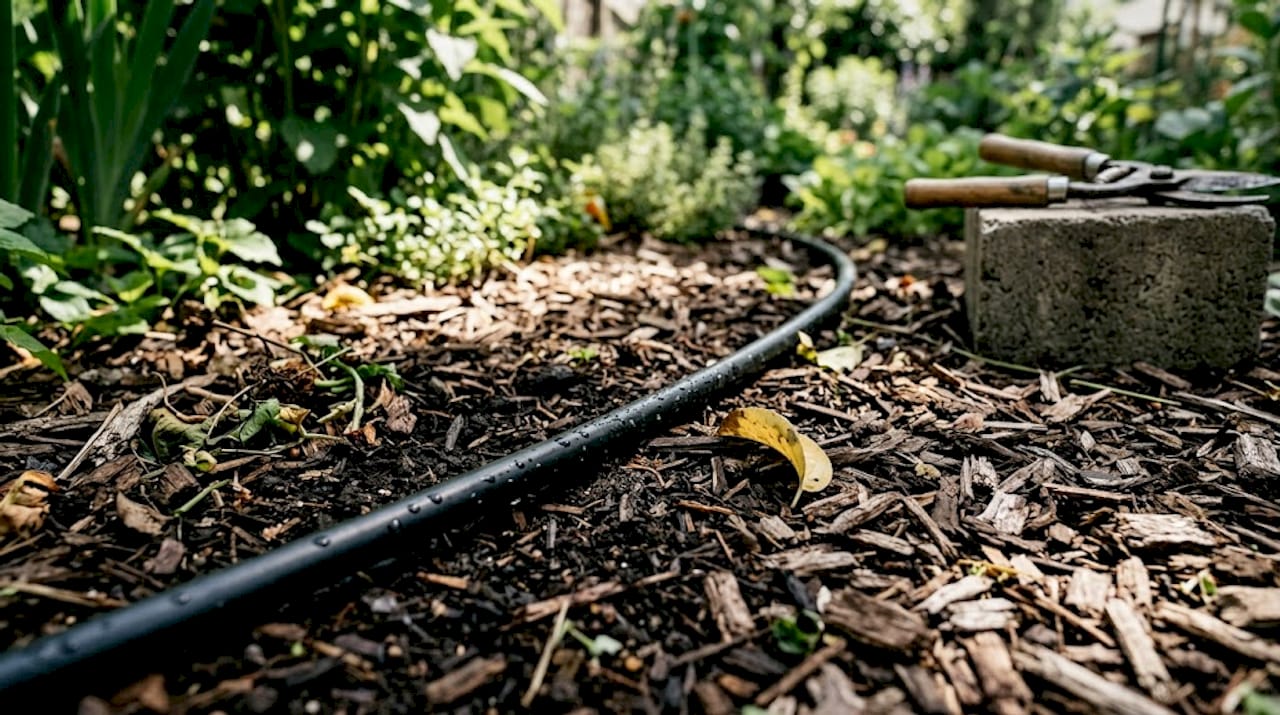
Root-zone irrigation methods like drip lines and soaker hoses deliver water directly where roots can absorb it, while keeping foliage dry. This reduces evaporation, cuts disease risk, and waters more evenly than overhead sprinklers. For new plantings and vegetable rows, these systems are especially effective.
Ollas (pronounced oh-yahs) are another excellent option worth knowing. These are unglazed terracotta pots buried in the soil that slowly seep water directly into the root zone over time. They are low-tech, water-efficient, and work beautifully in raised beds. You can read more about reducing water waste in your garden setup.
Mulch is the other half of the moisture equation. Two to four inches of organic mulch on top of your soil cuts evaporation dramatically, stabilizes soil temperature, and suppresses weeds that compete for water. It is one of the best returns on effort in gardening.
Good mulch materials include:
- Wood bark or chips: Long-lasting, great for perennial beds.
- straw: Light, easy to apply, excellent for vegetable gardens.
- compost: Double duty as a moisture retainer and slow-release fertilizer.
- shredded leaves: Free, widely available, breaks down to feed the soil.
| Tool | Water efficiency | Cost | Best use case |
|---|---|---|---|
| drip irrigation | Very high | Medium-high | vegetable rows, beds |
| soaker hose | High | Low | raised beds, borders |
| sprinkler | Medium | Low-medium | lawn, large areas |
| hand watering | Variable | Very low | small pots, spot care |
For a deeper look at how mulch works in your favor, explore mulch benefits and the broader benefits of mulching for soil health. If you grow edibles, mulching vegetable gardens covers the specifics for food crops.
adapt to your soil and plant types
No single watering schedule works for every garden. Your soil type and the plants you grow are the two biggest variables that determine how often and how much to water.
Sandy soils drain fast, sometimes too fast. Water passes through quickly, so plants in sandy ground need more frequent watering, and containers in hot weather may need water twice daily. Clay soils hold water much longer, meaning they are at higher risk of staying waterlogged. In clay, you need to space out your watering more to avoid saturating the root zone.
Container plants sit in their own category. They have no connection to the deeper ground moisture, so they dry out faster and need daily monitoring. A large pot in full sun can go from properly moist to bone dry in a single afternoon during summer. For creative approaches to managing this, check out container gardening ideas that also account for smart watering strategies.
Different plant types also have very different thirst levels:
- succulents and cacti: Water sparingly. Let soil dry out completely between waterings.
- vegetables (especially leafy greens and tomatoes): Regular, consistent moisture at root level.
- annuals: Generally need more frequent watering than established perennials.
- native perennials: Often drought-tolerant once established, minimal supplemental water needed.
Pro tip: Add a 2-inch layer of mulch around containers as well as garden beds. It slows evaporation from the top of the pot and smooths out moisture swings in any soil type, giving you a bigger window between necessary waterings.
Why most gardeners overwater (and how to avoid it)
Here is something most plant care articles skip: the biggest threat to home garden plants is not drought. It is overwatering. Most gardeners are watering more than their plants need, often without realizing it.
The instinct is understandable. You love your plants. You see a wilting leaf and your first response is to reach for the hose. But afternoon wilting is often a normal physiological response to heat, not a sign of drought stress. The plant is reducing water loss by closing its stomata (the tiny pores in leaves) and drooping slightly. Come morning, it often bounces back on its own.
Chasing that midday droop with extra water is one of the most common ways roots end up sitting in saturated soil. Over time, that leads to root rot, which is harder to recover from than a few dry days. We have seen thriving gardens stall out entirely not from neglect, but from too much love at the hose.
The fix is simpler than most expect. Let the soil be your guide, not the leaves. Check moisture at the root zone in the morning. Trust what you find there. A plant with moist soil at 2 inches deep does not need water, even if it looked sad at noon yesterday. You can also explore our watering indoor plants guide for additional perspective on reading plant signals accurately.
Take your garden growth further with expert guidance
Ready to put these hydration tips into practice? These strategies are just the beginning. Whether you are just getting started or looking to sharpen what you already know, building a reliable watering routine takes some experimentation and the right information at your side. At gardening basics, you will find step-by-step guidance for setting up a thriving garden from the ground up. And for growing your own food successfully, the vegetable gardening guide walks you through every season with clear, practical advice. Great gardens start with great information.
frequently asked questions
How can I tell if my plants need water?
Insert your finger 2 inches into the soil near the plant base. If it feels dry at that depth, it is time to water, as confirmed by soil moisture guidance.
What is the best time of day to water my garden?
Early morning is best. Water absorbs before the heat builds and foliage dries before evening, which reduces disease risk significantly.
How much mulch should I use to help my soil retain moisture?
Apply 2 to 4 inches of organic mulch on top of your soil. This retains moisture and suppresses weeds while keeping root temperatures stable.
Is it better to water more frequently with less water, or less often with more water?
Less frequent, deep watering wins every time. Deep root development leads to stronger, more drought-resistant plants than shallow daily splashes.
Recommended
- Watering Indoor Plants Made Easy: Your Step-by-Step Guide – Lushy Gardens
- Vegetable Garden Watering Systems – Expert Comparison 2025 – Lushy Gardens
- Houseplants for beginners: easy care tips (68% saved) – Lushy Gardens
- Essential Indoor Gardening Tips for Urban Dwellers – Lushy Gardens
- 10 Essential Tips For Maintaining Indoor Plants – Homes2MoveYou.com
- Making Every Drop Count: Water Efficiency Tips for London Homes – Complete EPC

I’m Eleanor, a seasoned gardener with over three decades of experience tending to Mother Nature’s creations. Through Lushy Gardens, I aim to share my wealth of knowledge and help fellow plant enthusiasts uncover the wonders of gardening. Let’s dive into this journey together, one leaf at a time.


