
Table of Contents
TL;DR:
- Waterwise gardening reduces water use by selecting native, drought-tolerant plants and employing efficient irrigation techniques. Proper soil preparation, mulching, and landscape design further minimize watering needs and support plant health. Patience during the establishment phase ensures long-term success and water savings.
Waterwise gardening is the practice of designing and maintaining a garden that uses water efficiently by matching plant choices, soil care, and irrigation methods to your local climate. The industry term for this approach is xeriscaping, though waterwise gardening ideas go beyond desert plants to include any technique that reduces waste and keeps your garden healthy with less water. You can apply these methods whether you garden in a dry Western state or a humid Southern yard that faces summer drought. Drip irrigation, organic mulch, native plants, and smart plant grouping are the core tools that make it work.
1. What are the best drought-tolerant plants for waterwise gardens?
Drought-tolerant native plants need less water, resist pests more effectively, and support local ecosystems better than non-native ornamentals. That combination makes them the single best starting point for any water-saving garden.
Strong choices for home gardens include:
- Coneflower (Echinacea): A North American native that thrives in full sun with minimal watering once established.
- Lavender: Handles dry, rocky soil and rewards neglect with fragrant blooms all summer.
- Sedum: A succulent ground cover that stores water in its leaves and spreads to suppress weeds.
- Black-eyed Susan (Rudbeckia): Tough, cheerful, and pest resistant across most American climates.
- Gaillardia (blanket flower): Blooms heavily in heat and drought, attracting pollinators without demanding irrigation.
- Asters: Late-season color with almost no supplemental water needed after the first year.
The establishment phase is the most overlooked part of planting drought-tolerant species. Consistent irrigation for 1–2 years after planting lets roots grow deep enough to access groundwater on their own. Skip this phase and even the toughest plants fail.
Pro Tip: Plant drought-tolerant species in fall rather than spring. Cooler temperatures and seasonal rain do most of the establishment work for you, cutting your first-year watering in half.
2. Smart irrigation techniques that cut water waste
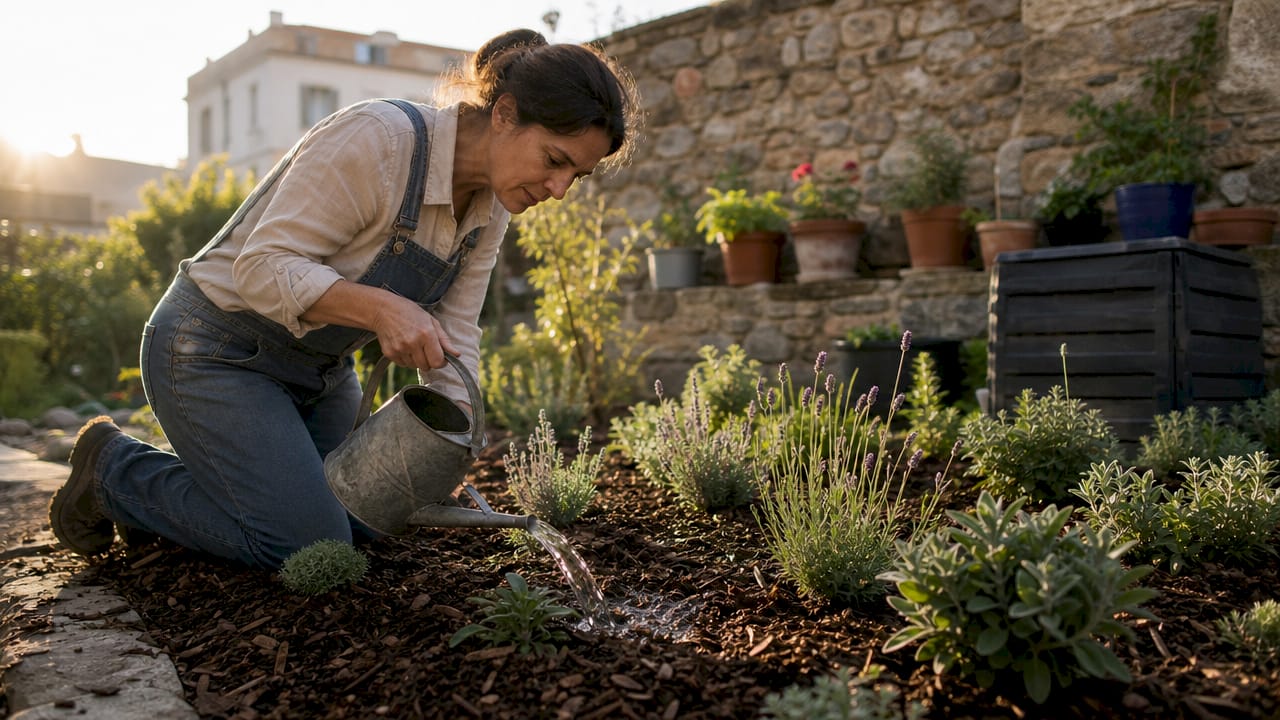
Watering between 4 p.m. and 10 a.m. reduces evaporative loss and improves how well soil absorbs moisture. Midday watering loses a large portion of water to evaporation before it ever reaches the roots.
The most effective delivery methods for home gardens are:
- Drip irrigation: Delivers water directly to the root zone at a slow rate. Almost no runoff, no wet foliage, and far less evaporation than sprinklers.
- Soaker hoses: Laid along plant rows, they seep water slowly into the soil. They work especially well in vegetable beds and shrub borders.
- Hydrozoning: Grouping plants by water needs lets you run separate irrigation zones for thirsty plants and drought-tolerant ones. You stop overwatering the tough plants and underwatering the delicate ones.
- Observation-based scheduling: Water based on plant stress signals like wilting or color changes rather than a fixed calendar. Plants tell you what they need if you watch them.
Pro Tip: Install a simple rain sensor on any automatic irrigation system. It shuts the system off during and after rainfall, which is one of the easiest ways to cut outdoor water use without changing your routine.
3. Soil and mulching strategies to hold moisture longer
Organic mulch is one of the most effective tools in water conservation gardening. A thick layer of mulch keeps soil moist, cools roots during heat waves, and suppresses weeds that compete for water. Apply 2–4 inches of bark chips, shredded leaves, or pine needles around plants, keeping mulch a few inches away from stems to prevent rot.
Soil quality matters as much as mulch. Compost and soil amendments improve moisture retention and nutrient availability, which means plants stay healthier between waterings. Work several inches of compost into beds before planting each season.
| Mulch type | Water retention | Best use |
|---|---|---|
| Bark chips | High | Shrub borders, trees |
| Shredded leaves | High | Vegetable beds, perennials |
| Pine needles | Moderate | Acid-loving plants |
| Gravel or pebbles | Low to moderate | Xeriscape beds, pathways |
| Compost | Very high | Soil amendment, top dressing |
Soil drainage quality is often more critical than soil type. Many drought-tolerant plants fail in poorly draining clay soils even when watered correctly. Raised beds or amendments like coarse sand and perlite fix drainage problems without replacing all your soil.
You can find a deeper breakdown of mulch types and application methods in Lushygardens’ mulching benefits guide.
4. Landscape design ideas that reduce watering needs
The structure of your garden determines how much water it needs. These design choices cut irrigation requirements before you plant a single seed:
- Reduce turfgrass: Traditional fine-turf lawns are the most resource-intensive part of any landscape. Replace sections with ground covers like creeping thyme, clover, or ornamental grasses that need a fraction of the water.
- Add hardscaping: Patios, gravel paths, and stone borders reduce the planted area you need to water and maintain.
- Build a rain garden: Rain gardens capture runoff from roofs and driveways, directing it into planted depressions where it soaks in slowly. They reduce stormwater runoff and cut how often you need to irrigate nearby beds.
- Mass planting: Planting drought-tolerant species close together creates microclimates that hold moisture and shade the soil. Dense plantings also crowd out weeds naturally.
- Observe natural water flow: Planting according to how water moves across your yard places thirsty plants in low spots and drought-tolerant ones on slopes. This is a key first step in any xeriscaping plan.
| Design feature | Water savings | Maintenance level |
|---|---|---|
| Rain garden | High | Low after establishment |
| Gravel mulch beds | Moderate to high | Very low |
| Ground cover lawn replacement | High | Low |
| Mass drought-tolerant planting | High | Low |
| Hardscaping (patios, paths) | High | Minimal |
Xeriscaping does not mean a yard full of rocks and cacti. It means designing with your local climate in mind so the landscape largely takes care of itself. A well-designed xeriscape can look lush and colorful while using a fraction of the water a conventional lawn demands.
For more ideas on putting these principles together, Lushygardens has a practical guide to simple garden design ideas worth bookmarking.
5. Rainwater harvesting and creative water-saving ideas
Rainwater harvesting is one of the most underused tools in residential water conservation gardening. A basic rain barrel connected to a downspout collects hundreds of gallons per season that would otherwise run off into storm drains. That stored water is free, soft, and ideal for garden use.
Beyond rain barrels, these ideas add meaningful water savings:
- Vertical gardens: Wall-mounted planters use far less soil volume than ground beds, which means less water per plant. Choose succulents or herbs for the lowest water demand.
- Container gardening with saucers: Saucers under pots catch overflow and let roots absorb it later. This simple step cuts container watering frequency noticeably.
- Reduce lawn size gradually: You do not need to rip out your entire lawn at once. Replace one section per season with drought-tolerant ground covers or native plantings.
- Pollinator-friendly plantings: Native wildflower mixes like coneflower, aster, and gaillardia attract bees and butterflies while needing almost no supplemental water after establishment.
- Prune strategically: Removing excess foliage reduces the water demand of individual plants. Pruning in late summer also prepares plants for dry fall conditions.
Pro Tip: Check your local municipality’s rebate programs before buying irrigation equipment. Many water districts offer rebates on drip systems, rain barrels, and even drought-tolerant plant purchases.
A landscape project planning workbook can help you map out rain garden placement and drainage patterns before you start digging.
Key takeaways
Waterwise gardening works best when drought-tolerant plant selection, efficient irrigation, and smart landscape design work together as a system rather than as isolated fixes.
| Point | Details |
|---|---|
| Choose native, drought-tolerant plants | Species like coneflower, lavender, and sedum thrive with minimal water after establishment. |
| Water at the right time and rate | Irrigate between 4 p.m. and 10 a.m. using drip systems or soaker hoses to cut evaporation. |
| Mulch every bed | Apply 2–4 inches of organic mulch to retain soil moisture and suppress weeds year-round. |
| Design for water flow | Use hydrozoning, rain gardens, and mass planting to reduce irrigation needs at the design stage. |
| Support the establishment phase | Water drought-tolerant plants consistently for 1–2 years so roots develop enough to survive on rainfall. |
Why I think most gardeners start waterwise gardening backwards
Most gardeners I talk to buy drought-tolerant plants first and figure out the rest later. That approach almost always leads to dead plants and frustration by midsummer. The real starting point is your soil and your site, not your plant list.
Waterwise gardening is not about zero water. It is about using water where it counts and eliminating waste everywhere else. I have seen gardeners install drip irrigation and then undermine it completely by planting thirsty annuals next to drought-tolerant natives in the same zone. Hydrozoning is not optional. It is the difference between a system that works and one that just looks good on paper.
The other thing nobody tells you clearly enough: there is no truly zero-maintenance garden. A waterwise garden is lower maintenance, not no maintenance. Start with one bed, get the soil right, mulch it properly, and plant natives suited to your region. Expand from there once you see what works. That patience pays off far more than buying 40 plants and hoping for the best.
— Povilas
Lushygardens resources for your waterwise garden
Lushygardens covers the full range of water-saving garden practices, from choosing the right plants to building a watering schedule that fits your climate and lifestyle. The gardening basics for beginners guide walks through soil preparation, plant selection, and irrigation setup in plain language, making it a strong foundation for anyone starting a water-efficient garden. For gardeners who already have beds established, the optimal watering guide covers timing, frequency, and technique in detail. You can also use the landscape maintenance cost strategies resource to identify where water and labor savings are easiest to find in your current setup.
FAQ
What is waterwise gardening?
Waterwise gardening is the practice of designing a garden to use water efficiently through drought-tolerant plants, smart irrigation, and soil management. The formal term for this approach is xeriscaping, though waterwise methods apply to any climate, not just arid regions.
Which plants work best in a waterwise garden?
Drought-tolerant natives like coneflower, lavender, sedum, black-eyed Susan, and gaillardia perform best because they are adapted to local rainfall patterns and need little supplemental irrigation after establishment.
When is the best time to water a waterwise garden?
Water between 4 p.m. and 10 a.m. to reduce evaporation and improve soil absorption. Midday watering loses significant moisture to heat before it reaches plant roots.
How does mulch help conserve water?
A 2–4 inch layer of organic mulch slows evaporation from the soil surface, keeps roots cooler, and suppresses weeds that compete for moisture. This reduces how often you need to water established beds.
How long does it take for drought-tolerant plants to need less water?
Most drought-tolerant plants require consistent irrigation for 1–2 years while their root systems develop. After that establishment phase, they can survive largely on natural rainfall with minimal supplemental watering.
Recommended
- Top hydration tips for gardeners: optimal watering made easy – Lushy Gardens
- Container Garden Drainage Tips for Thriving Plants – Lushy Gardens
- Dry Climate Vegetable Gardening: Thriving in Arid Conditions – Lushy Gardens
- 7 Best Drought Tolerant Garden Plants for Hot Climates – Lushy Gardens

I’m Eleanor, a seasoned gardener with over three decades of experience tending to Mother Nature’s creations. Through Lushy Gardens, I aim to share my wealth of knowledge and help fellow plant enthusiasts uncover the wonders of gardening. Let’s dive into this journey together, one leaf at a time.


