
Table of Contents
TL;DR:
- Naturalizing plants are non-native species that establish self-sustaining populations without human help, supporting biodiversity. Success depends on ecological factors like climate similarity, low native plant competition, and habitat disturbance; proper selection and minimal disturbance promote naturalization. Emphasizing ecological fit and patience, gardeners can create resilient, low-maintenance gardens that foster thriving ecosystems.
Naturalizing plants is defined as the ecological process where non-native plants establish self-sustaining populations that reproduce and spread) without ongoing human help. In formal ecology, this is called naturalization, and it sits at the intersection of gardening practice and ecosystem science. A naturalized plant is not the same as a native species, and it is not the same as an invasive one. Understanding the difference matters for every gardener who wants to support biodiversity, reduce maintenance, and build a garden that works with nature rather than against it.
What is naturalizing plants, and how does it work?
Naturalization in gardening describes what happens when a plant you introduce to your garden begins to reproduce on its own, spread gradually, and persist year after year without you replanting it. Think of daffodils multiplying across a meadow or wild garlic spreading through a woodland edge. You planted them once, and now they manage themselves.
The process exists on a spectrum. Some species introduced by humans may not sustain themselves) at all, dying out without intervention. Others reproduce intermittently. Full naturalization means continuous, independent reproduction and spread across a site. That last stage is what gardeners aim for when they talk about naturalizing bulbs or perennials.
What makes naturalization distinct from simply growing a plant is the absence of ongoing human support. No annual replanting, no regular division, no hand-watering to keep the population alive. The plant integrates into the local environment and maintains itself through seed dispersal, vegetative spread, or both.
How naturalized plants differ from native, non-native, and invasive species
These four categories confuse even experienced gardeners, and the distinctions carry real ecological weight.
Native plants evolved in a specific region over thousands of years. They have deep relationships with local insects, birds, and soil organisms. Eastern red columbine (Aquilegia canadensis) is native to eastern North America. Ruby-throated hummingbirds and native bees evolved alongside it.
Non-native plants originate elsewhere and were introduced, intentionally or accidentally, to a new region. Most garden plants fall into this category. Many never naturalize at all. They grow where you plant them and stop there.
Naturalized plants are non-native but have crossed a threshold. They reproduce in the wild) without human help, sustaining populations across seasons. Common examples include Queen Anne’s lace (Daucus carota) and common chicory (Cichorium intybus) across North America, both originally from Europe.
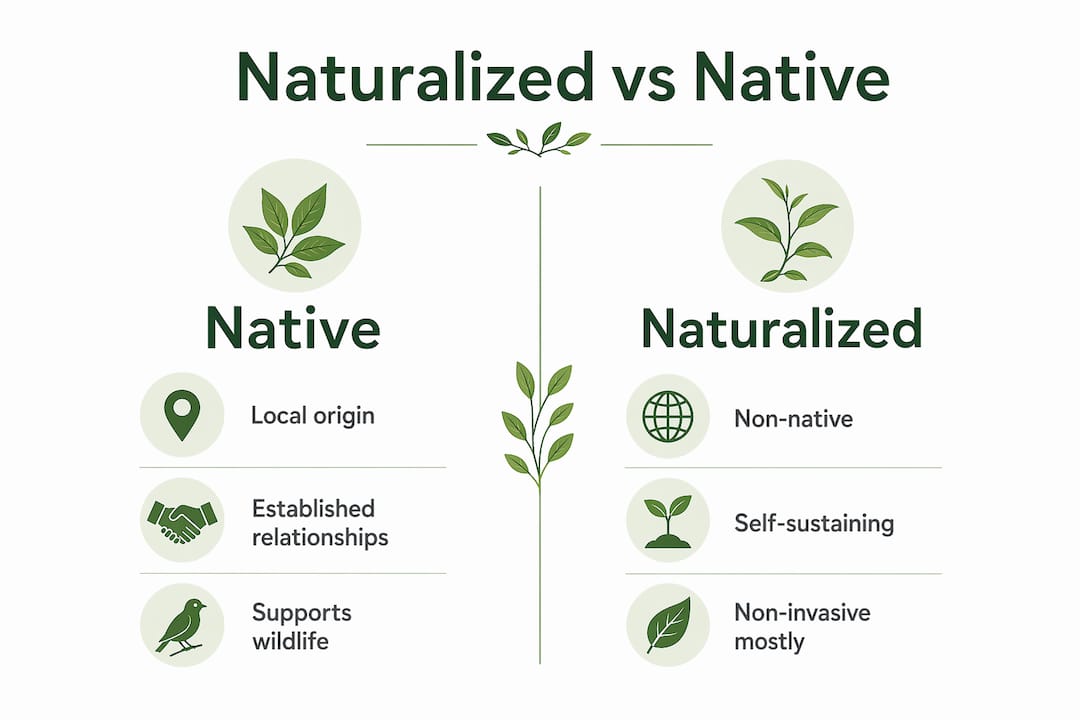
Invasive plants are a subset of naturalized species that spread aggressively, outcompeting native plants and degrading ecosystems. Japanese knotweed (Reynoutria japonica) and purple loosestrife (Lythrum salicaria) are invasive. Not all naturalized plants become invasive, and that distinction is critical before you choose plants for naturalization in your own garden.
| Category | Origin | Reproduces without help | Ecological impact |
|---|---|---|---|
| Native | Local region | Yes | Supports native food webs |
| Non-native | Outside region | No | Neutral to low impact |
| Naturalized | Outside region | Yes | Variable, often low impact |
| Invasive | Outside region | Yes, aggressively | Displaces native species |
Why naturalizing plants matters for biodiversity and ecosystem health
The ecological case for naturalizing plants, especially native and near-native species, is strong and growing stronger. Ecologist Doug Tallamy has documented that halving lawns and adding native gardens creates more combined habitat than Yellowstone National Park plus a dozen other parks. That figure reframes what your backyard is actually capable of.
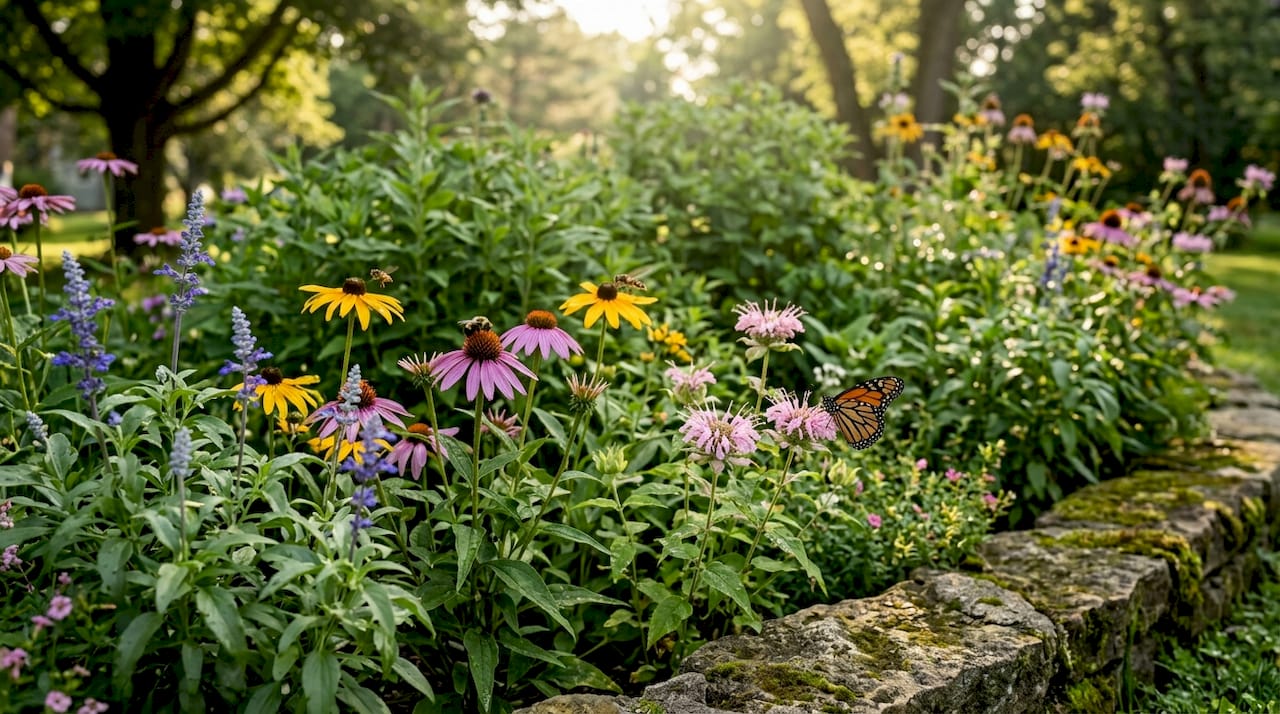
The mechanism behind this impact runs through insects. Many insects feed only on specific plant genera, and those insects feed birds, frogs, and lizards. When insects feed on native plants, they become food for higher-order wildlife, creating a functioning food web from the ground up. A garden with naturalized plants that support insects is not just prettier. It is ecologically productive.
The benefits of naturalizing plants in your garden include:
- Pollinator support. Naturalized flowering plants provide nectar and pollen across extended seasons, supporting bees, butterflies, and hoverflies beyond what a conventional garden offers.
- Bird habitat. Seed heads left standing on naturalized perennials feed finches and sparrows through winter. Dense naturalized plantings provide nesting cover.
- Soil health. Deep-rooted naturalized perennials improve soil structure, increase organic matter, and reduce erosion compared to bare soil or lawn.
- Reduced chemical inputs. A self-sustaining plant community needs fewer pesticides and fertilizers, which benefits soil microbiota and waterways.
- Ecosystem resilience. Diverse plantings buffer against pest outbreaks and climate variability better than monocultures.
“The single most impactful thing a homeowner can do for wildlife is replace lawn with native and naturalized plantings that support insect communities.” — Doug Tallamy, University of Delaware entomologist
You can explore pollinator-friendly plant choices to see which species deliver the strongest ecological return in home gardens.
What factors determine whether a plant naturalizes successfully?
Naturalization is not guaranteed by planting effort alone. Research published in Nature Communications confirms that plants naturalize more successfully where the climate and native flora of the source and recipient regions are similar. A Mediterranean herb transplanted to a Pacific Northwest garden faces a fundamentally different challenge than one moved from one temperate zone to another.
The table below summarizes the key ecological factors that shape naturalization outcomes.
| Factor | Effect on naturalization success |
|---|---|
| Climate similarity | Higher similarity increases establishment and reproduction rates |
| Native flora diversity | Lower diversity in recipient region reduces competition, aiding naturalization |
| Human habitat modification | Disturbed habitats often provide easier footholds for naturalization |
| Soil compatibility | Matching soil pH and drainage to plant origin improves persistence |
Human modification of habitats plays a counterintuitive role. Disturbed land, roadsides, field edges, and garden borders often have reduced native plant competition, which gives introduced plants an easier path to naturalization. This is why so many naturalized species appear along roadsides before they appear in intact ecosystems.
Pro Tip: Before selecting plants for naturalization, check the USDA Plant Hardiness Zone map and compare it against the plant’s native climate range. A plant from a zone within one step of yours has a significantly higher chance of naturalizing successfully.
Understanding microclimate conditions in your garden adds another layer of precision to this process, since a sheltered south-facing border can behave like a zone warmer than your official rating.
How to naturalize plants in your home garden
Naturalizing garden plants is less about intensive management and more about choosing the right plants and then stepping back. Here is a practical sequence that works for most home gardens.
- Choose regionally adapted species. Select plants native to your region or naturalized species with a track record of non-invasive behavior locally. Crocus (Crocus tommasinianus), snowdrops (Galanthus nivalis), and wood anemone (Anemone nemorosa) are reliable naturalizing bulbs in temperate North American gardens.
- Plant in informal drifts, not rows. Naturalized plants spread in organic patterns. Planting in irregular clusters of 10 to 20 bulbs or plugs mimics how populations establish naturally and gives the planting room to expand.
- Prepare the site once, then leave it. Loosen soil and add organic matter at planting. After that, avoid repeated soil disturbance around the planting area. Digging disrupts the seed bank and breaks up vegetative spread, which resets the naturalization process.
- Allow seed heads to mature. Resist deadheading. Naturalized plants self-seed and propagate by releasing seed into surrounding soil. Cutting flowers before seed set removes the primary mechanism of spread.
- Reduce lawn competition. Grass is the main competitor for naturalizing bulbs and low-growing perennials. Delay mowing until foliage has died back completely, or convert sections of lawn to mulched planting beds where naturalization can proceed without competition.
- Monitor and edit, not control. Check annually for any plants showing aggressive spread beyond your intended area. Remove outliers early. Naturalization should expand gradually, not explosively.
Pro Tip: Naturalizing bulbs under deciduous trees is one of the most effective low-maintenance strategies in gardening. The bulbs flower in early spring before the tree leafs out, then die back as shade increases. The tree’s leaf litter feeds the soil, and the bulbs multiply undisturbed for years.
For gardeners working in hot or dry climates, drought-tolerant species offer a strong starting pool for naturalization candidates that can establish without supplemental irrigation.
Key takeaways
Naturalizing plants succeed when ecological fit, minimal disturbance, and the right species selection work together in a site-specific system.
| Point | Details |
|---|---|
| Naturalization defined | A plant naturalizes when it reproduces and spreads without human help in a new environment. |
| Not the same as invasive | Naturalized plants spread gradually; invasive plants spread aggressively and displace native species. |
| Ecological fit drives success | Climate similarity and low native flora competition are the strongest predictors of naturalization. |
| Avoid soil disturbance | Repeated digging resets naturalization by disrupting seed banks and vegetative spread. |
| Biodiversity payoff | Naturalized plantings support insects, birds, and soil organisms, building functioning food webs. |
Why I think most gardeners underestimate naturalization
Most gardening advice treats naturalization as a passive bonus, something that happens to lucky gardeners with the right conditions. After years of working with naturalized plantings, I think that framing undersells what is actually a deliberate and learnable practice.
The biggest mistake I see is impatience combined with over-management. A gardener plants a drift of Crocus tommasinianus, sees modest spread in year two, and starts digging to “improve” the planting. That single intervention can set a naturalized population back by three to five years. The seed bank gets disrupted, the vegetative connections between corms get severed, and the population has to restart from scratch.
The second mistake is choosing plants based on aesthetics alone without checking ecological fit. A plant that looks right for your garden but originates from a climate two zones warmer will struggle to reproduce reliably. It may survive, but it will not naturalize. The research on ecological similarities shaping naturalization confirms what experienced gardeners already sense: the plant has to belong in the climate, not just in the design.
What I find genuinely exciting about naturalization is the shift it creates in how you relate to your garden. You stop being the manager of every plant and start being a curator of conditions. You read the garden differently. You notice where self-seeded foxgloves appear, where the snowdrops are advancing, where the soil is too compacted for spread. That observational shift makes you a better gardener across every area of the garden, not just in the naturalized sections. I encourage you to start small, choose one area, plant generously, and then practice the hardest skill in gardening: leaving it alone.
— Povilas
Start naturalizing your garden with Lushygardens
Lushygardens has built a library of practical guides for gardeners ready to move from conventional planting toward more self-sustaining, ecologically rich gardens. Whether you are just starting out or refining an established space, the beginner gardening guide covers the foundational skills that make naturalization work, from soil preparation to plant selection. For gardeners managing seasonal cycles in naturalized plantings, the seasonal maintenance guide provides a step-by-step framework for knowing when to act and when to leave well enough alone. Explore sustainable gardening practices to build a garden that supports biodiversity from the ground up.
FAQ
What is the difference between naturalized and native plants?
Native plants evolved in a specific region and have deep ecological relationships with local wildlife. Naturalized plants originated elsewhere but now reproduce and persist without human help, though they lack the same depth of ecological connections as true natives.
Can naturalized plants become invasive?
Some naturalized plants do become invasive if they spread aggressively and outcompete native species, but most naturalized plants spread gradually and cause minimal ecological disruption. Always check local invasive species lists before introducing new plants for naturalization.
Which plants naturalize best in home gardens?
Reliable naturalizing plants for temperate North American gardens include Crocus tommasinianus, Galanthus nivalis (snowdrops), Narcissus (daffodils), and Anemone nemorosa. These species self-seed or multiply vegetatively with minimal intervention.
How long does it take for plants to fully naturalize?
Most naturalizing bulbs and perennials show meaningful spread within three to five years when soil disturbance is minimized and seed heads are allowed to mature. Full, self-sustaining populations typically establish over five to ten years.
Does naturalizing plants reduce garden maintenance?
Yes. Once established, naturalized plants require no annual replanting and minimal intervention. The key is avoiding soil disturbance after establishment, which allows the seed bank and vegetative spread to build a persistent, self-managing population.
Recommended
- Master Natural Pest Control for a Thriving Garden – Lushy Gardens
- Benefits of native plants for sustainable gardening success – Lushy Gardens
- How to Fertilize Plants Naturally for Healthy Growth – Lushy Gardens
- Understanding the Benefits of Native Plants for Your Garden – Lushy Gardens

I’m Eleanor, a seasoned gardener with over three decades of experience tending to Mother Nature’s creations. Through Lushy Gardens, I aim to share my wealth of knowledge and help fellow plant enthusiasts uncover the wonders of gardening. Let’s dive into this journey together, one leaf at a time.


