
Table of Contents
TL;DR:
- Pinching back plants involves removing the growing tip to promote bushier growth and more flowers. It works by decreasing the hormone auxin, which suppresses lateral buds, allowing multiple stems to develop. The technique benefits soft-stemmed plants like herbs and annual flowers most and should be done when plants have at least three leaf sets for optimal results.
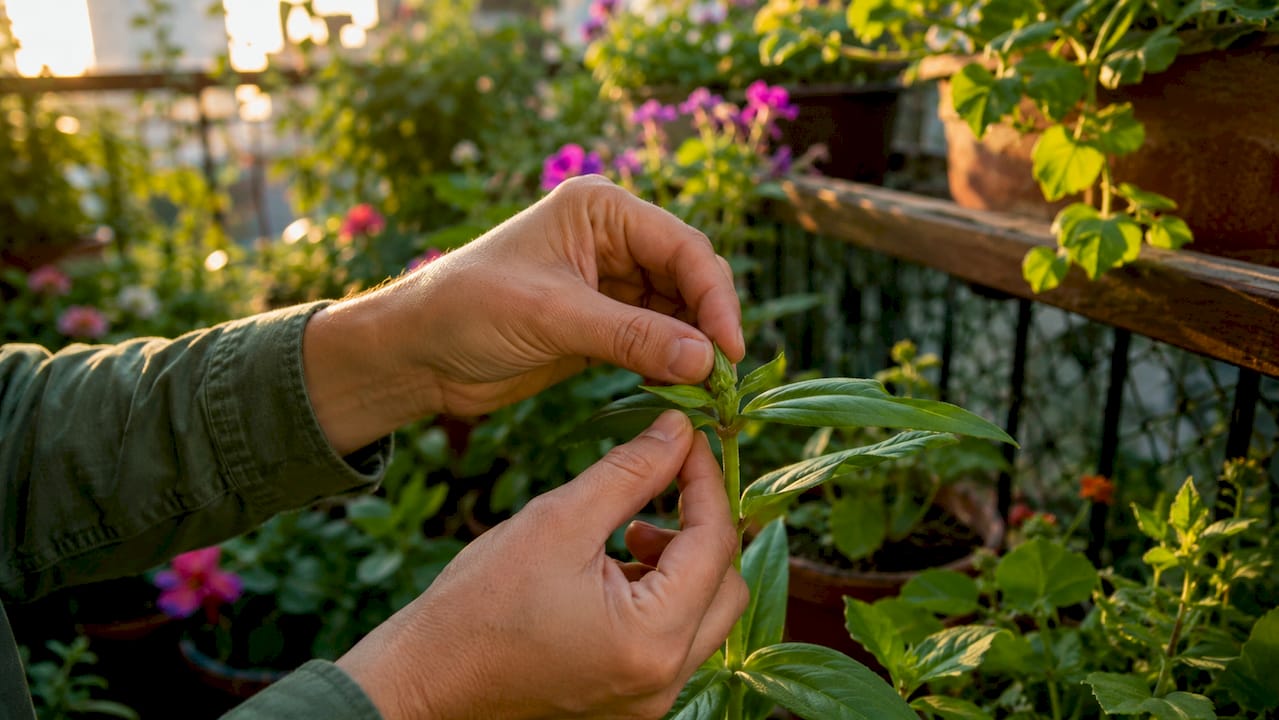
Pinching back plants is defined as the deliberate removal of a plant’s growing tip to redirect growth energy from a single central stalk into multiple lateral branches. This technique, formally called apical bud removal in horticulture, is the fastest way to turn a leggy, single-stemmed plant into a compact, floriferous one. Plants like basil, zinnias, chrysanthemums, and asters respond dramatically to pinching, producing more stems, more leaves, and more flowers than unpinched counterparts. The biology behind it involves a hormone called auxin, and once you understand how it works, you will never skip pinching again.
Why pinch back plants: the biology behind the technique
Pinching works because of a process called apical dominance. The growing tip of a plant, known as the apical bud, produces auxin, a hormone that suppresses the growth of buds lower on the stem. As long as the apical bud is intact, the plant channels most of its energy upward into a single shoot. Remove that tip, and auxin levels drop. The dormant lateral buds along the stem wake up and begin growing.
Removing the apical bud eliminates the auxin source, activating dormant lateral buds and producing compact, floriferous plants. That single action transforms a plant’s entire growth pattern. Instead of one tall stem, you get two, four, or even more branching shoots.
The effect is especially visible in zinnias and basil. Pinch a zinnia seedling once when it reaches 6 inches tall, and you can expect multiple flowering stems where one would have grown. Basil responds the same way: pinch the central flower spike before it opens, and the plant pushes out dense clusters of leaves from side shoots. Pinching can result in 5+ flowers versus one by redirecting growth energy into lateral shoots. That ratio alone makes pinching one of the highest-return techniques in the garden.
Pro Tip: Pinch just above a leaf node, not mid-stem. Cutting above a node gives lateral buds the clearest signal to activate and reduces the chance of a bare, dead stub.
Which plants benefit most from pinching?
Not every plant responds equally to pinching. The best candidates are soft-stemmed, actively growing plants that produce new growth from lateral buds. Woody shrubs and most root vegetables do not benefit and can be damaged by aggressive tip removal.
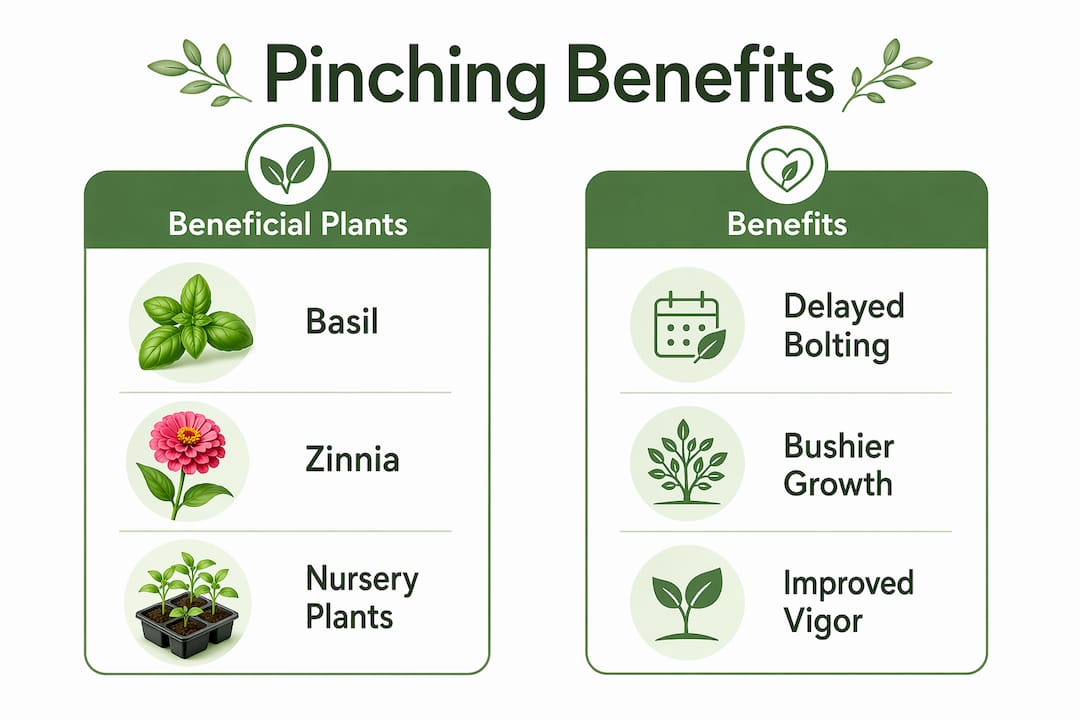
The strongest responders fall into two groups: herbs and flowering annuals or perennials.
Herbs that thrive with pinching:
- Basil bolts quickly in warm weather, sending up a flower spike that turns leaves bitter. Pinching the flower spike early increases leaf density and delays bolting by weeks.
- Mint spreads aggressively but grows tall and sparse without pinching. Regular tip removal keeps it bushy and productive.
- Lemon balm and oregano follow the same pattern, producing more harvestable leaf mass when pinched consistently.
Flowering plants that produce more blooms with pinching:
- Chrysanthemums and asters yield more blooms when pinched early in the season, before buds set.
- Zinnias branch freely after a single early pinch, creating a wider, fuller plant with a longer bloom window.
- Petunias and impatiens become leggy without pinching. A mid-season cutback restores their compact form and triggers a fresh flush of flowers.
Here is a quick comparison of pinching outcomes across common garden plants:
| Plant | Primary benefit of pinching | Best timing |
|---|---|---|
| Basil | Delays bolting, increases leaf yield | Before flower spike opens |
| Chrysanthemum | More flower buds per plant | Early summer, before bud set |
| Zinnia | More branching stems and flowers | When plant reaches 6 inches tall |
| Mint | Bushier, more productive growth | Throughout the growing season |
| Petunia | Prevents legginess, triggers rebloom | Mid-season as needed |
Nursery plants are another category worth noting. Pinching improves form and vigor of nursery-raised plants acclimating to new environments. When you bring home a leggy greenhouse plant, a quick pinch helps it settle into your garden conditions with a more balanced, stable structure.
When and how to pinch plants for best results
Timing is the most critical variable in pinching. Done too early, and the plant lacks the energy reserves to push new growth. Done too late, and you sacrifice flower buds that are already forming.
Follow these steps for consistent results:
- Start early. Begin pinching when the plant has at least three sets of leaves and is actively growing. For most annuals, this is when they reach 4–6 inches tall.
- Identify the growing tip. Look for the soft, new growth at the very top of the main stem or any dominant shoot.
- Choose your tool. Use clean fingers for soft stems to reduce pathogen risk. Woody or thicker stems require clean, sharp shears. Never use dull blades, which crush tissue and invite disease.
- Pinch just above a leaf node. Remove the top 1–2 inches of growth, cutting or pinching cleanly above a set of leaves.
- Repeat throughout the season. Most plants benefit from 2–3 pinching sessions. Stop pinching flowering plants 6–8 weeks before your first expected frost to allow buds to mature.
Pro Tip: Try staggered pinching for extended bloom displays. Pinch one-third of stems weekly over three weeks to stagger flowering and create a longer, sustained floral display rather than one concentrated flush.
Over-pinching is a real risk. Pinching only works on actively growing, non-woody stems. Pinching too late in the season or too aggressively can stress the plant, reduce yield, and prevent flowering entirely. Watch your plants after each pinch. If new lateral growth appears within 7–10 days, you timed it correctly.
What are the practical benefits of pinching beyond appearance?
Most gardeners pinch for aesthetics, but the technique delivers real structural and health benefits that go well beyond a fuller silhouette.
Stronger plant structure. Multiple lateral stems distribute the plant’s weight more evenly than a single central stalk. Pinched plants resist wind damage and heavy rain better than their unpinched counterparts. This is especially useful for tall-growing annuals like zinnias and dahlias in exposed garden beds.
Improved airflow and disease prevention. Better airflow from structured pinched growth prevents moisture buildup and fungal infections. Dense, unpinched canopies trap humidity, creating ideal conditions for botrytis, powdery mildew, and other fungal pathogens. A well-pinched plant with an open, branching structure dries faster after rain and resists these problems more effectively.
Higher fruit and flower quality. Pinching as a low-input strategy enhances canopy architecture and can increase fruit quality if timed correctly. In vegetable crops, removing early growth tips redirects energy into fewer, larger, higher-quality fruits rather than a sprawling mass of small ones. Tomato growers who remove suckers are practicing a form of pinching with exactly this goal.
Extended bloom time. A plant that branches freely produces flowers over a longer period than one that rushes to a single terminal bloom. For cut flower gardeners, this means more harvests from the same plant. For border gardeners, it means color from june through frost rather than a two-week peak.
Sustainable, low-input management. Pinching requires no chemicals, no fertilizers, and no specialized equipment. It is one of the most eco-friendly tools in a gardener’s kit. Paired with sustainable flower garden practices, regular pinching reduces the need for corrective pruning, staking, and replanting later in the season.
Key takeaways
Pinching back plants works because removing the apical bud suppresses auxin, activates lateral buds, and redirects growth energy into multiple branches for fuller plants and more flowers.
| Point | Details |
|---|---|
| Biological mechanism | Removing the apical bud drops auxin levels, waking dormant lateral buds for bushier growth. |
| Best plant candidates | Basil, mint, zinnias, chrysanthemums, and asters respond most strongly to pinching. |
| Optimal timing | Pinch when plants have 3+ leaf sets; stop 6–8 weeks before first frost for flowering plants. |
| Tool and technique | Use clean fingers on soft stems; use sharp, disinfected shears on thicker growth. |
| Benefits beyond looks | Pinching improves airflow, reduces fungal disease risk, and extends bloom time across the season. |
Pinching plants: what I have learned after years of getting it wrong
The fear of harming plants by pinching is the most common thing I see hold gardeners back. Fear of pinching damaging plants is misplaced. It is a deliberate strategy that sacrifices one short-term bloom for a long-term increase in yield. I pinched my first basil plant nervously, convinced I had ruined it. Within two weeks, it had doubled in width and was producing more leaves than I could use.
The mistake I made for years was pinching too late. I would wait until the plant looked established, which usually meant it had already set flower buds. Pinching at that stage removes the very thing you were trying to encourage. The rule I follow now: if the plant is taller than my hand, I am probably late.
I also underestimated staggered pinching. Gardeners can achieve professional-level extended bloom schedules uncommon in casual gardens by pinching one-third of stems at a time. I started doing this with my zinnia beds three seasons ago, and the difference in bloom continuity is striking. Instead of a three-week peak, I get color from early summer through october.
My honest recommendation: start with basil or zinnias. Both are forgiving, fast-growing, and show results within days. Once you see lateral buds push out after your first pinch, the technique clicks in a way no article can fully replicate. Experiment within the guidelines, watch how your specific plants respond, and adjust from there. Every garden is different, and your plants will tell you what they need.
Explore more plant care guides on Lushygardens
Pinching is one of the most rewarding techniques to add to your regular plant care routine, and it connects naturally to broader skills like pruning, propagation, and seasonal maintenance. If you are building your gardening knowledge from the ground up, the Gardening Basics for Beginners guide on Lushygardens covers the core techniques every gardener needs, including how to read plant growth signals and when to intervene. For those who want to go deeper into plant propagation and how pinching fits into the broader cycle of plant development, the plant propagation techniques guide is a natural next step. Lushygardens also publishes a seasonal maintenance guide that maps pinching schedules to the growing calendar, so you always know what to do and when.
FAQ
Why do you pinch back plants?
Pinching back plants removes the apical bud, which produces auxin and suppresses lateral growth. Without that hormonal signal, dormant side buds activate and the plant grows bushier with more flowers.
When is the best time to pinch plants?
Pinch plants when they have at least three sets of leaves and are actively growing, typically when they reach 4–6 inches tall. Stop pinching flowering plants 6–8 weeks before the first expected frost.
Can you pinch back plants with your fingers?
Yes. Clean fingers are the preferred tool for soft, young stems because they reduce the risk of transferring pathogens. Use sharp, disinfected shears only for thicker or woodier growth.
Does pinching back plants hurt them?
Pinching does not harm plants when done correctly on actively growing, non-woody stems. Over-pinching or pinching too late in the season can stress the plant and reduce flowering, so timing and moderation matter.
Which plants should not be pinched?
Woody shrubs, most root vegetables, and plants that bloom only on old wood (like lilacs) do not benefit from pinching and can be damaged by tip removal. Stick to soft-stemmed annuals, perennials, and herbs for best results.
Recommended
- Growing Plants from Cuttings: Easy Step-by-Step Success – Lushy Gardens
- Importance of Pruning – How It Transforms Plant Health – Lushy Gardens

I’m Eleanor, a seasoned gardener with over three decades of experience tending to Mother Nature’s creations. Through Lushy Gardens, I aim to share my wealth of knowledge and help fellow plant enthusiasts uncover the wonders of gardening. Let’s dive into this journey together, one leaf at a time.


