
Table of Contents
Most American indoor plant owners are shocked to discover that nearly 60 percent of common leaf drop cases are simply a natural survival strategy, not a sign of failure. When leaves start to pile up on the soil, worry can quickly replace the enjoyment of tending a green space. By understanding the truth behind leaf drop, American gardeners can swap frustration for practical solutions and help their plants flourish through even the toughest conditions.
Key Takeaways
| Point | Details |
|---|---|
| Understanding Leaf Drop | Leaf drop is a strategic survival mechanism, not a sign of plant failure; it helps plants conserve water and energy during stress. |
| Types of Leaf Loss | Different types of leaf loss, such as physiological and stress-induced, indicate varying underlying health conditions in indoor plants. |
| Environmental Triggers | Water, light, and temperature significantly influence leaf drop; gardeners should monitor these factors closely to maintain plant health. |
| Preventative Measures | Establish a consistent care routine and understand each plant’s needs to prevent unnecessary leaf drop from overwatering and environmental stressors. |
Leaf Drop Defined and Common Misconceptions
Leaf drop, scientifically known as abscission, is a sophisticated biological process that most indoor gardeners misunderstand. Far from being a random occurrence, it represents a strategic survival mechanism for plants. According to research from the Institute for Environmental and Energy Research (IERE), this process allows plants to conserve critical water and energy during challenging environmental conditions.
Contrary to popular belief, leaf drop is not a sign of plant failure but a carefully orchestrated response to environmental stress. When temperatures shift, daylight decreases, or moisture levels change, plants trigger hormonal signals that initiate leaf separation. During this process, the plant breaks down chlorophyll, revealing underlying pigment colors and effectively sealing off the leaf’s connection point to preserve internal resources.
Common misconceptions about leaf drop include viewing it as a purely negative event or assuming it indicates poor plant health. In reality, plants use this mechanism to protect themselves. Indoor gardeners often panic when leaves start falling, but understanding the biological mechanism can help transform anxiety into informed plant care. Different plant species have varying leaf drop patterns based on their native environments – tropical plants might behave differently from desert or temperate zone species.
Pro tip: Always observe the pattern and context of leaf drop rather than immediately assuming something is wrong with your plant.
Types of Leaf Loss in Indoor Plants
Indoor plants experience several distinct types of leaf loss, each signaling different underlying health conditions. Physiological leaf drop represents a natural process where plants intentionally shed leaves as part of their growth and adaptation cycle. This type of leaf loss occurs most commonly in seasonal changes or when plants transition between growth phases.
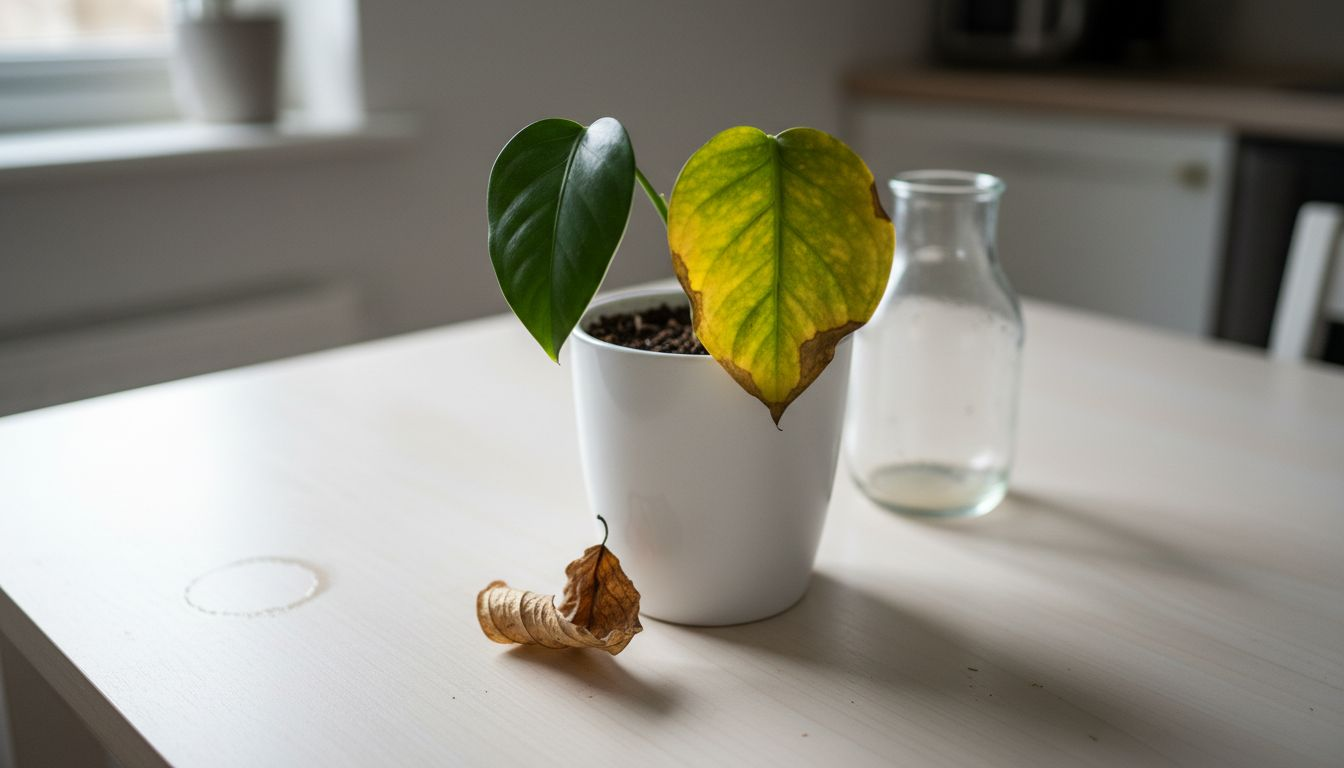
Another critical type is stress-induced leaf drop, which happens when plants encounter environmental challenges. Factors like sudden temperature changes, inadequate humidity, or improper watering can trigger this response. Pruning techniques for indoor plants can help mitigate some stress-related leaf loss by maintaining plant structure and reducing unnecessary energy expenditure.
Nutritional and pathological leaf loss represent more serious concerns for indoor gardeners. Nutritional leaf drop occurs when plants lack essential minerals or experience imbalanced soil conditions, causing leaves to yellow and fall prematurely. Pathological leaf loss stems from fungal infections, bacterial diseases, or pest infestations that damage plant tissue and force leaves to detach as a survival mechanism. These types of leaf loss often require immediate intervention to prevent complete plant deterioration.
Here’s a quick comparison of leaf drop types and their main causes:
| Leaf Drop Type | Main Cause | Typical Symptoms | Required Action |
|---|---|---|---|
| Physiological | Natural growth cycle | Gradual leaf yellowing | Routine care, observation |
| Stress-Induced | Environmental changes | Sudden leaf loss | Adjust care conditions |
| Nutritional | Mineral deficiencies | Pale or yellow leaves | Amend soil, fertilize |
| Pathological | Disease or pests | Spots, rapid drop | Disease control, inspection |
Pro tip: Conduct a weekly visual inspection of your plants to catch early signs of leaf loss and address potential issues before they become severe.
How the Abscission Process Works
The abscission process is a sophisticated biological mechanism that allows plants to strategically shed plant organs like leaves, flowers, and fruits. Detailed scientific research reveals a complex sequence of histological and hormonal changes that precisely control this intricate separation process. At its core, abscission involves the development of a specialized abscission zone where cells are programmed to break down in a controlled manner.
Hormonal signaling plays a critical role in triggering the abscission mechanism. Two key plant hormones, auxin and ethylene, work in concert to initiate and coordinate leaf separation. When environmental conditions or plant health signals indicate the need for leaf removal, ethylene levels increase while auxin concentrations decrease. This hormonal shift activates specific enzymes that begin breaking down cell wall structures in the abscission zone, creating a precise separation point.
The final stage of abscission involves complex cellular transformations. Specialized enzymatic processes gradually weaken the cell walls connecting the leaf to the plant stem, creating a clean break point. This carefully orchestrated process not only allows for leaf removal but also includes an immediate wound sealing mechanism. The plant simultaneously creates a protective barrier at the separation site, preventing potential infections and minimizing water loss. This demonstrates the remarkable evolutionary adaptation that enables plants to respond dynamically to changing environmental conditions.
Pro tip: Monitor your plants’ hormone balance and environmental conditions to understand and predict potential leaf drop patterns.
Major Triggers: Water, Light, and Temperature
Indoor plants are remarkably sensitive to environmental fluctuations, with water, light, and temperature serving as primary triggers for leaf drop. Scientific research demonstrates that variations in these environmental parameters can profoundly impact plant biomass and physiological responses, making them critical factors in understanding leaf loss mechanisms.
Water stress emerges as a significant catalyst for leaf drop. When plants experience inconsistent watering patterns, they respond by shedding leaves to conserve energy and reduce water loss. Overwatering can be equally damaging, causing root rot and disrupting the plant’s ability to absorb nutrients, which ultimately triggers protective leaf drop. Different plant species have varying water tolerance levels, requiring gardeners to understand each plant’s unique hydration requirements.
Light and temperature interactions represent another complex trigger for leaf loss. Sudden changes in light intensity or duration can shock plants, causing them to drop leaves as a survival mechanism. Indoor plants typically require stable light conditions that mimic their native environments. Temperature fluctuations compound this stress, with rapid shifts between warm and cool temperatures disrupting the plant’s metabolic processes and hormonal balance. Tropical plants, for instance, are particularly sensitive to temperature variations, often responding with immediate leaf drop when ambient conditions become unpredictable.
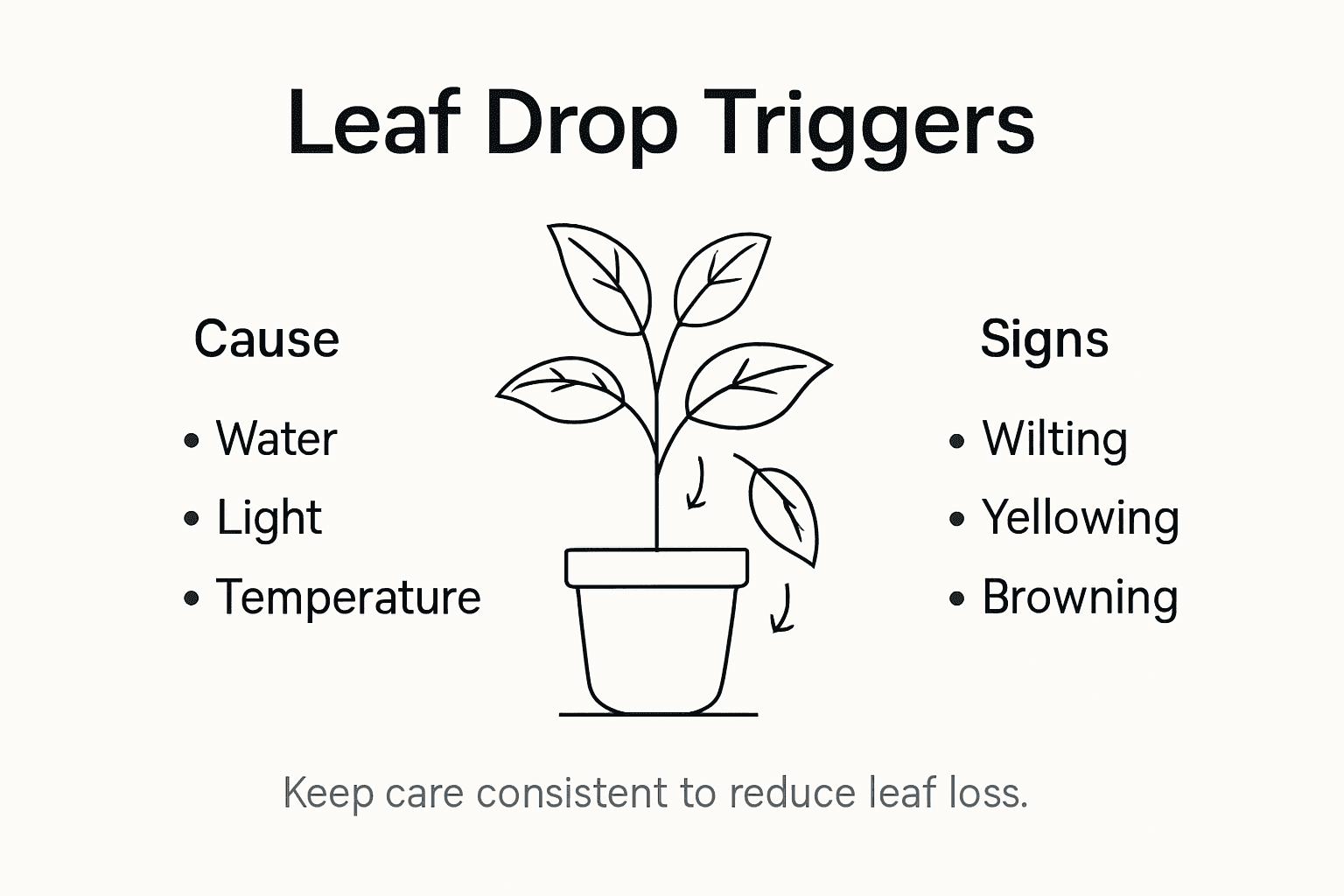
Here’s a summary of major environmental triggers and their impact on indoor plants:
| Trigger | Impact on Plant | Signs to Watch |
|---|---|---|
| Water stress | Conserves moisture | Leaf wilting, drop |
| Light changes | Alters photosynthesis | Pale or scorched leaves |
| Temperature | Disrupts metabolism | Drooping, sudden loss |
Pro tip: Create a consistent microclimate for your indoor plants by positioning them away from drafty windows, heating vents, and air conditioning units to minimize sudden environmental changes.
Pest, Disease, and Physical Stress Factors
Comprehensive research on indoor plant health reveals that pests, diseases, and physical stresses represent significant threats to plant vitality, often manifesting through dramatic leaf drop. Pest infestations emerge as a primary culprit, with microscopic invaders like aphids, spider mites, and mealybugs systematically weakening plant structures and disrupting normal physiological processes.
Plant diseases represent another critical factor in leaf loss, with fungal infections, bacterial pathogens, and viral attacks compromising plant immune responses. Root rot, leaf spot diseases, and systemic infections can rapidly progress, causing plants to shed leaves as a defensive mechanism. Molecular plant pathology research demonstrates that plants activate complex physiological defense mechanisms when confronting these biological threats, often resulting in strategic leaf removal to prevent complete system collapse.
Physical stress factors include mechanical damage, improper handling, sudden environmental changes, and inappropriate care techniques. Continuous bumping, inappropriate pruning, temperature shock, and dramatic humidity shifts can trigger immediate leaf drop. Indoor gardeners must recognize that plants respond to physical trauma much like living organisms, using leaf shedding as a protective response to minimize further damage and conserve internal resources.
Pro tip: Implement a weekly plant inspection routine to catch early signs of pest activity, disease progression, or physical stress before they lead to extensive leaf loss.
Avoiding Common Leaf Drop Mistakes Indoors
Indoor plant care requires nuanced understanding to prevent unnecessary leaf drop. Indoor plant care fundamentals reveal that many gardeners inadvertently trigger leaf loss through common misconceptions and reactive maintenance strategies. Overwatering stands as the most prevalent mistake, with well-intentioned gardeners drowning plant roots and creating conditions that force protective leaf shedding.
Temperature and light management represent another critical area where indoor gardeners frequently err. Positioning plants near heating vents, air conditioning units, or drafty windows creates sudden environmental shifts that shock plant systems. Many tropical and subtropical plants require stable microclimates with consistent temperature and humidity, and abrupt changes can trigger stress responses leading to rapid leaf drop. Understanding each plant’s specific environmental tolerances becomes crucial for preventing unnecessary leaf loss.
Improper nutrient management and soil conditions further contribute to leaf drop problems. Using incorrect potting soil, neglecting periodic fertilization, or failing to refresh nutrients can weaken plant health. Some gardeners mistakenly apply fertilizers inconsistently or in inappropriate concentrations, creating physiological stress that compels plants to sacrifice leaves as a survival mechanism. Recognizing that each plant species has unique nutritional requirements is key to maintaining robust indoor plant health and minimizing unexpected leaf loss.
Pro tip: Develop a consistent plant care routine that includes weekly visual inspections, documenting each plant’s specific environmental needs and growth patterns.
Take Control of Leaf Drop with Expert Indoor Plant Care
Understanding why your plants drop leaves is one of the first steps toward healthier indoor gardening. This article highlights the complex process of abscission and shows how environmental stress, pests, and improper care can cause leaf loss. If you feel overwhelmed when your plants shed leaves suddenly or you want to prevent stress-induced and nutritional leaf drop, you are not alone. Many indoor gardeners struggle with balancing water, light, and temperature to keep plants thriving.
Explore our dedicated Plant Care – Lushy Gardens section to discover practical tips tailored for indoor gardeners. Learn how to create a stable environment and master watering and lighting techniques that minimize leaf drop. If pests or diseases are causing damage, our Pest & Disease Management – Lushy Gardens resources offer trusted advice to protect your plants. Don’t wait for leaf problems to worsen. Visit Lushy Gardens now to empower your indoor gardening journey with expert guidance and actionable solutions.

Frequently Asked Questions
What causes leaf drop in indoor plants?
Leaf drop in indoor plants can be caused by a variety of factors including changes in water availability, light intensity, temperature fluctuations, and nutrient deficiencies. Each plant species has its own tolerance levels, and understanding these is key to preventing unnecessary leaf loss.
Is leaf drop a sign that my plant is unhealthy?
Not necessarily. Leaf drop, known as abscission, is a natural defense mechanism plants use to conserve resources during stressful environmental conditions. While excessive leaf drop can indicate problems, some leaf loss is a normal part of a plant’s growth cycle.
How can I prevent stress-induced leaf drop in my indoor plants?
You can prevent stress-induced leaf drop by maintaining consistent watering practices, avoiding sudden changes in light and temperature, and ensuring your plants are placed in suitable environments that mimic their native conditions. Regular care and observation are also essential.
What should I do if my plant is dropping leaves due to a pest infestation?
If you suspect that pests are causing leaf drop, inspect your plant for signs of infestation like spots or damage. Take appropriate measures such as quarantining the plant, applying insecticidal soap, or using neem oil to manage the problem. Regular inspections can help catch infestations early.
Recommended
- 8 Essential Indoor Plant Care Tips for Every Gardener – Lushy Gardens
- Watering Indoor Plants Made Easy: Your Step-by-Step Guide – Lushy Gardens
- Problems With Yellowing Leaves – Causes and Solutions – Lushy Gardens
- How to Clean Plant Leaves? – Lushy Gardens

I’m Eleanor, a seasoned gardener with over three decades of experience tending to Mother Nature’s creations. Through Lushy Gardens, I aim to share my wealth of knowledge and help fellow plant enthusiasts uncover the wonders of gardening. Let’s dive into this journey together, one leaf at a time.


