
Table of Contents
TL;DR:
- Most flowering plants depend on animal pollinators for reproduction, impacting crop yields and biodiversity. Supporting native plants, reducing pesticides, and providing nesting habitats enhance pollinator health and garden productivity. Declines in pollinator populations threaten ecosystem stability and global food quality.
Most gardeners know bees visit flowers, but fewer understand why plants need pollinators at a biological level. The relationship goes far beyond a pretty scene in the garden. Roughly 90% of crop species and countless wild plants depend on animal pollinators to reproduce at all. Without them, fruit sets drop, seed banks thin out, and entire plant communities begin to unravel. This article covers the biology behind pollination, the measurable effects pollinators have on fruit quality and nutrition, and what their decline means for ecosystems and your food supply.
Table of Contents
- Key takeaways
- Why plants need pollinators: the basic biology
- How pollinators affect fruit quality and nutrition
- Ecological significance: pollinators and plant biodiversity
- Threats to pollinators and what it costs plants
- How gardeners can support pollinators
- My perspective on what the science actually means for gardeners
- Grow more by supporting what pollinates your plants
- FAQ
Key takeaways
| Point | Details |
|---|---|
| Pollinators drive reproduction | Most flowering plants cannot set viable seed without animal-assisted pollen transfer. |
| Quality, not just quantity | Animal pollination improves fruit quality by up to 30%, affecting taste, minerals, and macronutrients. |
| Biodiversity depends on them | Excluding pollinators from a prairie reduced seed output by 50% and plant species diversity by 27%. |
| Threats are already measurable | Pesticides and climate shifts impair pollinator behavior before population numbers even drop. |
| Gardeners have real leverage | Planting native flowers and reducing pesticide use creates measurable gains in pollinator visits and plant health. |
Why plants need pollinators: the basic biology
Pollination is the transfer of pollen from the anther of one flower to the stigma of another, which triggers fertilization and seed development. Botanists distinguish between two broad modes: self-pollination, where pollen lands on the same plant’s stigma, and cross-pollination, where pollen travels between genetically distinct individuals. Cross-pollination almost always produces more vigorous offspring, greater genetic diversity, and better seed viability.
For the majority of flowering plants, getting pollen from plant A to plant B requires a courier. That courier is usually an animal.
Common pollinators include:
- Bees (wild and managed): the most efficient and widespread pollinators for most crop species
- Butterflies and moths: effective at transferring pollen between plants of the same species
- Beetles: among the oldest pollinators evolutionarily, favoring bowl-shaped flowers
- Flies: critical pollinators in high-altitude and cold-climate ecosystems
- Birds (especially hummingbirds): key for tubular, red-hued flowers
- Bats: primary night pollinators for many tropical and subtropical plants
Plants do not passively wait. Floral traits like color, nectar volume, and scent actively attract specific pollinators, creating specialized relationships built over millions of years of co-evolution. A hawkmoth and a night-blooming white flower with deep nectar tubes are not a coincidence. They evolved together.
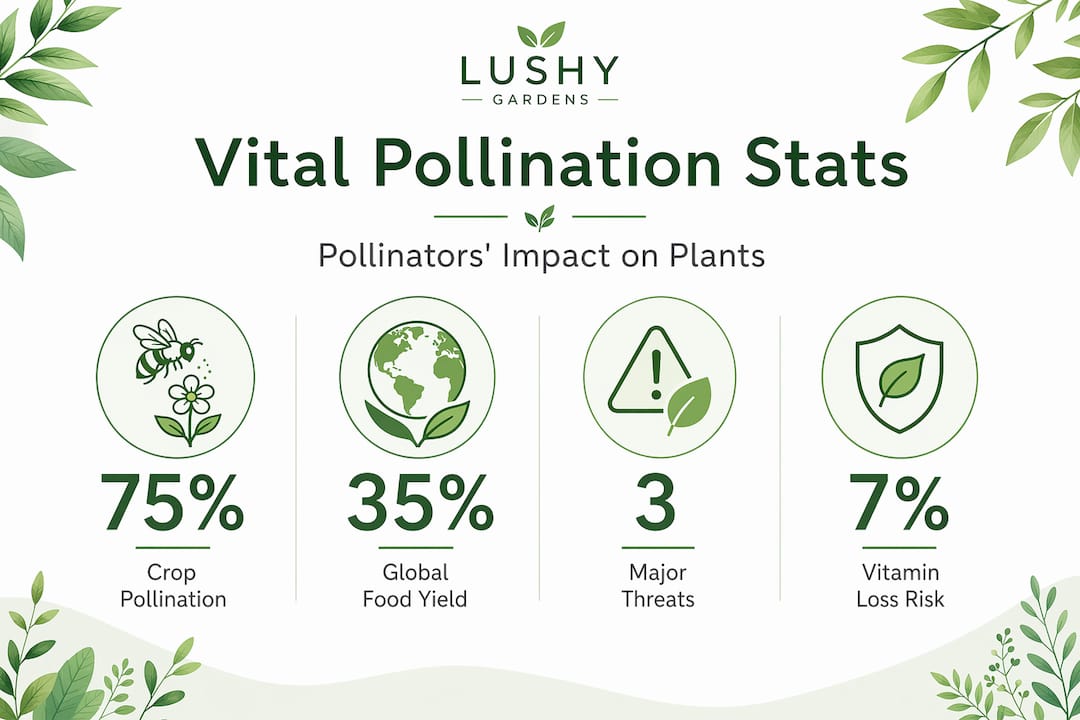
Pollinators contribute to 75% of cultivated plant pollination, which translates directly to 35% of global crop production. That figure is not a projection. It reflects what already happens every growing season on farms worldwide.
How pollinators affect fruit quality and nutrition
Most people think of pollination as a yes-or-no event: either a fruit forms or it doesn’t. The reality is more interesting. Pollinator activity shapes the character of the fruit, not just its existence.
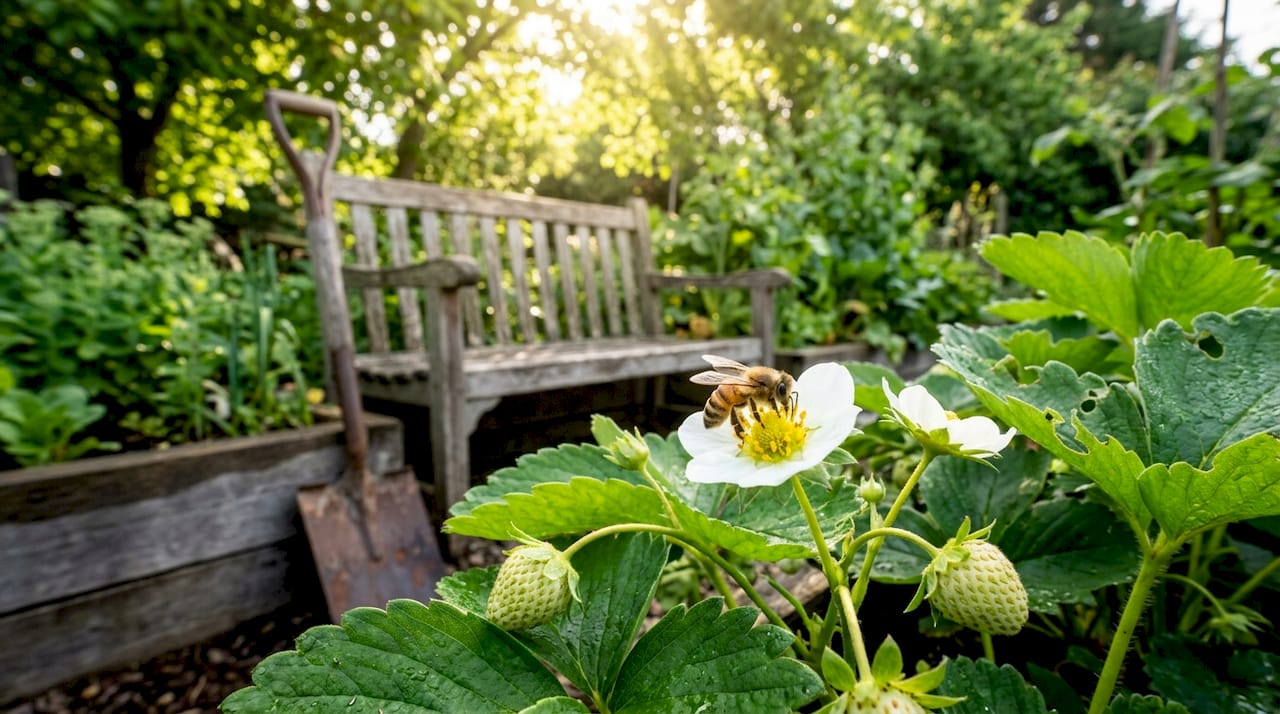
Animal pollination increases fruit quality by around 30%, measured through organoleptic properties like taste, texture, and appearance. That improvement reflects a more complete fertilization process, where more ovules are successfully fertilized, producing fuller, better-shaped fruit.
The nutritional dimension is equally striking:
- Mineral content: pollinator diversity affects calcium, magnesium, and potassium levels in fruit
- Macronutrients: protein and lipid profiles in seeds shift depending on which pollinator species visit
- Vitamins: pollinating insects contribute over 20% of people’s intake of vitamins E, A, and folate
This is not just about having more strawberries. It is about having strawberries that are nutritionally complete.
The interaction is actually a three-way system: pollinator species, pollen genotype, and plant cultivar all interact to determine final yield and quality. Swap one element out and the output changes. A garden with only one pollinator species visiting will consistently underperform compared to a garden with five or six species.
Pro Tip: If you grow tomatoes, squash, or blueberries, consider which pollinators actually visit your flowers. Bumblebees perform “buzz pollination” (sonication) that releases pollen from tomato anthers far more effectively than honeybees. Hosting bumblebees is not optional for peak tomato yield. It’s structural.
Ecological significance: pollinators and plant biodiversity
The relationship between pollinators and plants is genuinely reciprocal, and the consequences of breaking it run deep. A four-year prairie restoration experiment showed exactly how deep. Protecting wildflowers from pollinators reduced seed production by 50% and plant species diversity by 27%. Those numbers describe a prairie that is quietly hollowing out while still looking green.
Ecologists call the feedback loop the “plant-pollinator extinction vortex.” Fewer pollinators mean fewer plant species. Fewer plant species mean fewer floral resources for pollinators, which drives pollinator decline further. Each step down the spiral makes recovery harder.
| Scenario | Seed production | Plant species diversity |
|---|---|---|
| Pollinators present | Baseline (100%) | Full diversity |
| Pollinators excluded | Reduced by 50% | Reduced by 27% |
The effects extend beyond plant counts. Pollinators maintain soil quality indirectly through the root systems and leaf litter of the plant communities they support. Water retention, nutrient cycling, and habitat structure all degrade when plant diversity drops. Diverse landscapes attract more pollinators, and those pollinators maintain the plant diversity that keeps the landscape complex. Remove either side and the system destabilizes.
“Pollinator decline triggers a feedback loop: fewer pollinators reduce plant diversity, which then further reduces pollinator resources, risking ecosystem collapse.” — Iowa State University research summary
This is why understanding the importance of pollinators matters beyond any single garden or farm.
Threats to pollinators and what it costs plants
Three forces are currently reshaping plant-pollinator relationships at scale: climate change, pesticide use, and habitat loss. Each is measurable. Together, they compound.
Climate disruption shifts the timing of flower bloom and pollinator emergence out of sync. When a plant flowers two weeks early but its primary pollinator hasn’t emerged yet, the flowers produce no seed that season. Repeat that mismatch across thousands of plant populations and the genetic diversity of wild plant communities erodes noticeably within decades.
Pesticides are more complex than most people realize. The obvious concern is acute toxicity, where pesticides kill pollinators outright. The less obvious and arguably larger problem is sublethal effects. Pesticides impair foraging behavior, memory, and navigation before they kill. A bee that visits a flower but cannot effectively carry or deposit pollen is performing flower visitation, not pollination. The distinction matters enormously for plant reproduction.
Research shows that pollinator impairments often precede population declines. By the time population counts drop, functional pollination services have already been degraded for years.
The human cost is direct. If pollinator decline continues at current rates, projections show a 7% decline in key vitamin intake by 2030 for populations that depend on animal-pollinated crops. Farming income in pollinator-dependent sectors faces comparable pressure.
Pro Tip: When you read that a region “still has healthy pollinator populations,” check whether the metric is population counts or functional pollination rates. They are different measurements, and only the second one tells you whether plant reproduction is actually happening.
How gardeners can support pollinators
Supporting pollinators does not require a large property or a formal conservation program. Measurable impact starts at the garden scale.
- Plant native flowering species. Native plants co-evolved with local pollinators and provide the right nectar chemistry, bloom timing, and flower morphology. Exotic ornamentals often attract pollinators visually but deliver little nutritional value. Browse pollinator-friendly plant picks for region-specific options.
- Stagger bloom times across the growing season. A garden that only flowers in June leaves pollinators without resources from July through frost. Aim for continuous bloom from early spring through late fall.
- Reduce or eliminate insecticide use. Even “targeted” applications affect non-target pollinators. Where pest control is genuinely necessary, time applications to avoid open flowers and active pollinator hours (typically midday).
- Add nesting habitat. Most wild bee species are ground-nesters. Leaving patches of bare or lightly mulched soil supports them directly. Hollow stems and simple wood blocks with drilled holes support cavity-nesting species.
- Create density. Pollinators forage more efficiently when flowers are massed together. Single scattered plants attract fewer visits than a grouped planting of the same size.
Pro Tip: Before you buy plants marketed as “pollinator-friendly,” check whether they are cultivars with doubled petals or significantly modified flower structure. Many popular garden cultivars like double-flowered coneflowers have been bred in ways that block access to nectar and pollen entirely. The original straight species is almost always more useful to pollinators than the ornamental version.

My perspective on what the science actually means for gardeners
I’ve spent enough time watching plant-pollinator dynamics in real gardens to say something that most articles avoid: the gap between what we know scientifically and what we actually do in our gardens is embarrassing.
We know pollinator diversity matters more than pollinator presence. We know sublethal pesticide effects are degrading plant reproduction in treated gardens even when bees are visible. We know that a garden with five native flowering species supports a fraction of the pollinator diversity that a garden with twenty does. And yet most gardeners still think that having a patch of lavender and avoiding the most obvious sprays is “doing their part.”
What I’ve found in practice is that the gardens with the richest pollinator activity and the best fruit set share a few characteristics: structural complexity, bloom continuity, and genuine restraint with any chemical input. Not partial restraint. Near-total restraint, with mechanical controls substituted wherever possible.
The ecological feedback loops described in the Iowa State research are not abstract. I’ve watched a neglected meadow section of a garden recover plant diversity over three years simply because pollinators returned when mowing frequency dropped. The plants were already there as a seed bank. The pollinators were the missing trigger.
What I find most compelling about recent research is the reframing of pollination as a quality process, not just a delivery event. A plant can attract pollinators and still fail to set viable seed if the pollinators are functionally impaired. That’s the insight that should change how every gardener thinks about garden biodiversity and chemical management simultaneously.
— Povilas
Grow more by supporting what pollinates your plants
If this article has you thinking differently about what your garden actually needs, Lushygardens has resources to help you act on that. The beginners’ gardening guide covers how to build a productive, pollinator-supportive garden from the ground up, including plant selection, soil preparation, and layout principles that attract diverse visitors. For gardeners who already have established beds, the seasonal maintenance guide walks through how to manage each part of the year with pollinator health factored in. Both guides are written for real gardeners, not abstract ecological theory, and they connect directly to the biology covered here.
FAQ
Why can’t most plants just self-pollinate?
Many plants have evolved mechanisms that actively prevent self-pollination, including physical separation of anthers and stigmas and biochemical self-incompatibility systems. Cross-pollination through animal pollinators produces more genetically diverse, vigorous offspring.
How do pollinators affect fruit quality, not just fruit set?
Animal pollination improves fruit quality by up to 30% through more complete fertilization, affecting texture, taste, mineral content, and macronutrient profiles. Pollinator diversity determines which aspects of quality are optimized.
What is the plant-pollinator extinction vortex?
It is the feedback loop where declining pollinators reduce plant diversity, which then reduces floral resources for pollinators, accelerating further decline. A four-year prairie experiment demonstrated this clearly by showing 50% seed loss and 27% species reduction when pollinators were excluded.
Are pesticide effects on pollinators only about killing bees?
No. Sublethal pesticide effects like impaired navigation, foraging ability, and memory reduce effective pollen transfer even when pollinators survive. Functional pollination declines before population numbers drop visibly.
Which pollinators matter most for home vegetable gardens?
Bumblebees are particularly effective for tomatoes, peppers, and squash because they perform buzz pollination that releases pollen more completely than other species. Native solitary bees often outperform managed honeybees for many garden crops in terms of pollination efficiency per visit.
Recommended
- Planting for Pollinators: Boost Your Garden Biodiversity – Lushy Gardens
- 7 Must-Have Pollinator Friendly Plants for Urban Gardens – Lushy Gardens
- How bees transform your garden: Bigger harvests, more life – Lushy Gardens
- Importance of Pollinators: Boosting Garden Health and Yield – Lushy Gardens

I’m Eleanor, a seasoned gardener with over three decades of experience tending to Mother Nature’s creations. Through Lushy Gardens, I aim to share my wealth of knowledge and help fellow plant enthusiasts uncover the wonders of gardening. Let’s dive into this journey together, one leaf at a time.


