
Table of Contents
Did you know that having real indoor plants around you can improve your memory retention by up to 20%? As more people seek natural ways to enhance their living spaces and overall wellness, the connection between indoor greenery and health continues to gain scientific support. This guide explores the evidence-based health benefits of indoor plants and provides practical advice to help you choose and care for species that can genuinely improve your home environment and well-being.
Key takeaways
| Point | Details |
|---|---|
| Stress reduction and cognitive boost | Indoor plants lower cortisol, heart rate, and blood pressure while improving memory and concentration by up to 20%. |
| Air quality and comfort improvements | Plants filter pollutants, increase humidity through evapotranspiration, and can reduce perceived indoor temperature by 2°C. |
| Smart selection and maintenance | Choose 5-10% indoor coverage with species suited to your light and care capabilities for sustained benefits. |
| Realistic expectations matter | Air purification effects are modest and dependent on conditions; overcrowding plants can actually reduce positive impacts. |
Introduction to indoor plants and health
Indoor plants have surged in popularity for both aesthetic appeal and health benefits. These are living plants cultivated inside homes and offices, ranging from compact succulents to lush ferns and air-purifying species like snake plants and pothos. The growing interest in holistic health has driven renewed attention to how greenery in our living spaces affects physical and mental wellness.
Historically, cultures worldwide used plants for healing and emotional comfort. Ancient Egyptians grew plants indoors for medicinal purposes, while Victorian households filled conservatories with exotic species believed to improve air and mood. Modern scientific research now confirms many of these traditional beliefs. Studies demonstrate measurable benefits including:
- Reduced stress hormones and lower blood pressure
- Enhanced cognitive function and memory retention
- Improved indoor air quality through pollutant filtration
- Increased humidity for respiratory comfort
- Positive effects on mental health through horticultural therapy
Exploring indoor plants for wellbeing reveals that these benefits extend beyond folklore. The following sections dive into the mechanisms behind these effects and how you can harness them in your own space.
How indoor plants improve health: mechanisms explained
Understanding how plants deliver health benefits helps you maximize their positive impact. The mechanisms are biological, psychological, and environmental, all working together to create healthier indoor spaces.
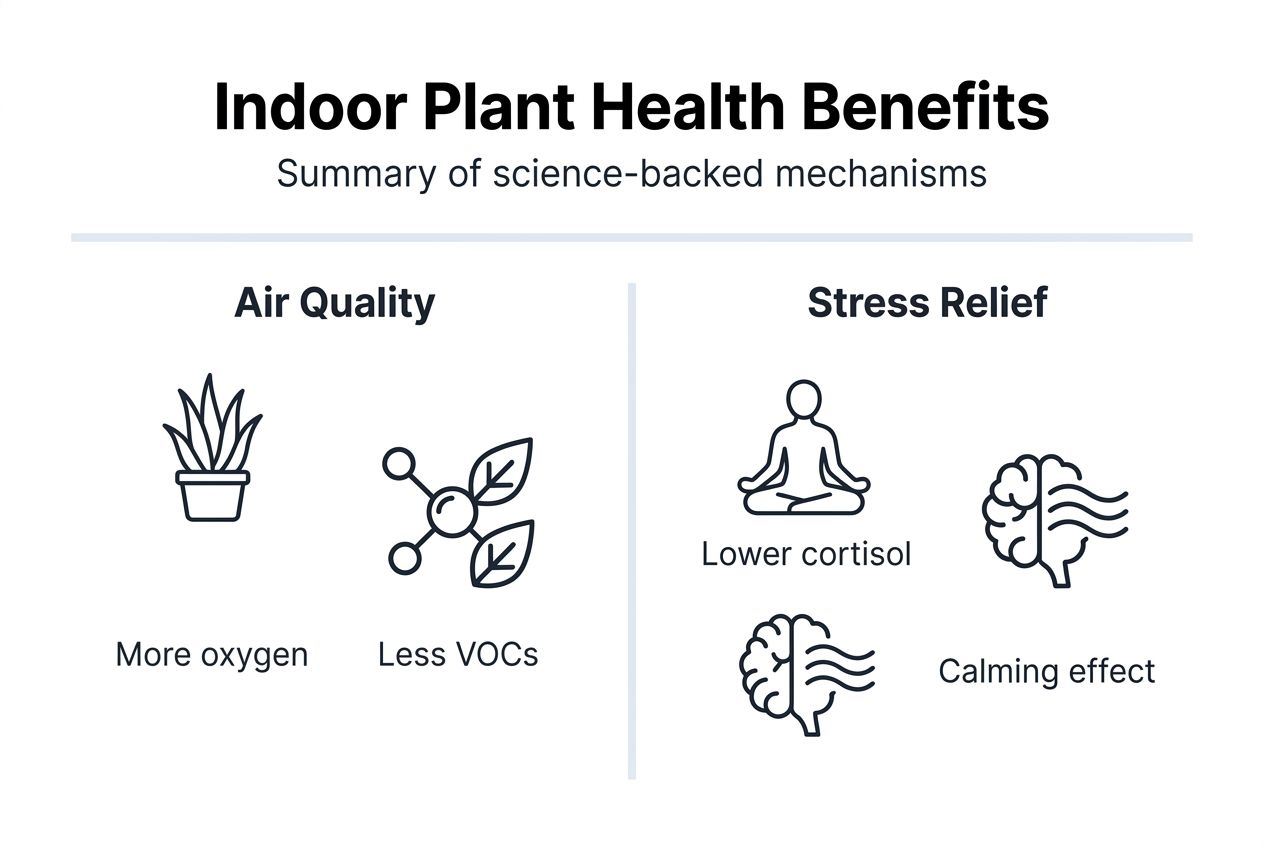
Stress reduction happens through multiple pathways. Interacting with plants or simply viewing greenery lowers cortisol levels, the primary stress hormone. Heart rate and blood pressure drop measurably when people spend time around living plants compared to artificial ones or bare spaces.

Air quality improvement occurs as plants absorb carbon dioxide and release oxygen through photosynthesis. More importantly, certain species filter volatile organic compounds (VOCs) like formaldehyde, benzene, and toluene from indoor air. These pollutants come from furniture, cleaning products, and building materials.
Indoor plants naturally increase humidity through evapotranspiration, the process where water absorbed by roots is released through leaves as vapor. This is especially beneficial in dry indoor environments, improving respiratory comfort and skin hydration. Research shows that large indoor greening systems reduce perceived temperature by up to 2°C, enhancing thermal comfort without energy costs.
Beyond air and temperature, plants improve indoor microbiome diversity by introducing environmental microbes that may support immune health. This effect mirrors the benefits of spending time outdoors, bringing nature’s microbial diversity into your home.
Pro Tip: Position plants near air vents or windows to maximize airflow around leaves, enhancing evapotranspiration and air filtration effects. Grouping several plants together creates a microclimate that amplifies humidity and temperature benefits.
For those interested in optimizing air quality specifically, exploring indoor house plants air quality options can help you select species with proven filtration capabilities.
Proven health benefits of indoor plants
Scientific studies provide concrete evidence of how indoor plants improve health. These aren’t subtle effects but measurable improvements you can experience with the right plant choices and care.
Indoor plants reduce physiological and psychological stress through documented decreases in heart rate, blood pressure, and cortisol. One study found that people performing computer tasks in rooms with plants showed significantly lower stress responses than those in plant-free environments. The calming effect is both visual and biochemical, with plant compounds called phytoncides potentially contributing to relaxation.
Cognitive enhancement is another remarkable benefit. Research demonstrates that real indoor plants improve attention and concentration by up to 20% compared to artificial plants or no plants at all. Memory retention, task completion speed, and creative problem solving all improve in green environments. This makes plants particularly valuable in home offices and study spaces.
Studies show that indoor plant exposure can reduce stress hormone levels by up to 30% while simultaneously boosting memory performance by 20%, creating a dual benefit for mental performance and emotional well-being.
Mental health benefits extend to clinical applications. Horticultural therapy using indoor plants effectively improves depression and anxiety in structured therapeutic settings. The act of caring for plants provides purpose, routine, and tangible evidence of nurturing, which supports emotional healing.
Key health benefits ranked by impact:
- Stress relief through cortisol reduction and heart rate stabilization
- Cognitive enhancement including memory, attention, and creativity
- Mental health support via horticultural therapy and mood improvement
- Respiratory comfort from increased humidity and cleaner air
- Immune support through enhanced indoor microbiome diversity
The benefits of indoor plants guide offers additional insights into how different species deliver specific advantages based on your health priorities.
Common misconceptions and limits of indoor plant health benefits
While indoor plants offer genuine benefits, understanding their limitations prevents disappointment and helps you set realistic expectations.
One widespread myth suggests that more plants always equals better health outcomes. In reality, overplanting can overwhelm your space and create stress rather than relief. Too many plants increase maintenance demands, can harbor pests if neglected, and may make spaces feel cluttered rather than calm. Balance matters more than quantity.
Another misconception centers on air purification. While plants do filter some pollutants, air purification effects are limited and depend heavily on species, light availability, and airflow. A single plant won’t meaningfully clean the air in a large room. You need multiple well-maintained plants in optimal conditions to see measurable air quality improvements.
Common myths corrected:
- Myth: Any plant will purify your air dramatically. Reality: Species vary widely in filtration ability, and effects are modest without proper density and care.
- Myth: Plants release dangerous levels of carbon dioxide at night. Reality: Nighttime CO2 release is negligible and poses no health risk in normal home settings.
- Myth: Artificial plants provide the same benefits as real ones. Reality: Studies consistently show real plants deliver cognitive and stress benefits that artificial versions cannot replicate.
- Myth: All plants are safe for homes with pets and children. Reality: Many common houseplants are toxic if ingested, requiring careful selection for safety.
Proper plant care is essential for sustained benefits. Neglected plants with pest infestations, fungal growth, or dying leaves can worsen indoor air quality and create stress rather than relief. Understanding these limitations helps you approach indoor gardening with informed expectations.
For evidence-based guidance on realistic plant benefits, see how houseplants cut indoor pollutants 70 boost well being under specific conditions.
Choosing and caring for indoor plants to maximize health
Selecting appropriate plants and maintaining them properly ensures you receive maximum health benefits without unnecessary complications.
When choosing plants, consider these criteria:
- Air purification ability: Species like spider plants, snake plants, and pothos excel at filtering common indoor pollutants
- Ease of care: Low-maintenance varieties suit busy lifestyles and reduce stress from demanding upkeep
- Light adaptability: Match plants to your available natural light to prevent struggling specimens
- Non-toxicity: If you have pets or children, prioritize safe species like spider plants and Boston ferns
Research shows certain plant species reduce VOCs by 20-30% under optimal conditions, making species selection critical for air quality goals.
| Plant Species | Primary Benefits | Care Level | Ideal Environment |
|---|---|---|---|
| Spider Plant | VOC filtration, humidity boost | Easy | Moderate indirect light, tolerates neglect |
| Snake Plant | Night oxygen release, low water needs | Very Easy | Low to bright indirect light, infrequent watering |
| Peace Lily | Air purification, aesthetic appeal | Moderate | Low to medium light, consistent moisture |
| Aloe Vera | Air cleaning, medicinal gel | Easy | Bright indirect light, infrequent watering |
For plant density, aim for approximately 5-10% coverage of your indoor space. This typically means one medium plant per 100 square feet or several smaller plants distributed throughout a room. This range provides measurable benefits without overwhelming your maintenance capacity or living space.
Essential care practices for sustained health benefits:
- Water based on species needs, checking soil moisture rather than following rigid schedules
- Provide adequate light by placing plants near windows or using grow lights for low-light spaces
- Clean leaves monthly to remove dust that blocks photosynthesis and reduces air purification
- Fertilize during growing seasons to maintain plant vigor and pollutant-absorbing capacity
- Monitor for pests and address issues immediately to prevent plant decline
Pro Tip: Group plants with similar water and light requirements together. This simplifies maintenance routines and creates plant clusters that amplify humidity and air quality benefits through combined evapotranspiration.
Explore the 7 best air purification plants for specific species recommendations, and review indoor plant care tips 8 for detailed maintenance guidance tailored to different plant types.
Conclusion and practical next steps
Indoor plants offer scientifically validated benefits spanning stress reduction, cognitive enhancement, air quality improvement, and mental health support. The evidence shows these effects are real and measurable when you choose appropriate species and maintain them consistently.
Start your indoor plant journey by selecting one or two low-maintenance species that match your lighting conditions and lifestyle. Spider plants or snake plants make excellent first choices, offering proven benefits with minimal care demands. Position them where you spend the most time to maximize exposure to their stress-reducing and cognitive benefits.
Observe how plants affect your mood, focus, and comfort over several weeks. As you gain confidence in care routines, gradually expand your collection toward that optimal 5-10% indoor coverage. Remember that quality matters more than quantity; three thriving plants deliver more benefits than ten struggling specimens.
The essential guide to indoor plants benefits provides deeper insights as you refine your approach and explore new species that align with your evolving health and aesthetic goals.
Explore expert indoor plant guides and care tips
Lushy Gardens offers comprehensive resources to help you successfully integrate health-boosting plants into your home. Our detailed guides cover everything from selecting the right species for your space to mastering care techniques that keep plants thriving year-round.
Discover essential indoor plant care tips that address common challenges and optimize plant health. If air quality is your priority, explore our curated selection of best air purification plants with proven pollutant-filtering capabilities.
For ongoing guidance on maximizing wellness through greenery, visit our indoor house plants air quality resource center, where expert advice meets practical application for healthier indoor living.
FAQ
What types of indoor plants are best for improving air quality?
Spider plants, snake plants, peace lilies, and pothos rank among the most effective air-purifying indoor species. These plants excel at filtering common VOCs like formaldehyde and benzene while requiring relatively low maintenance. Choose based on your available lighting and willingness to provide specific care to ensure plants remain healthy enough to deliver sustained air quality benefits. The best air purification plants guide offers detailed comparisons to match species with your environment.
How many indoor plants should I have to see health benefits?
Aim for approximately 5-10% coverage of your indoor space with plants, which typically means one medium-sized plant per 100 square feet. This density provides measurable stress reduction and air quality improvements without creating maintenance overwhelm. Overcrowding with too many plants can actually increase stress and reduce positive effects, so focus on quality care for a reasonable number rather than maximizing quantity. Learn more about optimal indoor plant density for specific room sizes.
Can indoor plants help reduce anxiety and depression?
Yes, horticultural therapy with indoor plants reduces depression and anxiety symptoms in clinical settings and home environments. Engaging with plants through watering, pruning, and general care promotes relaxation by lowering stress hormones and providing a sense of purpose and accomplishment. The act of nurturing living things creates routine and tangible evidence of growth, which supports mood improvement. Combined with the visual calming effect of greenery, plants offer meaningful mental health benefits when integrated into daily life. Explore how indoor plants and mental health connect through practical care routines.
Do indoor plants really improve memory and concentration?
Research confirms that real indoor plants improve memory retention and concentration by up to 20% compared to environments with artificial plants or no plants. The mechanism involves both reduced stress, which frees cognitive resources, and the biophilic effect where natural elements inherently support brain function. Students and professionals working in plant-filled spaces show faster task completion, better information recall, and enhanced creative problem solving. For maximum cognitive benefits, position plants within your line of sight in workspaces and study areas.
Recommended
- The Essential Guide to Benefits of Indoor Plants – Lushy Gardens
- Houseplants Cut Indoor Pollutants by 70% & Boost Well-Being – Lushy Gardens
- Indoor Plants for Wellbeing: Enhancing Air Quality and Healthy Living – Lushy Gardens
- Why We Love Plants: Benefits for Modern Living – Lushy Gardens

I’m Eleanor, a seasoned gardener with over three decades of experience tending to Mother Nature’s creations. Through Lushy Gardens, I aim to share my wealth of knowledge and help fellow plant enthusiasts uncover the wonders of gardening. Let’s dive into this journey together, one leaf at a time.


