
Table of Contents
TL;DR:
- Choose non-toxic, allergen-free plants with no sharp edges and minimal irritants for safety.
- Use childproof placement like hanging baskets and high shelves to prevent ingestion and accidents.
- Always identify plants, supervise children, and contact Poison Control if ingestion occurs.
Bringing plants indoors is one of the most rewarding things you can do for your home environment, but for parents, the decision carries real weight. The word “non-toxic” gets thrown around loosely, and what’s safe for a cat isn’t always the same story for a curious toddler who puts everything in their mouth. common kid-friendly plants appear on multiple expert safety lists, yet parents still face genuine confusion about which sources to trust. This guide cuts through the noise with clear criteria, specific plant recommendations, and practical tips so you can build a beautiful, safe indoor garden your whole family will love.
Table of Contents
- How to choose kid-friendly indoor plants: Safety criteria and tips
- The top kids-friendly indoor plants (with benefits and care tips)
- Quick comparison: Which plant is right for your space and family?
- Safety in real life: Handling edge cases and common mistakes
- Creative plant placement: Making your indoor garden both safe and engaging
- Our take: Why plant safety for kids is about more than just non-toxicity
- Ready to create a safe, thriving indoor garden for your family?
- Frequently asked questions
Key Takeaways
| Point | Details |
|---|---|
| Check trusted safety lists | Always cross-reference ASPCA or pediatric sources before bringing any plant home. |
| Even safe plants need supervision | Non-toxic plants should still be kept out of reach and used for learning, not eating. |
| Engage children safely | Select easy-care, interactive plants to foster curiosity while maintaining clear boundaries. |
| Call Poison Control if needed | If ingestion occurs, identify the plant and call the national Poison Control hotline promptly. |
How to choose kid-friendly indoor plants: Safety criteria and tips
Before you buy a single plant, you need a working definition of “kid-friendly.” It means more than just non-toxic. A truly safe plant for children has no irritating sap, no sharp spines or edges, minimal allergen output, and won’t cause more than minor stomach discomfort if a small amount is accidentally tasted. That last part matters because kids explore with their hands and mouths in ways pets simply don’t.
The best approach is to cross-reference multiple sources. The ASPCA non-toxic list is excellent for pets, but for children you should also check Poison Control or pediatric hospital resources. These lists overlap significantly, but they aren’t identical. Some plants safe for dogs may still cause mild irritation in young children with sensitive skin.
Here are the core criteria to check before bringing any plant home:
- Non-toxic: Confirmed safe by both ASPCA and pediatric sources
- No irritating sap: Avoid plants like euphorbia that ooze milky latex
- No sharp edges or spines: Cacti and agave are obvious risks for small hands
- Low allergen potential: Avoid heavy pollen producers if your child has respiratory sensitivities
- Minimal pesticide residue: Buy from reputable nurseries and ask about chemical treatments
Prevention still matters even with safe plants. Keep pots elevated on shelves, use hanging baskets for trailing varieties, and teach children early that plants are for looking and gentle touching, not eating. You can also explore pet-safe houseplants as a starting point, then cross-check with child safety resources.
“Know the plants in your home before an emergency happens. Identification is the first step in any plant ingestion response.” — Children’s Hospital of Philadelphia
Pro Tip: Save the Poison Control number (1-800-222-1222) in your phone right now. Over 1,200 pediatric plant exposures occur in U.S. schools annually, and having that number ready means faster, calmer responses. Also review our guide on toxic houseplants to avoid so you know exactly what to keep out of your home.
The top kids-friendly indoor plants (with benefits and care tips)
Not all safe plants are created equal. Some thrive on neglect, some teach kids fascinating lessons about growth, and some simply look stunning on a windowsill. Here are eight consistently non-toxic options that work beautifully in family homes.
Spider Plant is practically indestructible. It tolerates low light, irregular watering, and produces little “baby” offshoots that kids love to watch grow. Great for hanging baskets out of toddler reach.
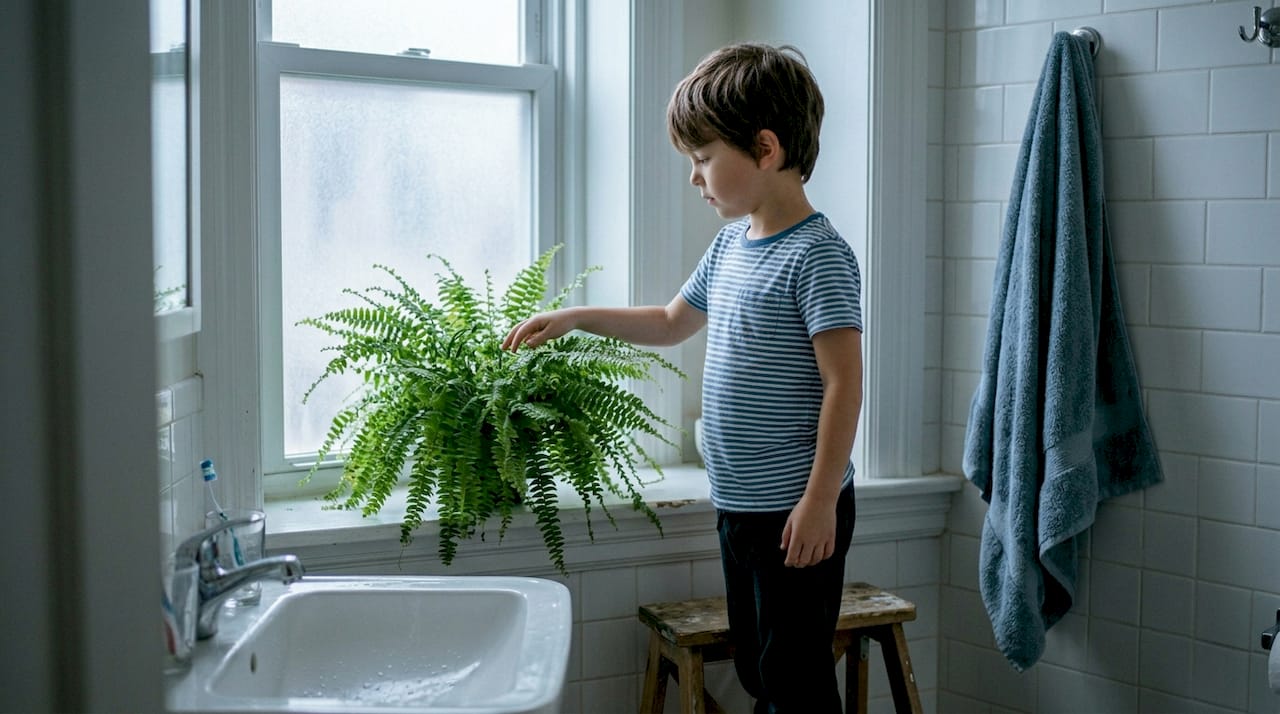
Boston Fern thrives in humid spaces like bathrooms and adds lush texture. It’s non-toxic but does shed fronds, so teach kids not to pull at the leaves.
Parlor Palm is an elegant, slow-growing plant that handles low light and dry indoor air surprisingly well. It’s one of the best choices for living rooms with active kids.
Prayer Plant folds its leaves upward at night, which genuinely fascinates children. It’s a natural conversation starter about how plants respond to light.
Cast Iron Plant lives up to its name. It survives low light, infrequent watering, and temperature swings. Perfect for busy households.
Peperomia comes in dozens of textures and colors, stays compact, and is nearly impossible to kill through mild neglect. Kids can handle the thick, rubbery leaves without risk.
Pilea (also called the Chinese money plant) propagates easily, making it a fun project for older children who want to grow their own plant from a cutting.
Christmas Cactus blooms in vivid pink or red and has soft, scalloped edges rather than sharp spines. It’s a safer flowering option than most cacti.
Many of these plants also contribute to better indoor air quality, which is a bonus for families with young children spending long hours indoors. For care routines that won’t overwhelm a busy parent, check out our easy-care houseplant guide.
Pro Tip: Let kids take ownership of one plant. Assign a Peperomia or Spider Plant as “their” plant to water each week. Responsibility builds curiosity, and curiosity builds lifelong habits.
Quick comparison: Which plant is right for your space and family?
Choosing the right plant comes down to your home’s light levels, your schedule, and your child’s age and temperament. This table gives you a fast reference.
| Plant | Toxicity risk | Care level | Best placement | Allergy notes |
|---|---|---|---|---|
| Spider Plant | None | Easy | Hanging basket | Very low |
| Boston Fern | None | Moderate | Bathroom shelf | Low to moderate |
| Parlor Palm | None | Easy | Living room | Very low |
| Prayer Plant | None | Moderate | Bedroom shelf | Very low |
| Cast Iron Plant | None | Very easy | Low-light corner | Very low |
| Peperomia | None | Easy | Desk or shelf | Very low |
| Pilea | None | Easy | Windowsill | Very low |
| Christmas Cactus | None | Easy | Windowsill | Low (pollen) |
Stat callout: No systemic toxicity has been reported from these plants in U.S. school exposure data, which is reassuring for parents placing them in playrooms or children’s bedrooms.
Spider Plant and Cast Iron Plant are the top picks for low-light rooms and irregular watering schedules, making them ideal for nurseries or playrooms where conditions aren’t always perfect. Christmas Cactus is the only one worth a second thought if your child has pollen allergies, though its pollen output is minimal compared to flowering outdoor plants.
For playrooms, go with Spider Plant or Peperomia. For bedrooms, Prayer Plant or Parlor Palm. For educational interaction, Pilea wins because propagating it is a hands-on science lesson. If something goes wrong with any of these plants, our guide to common houseplant problems will help you troubleshoot fast.
Safety in real life: Handling edge cases and common mistakes
Even with a fully non-toxic plant collection, safety isn’t automatic. The most common mistake parents make is assuming “non-toxic” means “completely harmless in any amount.” It doesn’t. Even non-toxic plants can cause mild stomach upset or mechanical irritation if a child eats a significant quantity. Think of it like eating a handful of raw grass: not poisonous, but not comfortable either.
Another overlooked risk is the substances on the plant rather than the plant itself. Fertilizers, pesticide sprays, and leaf-shine products can be genuinely harmful. Always use food-safe or child-safe products indoors, and allow treated plants to air out before placing them back in shared spaces. Our guide to cleaning plant leaves naturally covers safe methods that won’t introduce chemicals into your home.
Here’s a numbered safety checklist to keep on your fridge:
- Identify every plant in your home by its full name before placing it
- Keep plants out of reach of children under five
- Avoid any pesticides, fertilizers, or sprays not labeled safe for indoor family use
- Teach children the “look but don’t eat” rule from an early age
- Know the difference between the plant itself and what’s been applied to it
- Call Poison Control immediately if any ingestion occurs, even with a safe plant
For edge cases in kids plant safety, including allergy reactions and pollen sensitivity, the guidance is consistent: identify the plant, assess the amount ingested, and call a professional rather than waiting to see what happens.
“When in doubt, call Poison Control. They handle thousands of plant-related calls each year and can give you immediate, specific guidance.” — Pediatric safety consensus
Creative plant placement: Making your indoor garden both safe and engaging
Safety and beauty don’t have to compete. With a little planning, your indoor plant setup can be both childproof and genuinely inspiring for young minds. The RHS recommends prioritizing out-of-reach placement for toddlers while also thinking about how plants can engage older children educationally.
Here are practical display ideas that work for family homes:
- Wall-mounted shelves at adult height keep trailing plants like Pilea and Spider Plant visible but untouchable for very young children
- Hanging baskets near windows are perfect for Boston Fern and Spider Plant, adding greenery without floor-level risk
- Windowsill rows of small Peperomia or Christmas Cactus create a colorful display that older kids can tend independently
- A dedicated “kids’ plant corner” with one or two easy plants at child height teaches responsibility in a controlled way
- Clear glass jars for propagation let children watch roots develop in water, turning plant care into a live science experiment
For older children, assign seasonal tasks: repotting in spring, propagating cuttings in summer, and observing dormancy in winter. These routines build patience and observation skills that extend well beyond the garden.
Pro Tip: Combine plant care with art by letting kids decorate their plant pots with non-toxic paint. It creates ownership, encourages creativity, and makes plant care feel like play rather than a chore. Pair this with our beginner houseplant tips to keep the whole family on track.

Our take: Why plant safety for kids is about more than just non-toxicity
Here’s something most plant safety articles won’t tell you: the fear around houseplants and children is often more paralyzing than the actual risk warrants. With modern resources, identifying safe plants takes minutes. The educational value of plants for children, including curiosity, science engagement, and responsibility, is well documented and genuinely significant.
The real opportunity isn’t just avoiding harm. It’s using plants as tools for raising observant, curious, nature-connected kids. A child who learns to water a Spider Plant at age four is building habits that compound over a lifetime. The goal shouldn’t be to keep plants away from children out of excessive caution. It should be to create structured, supervised interactions that grow alongside your child’s development.
We believe the best approach is informed confidence, not fear. Use the resources available, cross-check your sources, keep indoor plant benefits in mind, and then let your kids get their hands a little dirty. That’s where the real learning happens.
Ready to create a safe, thriving indoor garden for your family?
You now have the criteria, the plant list, the comparison table, and the safety protocols to build a genuinely child-friendly indoor garden. The next step is putting it all together with confidence. At Lushy Gardens, we’ve built a library of guides specifically for parents and beginner gardeners who want practical, trustworthy advice without the overwhelm. Explore our full guide to houseplants safe for kids, dive into our indoor plant care tips for keeping your plants healthy long-term, or start from the ground up with our gardening basics guide. Your family’s green space starts here.
Frequently asked questions
What makes a plant truly ‘kid-friendly’?
A kid-friendly plant is confirmed non-toxic by ASPCA and Poison Control standards, has no irritating sap or sharp edges, and poses no significant risk from casual contact or accidental tasting.
Could my child still get sick from eating a safe plant?
Even non-toxic plants can cause mild stomach upset if eaten in large quantities, so prevention and supervision still matter even with the safest varieties.
What should I do if my child eats part of a houseplant?
Identify the plant immediately and call Poison Control at 1-800-222-1222. Most cases involving non-toxic plants resolve without harm, but professional guidance is always the right call.
Are pet-safe houseplants always safe for kids?
Most pet-safe plants are also safe for children, but some differences exist between the lists, so always cross-check with a pediatric or Poison Control source before assuming full overlap.
How can I prevent houseplants from becoming safety hazards?
Prevention strategies include keeping plants out of reach, teaching children not to eat any plant material, and avoiding indoor pesticide use around young children.
Recommended
- Indoor House Plants: Enhance Air Quality Safely – Lushy Gardens
- 7 Types of Indoor Plants to Brighten Your Home – Lushy Gardens
- Best Plants for Small Spaces to Brighten Your Home – Lushy Gardens
- Get thriving indoor plants: expert tips for home gardeners – Lushy Gardens

I’m Eleanor, a seasoned gardener with over three decades of experience tending to Mother Nature’s creations. Through Lushy Gardens, I aim to share my wealth of knowledge and help fellow plant enthusiasts uncover the wonders of gardening. Let’s dive into this journey together, one leaf at a time.


