
Table of Contents
TL;DR:
- Early detection and gentle, proactive measures are key to managing indoor plant pests effectively.
- Preventing pests involves quarantining new plants, maintaining plant health, and regular inspections.
- Use cultural, mechanical, biological, and chemical controls in that order, prioritizing patience and precision.
Even the healthiest-looking houseplant can be quietly losing the battle against pests before you notice a single yellowed leaf. Infestations rarely start with obvious damage. They begin underneath a leaf, in the soil, or tucked along a stem where casual watering checks never reach. Many indoor plant owners only discover they have a problem when the population has already exploded. This guide walks you through exactly which pests to watch for, how to stop them before they start, and what to do when they show up anyway, using methods that are safe, effective, and grounded in real horticultural science.
Table of Contents
- Know your enemy: Common indoor plant pests and their effects
- Prevention first: Quarantine, inspection, and healthy plant practices
- Direct action: Cultural and mechanical controls for indoor pests
- Integrated approaches: Biological and chemical controls explained
- A smarter way: Why early action and patience beat panic sprays
- Take your indoor plant care to the next level
- Frequently asked questions
Key Takeaways
| Point | Details |
|---|---|
| Know common pests | Recognizing the usual suspects fast-tracks early control. |
| Start with prevention | Quarantine new plants and keep them healthy to block infestations. |
| Use safe controls | Cultural and mechanical methods are effective and safest for homes. |
| IPM is best | Layer non-chemical, biological, and only then chemical controls as a last resort. |
| Patience pays off | Regular monitoring and calm, informed action protect plants long term. |
Know your enemy: Common indoor plant pests and their effects
Before you can fight a pest, you need to recognize it. The causes and effects of indoor pests vary widely depending on which invader you are dealing with, and misidentifying them wastes time and money. Common indoor plant pests include aphids, spider mites, mealybugs, scale insects, whiteflies, fungus gnats, and thrips, and each one leaves a different calling card.
Here is a quick breakdown of what to look for:
- Aphids: Soft-bodied clusters, usually on new growth or stem tips. Leaves curl, yellow, or look distorted.
- Spider mites: Tiny dots on leaves, fine webbing on undersides. Leaves develop a dusty, stippled look.
- Mealybugs: White, cottony masses in leaf joints or along stems. Plants weaken fast.
- Scale insects: Brown or tan bumps stuck to stems and leaves. Sticky residue (called honeydew) attracts mold.
- Whiteflies: Tiny white insects that fly up in a cloud when disturbed. Leaves turn pale or yellow.
- Fungus gnats: Small flying insects near soil. Larvae damage roots and slow growth significantly.
- Thrips: Tiny, slender insects causing silver streaking or scarring on leaves. Hard to spot without a magnifier.
| Pest | Key symptom | Spreads quickly? |
|---|---|---|
| Aphids | Curled, sticky leaves | Yes |
| Spider mites | Webbing, stippled leaves | Very quickly |
| Mealybugs | White cottony clusters | Moderately |
| Scale insects | Sticky honeydew, bumps | Slowly but stubbornly |
| Whiteflies | Cloud of white insects | Yes |
| Fungus gnats | Flies near soil | Yes |
| Thrips | Silver streaks on leaves | Quickly |
One thing all of these pests share: they reproduce fast. A small spider mite population can double within days under warm, dry indoor conditions. That is exactly why early detection matters so much. Catching a problem at five insects is manageable. Catching it at five thousand is a real fight.
Spend one minute per plant each week flipping leaves, checking soil, and looking for sticky residue or unusual discoloration. That habit alone will save more plants than any spray you own.
Prevention first: Quarantine, inspection, and healthy plant practices
Knowing which pests to look for is only useful if you also build habits that keep them from getting inside in the first place.
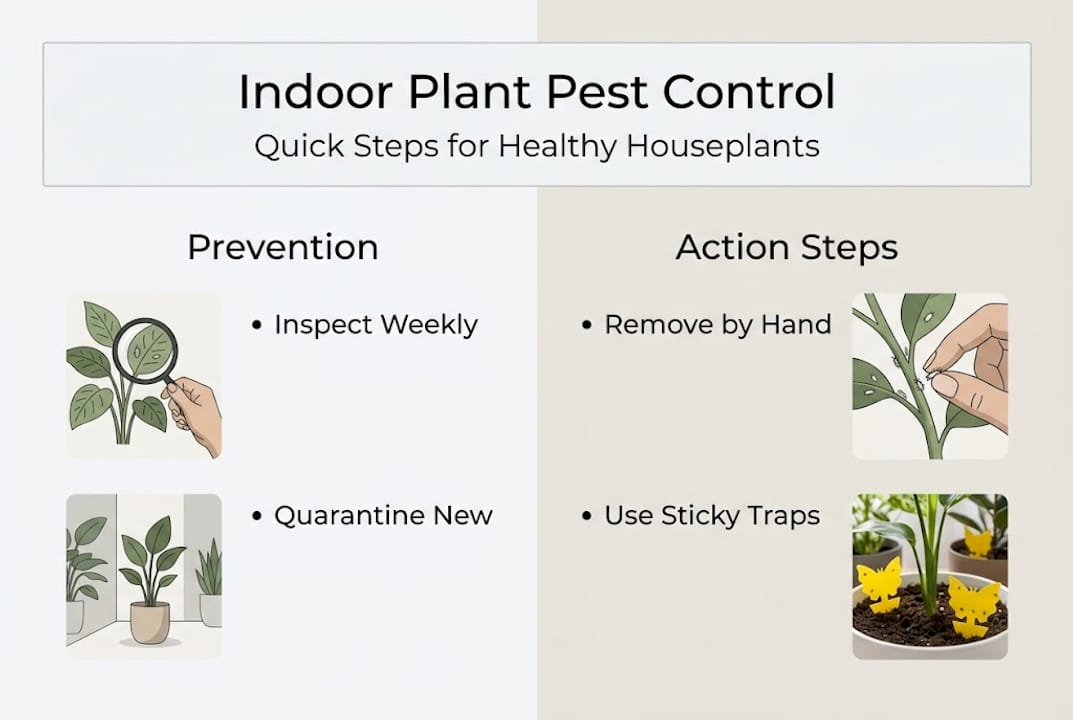
The most overlooked entry point for pests is a new plant from the nursery. Even premium stores sell plants that carry hitchhikers. Quarantining new plants for 2 to 3 weeks before placing them near your existing collection is one of the single most effective pest prevention moves you can make. Keep the new plant in a separate room, inspect it every few days, and only integrate it once you are confident it is clean.
Here is a practical step-by-step routine to follow every time you bring home a new plant:
- Inspect the entire plant at the nursery before purchasing, including leaf undersides and the soil surface.
- Check the root ball briefly if possible by sliding it out of the pot.
- Place the new plant in a separate room away from existing plants.
- Inspect again every three to four days for two to three weeks.
- Look for webbing, white clusters, sticky residue, or flying insects near the soil.
- Only move the plant to its permanent spot after it passes all checks.
Beyond quarantine, plant health itself is your best long-term barrier. Stressed plants are far more vulnerable to pest damage because they cannot mount effective chemical defenses. This means keeping light levels appropriate, avoiding overwatering or underwatering, and feeding plants on a consistent schedule.
“A plant growing in the right conditions with the right nutrients is simply harder to colonize. Pests prefer struggling hosts.”
Pro Tip: Do not wait until you see a problem to start inspecting. Build a brief weekly check into your watering routine. Look at the expert solutions for indoor plant issues to understand how proactive care prevents more than it cures.
Direct action: Cultural and mechanical controls for indoor pests
Even the most careful prevention routine will not catch every pest. When something slips through, your first moves should be non-chemical. These approaches are safe for kids and pets, cost almost nothing, and work remarkably well when applied early.
Cultural controls target the environmental conditions pests need to thrive. Let the top inch of soil dry out completely between waterings to stop fungus gnat larvae, which depend on moist soil to survive. For spider mite control, increase humidity around the plant and use a firm water jet to knock mites off leaves. Improving air circulation by spacing plants further apart or adding a small fan reduces conditions that favor many soft-bodied insects.
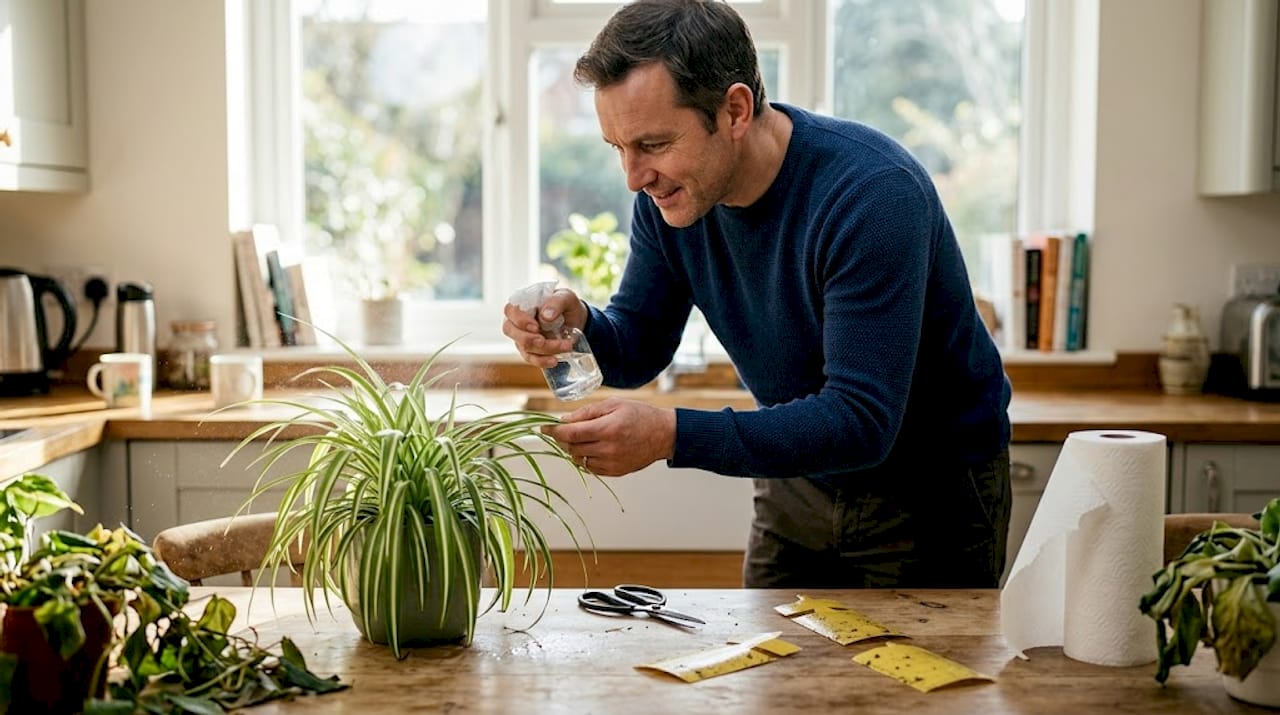
Mechanical controls are exactly what they sound like: physically removing pests. Handpicking and water jets are effective for scale, aphids, and mites. Rubbing alcohol on a cotton swab dissolves the waxy coating that protects mealybugs, killing them on contact. Yellow sticky traps catch whiteflies and fungus gnats mid-flight, giving you a real-time sense of population size.
| Method | Best for | Notes |
|---|---|---|
| Soil drying | Fungus gnats | Let top inch dry before watering |
| Water jet spray | Spider mites, aphids | Use outdoors or in shower |
| Sticky traps | Whiteflies, gnats | Yellow color is most effective |
| Alcohol swabs | Mealybugs | Apply directly to each pest |
| Handpicking | Scale insects | Use a soft brush or toothpick |
For troubleshooting indoor plant pests that persist near your soil line, consider managing indoor plant flies with a layered approach combining sticky traps and soil management together. For broader pest situations, even non-chemical rodent pest control principles reinforce the same logic: remove conditions that attract and sustain pests before reaching for stronger solutions.
Pro Tip: Place a few yellow sticky traps near your most pest-prone plants permanently, not just during an outbreak. Spikes in trapped insects are your early warning system.
Integrated approaches: Biological and chemical controls explained
For large or returning infestations, you need a bigger toolkit. This is where biological and chemical controls come in, but the order and logic of how you use them matters more than which product you pick.
Biological controls use living organisms to reduce pest populations. Predator mites target spider mites, Encarsia formosa parasitizes whiteflies, the mealybug destroyer beetle attacks mealybugs, and Bacillus thuringiensis (Bt) kills fungus gnat larvae in soil. These solutions work best when conditions are right and when you source them from reputable specialty suppliers, since timing and viability matter.
Key things to know about biological controls:
- They work best at moderate pest pressure, not full-blown infestations.
- They need to be applied when pest populations are present for them to establish.
- Never apply chemical pesticides right before or after introducing biological agents.
- Results take days to weeks, not hours.
Chemical controls should come last, not first. Insecticidal soaps, horticultural oils, neem oil, and Bt israelensis are the most practical options for houseplants. Always choose products labeled specifically for indoor use, apply outdoors or with ventilation when possible, and follow label directions exactly. Skipping this step is how people harm their plants or create unhealthy indoor air.
“Biological control is a scalpel. Chemical sprays are a sledgehammer. Use the scalpel first.”
Crop research shows chemicals reduce pests by 50 to 60% but can significantly harm beneficial insects at higher doses, which is why using natural pest control methods first protects the ecosystem around your plants. This is the core logic of Integrated Pest Management, or IPM: IPM prioritizes cultural and mechanical methods first, biological second, and chemical last, with consistent monitoring as the foundation throughout. Exploring organic pest control methods can help you build out that second tier before you ever need to open a bottle of spray.
A smarter way: Why early action and patience beat panic sprays
Here is something most pest guides skip: the biggest mistake indoor gardeners make is not failing to identify a pest. It is panicking.
When people see bugs, they reach for the strongest spray available. That instinct almost always backfires. Broad-spectrum sprays kill the natural predators already present in your home environment, the ones quietly keeping other pest populations in check. You eliminate one problem and unknowingly create space for three more.
After years of growing plants indoors, the pattern at Lushy Gardens is clear: the growers who have the fewest pest disasters are the ones who observe first and act second. They catch problems early, start with the gentlest intervention, and stay patient through the process. A mealybug colony treated with alcohol swabs over two weeks beats one nuked with chemicals and then replaced by a spider mite explosion a month later.
Building indoor gardening insights into your regular care habits is what makes the difference. Healthy plants, consistent checks, and calm layered responses will protect your collection far better than any single product ever could.
Take your indoor plant care to the next level
Now that you have a clear framework for identifying, preventing, and managing indoor plant pests, the next step is putting those strategies to work consistently. At Lushy Gardens, we have built a library of practical guides designed to help you go deeper on every one of these topics. Start with our top indoor plant care tips to strengthen your everyday routines, then work through the full troubleshooting guide when something goes wrong. If you want to get sharper on identifying what is attacking your plants, our indoor plant pests guide breaks down every major culprit with detailed visuals and targeted solutions.
Frequently asked questions
How can I tell if my indoor plant has pests?
Inspect leaf undersides, stems, and soil weekly for sticky residue, webbing, spots, or stunted growth. Early weekly detection is the fastest path to easy control before populations grow.
What is the safest way to get rid of indoor plant pests?
Start with cultural and mechanical controls like drying soil, using sticky traps, or handpicking pests before turning to any spray. Soil drying and water jets handle most common infestations without chemicals.
Can I use outdoor garden pesticides on houseplants?
No. Only use products labeled for indoor houseplants and follow directions carefully, since outdoor formulas can release harmful fumes indoors and damage sensitive plant tissue.
Why do pests keep coming back to my indoor plants?
Recurring infestations usually signal ongoing plant stress, overcrowding, or a hidden population you have not fully eliminated. Proper light, water, and fertilizer reduce susceptibility and make your plants far harder targets.
Recommended
- How to control indoor plant flies for a healthier garden – Lushy Gardens
- Understanding Common Indoor Plant Pests: Causes and Effects – Lushy Gardens
- Solving Indoor Plant Problems: Expert Solutions – Lushy Gardens
- Natural pest control: eco-friendly solutions for healthy gardens – Lushy Gardens

I’m Eleanor, a seasoned gardener with over three decades of experience tending to Mother Nature’s creations. Through Lushy Gardens, I aim to share my wealth of knowledge and help fellow plant enthusiasts uncover the wonders of gardening. Let’s dive into this journey together, one leaf at a time.


