
Table of Contents
TL;DR:
- Indoor plant trends in 2026 focus on textured foliage and smaller, space-adapted varieties for modern homes. Selecting plants based on home conditions, pet safety, and care needs ensures more successful and satisfying indoor gardening. Top choices include Alocasia ‘Silver Dragon,’ Philodendron ‘Birkin,’ and Boston Fern, emphasizing connection and thoughtful placement over oversized statement plants.
The rules for indoor plants have changed. The days of hunting down the biggest Monstera you could fit through your apartment door are giving way to something more considered. The trending indoor plants 2025 conversation is now about texture, personality, and plants that actually fit how people live. Whether you have one bright windowsill or a dim studio corner, this guide gives you a practical framework for choosing well, plus a curated list of the plants worth your attention right now.
Key takeaways
| Point | Details |
|---|---|
| Texture beats size in 2025 | Detailed foliage with silvery veins and bold patterns is replacing oversized statement plants. |
| Match plants to your space first | Light, humidity, and square footage should narrow your options before aesthetics do. |
| Pet safety is non-negotiable | Bella Palm and Boston Fern are standout choices for households with cats or dogs. |
| Interactive plants add daily value | Plants like the Prayer Plant create visual rituals that deepen your connection to greenery. |
| Group by care needs, not just looks | Pairing plants with similar watering and light requirements makes maintenance far more manageable. |
How to choose the right trending indoor plants in 2026
Before you spend money on any plant, get honest about your home’s conditions. The 2025 indoor plant trend is shifting toward nuanced textures and smaller sizes suited to apartment living, which means there are genuinely great options for almost every condition. But that abundance of choice makes a clear framework more useful than ever.
Here is what to work through before you buy:
- Light availability. Is your space bright and sunny, filtered, or mostly dim? Some plants listed here, like Alocasia ‘Silver Dragon,’ want bright indirect light. Others, like Aglaonema, will thrive in your darkest corner.
- Humidity levels. Bathrooms and kitchens have naturally higher humidity. Living rooms and bedrooms in heated apartments tend to run dry. Factor this in before falling for a fern.
- Space size. Compact plants are a conscious aesthetic choice right now, not a compromise. A bookshelf or a small side table can become a curated display.
- Pet and child safety. Several trending plants are toxic to cats and dogs. Know this before you bring anything home.
- Lifestyle and care commitment. Be realistic. A plant you water once a week will outlive one you forget for three weeks, no matter how beautiful it looks in the store.
Once you have a sense of your conditions, then you can let aesthetics drive the final call. Do you want bold, saturated color? Silvery metallic foliage? Something that literally moves at night?
Pro Tip: If you are new to indoor gardening, start with two or three plants that share the same light and watering needs. You will build confidence faster, and your plants will actually survive long enough to be worth styling.
1. Alocasia ‘Silver Dragon’
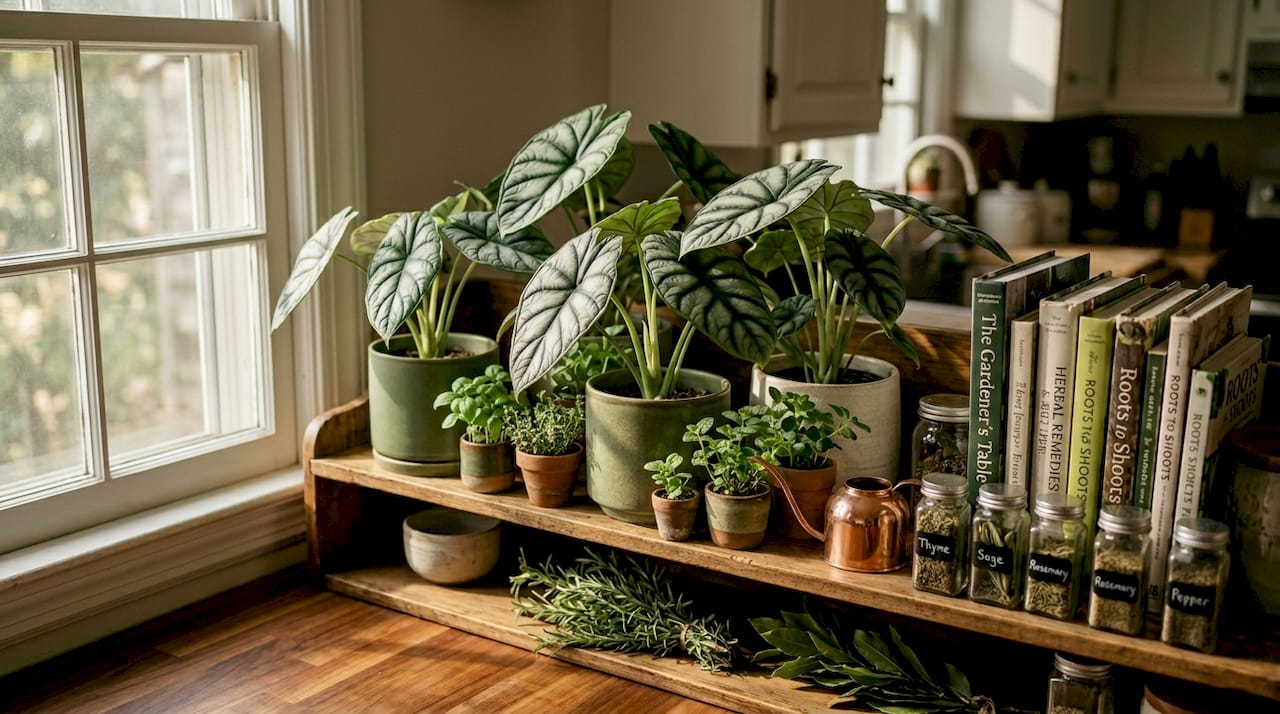
This one stops people in their tracks. Alocasia ‘Silver Dragon’ has compact, heart-shaped leaves covered in a silvery, metallic sheen with dark green veins running through them. It looks almost sculpted, like a botanical piece of art.
It prefers bright indirect light and higher humidity, so a bathroom with a window or a kitchen shelf is ideal. Water it when the top inch of soil dries out, and never let it sit in soggy soil. It is not pet-safe, so keep it out of reach. For design-minded plant owners, this is one of the most visually striking choices in the current cycle of popular houseplants 2026.
2. Philodendron ‘Birkin’
The Philodendron ‘Birkin’ earns its popularity through sheer visual contrast. Each dark green leaf is streaked with creamy white pinstripes, and no two leaves look exactly alike. It is a slow grower, which actually works in its favor for small spaces.
It tolerates medium to bright indirect light and needs watering only when the top layer of soil feels dry. Care is forgiving enough for beginners, yet the plant looks like something from a designer showroom. It is one of the best indoor plants 2025 has surfaced for people who want impact without high maintenance.
3. Bella Palm
If you have pets and want a lush, tropical feel without the anxiety of toxicity concerns, Bella Palm is your plant. It is one of the safest options for households with animals and children, and it brings genuine presence to a room with its arching, feathery fronds.
Bella Palm grows slowly and stays compact enough for most apartments. It prefers bright indirect light but handles medium light reasonably well. It adds a calm, hotel-lobby quality to interior spaces without demanding much in return.
4. Rex Begonia
Rex Begonias are the maximalist’s houseplant. Their leaves come in swirling combinations of silver, burgundy, pink, green, and near-black, often with textured or ruffled surfaces. Each plant is a statement by itself, and a collection of them feels almost theatrical.
They want bright indirect light and moderate watering. Let the soil dry slightly between waterings because they are prone to root rot if overwatered. They are not pet-safe, but for rooms where animals do not roam, they deliver color and texture that almost nothing else matches. If you are designing a maximalist shelf or corner vignette, Rex Begonia belongs in the conversation.
5. Boston Fern
The Boston Fern has come back around, and it feels right for this moment. Boston ferns align with the vintage revival running through interior design right now, and their dense, cascading fronds bring a lushness that more architectural plants simply cannot replicate.
They are pet-safe, which matters, and they genuinely improve the atmosphere of a space with high humidity. Hang one in a bright bathroom or place it near a humidifier in a living room. The care requirement is consistent moisture, which is the one thing people tend to underestimate. Let them dry out and they drop fronds fast.
Pro Tip: Mist your Boston Fern every few days or set the pot on a tray of pebbles filled with water. The evaporation keeps local humidity high without soaking the roots.
6. Aglaonema ‘Silver Bay’
For anyone who has ever killed a plant in a low-light apartment and given up, Aglaonema ‘Silver Bay’ is the answer. It tolerates low light conditions that would stress most other plants, and its silvery-green patterned leaves still look polished and intentional in a dim corner.
It is one of the most reliably beginner-friendly plants on this list. Water it every 10 to 14 days, keep it away from cold drafts, and it will reward you with steady, unfussy growth. For urban indoor gardening in spaces that lack good natural light, this is as dependable as it gets.
7. Prayer Plant
The Prayer Plant is genuinely interactive. Its leaves fold upward at night, as if in prayer, then open again during the day. This nightly movement creates a quiet daily ritual that makes plant ownership feel like a relationship rather than just décor.
The foliage is beautiful regardless. Deep green with red veins and feathered yellow markings, it is a visually layered plant that rewards close attention. It does best in medium indirect light with consistent moisture and prefers higher humidity. Set it somewhere you pass often and you will notice the movement without even thinking about it.
8. Coleus ‘Chocolate Mint’
Coleus has been a porch plant for decades, but the indoor trend toward bold color and textural contrast has brought it inside. The ‘Chocolate Mint’ variety has deep brown-maroon leaves edged in bright lime green. Under grow lights or in a bright window, the color saturation is extraordinary.
It is a fast grower and rewards pinching to stay bushy. It prefers bright indirect light indoors and consistent moisture. Place it where natural light is strong, or supplement with a grow light. If you want one plant that makes a room feel designed rather than decorated, this variety earns serious consideration among unique indoor plants for 2025.
9. Senecio varieties
Senecio varieties, including the velvety white ‘Chalk Sticks’ and the sculptural blue-gray forms, are landing on minimalist plant lists for good reason. Their muted, dusty coloration is the botanical equivalent of a neutral palette, and they pair naturally with concrete, white, and natural wood interiors.
They are low maintenance and drought tolerant, making them one of the more forgiving options among trending succulents 2025. Give them bright light, water sparingly, and let the soil dry out completely between waterings. Their sculptural quality means a single plant in a clean ceramic pot reads as intentional design rather than an afterthought.
Side-by-side comparison of top picks
| Plant | Light needs | Watering | Pet safe | Care level | Visual style |
|---|---|---|---|---|---|
| Alocasia ‘Silver Dragon’ | Bright indirect | Moderate | No | Intermediate | Metallic, sculptural |
| Philodendron ‘Birkin’ | Medium to bright | Low to moderate | No | Beginner | Striped, graphic |
| Bella Palm | Bright indirect | Moderate | Yes | Beginner | Tropical, lush |
| Rex Begonia | Bright indirect | Moderate | No | Intermediate | Bold, colorful |
| Boston Fern | Bright indirect | High | Yes | Intermediate | Vintage, cascading |
| Aglaonema ‘Silver Bay’ | Low to medium | Low | No | Beginner | Silvery, patterned |
| Prayer Plant | Medium indirect | Moderate | Yes | Beginner | Graphic, interactive |
| Coleus ‘Chocolate Mint’ | Bright | Moderate | No | Intermediate | Vibrant, textural |
| Senecio varieties | Bright | Low | No | Beginner | Minimalist, sculptural |
Matching plants to your specific living situation
Knowing what is trending is one thing. Knowing what will actually work in your home is what saves you from a graveyard of sad plants on a windowsill.
For low-light apartments, your best picks from this list are Aglaonema ‘Silver Bay’ and Bella Palm. Both tolerate limited natural light without visibly struggling. If you also want something that improves indoor air quality, Aglaonema is well documented for its air-filtering capacity in lower-light rooms.

For humidity-rich rooms like bathrooms and kitchens:
- Prayer Plant loves the extra moisture and will reward you with more vivid coloration.
- Boston Fern is at its absolute best in a steamy bathroom with a window.
- Alocasia ‘Silver Dragon’ also appreciates higher ambient humidity.
For pet owners, the short list is Bella Palm, Boston Fern, and Prayer Plant. Everything else on this list carries some level of toxicity risk for cats and dogs. It is worth checking current toxicity data before introducing any new plant to a home with animals.
Grouping plants with matching needs is one of the most practical things you can do for your collection. A humidity-loving group of Prayer Plant, Boston Fern, and Rex Begonia on a pebble tray creates a cohesive display while simplifying your care routine. Senecio varieties, on the other hand, belong with other drought-tolerant plants and away from anything that needs consistent watering.
Pro Tip: Before grouping plants aesthetically, check that their watering schedules align. One overwatered succulent or one underwatered fern can throw off an otherwise beautiful arrangement.
My take on where indoor plant trends are actually heading
I have watched the big statement plant trend peak and start to exhale. The Monstera, the fiddle leaf fig, the Bird of Paradise. They were genuinely exciting, but they worked better in the mood boards than in most real homes. What I am seeing now is more thoughtful, and honestly more satisfying.
The shift toward nuanced living décor that fits modern apartment life reflects something real. People are not just buying a plant. They are choosing a daily companion for their space, something that earns its square footage. The Prayer Plant moving at night, the Birkin pushing out a new striped leaf. These moments create a genuine connection that a massive Monstera in the corner rarely does.
What I have learned after years of following these trends is that the best plant purchases start with constraints. The people who struggle are often the ones who buy based on aesthetics alone, then fight their home’s conditions for months. The people who thrive pick a plant that wants to live where they want to put it, then enjoy the beauty as a bonus.
I also think the wellness dimension is real and underappreciated. Plants that interact, move, or change day to day give you a reason to pay attention. That habit of observation, checking in, noticing growth, has genuine mental benefits that go beyond a green object in your room. Embrace smaller collections of plants you actually care about over a large collection of plants you barely notice.
— Povilas
Start your indoor plant journey with Lushygardens
Ready to move from browsing to actually growing? Lushygardens has everything you need to take the next step with confidence. If you are building your first indoor collection, the beginner’s gardening guide walks you through the foundations without overwhelming you with unnecessary detail. For those already growing, the daily plant care checklist keeps your routine tight and your plants thriving through every season. When problems come up, and they will, the indoor plant troubleshooting guide covers the most common issues with clear, practical fixes. Lushygardens exists to make indoor gardening less guesswork and more joy.
FAQ
What indoor plants are trending in 2026?
The most popular houseplants in 2026 include Alocasia ‘Silver Dragon,’ Philodendron ‘Birkin,’ Prayer Plant, and Senecio varieties, all prized for their texture, pattern, and suitability for smaller spaces.
Which trending plants are safe for pets?
Bella Palm, Boston Fern, and Prayer Plant are among the safest trending options for households with cats and dogs. Always verify toxicity with an up-to-date source before purchasing.
What are the best indoor plants for low-light apartments?
Aglaonema ‘Silver Bay’ and Bella Palm are the strongest low-light performers from this year’s trending list, both offering attractive foliage without demanding bright windows.
Are there any unique indoor plants trending in 2026?
Alocasia ‘Silver Dragon’ and Coleus ‘Chocolate Mint’ are standout unique picks, offering metallic leaf textures and vivid color combinations rarely seen in mainstream plant selections.
How should I group my new indoor plants?
Group plants by shared watering and light needs rather than visual style alone. Drought-tolerant plants like Senecio do best together, while humidity lovers like Prayer Plant and Boston Fern thrive as a cluster.
Recommended
- Proven strategies for thriving indoor houseplants – Lushy Gardens
- Best Top Indoor Plant Pots – Expert Comparison 2026 – Lushy Gardens
- Get thriving indoor plants: expert tips for home gardeners – Lushy Gardens
- 7 Types of Indoor Plants to Brighten Your Home – Lushy Gardens

I’m Eleanor, a seasoned gardener with over three decades of experience tending to Mother Nature’s creations. Through Lushy Gardens, I aim to share my wealth of knowledge and help fellow plant enthusiasts uncover the wonders of gardening. Let’s dive into this journey together, one leaf at a time.


