
Table of Contents
TL;DR:
- Vermiculite is a natural mineral that expands when heated and enhances soil moisture retention, aeration, and nutrient holding.
- Gardeners use it for seed starting, propagating cuttings, and improving garden soils, especially for moisture-loving plants.
- However, it can compress over time and is less suitable for drought-tolerant plants, requiring proper grading and handling.
What is vermiculite in gardening, and why does it matter?
Vermiculite is a naturally occurring magnesium-aluminum-iron silicate mineral that, when heated to high temperatures, expands into lightweight, accordion-shaped granules. Those granules can absorb 3–4 times their own weight in water while simultaneously improving soil aeration and nutrient retention. That combination is rare in a single amendment, and it’s why vermiculite shows up in seed trays, potting mixes, and propagation benches across the country.
Here’s what makes it genuinely useful for home gardeners:
- Water retention: Holds moisture like a sponge, then releases it gradually as the surrounding soil dries out
- Aeration: Loosens compacted or clay-heavy soil so roots can spread without fighting for space
- Nutrient retention: Holds key minerals like potassium, magnesium, and calcium in the root zone, making them available to plants over time
- Sterility: Naturally free of pathogens, which dramatically reduces damping-off risk in seedlings
- Lightweight: Easy to handle, mix, and transport compared to most soil amendments
One limitation worth knowing upfront: vermiculite can compress over time under the weight of heavy soil or repeated watering, gradually losing its aeration and water-holding capacity. That makes it less suited for long-term container plantings or drought-tolerant plants like succulents and cacti.
How to use vermiculite effectively in your garden
Vermiculite is flexible enough to work across several gardening tasks, but the technique matters.
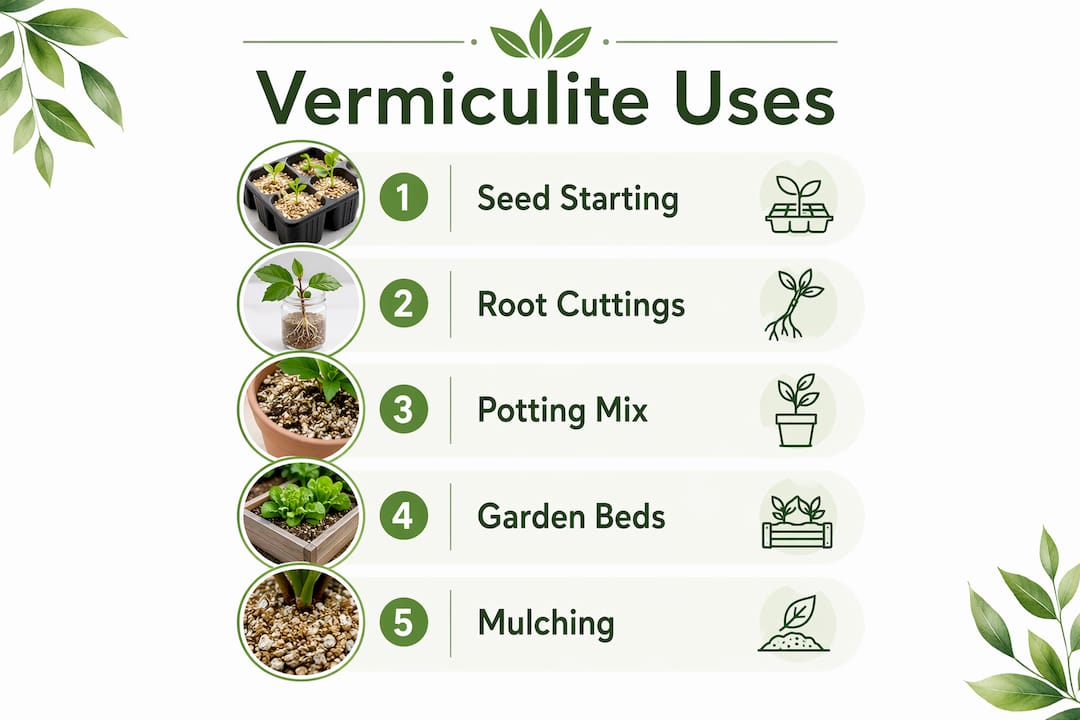
For seed starting: Sow seeds directly into pure vermiculite, or use a 50/50 mix with seed-starting compost. Either way, the sterile environment protects against fungal diseases, and the fine texture lets delicate roots pull free at transplant time without tearing. You can also sprinkle a thin layer of fine vermiculite over a freshly seeded tray to lock in surface moisture and buffer temperature swings.
For rooting cuttings: Medium-grade vermiculite is the standard among professional nurserymen for propagating cuttings. Soak the cutting ends for a few hours, then insert them into a container of vermiculite. The material keeps cuttings moist without waterlogging, and roots form faster than in plain soil.
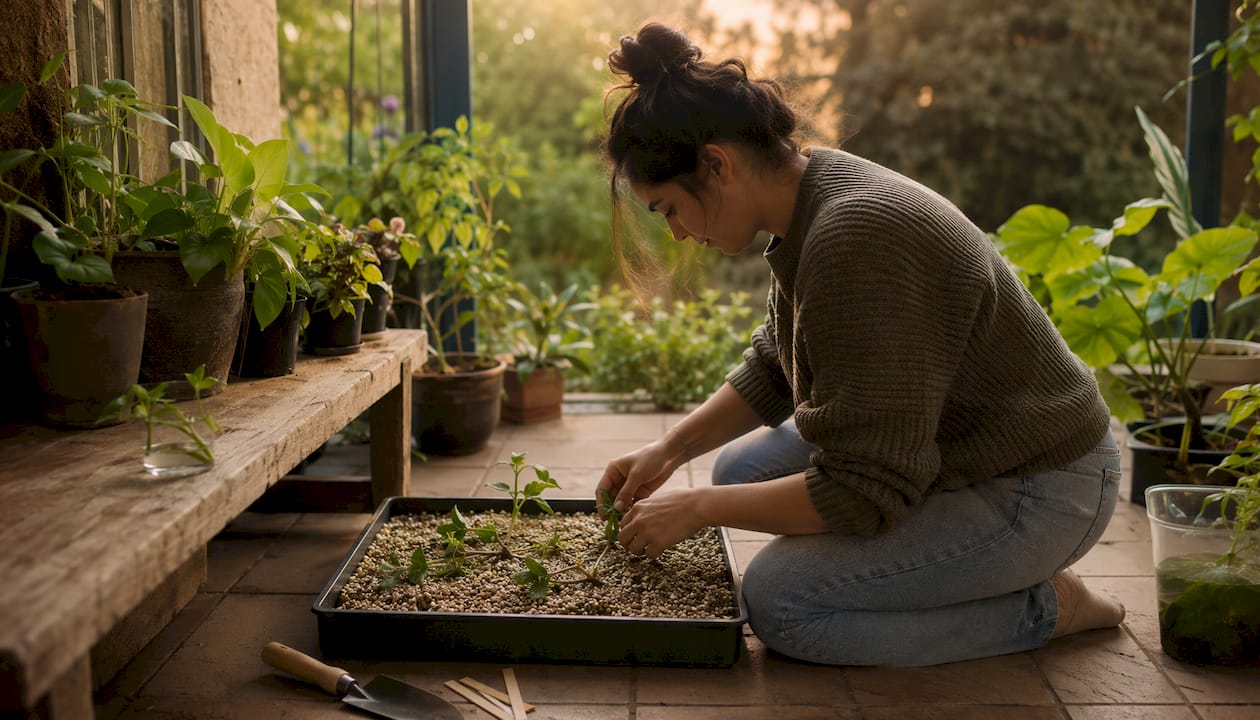
For potting mixes: A 1:3 ratio of vermiculite to potting soil works well for most houseplants and container vegetables. For plants that genuinely love moisture, like peace lilies or maidenhair ferns, a 1:1 mix keeps the root zone consistently damp between waterings.
For garden beds: Work vermiculite into clay soil to open up air channels, or into sandy soil to improve water retention. The horticultural brochure from the Vermiculite Association recommends mixing up to half the soil volume with vermiculite when amending heavy or compacted ground.
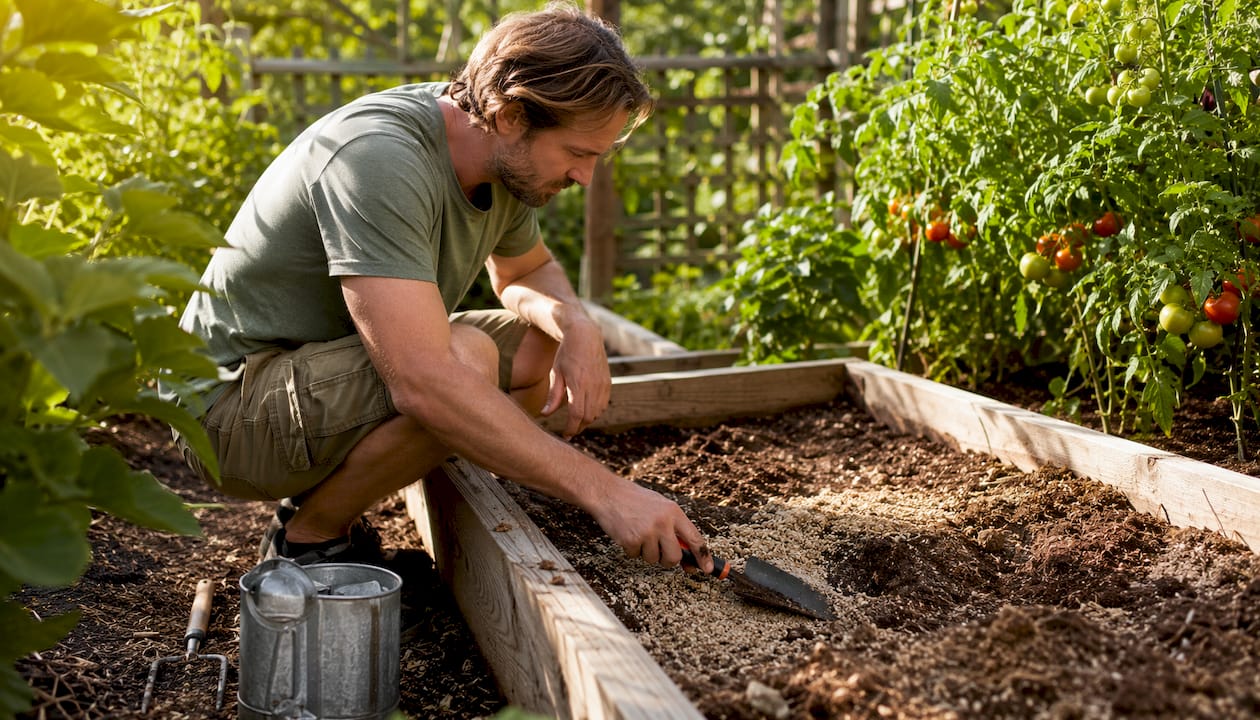
As mulch: Spread a layer of vermiculite mulch around roses, tomatoes, or shrubs to insulate roots and slow moisture loss. In spring, work the mulch layer directly into the soil as a conditioner.
Pro Tip: Match the grade to the job. Fine vermiculite holds surface humidity best for seed trays; medium grade gives cuttings the structure they need to root without sitting in soggy material.
Vermiculite vs. perlite: which one should you use?
Both amendments improve soil structure, but they work differently and suit different plants.
Perlite is expanded volcanic glass. It drains fast and resists compaction, making it the go-to for cacti, succulents, and any plant that hates wet feet. Vermiculite retains far more moisture and nutrients, which is why it performs better for moisture-loving plants, seedlings, and propagation work. Gardening author Niki Jabbour points out that vermiculite has a clear edge over perlite for covering seed surfaces to maintain humidity, while perlite handles large-scale aeration better in established pots.
| Feature | Vermiculite | Perlite |
|---|---|---|
| Water retention | High; releases moisture slowly | Low; drains quickly |
| Aeration | Moderate | High |
| Typical uses | Seed starting, propagation, moisture-loving plants | Cacti, succulents, fast-draining mixes |
| Best plant types | Ferns, peace lilies, tropical houseplants | Drought-tolerant, Mediterranean plants |
The practical rule: if your plant wants consistently moist soil, use vermiculite. If it wants to dry out between waterings, reach for perlite.
Safety, handling, and sustainability
Vermiculite is non-toxic and sterile, but it’s dusty. Breathing vermiculite dust during mixing is the main handling concern, and experts recommend wearing a dust mask and dampening the material before mixing to keep particles from becoming airborne. Gloves are a sensible precaution too, especially for large batches.
Key handling and sustainability points:
- Dust control: Moisten vermiculite before mixing, and work in a ventilated space or outdoors
- Sourcing: Vermiculite sold for horticulture is mined under strict industry protocols and prepared specifically to be clean and safe for garden use
- Storage: Keep bags sealed in a cool, dry location, away from weedkillers and other garden chemicals; properly stored vermiculite does not deteriorate or grow mold
- Compression over time: In long-term containers, vermiculite gradually loses its loft under soil weight, reducing both drainage and moisture retention; refreshing the mix every season or two helps maintain performance
- Plant compatibility: Avoid using vermiculite-heavy mixes for drought-tolerant plants, as the sustained moisture can cause root rot
One historical note worth knowing: a mine in Libby, Montana, produced vermiculite contaminated with asbestos for decades before closing in 1990. The EPA has guidance on this specific risk for homeowners who may have old insulation from that source. Horticultural vermiculite sold today comes from different sources and is not associated with that contamination.
Where to buy vermiculite in the United States
Horticultural-grade vermiculite is widely available and easy to find.
- Garden centers and nurseries: Most carry it in small bags alongside perlite and potting soil; staff can usually point you to the right grade for your project
- Home improvement stores: Large chains stock it seasonally, often in larger bags at lower per-unit cost
- Online retailers: Bags ranging from a few quarts to 4 cubic feet are available through major online platforms, useful when you need bulk quantities for raised beds or large container projects
- What to look for: The label should say “horticultural grade” or “for horticultural use.” Avoid industrial or construction-grade products, which are not prepared for plant contact
- Pricing: Small bags suitable for seed starting cost a few dollars; larger bags for soil amendment run higher but offer better value per volume
- After purchase: Store in a sealed bag or airtight container in a dry spot; moisture before use is fine, but long-term wet storage can cause clumping
For guidance on building a complete soil amendment strategy for your vegetable beds, Lushygardens covers the broader picture of what your soil actually needs.
What experienced gardeners know about vermiculite
“Vermiculite is best used for plants that require soil to stay damp. It can absorb water three to four times its weight in water. It holds it like a sponge until the soil begins to dry out, and then it acts as a slow-release watering system.” — Kelly Funk, gardening expert
That description captures something gardeners often miss: vermiculite doesn’t just hold water, it times its release to match when roots actually need it. For container plants that dry out fast or houseplants that suffer between waterings, that slow-release behavior makes a real difference.
A few nuances worth keeping in mind. Vermiculite retains nutrients like calcium, potassium, and magnesium in the root zone, but it supplies none of them on its own. Seedlings started in pure vermiculite need a dilute fertilizer solution once their first true leaves appear. Experienced growers also pay attention to grade: fine vermiculite for seed trays, medium for cuttings and potting, coarser grades for soil conditioning. Using the wrong grade won’t ruin a plant, but matching particle size to the task genuinely improves results.
If you’re new to working with soil amendments, Lushygardens’ gardening basics guide walks through how vermiculite fits into a broader approach to building healthy soil from the ground up.
Key Takeaways
Vermiculite absorbs 3–4 times its weight in water and releases it gradually, making it one of the most effective moisture-management amendments available to home gardeners.
| Point | Details |
|---|---|
| Water absorption | Vermiculite absorbs 3–4 times its weight in water, releasing it slowly as soil dries. |
| Best plant match | Use vermiculite for moisture-loving plants; avoid it for succulents and cacti. |
| Grade selection | Fine grade suits seed trays; medium grade works best for cuttings and potting mixes. |
| Nutrient retention | Vermiculite holds potassium, magnesium, and calcium but is not a fertilizer itself. |
| Compression risk | Vermiculite compresses over time in heavy containers, reducing aeration and moisture capacity. |
Recommended
- What Is Vermicomposting and Why It Matters – Lushy Gardens
- Why Mulch Garden Beds: Benefits Every Gardener Should Know – Lushy Gardens
- Complete Guide to the Benefits of Mulching – Lushy Gardens
- Understanding Mulching Vegetable Gardens for Healthier Growth – Lushy Gardens

I’m Eleanor, a seasoned gardener with over three decades of experience tending to Mother Nature’s creations. Through Lushy Gardens, I aim to share my wealth of knowledge and help fellow plant enthusiasts uncover the wonders of gardening. Let’s dive into this journey together, one leaf at a time.


