
Table of Contents
TL;DR:
- Choosing well-draining soil prevents root rot and promotes healthy sansevieria growth.
- A mix of cactus/succulent soil, perlite or pumice, and orchid bark creates an ideal environment.
- Regular soil checks and timely repotting ensure long-term plant health and vibrancy.
Most indoor plant owners assume sansevieria are nearly indestructible, and while they do tolerate neglect better than most houseplants, the soil you choose can make or break their long-term health. Choosing the wrong mix leads to root rot, stunted growth, and eventually a plant that just slowly declines without any obvious warning signs. This guide cuts through the confusion and gives you specific, tested soil recommendations, exact mix recipes, and a clear step-by-step repotting process so your sansevieria can thrive, not just survive.
Table of Contents
- Why soil choice matters for sansevieria
- Core ingredients of the best sansevieria mixes
- Comparing store-bought vs. DIY sansevieria soil
- Repotting and maintaining sansevieria in the right soil
- Why “set and forget” rarely works with sansevieria soil
- Get expert help for every step of your sansevieria journey
- Frequently asked questions
Key Takeaways
| Point | Details |
|---|---|
| Sansevieria need excellent drainage | A gritty, fast-draining mix prevents root rot and helps your snake plant thrive. |
| DIY mixes use simple ingredients | Combining cactus mix, perlite, and bark creates superior growing conditions compared to standard potting soil. |
| Repot every 2-3 years | Refreshing soil and checking roots prevents disease and supports healthy growth. |
| Ongoing care matters | Even tough plants like sansevieria benefit from regular attention to their soil and roots. |
Why soil choice matters for sansevieria
Sansevieria are native to arid regions of West Africa, where the ground is rocky, fast-draining, and far from the rich, moisture-retentive potting soil sold at most garden centers. When you plant one in standard indoor potting mix, the soil stays wet far longer than the roots can tolerate, and that extended moisture creates the perfect environment for fungal rot to take hold.
Root rot is the leading cause of sansevieria death in indoor settings, and the soil is almost always the first point of failure.
The issue is not always overwatering. Plenty of plant owners water their sansevieria correctly but still lose them because the soil itself holds too much moisture around the roots. As noted in our best soil for snake plant guide, sansevieria require excellent drainage and can rot in standard potting soil even with careful watering. The soil is working against you before you even fill your watering can.
There are three core factors that determine whether a soil mix is suitable for sansevieria:
- Drainage: Water should pass through quickly and not pool at the bottom of the root zone.
- Aeration: The mix needs air pockets so roots can breathe. Dense soil suffocates roots over time.
- Resistance to compaction: Soil that packs down tightly over months blocks both water movement and root growth.
Standard potting mixes are designed for thirsty tropical plants that need consistent moisture. They typically contain high levels of peat moss or coir, both of which are excellent at retaining water. That’s exactly what sansevieria do not need. Choosing the best soil for succulents as a starting point puts you in the right direction, since both plant categories share this critical preference for sharp drainage.
Core ingredients of the best sansevieria mixes
The good news is that building an ideal sansevieria soil is simple. You do not need exotic materials or expensive specialty blends. A handful of widely available ingredients, combined in the right ratio, will outperform most commercial options.
The base: cactus or succulent potting mix
This is your starting point. Cactus and succulent mixes are already formulated with drainage in mind. They contain less peat than standard potting soil and often include some sand or grit. However, most commercial cactus mixes still retain more moisture than sansevieria prefer on their own, which is why you need to amend them.
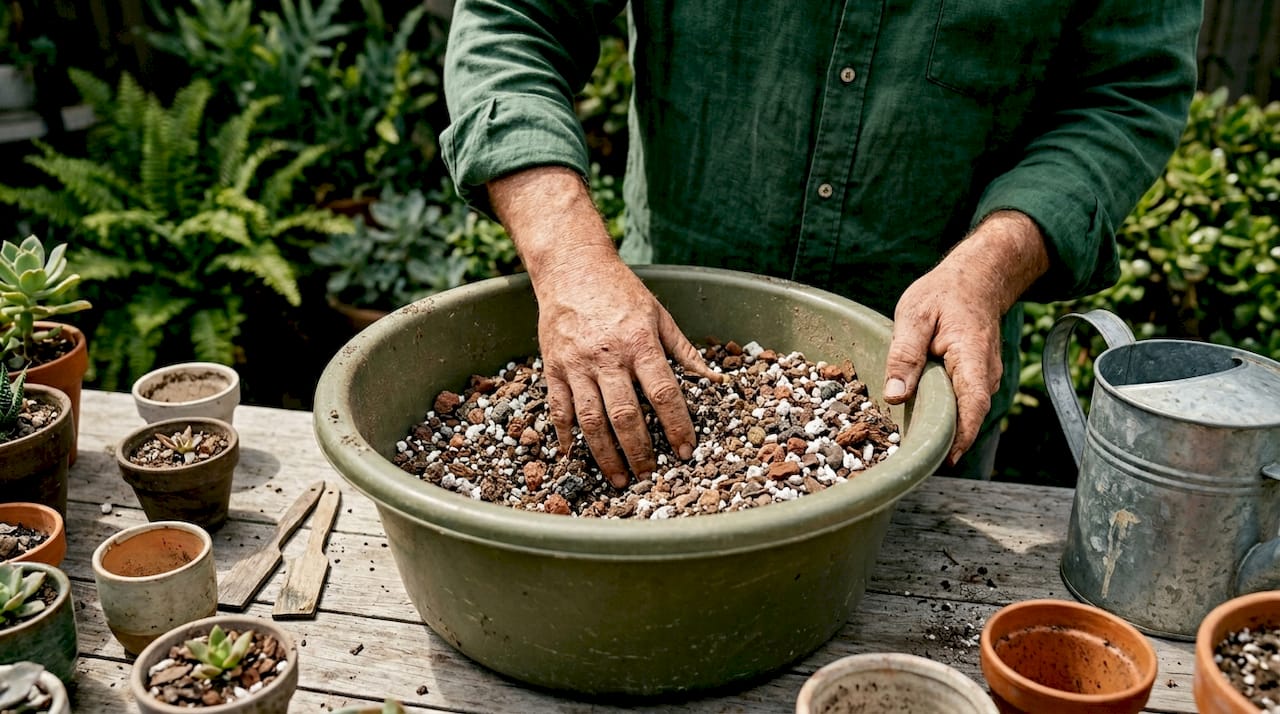
The drainage boosters: perlite and pumice
Perlite is a lightweight volcanic glass that creates air pockets and speeds drainage without adding weight. Pumice is a denser volcanic rock that does the same job but holds up longer without breaking down. Either one works well in a sansevieria mix. An ideal snake plant soil contains a combination of cactus potting mix, perlite or pumice, and optional orchid bark, and that combination is hard to beat for both drainage and root health.
The optional extra: orchid bark
Chunky orchid bark adds structure to the mix. It keeps the soil loose, prevents compaction, and creates large air channels that roots love. It is especially useful if you tend to water on the more frequent side.
Here is the basic recipe by volume:
| Ingredient | Amount | Purpose |
|---|---|---|
| Cactus/succulent mix | 2 parts | Nutrient base, some drainage |
| Perlite or pumice | 1 part | Fast drainage, aeration |
| Orchid bark (optional) | 1 part | Prevents compaction, adds airflow |
What to avoid
Certain ingredients actively harm sansevieria roots. Steer clear of these:
- Dense peat-heavy mixes (peat retains water for days)
- Mixes marketed as “moisture control” (these are designed to hold water)
- Clay-based soils or heavy garden loam
- Compost-heavy blends (too rich and too moist for sansevieria)
If perlite is not available in your area, coarse horticultural sand works as a substitute, but use it at a higher ratio since it drains less aggressively than perlite. Pumice is slightly harder to find in some regions, but it is worth seeking out as it does not break down as quickly as perlite.
Pro Tip: Squeeze a handful of your mix after lightly moistening it. If it clumps and holds its shape tightly, it retains too much moisture for sansevieria. The mix should crumble apart almost immediately when you open your hand.
Before you start mixing, review your overall approach to preparing soil so you understand how each ingredient interacts in the container environment. A deeper understanding of succulent care will also help you make confident adjustments based on your home’s humidity and temperature.
Comparing store-bought vs. DIY sansevieria soil
Once you understand what goes into a good sansevieria mix, the next question is whether to buy a premade blend or build your own. Both approaches can produce healthy plants, but they come with very different tradeoffs.
Store-bought options
Bagged cactus and succulent mixes are convenient and widely available. The challenge is that quality varies enormously between brands. Some products labeled as “cactus mix” are barely different from regular potting soil, with high peat content and minimal grit. Others are genuinely well-formulated with pumice, perlite, and a balanced base.
The safest way to evaluate a commercial mix is to read the ingredient list. If peat moss is the first or second ingredient, that mix will hold more water than your sansevieria wants. If you see perlite, pumice, or sand listed prominently, you are starting from a better place.
DIY mixes
As noted in our best soil for snake plant guide, a DIY mix lets you avoid water-retaining fillers that sneak into store-bought soils. When you mix your own, you control every ingredient and can fine-tune drainage to your specific conditions. If your home tends to be humid, you can increase the perlite ratio. If you live somewhere drier, you might dial it back slightly.
| Factor | Store-bought | DIY mix |
|---|---|---|
| Convenience | High | Low |
| Cost per batch | Medium to high | Lower over time |
| Drainage quality | Inconsistent | Fully customizable |
| Pest risk | Some (fungus gnats) | Lower with sterile inputs |
| Consistency | Varies by brand | Consistent if measured |
| Adjustability | None | Complete control |
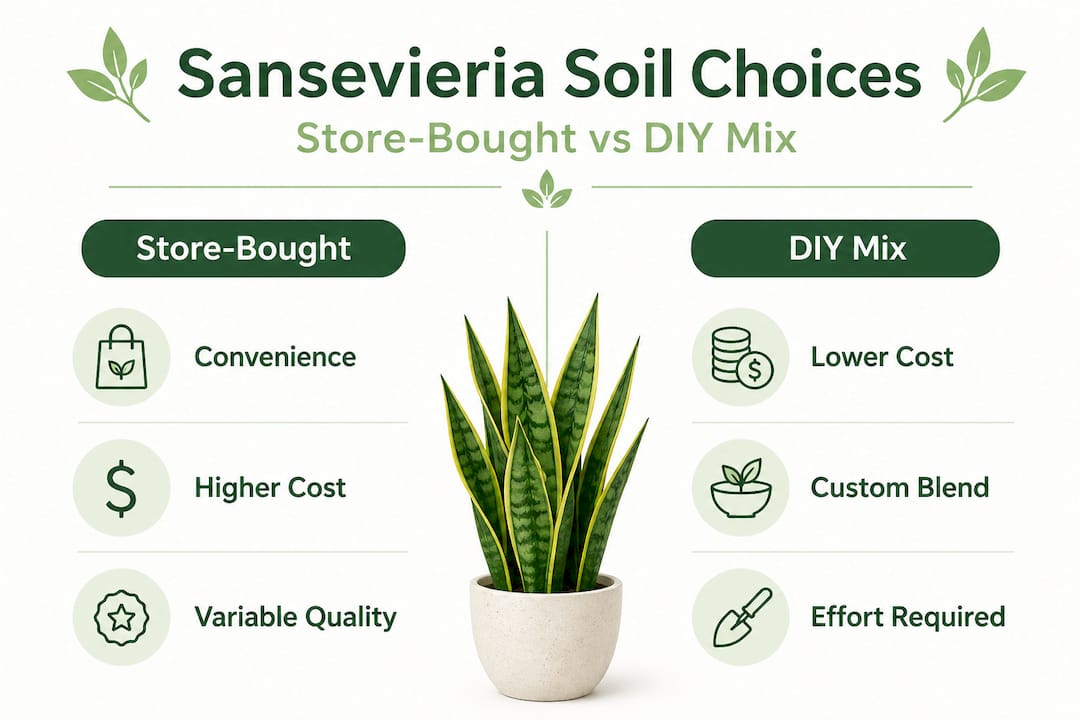
The main downside of DIY mixes is the upfront effort of sourcing materials and measuring them out. For one or two plants, it might feel like overkill. For anyone managing a collection of sansevieria or multiple succulents, mixing in bulk saves money and produces reliably better results.
Pro Tip: If you prefer buying premade soil, always add at least 30 percent perlite by volume to any commercial cactus mix before using it for sansevieria. This simple adjustment dramatically improves drainage without much extra effort.
If you also grow other low-water plants indoors, check out the tips in our indoor succulent care guide to apply the same soil principles across your whole collection.
Repotting and maintaining sansevieria in the right soil
Choosing the right soil is only half the job. Knowing when and how to repot your sansevieria, and how to keep the soil performing well over time, is equally important for healthy, long-term growth.
When to repot
Most sansevieria need repotting every two to three years. You should also repot if you notice roots circling the outside of the root ball or poking out of the drainage holes, if water runs straight through the pot without absorbing, or if the plant looks top-heavy and unstable. According to our snake plant care guide, you should repot sansevieria every 2-3 years or when roots become crowded, and always use a mix with enhanced drainage.
Step-by-step repotting process
- Choose a pot only one size larger than the current one. A pot that is too large holds excess soil and moisture, which increases rot risk.
- Add a layer of your prepared sansevieria mix to the bottom of the new pot, enough to position the plant at the correct height.
- Tip the plant gently sideways and slide it out of its current pot. If roots are stuck, run a thin knife around the inside edge to loosen them.
- Shake off as much of the old soil as possible. Sansevieria roots are thick and fleshy, so you can handle them firmly without causing damage.
- Inspect the roots carefully. Trim off any that are dark brown, mushy, or smell unpleasant. Healthy roots are pale and firm.
- Let the plant sit out for a few hours if you trimmed any roots, allowing cut surfaces to dry before planting.
- Position the plant in the center of the new pot and fill in around the roots with fresh mix. Press gently but do not pack the soil tightly.
- Wait at least one week before watering. This gives any disturbed roots time to settle and reduces the chance of rot.
Signs your soil is failing
Keep an eye out for these warning signals between repottings:
- Yellow or mushy leaves at the base of the plant
- A sour or rotten smell coming from the soil
- Water sitting on the surface for more than a few seconds before absorbing
- Soil that feels wet for more than a week after watering
If you see any of these signs, check your watering habits for indoor plants and consider refreshing the soil mix sooner than the standard schedule. Catching problems early prevents permanent root damage.
Why “set and forget” rarely works with sansevieria soil
Here is something most plant content glosses over: sansevieria are tough, but that toughness has limits that soil slowly erodes. The “plant it once and ignore it for years” approach produces plants that technically survive but never really look spectacular.
Even the best soil mix breaks down over time. Perlite can float to the surface after repeated watering, leaving a denser layer at the bottom where roots sit. Organic matter in the base mix decomposes and compacts, reducing the air pockets that healthy roots depend on. Within two or three years, even a perfectly formulated mix can start behaving more like regular potting soil.
The plants that truly thrive are the ones whose owners pay quiet, consistent attention. Not obsessive daily checking, but a regular, calm awareness of what the soil looks like, how quickly it drains, and whether the plant is sending any signals. A quick soil check every few weeks during growing season takes thirty seconds and can catch compaction or drainage issues before they cause real harm.
Sansevieria also communicate through their leaves. Pale coloring, soft texture at the base, or a lean toward one side often points to a soil problem rather than a light or watering issue. Learning to read these signs is worth far more than any specific soil recipe. Our snake plant indoor care tips cover these visual cues in more detail so you can respond before problems escalate.
The plants that look impressive year after year are not growing in magic soil. They belong to owners who treat sansevieria as living things that benefit from periodic attention, not decorative objects that look after themselves.
Get expert help for every step of your sansevieria journey
Soil is just one piece of the puzzle when it comes to keeping sansevieria genuinely healthy. If you want your plant to look its best season after season, Lushy Gardens has in-depth guides covering every aspect of indoor plant care. Our complete indoor plant care guide walks you through watering schedules, light needs, and seasonal adjustments for a wide range of houseplants. When something goes wrong and you are not sure why, the plant problem troubleshooting guide gives you fast, clear answers. For those who like structure, our daily plant care checklist keeps your routine consistent without feeling overwhelming. Everything you need to keep your sansevieria thriving is right here.
Frequently asked questions
Can I use regular potting soil for sansevieria?
Regular potting soil holds too much moisture for sansevieria and can increase root rot risk significantly; always amend with perlite or use a cactus-specific blend as your base.
Do sansevieria need fertilizer if the soil is good?
Sansevieria do well in lean soil but benefit from a light, balanced fertilizer once or twice during the growing season; mineral-rich but unfertilized conditions are their natural preference.
How often should I change the soil for my sansevieria?
You should repot with fresh, well-draining mix roughly every 2-3 years or sooner if roots are crowded or drainage has noticeably slowed.
What materials should I avoid when making sansevieria soil?
Avoid high peat content, dense clay, or compost-heavy mixes because these retain too much moisture and will keep roots sitting in wet conditions far longer than sansevieria can tolerate.
Recommended
- Caring for Snake Plant: A Step-by-Step Guide to Healthy Growth – Lushy Gardens
- Snake plant succulent guide: easy indoor care tips – Lushy Gardens
- 7 Best Plants for Beginners to Grow at Home Easily – Lushy Gardens
- Best Soil for Snake Plant – Cultivating a Healthy Growth Environment – Lushy Gardens
- Plantentips voor in huis: gezondere kamerplanten met slimme zorg
- Kamerplanten verzorgen: praktische tips voor blijvende groei

I’m Eleanor, a seasoned gardener with over three decades of experience tending to Mother Nature’s creations. Through Lushy Gardens, I aim to share my wealth of knowledge and help fellow plant enthusiasts uncover the wonders of gardening. Let’s dive into this journey together, one leaf at a time.


