
Table of Contents
Snake plants have a reputation that’s almost too good to be true. People call them indestructible, pass them around as gifts for forgetful friends, and assume they’ll survive anything. That’s partly true, but it’s also the reason so many snake plants end up with yellow leaves, mushy roots, and confused owners. The reality is that snake plants are succulents with specific preferences, and knowing those preferences is what separates a thriving plant from a struggling one. This guide walks you through everything: what makes them succulents, how to set up the right environment, how to water and feed them properly, and how to fix the most common problems before they get serious.
Key Takeaways
| Point | Details |
|---|---|
| Snake plant basics | Snake plants are succulents that thrive with minimal, attentive care and are ideal for beginners. |
| Optimal conditions | They prefer bright, indirect light, fast-draining soil, and sparing watering for the best growth. |
| Common mistakes | Overwatering and poor light are the top reasons for unhealthy leaves or rot. |
| Propagation tips | For variegated varieties, propagate by division instead of leaf cuttings to maintain their signature look. |
| Simple routines best | A measured, hands-off approach often keeps snake plants at their healthiest indoors. |
What makes the snake plant a succulent?
Not every tough plant is a succulent, but snake plants genuinely earn that label. A succulent is any plant that stores water in its leaves, stems, or roots to survive dry conditions. Snake plants do exactly that. Their thick, upright leaves act like reservoirs, holding moisture so the plant can keep going even when you forget to water for a few weeks.
This adaptation comes from their native habitat in West Africa, where rainfall is unpredictable and soils drain fast. As noted in our propagation guide, snake plants store water in thick leaves, making them built for drought. That’s not just a fun fact. It directly shapes how you should care for them indoors.
Here’s what their succulent nature means in practical terms:
- Thick, waxy leaves that reduce water loss through evaporation
- Shallow root systems that prefer fast-draining soil over dense, moisture-retaining mixes
- High drought tolerance but low tolerance for sitting in wet soil
- Slow growth that speeds up with the right light and warmth
The most popular varieties you’ll find at nurseries include Sansevieria trifasciata, the classic dark green banded type, and Laurentii, which has striking yellow edges. Both share the same succulent adaptations, though Laurentii’s variegation (the yellow border pattern) requires some extra attention to preserve.
Understanding the benefits of snake plants goes beyond their good looks. They’re known to filter indoor air and tolerate low-light spaces, making them practical as well as attractive. But their succulent characteristics are what make them so forgiving for beginners who are still learning their rhythm.
Optimal growing conditions for snake plants
Understanding their adaptations, let’s outline how to recreate ideal conditions to help your snake plant thrive inside.
Light is where most beginners get it wrong. Snake plants tolerate low light, but they don’t love it. In dim corners, growth slows dramatically and variegated types can lose their color patterns. Bright, indirect sunlight is the sweet spot. A spot near a north or east-facing window works well. Direct afternoon sun can scorch the leaves, so keep them back from south-facing windows in summer.
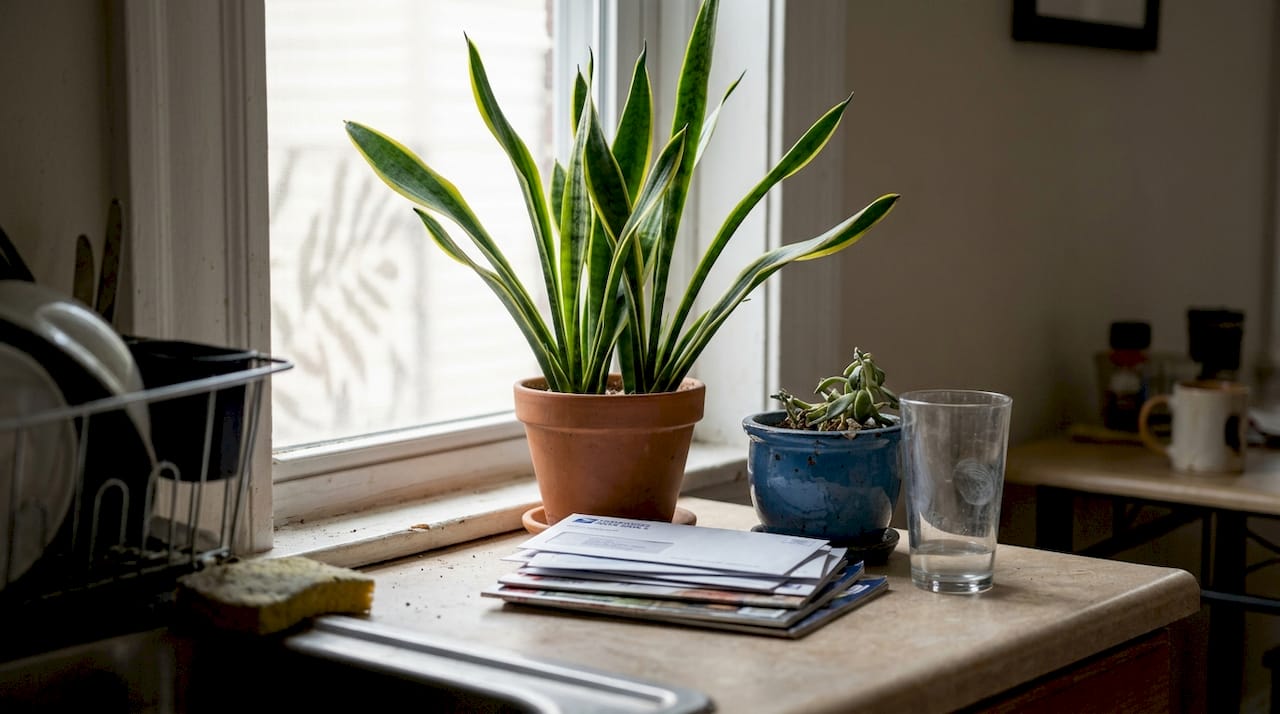
Research confirms that variegated types lose variegation in low light, which is worth knowing before you tuck a Laurentii into a dark hallway.
| Condition | Ideal range | Notes |
|---|---|---|
| Light | Bright, indirect | Tolerates low light; variegation fades in shade |
| Temperature | 60°F to 80°F | Avoid drafts and temps below 50°F |
| Humidity | 30% to 50% | Tolerates dry air well |
| Soil | Fast-draining, gritty | Cactus or succulent mix works best |
| Pot type | Terracotta with drainage | Plastic holds moisture longer |
Temperature matters more than most people think. Snake plants dislike cold drafts and anything below 50°F can damage their roots. Keep them away from air conditioning vents and exterior doors in winter.
For soil, skip the standard potting mix. A best soil for snake plants recommendation always points toward gritty, fast-draining blends. You can also explore best succulent soil options that mix perlite or coarse sand with a base potting mix. The goal is soil that dries out quickly after watering.
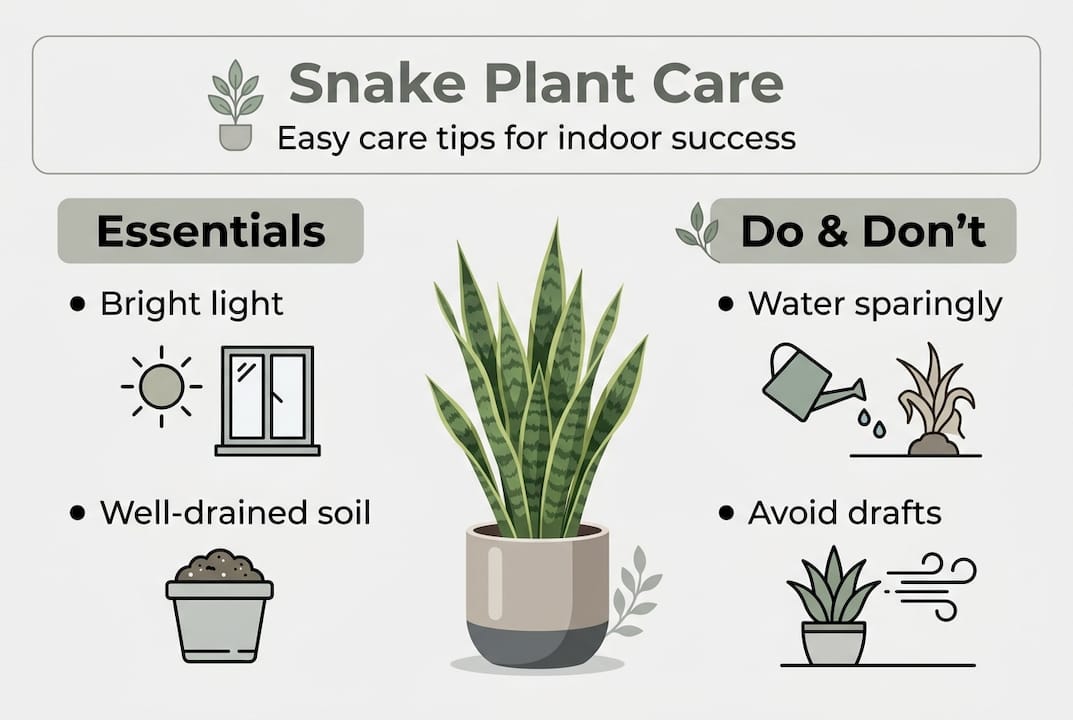
Pro Tip: Terracotta pots are your best friend here. They’re porous, which means they pull excess moisture away from the roots faster than plastic or ceramic glazed pots.
For small apartments or offices, snake plants are ideal near windows or on shelves that get some natural light. Even a few feet from a window is usually enough to keep them healthy.
Watering, feeding, and practical care routines
With their environment set, here’s how to keep up with maintenance.
The single biggest mistake snake plant owners make is watering too often. Because these plants store water in their leaves, they don’t need frequent top-ups. The rule is simple: only water when the top two inches of soil are completely dry. Stick your finger in. If it feels damp at all, wait a few more days.
As our watering guide explains, snake plants need infrequent watering to prevent root rot, which is the number one killer of these plants.
Here’s a simple routine to follow:
- Check the soil by pressing your finger two inches deep. Water only if it’s dry.
- Water thoroughly until it drains from the bottom of the pot. Empty the saucer after 30 minutes.
- Wipe the leaves with a damp cloth every few weeks to remove dust and help the plant absorb light.
- Rotate the pot a quarter turn each month so all sides get even light exposure.
- Fertilize lightly during spring and summer with a balanced liquid fertilizer diluted to half strength. Skip feeding in fall and winter.
Pro Tip: In winter, you might only water once a month. Snake plants go semi-dormant in cooler months and need even less moisture than usual. Overwatering in winter is when root rot strikes hardest.
For caring for snake plants long-term, keep it simple. Less is genuinely more with these plants. Overfeeding with fertilizer causes salt buildup in the soil, which burns roots and causes brown leaf tips.
Solving common problems: Pests, rot, and leaf issues
Even with the right care, snake plants can show warning signs. Here’s how to troubleshoot.
The most common issues you’ll run into fall into a few clear categories. Knowing what you’re looking at makes fixing it much faster.
Pests to watch for:
- Mealybugs: Look like white cottony clusters at the base of leaves. Wipe off with rubbing alcohol on a cotton swab.
- Spider mites: Tiny dots and fine webbing on leaves. Rinse leaves with water and treat with neem oil.
- Fungus gnats: Tiny flies hovering around soil. Usually a sign of overwatering. Let soil dry out completely.
| Problem | Likely cause | Fix |
|---|---|---|
| Yellow leaves | Overwatering | Reduce watering; check drainage |
| Mushy base | Root rot | Unpot, trim rotted roots, repot in dry mix |
| Brown tips | Low humidity or fertilizer burn | Flush soil; trim tips with clean scissors |
| Faded variegation | Low light or leaf cutting propagation | Move to brighter spot; use division instead |
| Drooping leaves | Cold damage or root rot | Check temperature and root health |
Root rot is serious but fixable if you catch it early. Unpot the plant, shake off the soil, and look for black or mushy roots. Trim them back to healthy white tissue with sterile scissors, let the roots air dry for a day, then repot in fresh dry mix.
“Variegated types lose variegation in low light or from leaf cuttings; use division or rhizome propagation for pattern fidelity.” This is especially important for Laurentii owners who want to keep that signature yellow border.
For a broader look at keeping your plant healthy, our snake plant care tips cover air quality benefits alongside troubleshooting strategies.
Research on variegation and propagation confirms that the method you use to multiply your plant directly affects whether the color pattern carries over.
Propagation and advanced tips for plant lovers
If you want to multiply your collection, here’s how to start new plants the smart way.
Snake plants are easy to propagate, but the method you choose matters a lot, especially if you have a variegated variety.
Two main methods:
- Leaf cuttings: Cut a healthy leaf into 3 to 4 inch sections. Let the cut ends dry for a day, then place them upright in moist soil or water. Roots appear in 4 to 8 weeks. Fast and easy, but variegated plants will lose their pattern with this method.
- Division: Remove the plant from its pot and gently separate the root clump into sections, each with its own leaves and roots. Repot each section individually. This preserves variegation and produces a mature plant faster.
As confirmed by propagation research, variegated types lose their pattern from leaf cuttings, so division is the right choice for Laurentii and similar varieties.
Pro Tip: Spring is the best time to propagate. The plant is entering its active growth phase, which means new roots establish faster and the risk of rot is lower.
Here’s a quick step-by-step for division:
- Water the plant a day before to loosen the soil.
- Unpot carefully and shake off excess soil.
- Identify natural separation points in the root mass.
- Pull or cut sections apart, making sure each has healthy roots.
- Repot in fresh succulent mix and wait a week before watering.
For a detailed walkthrough, our guide on how to propagate snake plants covers both methods with photos and aftercare advice.
The real secret to happy snake plant succulents
Here’s the thing most articles won’t tell you: the biggest threat to a snake plant isn’t neglect. It’s enthusiasm.
New plant owners read that snake plants are resilient and then proceed to water them weekly, fertilize monthly, mist the leaves, and move them around the apartment looking for the perfect spot. Every one of those actions adds stress. Snake plants don’t want attention. They want consistency.
The plants that thrive longest are the ones that get watered on a loose schedule, sit in one good spot, and get fertilized twice a year at most. That’s it. The owners who do best with snake plants are the ones who learn to read the plant rather than follow a rigid calendar. Drooping slightly? Check the roots. Leaves looking dull? Wipe them down and check the light. Color fading? Move it closer to a window.
There’s real value in that kind of attentiveness, and it connects to why snake plants and wellness go hand in hand for people living in busy urban spaces. They reward a calm, observant approach rather than constant intervention.
Ready to grow? More resources for plant lovers
For more on creating a healthy indoor oasis, check out these resources. Whether you’re just getting started or looking to expand your plant collection, Lushy Gardens has guides built for every level. Explore how indoor plants improve air quality in your home, or use our plant troubleshooting guide when something looks off with your snake plant. If you’re newer to gardening overall, our gardening basics guide is the perfect place to build a strong foundation. We’re here to help you grow with confidence, one plant at a time.
Frequently asked questions
Is a snake plant really a succulent?
Yes. Snake plants store water in thick leaves and tolerate drought well, which are the defining traits of a succulent. They’re well suited to dry indoor conditions and infrequent watering.
How often should you water a snake plant succulent?
Water when the soil is completely dry, which is usually every 2 to 4 weeks depending on your home’s temperature and humidity. As our guide confirms, watering infrequently prevents the root rot that kills most snake plants.
Why do snake plant leaves turn yellow or mushy?
Yellow or mushy leaves almost always point to overwatering and root rot. Let the soil dry out fully, unpot the plant to check the roots, and trim any damaged sections before repotting. Our guide on caring for snake plants covers the recovery steps in detail.
How can I keep variegation in a snake plant like Laurentii?
Propagate by division or rhizome separation rather than leaf cuttings, and keep the plant in bright indirect light. Research confirms that variegated types lose their pattern in low light and through leaf cutting propagation.
Recommended
- Master Indoor Succulent Care for a Thriving Collection – Lushy Gardens
- Succulent care guide: expert tips for thriving plants – Lushy Gardens
- Caring for Snake Plant: A Step-by-Step Guide to Healthy Growth – Lushy Gardens
- Succulent Care Essentials: Thriving in Low Light Homes – Lushy Gardens

I’m Eleanor, a seasoned gardener with over three decades of experience tending to Mother Nature’s creations. Through Lushy Gardens, I aim to share my wealth of knowledge and help fellow plant enthusiasts uncover the wonders of gardening. Let’s dive into this journey together, one leaf at a time.


