
Table of Contents
Succulents have a reputation for being nearly impossible to kill, yet 83-90% of deaths come down to one avoidable mistake: overwatering. That gap between reputation and reality leaves a lot of home gardeners frustrated, staring at a mushy, yellowing plant and wondering what went wrong. The good news is that once you understand how succulents actually work, the care routine becomes surprisingly simple. This guide walks you through watering, light, soil, and troubleshooting so your succulents can genuinely thrive indoors.
Key Takeaways
| Point | Details |
|---|---|
| Water only when dry | Succulents thrive when soil is allowed to dry completely between deep waterings. |
| Prioritize proper soil | Use fast-draining mixes to prevent root rot and support healthy roots. |
| Light is crucial | Succulents need plenty of bright light, and adjusting placement protects against stretching or sunburn. |
| Spot issues early | Look for signs of over- or underwatering, and adjust routines promptly to save your plant. |
Understanding your succulent: What makes them unique
Succulents are not just pretty plants with thick leaves. Those plump, fleshy leaves and stems are actually water storage organs, built to survive long dry spells in arid environments. That adaptation is the key to everything: it explains why they hate sitting in wet soil, why they grow slowly, and why the care rules for most houseplants simply do not apply here.
Here is what sets succulents apart from your average houseplant:
- Water storage: Leaves, stems, or roots hold moisture for weeks at a time
- Slow metabolism: They use water and nutrients at a much slower rate than tropical plants
- Drought resilience: Built to survive neglect, not constant attention
- Sensitivity to overwatering: Roots suffocate quickly in soggy soil
- Wide variety: From Echeveria to Aloe, each genus has slightly different needs
One of the biggest misconceptions is that succulents need constant bright sunlight. While most prefer good light, some species like Sansevieria maintain health even in lower-water, lower-light conditions. Another myth is that they never need fertilizer. They do, just far less than other plants and only during their active growing season.
“Think of a succulent like a camel, not a cactus. It stores what it needs and thrives on a rhythm of feast and fast, not constant feeding.”
Understanding this biology is what separates gardeners who struggle from those who succeed. If you are building a drought tolerant garden or just starting out with indoor plants, getting these basics right from the start saves a lot of heartache. For a broader overview of what succulents need day to day, the succulent care essentials guide at Lushy Gardens is a great starting point.
Watering succulents: The most common mistakes
Watering is where most people go wrong, and it is almost always in the direction of too much rather than too little. Succulents store water in their tissues, so they can handle a missed watering far better than a soggy pot.
The golden rule is simple: soak, then let dry completely. Water thoroughly until it drains from the bottom of the pot, then do not water again until the top 1-2 inches of soil are bone dry. Water every 1-3 weeks depending on the season, your home’s humidity, and how much light the plant gets. In winter, when most succulents go dormant, you can stretch that to once a month or even less.
Overwatered vs. underwatered succulents: Know the difference
| Symptom | Overwatered | Underwatered |
|---|---|---|
| Leaf texture | Soft, mushy, translucent | Wrinkled, shriveled, dry |
| Leaf color | Yellow or pale | Brown tips, dull color |
| Stem condition | Rotting at base | Firm but dry |
| Soil condition | Wet, possibly smelly | Bone dry, pulling from edges |
| Recovery time | Weeks to months | 2-6 weeks with proper watering |
Overwatering causes root rot and stunted growth, accounting for the vast majority of succulent deaths. Underwatering, while uncomfortable for the plant, is far easier to fix. Knowing the difference between overwatering vs underwatering is one of the most valuable skills you can develop as a plant owner.
Seasonal adjustments matter more than most people realize. During spring and summer, your succulent is actively growing and will use water faster. Come fall and winter, growth slows dramatically and water needs drop. Ignoring this seasonal shift is a fast track to root rot.
Pro Tip: Use collected rainwater or filtered water when possible. Tap water in many areas contains minerals that build up in the soil over time, leaving white crusty deposits and potentially stressing your plant’s roots.
If you want a deeper look at reading your plant’s signals, check out the signs of overwatering guide and the full breakdown of succulent care indoors for seasonal watering schedules.
The right soil and pots for healthy roots
Even if you nail your watering schedule, the wrong soil will undo all of it. Regular potting mix holds moisture for too long, keeping roots wet between waterings and creating the perfect conditions for rot.
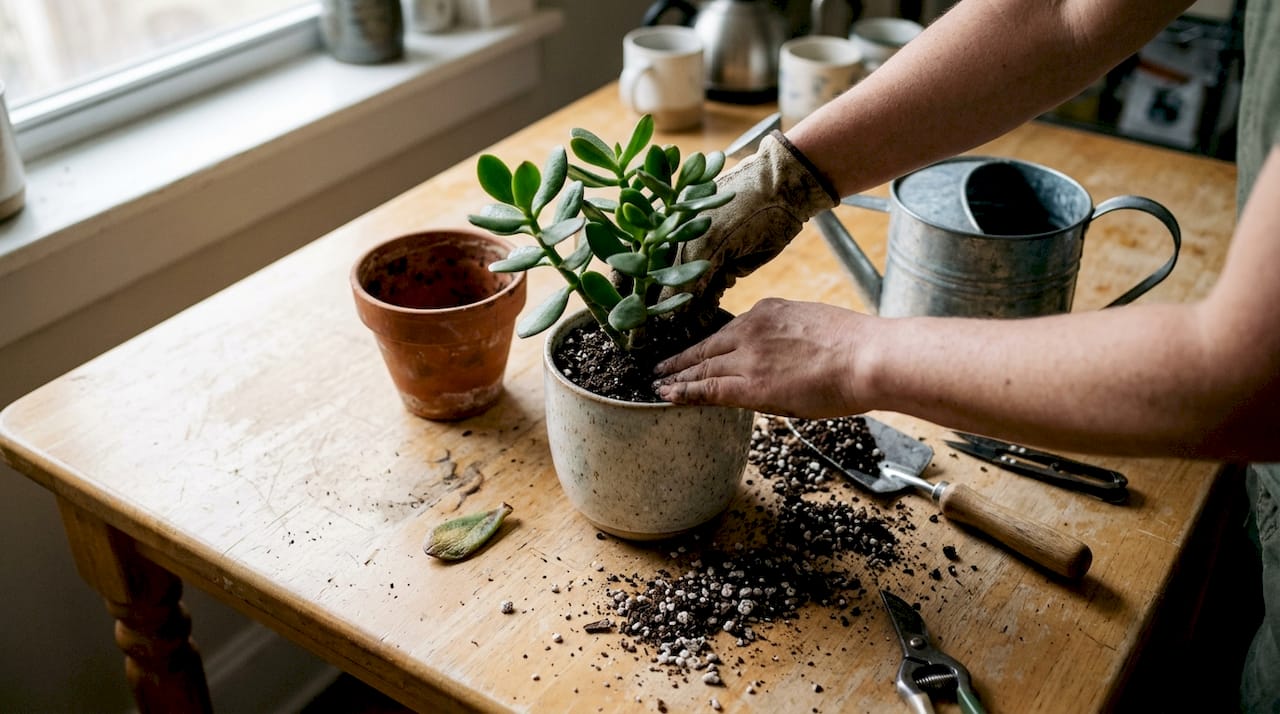
Succulent soil needs to drain fast. A good mix is roughly 50% inorganic material like coarse sand, perlite, or pumice, and 50% organic material like a basic potting mix. This combination lets water move through quickly while still holding enough nutrients for the plant. You can buy pre-made succulent and cactus soil or amend a standard mix yourself.
Soil options and amendments at a glance
| Material | Purpose | Notes |
|---|---|---|
| Perlite | Improves drainage and aeration | Add 30-50% to any mix |
| Coarse sand | Prevents compaction | Use horticultural grade, not beach sand |
| Pumice | Excellent drainage and structure | Pricier but very effective |
| Pre-made succulent mix | Convenient, balanced | Check label for perlite content |
| Regular potting soil | Base only | Never use alone for succulents |
Pot choice matters just as much as soil. Here is what to look for:
- Drainage holes: Non-negotiable. No drainage hole means no airflow to roots.
- Terracotta pots: Porous walls allow moisture to evaporate faster, great for beginners
- Ceramic or plastic pots: Retain moisture longer, so water even less frequently
- Pot size: Choose a pot only 1-2 inches wider than the plant. Too large a pot holds excess soil moisture.
Soil that stays dry at the top 1-2 inches is your signal to water again, so the pot and soil together act as your built-in watering guide.
Pro Tip: Never let your succulent sit in a saucer of standing water. Even 30 minutes of standing water can start the root rot process in a well-draining pot. Empty saucers after every watering.
Lighting and placement: Getting it just right
Light is the third pillar of succulent care, and it is one that catches a lot of indoor gardeners off guard. Succulents are not shade plants, but they are not all sun-worshippers either.
Most succulents do best with 6 hours of bright, indirect light per day. A south or east-facing window is usually ideal for indoor growing. West-facing windows work too, though afternoon sun can be intense enough to scorch leaves in summer. North-facing windows rarely provide enough light for most varieties.
Here is how to read your plant’s light signals:
- Etiolation (stretching): The plant grows tall and leggy, reaching toward the light source. This means it needs more light.
- Scorching: Brown, crispy patches appear on leaves facing the sun. Move the plant back or filter light with a sheer curtain.
- Color fading: Vibrant colors turning pale or washed out often signal too much harsh direct sun.
- Compact, colorful growth: This is what you are aiming for. Good light produces tight rosettes and rich color.
“Rotating your pot a quarter turn every week is one of the easiest things you can do. It keeps growth even and prevents your plant from leaning awkwardly toward the window.”
If your home does not have great natural light, grow lights are a practical solution. Full-spectrum LED grow lights placed 6-12 inches above the plant for 12-14 hours a day can fully substitute for a sunny windowsill. This is especially useful in winter when daylight hours shrink.
For more on managing succulent care in low light environments, Lushy Gardens has practical tips for making the most of whatever light your home offers. It is worth noting that prolonged drought combined with poor light can cause crispiness that takes 2-6 weeks to recover from even after you correct conditions, so catching problems early matters.
Solving common succulent problems
Even with the best routine, things go sideways sometimes. The key is catching problems early and knowing exactly what to do next.
Visual symptoms to watch for:
- Mushy, translucent leaves at the base: Overwatering or root rot
- Wrinkled, shriveled leaves: Underwatering or extreme heat
- Brown, crispy leaf tips: Sunburn or low humidity
- Tall, stretched growth with wide leaf spacing: Etiolation from insufficient light
- White crusty deposits on soil or pot: Mineral buildup from tap water
- Black or brown soft stem: Advanced root rot, act immediately
What to do for each problem:
- Overwatering: Stop watering immediately. Remove the plant from its pot, trim any black or mushy roots, let roots air dry for 24-48 hours, then repot in fresh dry soil.
- Underwatering: Water thoroughly using the soak method, then resume a regular schedule. Leaves should plump back up within 1-2 weeks.
- Sunburn: Move the plant to a spot with filtered or indirect light. Damaged leaves will not recover but new growth will be healthy.
- Etiolation: Gradually increase light exposure over 1-2 weeks to avoid shocking the plant. You can also propagate the stretched stem by cutting and rerooting it.
- Root rot (advanced): Remove all rotted roots and stems, let the healthy portion callous over for a few days, then replant. Recovery takes several weeks.
Root rot and stunted growth from overwatering are the hardest problems to reverse, which is why prevention matters far more than treatment. If you are unsure whether your plant is overwatered or underwatered, compare your plant’s symptoms against the table in the watering section above.
For a full recovery plan and timeline, the signs of overwatering and recovery guide walks you through each stage. And if your plant seems to have stopped growing entirely, it may simply be resting. Learning about plant dormancy can save you from over-correcting a plant that is perfectly fine.

Grow your collection and skills with Lushy Gardens
If this guide has you feeling more confident about your succulents, there is a whole world of indoor plant care waiting for you. At Lushy Gardens, you will find practical, no-fluff guides written for real home gardeners, not botanists. Whether you want to expand into other houseplants, learn how to multiply your succulents through propagation, or dial in the perfect soil setup, the resources are there. Explore indoor plant care tips for a broader look at keeping all your houseplants healthy, or follow the step-by-step houseplant propagation guide to grow your collection for free. For everything soil-related, the deep-dive on succulent soils is one of the most practical reads on the site.
Frequently asked questions
How often do I water succulents indoors?
Water thoroughly only when the top 1-2 inches of soil are completely dry, which typically means every 1-3 weeks depending on your home’s conditions and the season.
Can overwatered succulents recover?
Yes, recovery is possible if you catch it early. Remove the plant from wet soil, trim rotted roots, and let everything dry out before repotting, since root rot from overwatering is the leading cause of succulent death.
What soil should I use for succulents?
Use a gritty, fast-draining mix with at least 30-50% perlite or coarse sand. Regular potting soil holds too much moisture and soil that stays wet between waterings is the fastest path to root rot.
Why are my succulent’s leaves shriveling?
Shriveling usually means underwatering. Rehydrate using the soak method and your plant should recover within a few weeks, since prolonged drought causes crispiness that takes 2-6 weeks to fully reverse.
Can I keep succulents in rooms with little natural light?
Yes, but you will need to supplement with a full-spectrum grow light placed 6-12 inches above the plant for 12-14 hours daily to keep your succulent compact and healthy.
Recommended
- Houseplants for beginners: easy care tips (68% saved) – Lushy Gardens
- How to Propagate Snake Plant: Step-By-Step Guide for Thriving Plants – Lushy Gardens
- Master Indoor Succulent Care for a Thriving Collection – Lushy Gardens
- Succulent Care Essentials: Thriving in Low Light Homes – Lushy Gardens
- Torkade växter skötselguide för hållbar inredning – Torrdecor

I’m Eleanor, a seasoned gardener with over three decades of experience tending to Mother Nature’s creations. Through Lushy Gardens, I aim to share my wealth of knowledge and help fellow plant enthusiasts uncover the wonders of gardening. Let’s dive into this journey together, one leaf at a time.


