
Table of Contents
Think snake plants need frequent watering? That’s the fastest way to kill them. These resilient indoor plants thrive on neglect, not attention. Their unique biology allows them to survive weeks without water while actively purifying your air. Understanding their natural adaptations transforms confusing care advice into simple, effective routines that keep your snake plant healthy for years.
Key Takeaways
| Point | Details |
|---|---|
| Watering frequency | Water every 2 to 6 weeks only when soil is completely dry to prevent deadly root rot. |
| Light tolerance | Snake plants survive low light but need some indirect brightness for optimal growth and health. |
| Air purification | They reduce formaldehyde and benzene by up to 30% within 24 hours according to NASA research. |
| Propagation ease | Both leaf cuttings and rhizome division work well, with division producing faster results in about one month. |
Introduction to Snake Plants: Biology and Benefits
Snake plants evolved in arid African regions where water scarcity shaped their survival strategy. They use Crassulacean Acid Metabolism, opening their stomata at night instead of during the day. This adaptation reduces water loss by up to 50% compared to typical houseplants.
While you sleep, your snake plant works. It absorbs carbon dioxide and releases oxygen overnight, unlike most plants that only photosynthesize during daylight. This makes them ideal bedroom companions for improved air quality around the clock.
The air purification benefits extend beyond oxygen production. NASA studies documented that snake plants reduce formaldehyde and benzene concentrations by 30% within 24 hours. These volatile organic compounds escape from furniture, cleaning products, and building materials.
Their thick, waxy leaves store water for extended periods. This biological reservoir explains why frequent watering harms rather than helps them. The succulent leaves contain enough moisture to sustain the plant through drought conditions that would devastate conventional houseplants.
Pro Tip: Place your snake plant in your bedroom to take advantage of its nighttime oxygen production and continuous air filtration while you sleep.
Understanding these adaptations clarifies why snake plants demand different care than ferns or pothos. Their urban wellness benefits stem directly from evolutionary traits that prioritize water conservation and metabolic efficiency.
Key biological advantages include:
- Night oxygen production through CAM photosynthesis
- Toxin filtration from common household chemicals
- Drought resilience through water storage in leaves
- Low maintenance requirements due to slow growth patterns
- Tolerance for neglect and irregular care schedules
Understanding Snake Plant Light and Water Needs
Bright, indirect light produces the healthiest growth, but snake plants tolerate surprisingly dim conditions. They can survive in corners away from windows, though growth slows dramatically. Avoid direct sunlight, which scorches their leaves and causes unsightly brown patches.
Office fluorescent lighting provides sufficient illumination. If your space allows you to read comfortably without artificial light during the day, your snake plant will manage. Variegated varieties need slightly more light to maintain their striking patterns.
Watering frequency depends entirely on soil dryness. Stick your finger two inches into the soil. If you feel any moisture, wait another week. During winter, plants may need water only once every six weeks as their metabolism slows.
Summer watering increases to every two to three weeks when warmth accelerates growth. Season matters more than calendar schedules. Your climate, pot size, and soil type all influence how quickly moisture evaporates.
Overwatering causes 70% more deaths than the recommended intervals. Root rot develops when roots sit in soggy soil, cutting off oxygen supply. Black, mushy roots and yellow, drooping leaves signal overwatering damage.
Underwatered snake plants show different symptoms:
- Leaves develop brown, crispy tips
- Foliage wrinkles or folds inward
- Growth stops completely for months
- Soil pulls away from pot edges when bone dry
Pro Tip: Use terracotta pots instead of plastic. The porous material wicks excess moisture from soil and prevents water accumulation that leads to root rot.
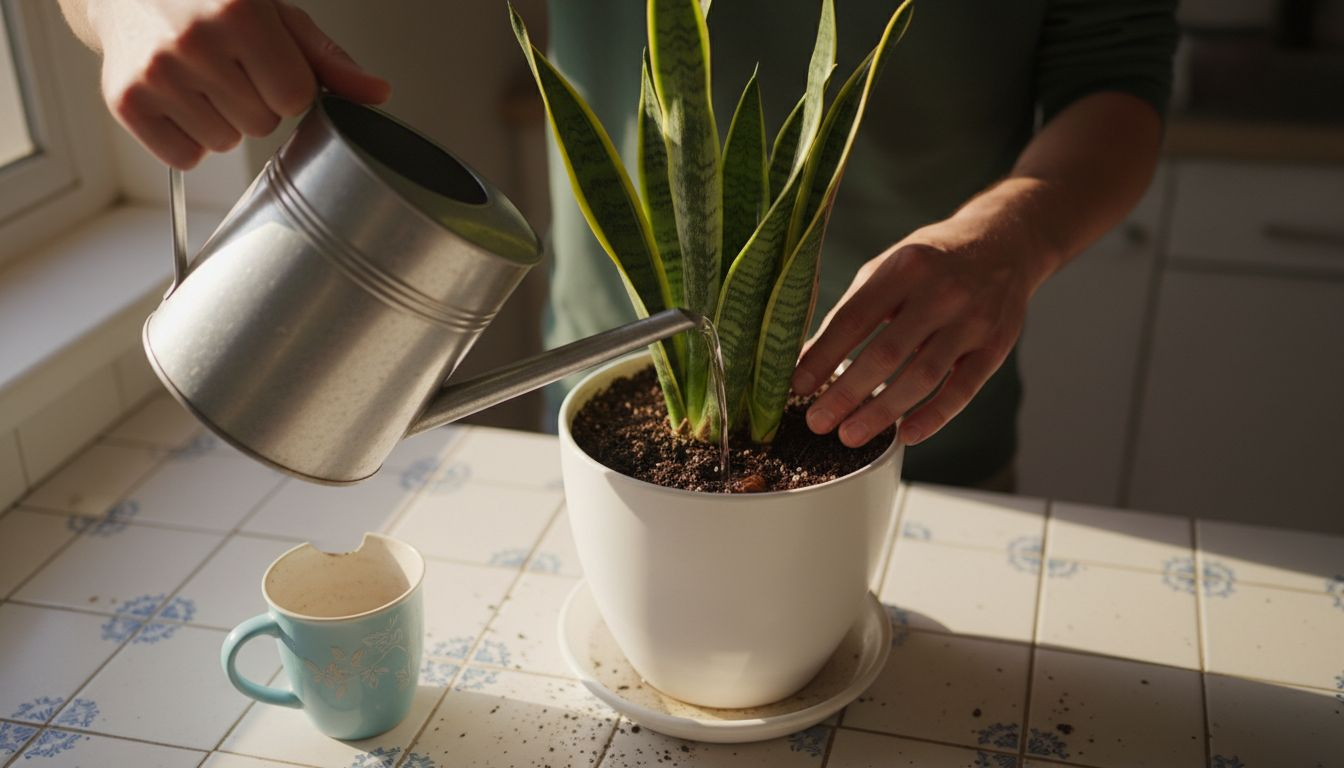
Water thoroughly until liquid drains from bottom holes, then let the pot drain completely. Never leave your snake plant sitting in a saucer full of water. This creates the perpetually wet conditions that invite fungal diseases and root decay.
Common Mistakes and Misconceptions About Snake Plant Care
The biggest myth claims snake plants thrive in complete darkness. While they tolerate low light better than most houseplants, they still require some indirect light for photosynthesis. Total darkness eventually starves them of energy.
Many beginners water on fixed schedules regardless of soil conditions. This rigid approach ignores seasonal changes, humidity levels, and individual plant needs. Your snake plant drinks less in winter and more in summer, so adapt accordingly.
Another common error involves overfertilizing. Snake plants grow slowly and need minimal nutrients. Fertilizing more than twice yearly causes salt buildup in soil, burning roots and creating brown leaf tips. Less truly means more with these plants.
Some people assume yellow leaves always indicate underwatering. Actually, yellowing often signals the opposite problem. When roots rot from excess moisture, they cannot absorb nutrients, causing leaves to yellow and collapse.
Remember: Snake plants evolved to survive drought, not floods. When in doubt, underwater rather than overwater.
Recognize these warning signs of improper care:
- Soft, mushy leaf bases indicate root rot from overwatering
- Slow growth is normal, not a problem requiring intervention
- Pale leaves suggest too little light, not nutrient deficiency
- Leaf splitting occurs from physical damage or very dry air
The proper watering approach requires patience. New plant owners often kill their snake plants with kindness, providing water the plant doesn’t need or want. Trust the soil dryness test more than any predetermined schedule.
Correcting these misconceptions saves countless plants. Understanding that neglect benefits snake plants more than constant attention revolutionizes your care approach. Their resilience becomes an asset rather than a mystery when you stop fighting their natural adaptations.
Managing Pests, Diseases, and Ensuring Safety
Pest problems affect fewer than 10% of snake plants, making infestations relatively rare. Mealybugs appear as white, cottony clusters on leaves and in crevices. Spider mites create fine webbing and cause stippled, yellowing foliage.
Neem oil provides effective organic control. Mix one tablespoon of pure neem oil with one quart of water and a few drops of dish soap. Spray all leaf surfaces thoroughly, especially undersides where pests hide. Repeat weekly for three weeks.
Insecticidal soap offers another safe option. It suffocates soft-bodied insects on contact without leaving harmful residues. Apply in the evening to avoid leaf burn from sunlight interacting with the soap solution.
Pet owners need awareness about snake plant toxicity. The ASPCA confirms these plants contain saponins that cause gastrointestinal upset in cats and dogs. Ingestion leads to vomiting, diarrhea, and excessive drooling.
Place plants on high shelves or in rooms pets cannot access. Hanging planters work well for homes with curious cats. Monitor pets around any new plants until you confirm they show no interest in chewing leaves.
| Pest Type | Symptoms | Treatment Frequency |
|---|---|---|
| Mealybugs | White cottony clusters | Weekly for 3 weeks |
| Spider Mites | Fine webbing, stippling | Every 5 days for 3 applications |
| Scale Insects | Brown bumps on leaves | Twice weekly for 2 weeks |
Learn more about snake plant toxicity to cats and dogs to make informed placement decisions. While not severely toxic, the discomfort they cause pets warrants caution.
Pro Tip: Wipe leaves monthly with a damp cloth to remove dust and spot pest problems early before they spread throughout your plant collection.
Preventive care reduces pest risks:
- Inspect new plants thoroughly before bringing them home
- Quarantine new additions for two weeks away from other plants
- Maintain good air circulation around foliage
- Avoid overwatering, which attracts fungus gnats
- Remove dead leaves promptly as they harbor pests
Regular monitoring catches problems when they’re easiest to fix. Check your snake plant weekly during watering for any unusual spots, webbing, or sticky residue that signals pest activity.
Propagation Techniques for Snake Plants
Rhizome division delivers the fastest results, producing independent plants in about one month. When repotting, examine the root system for natural divisions where the plant has already begun separating. Cut through the rhizome with a clean, sharp knife.
Each division needs at least three leaves and a portion of the root system. Plant divisions immediately in fresh, well-draining soil. Water lightly and avoid fertilizing for six weeks while roots establish.
Leaf cuttings take longer but produce multiple plants from a single leaf. This propagation method requires two to three months for roots to develop. Cut a healthy leaf into three to four inch sections.
Mark the bottom of each cutting with a notch. Plant cuttings bottom-side down in moist soil, burying about one inch. The direction matters because roots only emerge from the base. Reversed cuttings will not root.
Step-by-step leaf cutting process:
- Select a healthy, mature leaf without damage or discoloration
- Cut the leaf into sections using sterilized scissors or knife
- Allow cut ends to callus over for 24 hours in open air
- Plant sections in well-draining cactus or succulent mix
- Water lightly to settle soil without creating sogginess
- Place in bright, indirect light and wait patiently for roots
Variegated snake plants lose their patterns when propagated from leaf cuttings. Only rhizome division preserves the yellow or white striping. If maintaining variegation matters to you, division is your only option.
| Method | Timeline | Difficulty | Variegation Preserved |
|---|---|---|---|
| Rhizome Division | 1 month | Easy | Yes |
| Leaf Cuttings | 2 to 3 months | Moderate | No |
Pro Tip: Root leaf cuttings in water first to monitor progress. Change water weekly and transplant to soil once roots reach two inches long for higher success rates.
Beginner-friendly tips for successful propagation include patience and proper soil selection. Use cactus mix or add perlite to regular potting soil for drainage. Soggy soil rots cuttings before they root.
Spring and early summer provide ideal propagation timing. Plants actively grow during warmer months, healing wounds faster and producing roots more reliably. Winter propagation succeeds but takes significantly longer.
Conclusion: Making the Most of Your Snake Plant
Your snake plant requires minimal intervention when you align care with its natural biology. Water only when soil dries completely, typically every two to six weeks depending on season. Overwatering remains the primary threat, causing 70% more deaths than proper intervals allow.
Place your plant in bright, indirect light for best results, though it tolerates dimmer conditions. Its air purification capabilities work continuously, reducing harmful toxins by 30% within a day. This makes snake plants valuable additions to bedrooms, offices, and living spaces.
Monitor occasionally for rare pest problems, treating promptly with organic solutions. Keep plants away from pets to avoid mild gastrointestinal upset from leaf ingestion. When your plant outgrows its pot, propagate through division or leaf cuttings to share with friends.
Essential care principles to remember:
- Test soil dryness before every watering session
- Choose well-draining soil and pots with drainage holes
- Provide some indirect light even in low-light tolerant spots
- Fertilize sparingly, no more than twice yearly
- Embrace slow growth as normal, healthy behavior
Your snake plant’s resilience makes it ideal for beginners and busy plant owners. Its forgiving nature tolerates occasional neglect better than constant fussing. Trust these guidelines and your plant will thrive for decades with minimal effort.

Explore More Indoor Gardening Resources at Lushy Gardens
Ready to expand your indoor plant collection with confidence? Lushy Gardens provides comprehensive guides covering everything from basic care to advanced propagation techniques. Our indoor plant care basics guide walks you through foundational principles that apply across dozens of popular houseplants. Discover proven propagation methods for multiplying your favorites, and explore which air-purifying plants work best for your space. Whether you’re troubleshooting problems or planning your next green addition, our expert resources help you grow successfully.
Frequently Asked Questions About Snake Plant Care
How often should I water my snake plant during winter months?
Water every four to six weeks in winter as plant metabolism slows significantly. Check soil dryness two inches deep before watering. Cold temperatures and shorter days reduce water needs dramatically compared to summer.
Can snake plants survive under fluorescent office lighting?
Yes, fluorescent lights provide sufficient illumination for snake plant survival. Growth slows compared to natural light conditions but the plant remains healthy. Position within six feet of light fixtures for best results.
What are the safest remedies for treating snake plant pests?
Neem oil and insecticidal soap offer effective, pet-safe pest control. Mix one tablespoon neem oil per quart of water, or use ready-made insecticidal soap. Apply weekly for three weeks, covering all leaf surfaces thoroughly.
How can I tell if I’ve overwatered my snake plant?
Yellow, drooping leaves and soft, mushy bases indicate overwatering damage. Check roots for black, slimy texture rather than firm, white appearance. Soil stays wet for weeks instead of drying within days.
Which propagation method works best for beginners?
Rhizome division offers easier success for beginners with faster results in one month. Simply separate natural divisions during repotting. Leaf cuttings take longer but work well if you want multiple plants from limited material.
Do snake plants need fertilizer to stay healthy?
Snake plants need minimal fertilization, thriving on twice-yearly feeding at most. Excessive nutrients cause more harm than benefit, leading to salt buildup and root burn. Use diluted liquid fertilizer at half strength during growing season only.
Recommended
- Snake Plant Benefits: Cleaner Air and Stylish Homes – Lushy Gardens
- Snake Plants Explained: Boosting Urban Home Wellness – Lushy Gardens
- 7 Best Air Purification Plants for Healthier Indoor Air – Lushy Gardens
- Are Snake Plants Toxic to Dogs? Identifying Risks and Safety Measures – Lushy Gardens
- Effective Carpet Cleaning for Asthma Relief – Yarra Valley Carpet Cleaning

I’m Eleanor, a seasoned gardener with over three decades of experience tending to Mother Nature’s creations. Through Lushy Gardens, I aim to share my wealth of knowledge and help fellow plant enthusiasts uncover the wonders of gardening. Let’s dive into this journey together, one leaf at a time.


