
Table of Contents
TL;DR:
- Trace minerals are essential micronutrients that plants need in small amounts for crucial metabolic processes. Their deficiencies cause specific symptoms, such as chlorosis or stunted growth, and must be managed carefully with soil testing and pH control. Excess minerals can be toxic, making precise diagnosis and targeted treatment vital for healthy plant development.
Trace minerals are defined as micronutrients that plants require in very small quantities but cannot complete their lifecycle without. The eight recognized trace elements, iron, manganese, zinc, copper, boron, molybdenum, chlorine, and nickel, each serve specific biochemical roles in enzyme activation, photosynthesis, and reproduction. The role of trace minerals in plants is not optional. Their absence stalls critical metabolic pathways even when macronutrients like nitrogen, phosphorus, and potassium are fully supplied. Understanding how these microelements work gives gardeners and agriculturalists a real edge in diagnosing problems and building genuinely healthy soil.
How do trace minerals contribute to photosynthesis and energy production?
Trace minerals function as structural and catalytic cofactors inside the photosynthetic machinery that powers every green plant. Without them, the light reactions of photosynthesis cannot run at full capacity, and the plant’s entire energy budget suffers.
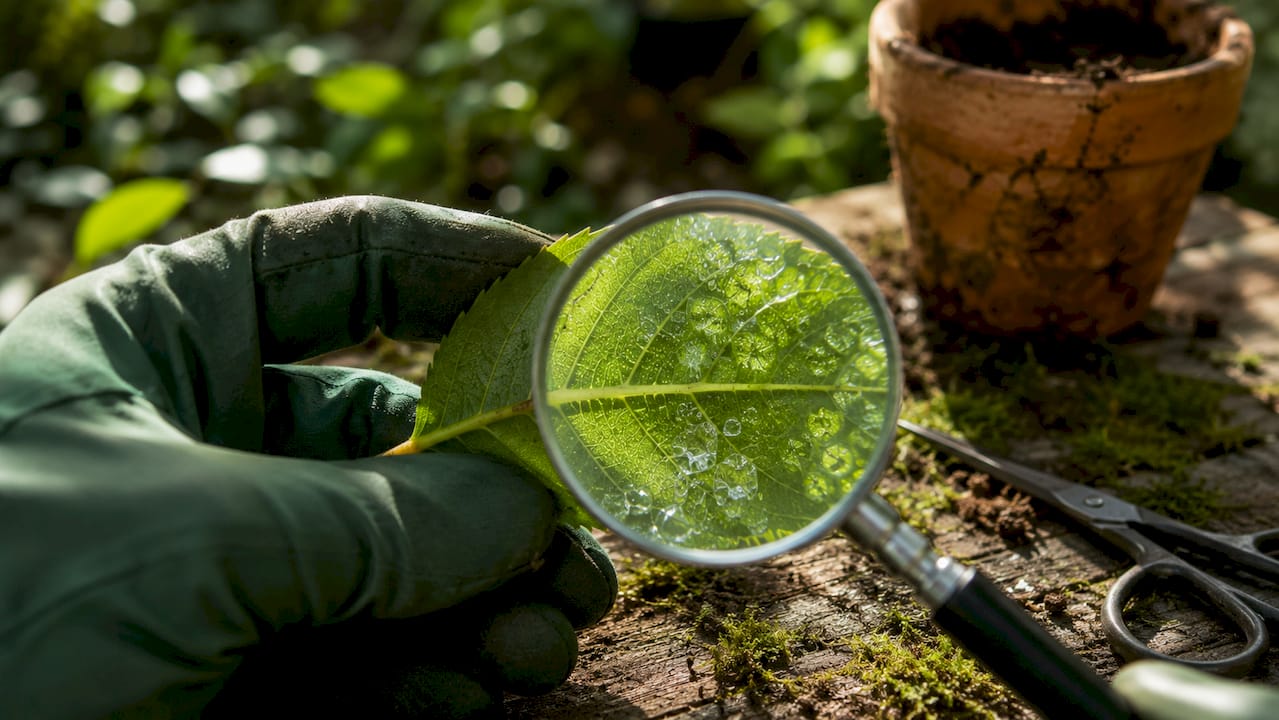
Iron, manganese, copper, and zinc all integrate into electron transport complexes within Photosystem I and Photosystem II. These complexes transfer electrons down a chain that ultimately produces ATP, the energy currency plants use for growth, nutrient uptake, and reproduction. Manganese specifically anchors the water-oxidizing complex of Photosystem II, the site where water molecules are split to release oxygen. That single reaction is the origin of nearly all atmospheric oxygen on Earth.
Molybdenum and chlorine round out the photosynthetic team in less obvious ways. Molybdenum activates enzymes that reduce nitrate into usable nitrogen, feeding the amino acid pool that builds photosynthetic proteins. Chlorine regulates osmotic balance in guard cells, keeping stomata open so carbon dioxide can enter for carbon fixation.
Key trace minerals involved in photosynthesis and energy production:
- Iron: Builds cytochromes and ferredoxin proteins in the electron transport chain
- Manganese: Anchors the water-oxidizing complex in Photosystem II
- Copper: Required for plastocyanin, the electron carrier between Photosystem II and I
- Zinc: Stabilizes enzyme structures involved in carbon dioxide fixation
- Molybdenum: Activates nitrate reductase, supplying nitrogen for photosynthetic proteins
- Chlorine: Maintains osmotic pressure in guard cells to keep stomata functional
Pro Tip: If your plants show pale new leaves but the older leaves stay green, suspect an iron or manganese deficiency first. Both minerals are tied directly to the photosynthetic complexes that build new tissue.
What are the specific functions of key trace minerals and their deficiency symptoms?
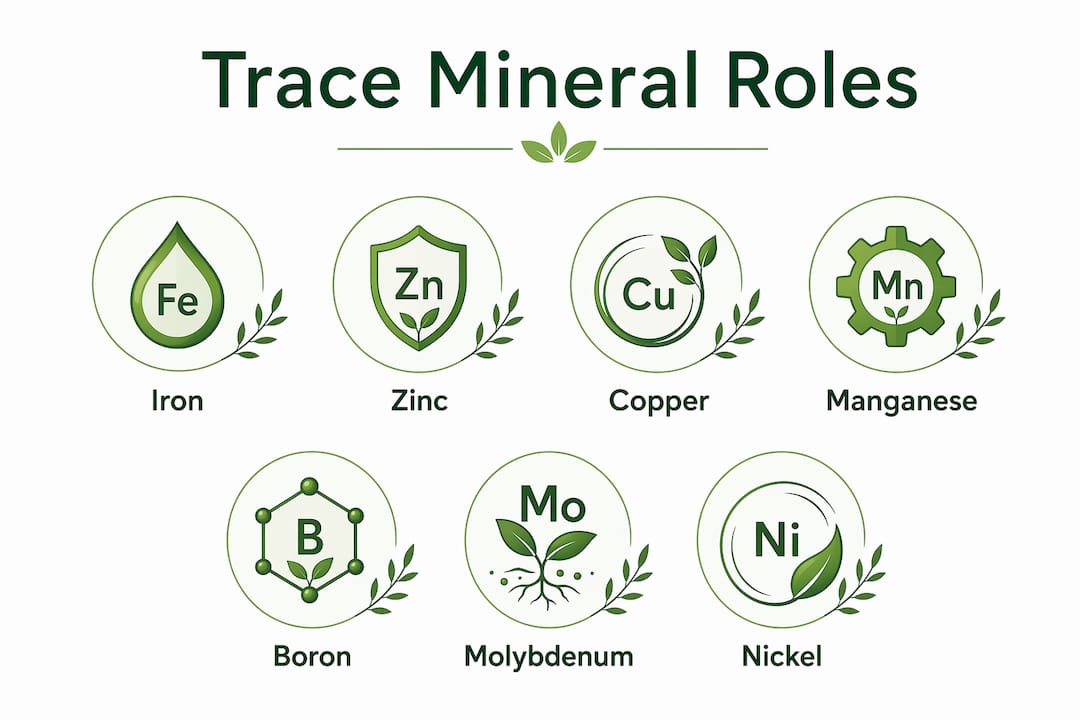
Each trace mineral targets a distinct physiological process. Knowing which mineral does what lets you read deficiency symptoms like a diagnostic chart rather than guessing at random.
Iron and magnesium are the two minerals most directly tied to chlorophyll production. Iron deficiency causes interveinal chlorosis on young leaves, where the leaf tissue between veins turns yellow while the veins stay green. This pattern appears on new growth first because iron moves poorly through the phloem and cannot be redistributed from older tissue.
Zinc regulates auxin synthesis, the hormone that drives stem elongation and leaf expansion. A zinc-deficient plant produces shortened internodes, small distorted leaves, and reduced apical dominance. Copper activates a range of oxidative enzymes and strengthens cell walls, so copper deficiency often shows up as wilting or dying leaf tips even when soil moisture is adequate.
| Trace mineral | Primary function | Deficiency symptom |
|---|---|---|
| Iron | Chlorophyll synthesis, electron transport | Interveinal chlorosis on young leaves |
| Zinc | Auxin production, stem elongation | Stunted growth, small distorted leaves |
| Copper | Enzyme activation, cell wall strength | Wilting tips, poor lignification |
| Manganese | Photosystem II, enzyme cofactor | Interveinal chlorosis on young leaves |
| Boron | Cell wall formation, pollen viability | Poor fruit set, hollow stems |
| Molybdenum | Nitrate reduction, nitrogen metabolism | Marginal leaf scorch, poor seed fill |
| Nickel | Urease enzyme activity | Urea toxicity, tip necrosis on leaves |
| Chlorine | Osmotic regulation, stomatal function | Wilting, reduced turgor pressure |
Boron and molybdenum deserve special attention for fruit and seed crops. Boron and molybdenum are both required for flowering, pollen formation, and seed development. A boron deficiency in tomatoes or squash causes blossom drop and hollow fruit cores. Molybdenum deficiency in legumes disrupts the nitrogen fixation process that makes those crops self-sufficient in protein production.
Nickel is the most recently recognized essential micronutrient. It activates urease, the enzyme that breaks down urea into usable ammonium. Without nickel, urea accumulates to toxic levels in leaf tips, causing necrosis that looks like salt burn.
Why can trace minerals be both essential and potentially toxic to plants?
Trace minerals occupy a narrow window between deficiency and toxicity. The same copper that activates enzymes at low concentrations damages root membranes at high concentrations. This dual nature makes precision the defining challenge of micronutrient management.
Toxicity symptoms vary by mineral but share common patterns. Excess manganese causes brown speckling on older leaves. Excess zinc interferes with iron uptake, creating secondary iron deficiency even when iron levels in the soil are adequate. Excess boron scorches leaf margins in a pattern that mimics drought stress. Root damage from metal toxicity reduces water and nutrient uptake across the board, compounding the problem.
Soil pH is the master switch controlling mineral availability. High soil pH locks iron, zinc, and manganese into insoluble forms that plant roots cannot absorb. The minerals are physically present in the soil but chemically unavailable. Conversely, acidic soils below pH 5.5 release manganese and aluminum into solution at concentrations that become toxic. Most vegetable crops perform best in the pH 6.0–6.8 range, where trace mineral availability is balanced across the board.
Common mistakes that lead to trace mineral toxicity:
- Applying micronutrient fertilizers without a prior soil test
- Using high-rate foliar sprays on stressed or drought-affected plants
- Ignoring soil pH before adding chelated iron or zinc products
- Stacking multiple micronutrient products without checking cumulative totals
- Assuming more is better because deficiency symptoms are visible
Pro Tip: Always run a soil test before adding any trace mineral supplement. A test costs far less than replacing plants damaged by toxicity, and it tells you exactly which minerals are actually low.
How can gardeners manage trace mineral nutrition for optimal plant health?
Managing micronutrient nutrition starts with diagnosis, not application. Applying minerals without knowing your baseline is how toxicity problems begin.
- Test your soil first. A standard soil test from a university extension lab reports pH, organic matter, and major nutrient levels. A micronutrient panel adds iron, zinc, manganese, copper, and boron readings. Run this test before any new growing season.
- Adjust soil pH before adding supplements. Correcting pH often resolves apparent deficiencies without any additional mineral inputs. Lime raises pH in acidic soils; sulfur lowers it in alkaline soils. This step alone can unlock minerals already present in your soil.
- Choose chelated fertilizers for alkaline soils. Chelated micronutrients like Fe-EDTA remain soluble and plant-available at higher pH levels where standard mineral salts would precipitate out. They cost more per pound but deliver far better results in high-pH conditions.
- Use foliar feeding for rapid correction. When a deficiency is confirmed and the growing season is already underway, foliar sprays deliver minerals directly to leaf tissue within 24–48 hours. This bypasses soil chemistry entirely and gives the plant immediate access to the nutrient.
- Build organic matter to retain micronutrients. Compost and aged manure improve the soil’s cation exchange capacity, which is its ability to hold positively charged mineral ions against leaching. Higher organic matter means minerals stay in the root zone longer.
- Understand mineral transport to target your treatment. Mineral translocation differs by element. Calcium and magnesium move only through the xylem in one direction, so deficiencies appear in new growth. Zinc moves bidirectionally through the phloem, so its deficiency pattern is more complex. Knowing this helps you decide whether a soil drench or a foliar spray will reach the affected tissue faster.
- Monitor plant tissue alongside soil. Soil tests tell you what is available; tissue tests tell you what the plant actually absorbed. Running both gives you the full picture, especially in crops where yield and quality matter.
Key Takeaways
Trace minerals are the biochemical foundation of plant health, and managing them with soil testing and pH adjustment delivers more reliable results than blanket supplementation.
| Point | Details |
|---|---|
| Trace minerals are non-negotiable | Iron, zinc, copper, manganese, boron, molybdenum, chlorine, and nickel each fill roles no other nutrient can replace. |
| Photosynthesis depends on micronutrients | Manganese, iron, and copper are structural components of Photosystem I and II, not optional additions. |
| Deficiency patterns are diagnostic tools | Interveinal chlorosis on new leaves points to iron or manganese; stunted internodes point to zinc. |
| Toxicity is a real risk | Excess trace minerals cause leaf burn, root damage, and nutrient antagonism, making soil testing non-negotiable. |
| pH management unlocks existing minerals | Correcting soil pH to the 6.0–6.8 range often resolves deficiencies without adding any new mineral inputs. |
The hidden variable most gardeners never check
I have watched gardeners spend money on premium fertilizers, quality compost, and careful watering schedules, then wonder why their plants still look tired. Nine times out of ten, the answer is micronutrients. Not the macronutrients they obsessed over. The trace elements they never tested for.
The conventional gardening conversation focuses almost entirely on nitrogen, phosphorus, and potassium. That focus makes sense for basic plant survival. But micronutrients are the hidden drivers of the difference between a plant that survives and one that genuinely thrives. Tomatoes that drop blossoms in midsummer. Corn with pale striped leaves. Fruit trees that set a fraction of their potential crop. These are micronutrient stories, not macronutrient ones.
What changed my own practice was learning that soil pH controls mineral availability more than mineral quantity does. I had a raised bed with adequate iron in the soil, confirmed by a lab test. The plants were still chlorotic. The pH was 7.4. Dropping it to 6.5 with sulfur applications over two seasons resolved the chlorosis completely, without adding a single iron supplement. That lesson, that chemistry matters more than quantity, reshaped how I think about plant nutrition basics entirely.
The other shift I would encourage is treating plant tissue testing as a routine tool, not a last resort. Soil tests show availability. Tissue tests show uptake. A plant under heat stress or root pressure may not absorb minerals even when they are available. Tissue testing closes that gap and tells you what is actually happening inside the plant.
Trace mineral management is not complicated once you have the right data. Get the soil test. Check the pH. Then make targeted decisions. That sequence beats guessing every time.
Lushygardens resources for plant nutrition and soil health
Trace mineral management is one piece of a larger plant care picture. Lushygardens covers the full range of soil health, fertilization, and plant care topics that help you build on what you have learned here. The plant care routine checklist gives you a structured daily and weekly framework for monitoring plant health, including signs of nutrient stress. For gardeners starting from the ground up, the gardening basics for beginners guide covers soil preparation, fertilization fundamentals, and how to read your plants before problems escalate. Both resources are built around the same evidence-based approach that makes micronutrient management practical rather than overwhelming.
FAQ
What are trace minerals in plants?
Trace minerals are micronutrients that plants require in very small amounts to complete their lifecycle. The eight recognized trace elements are iron, manganese, zinc, copper, boron, molybdenum, chlorine, and nickel.
What happens when plants lack trace minerals?
Deficiencies cause visible symptoms including leaf chlorosis, stunted growth, poor fruit set, and tip necrosis. Each mineral produces a distinct symptom pattern that helps identify which element is missing.
Can too much of a trace mineral harm plants?
Yes. Excess trace minerals cause leaf burn, root damage, and nutrient antagonism, where one mineral blocks the uptake of another. Soil testing before supplementation prevents toxicity.
How does soil pH affect trace mineral availability?
High soil pH locks iron, zinc, and manganese into insoluble forms that roots cannot absorb. Keeping pH in the 6.0–6.8 range maintains balanced mineral availability for most vegetable and fruit crops.
What is the fastest way to correct a trace mineral deficiency?
Foliar feeding delivers minerals directly to leaf tissue within 24–48 hours, bypassing soil chemistry. Chelated fertilizers like Fe-EDTA are the most effective option in alkaline soils where standard mineral salts remain insoluble.
Recommended
- Magnesium Deficiency in Plants: Complete Guide – Lushy Gardens
- Role of Carbon Dioxide in Plants: 2026 Guide – Lushy Gardens
- Plant Nutrition Basics: Key to Thriving Gardens – Lushy Gardens
- Plant Problems in 2026: 65% Soil pH Imbalance Hinders Growth – Lushy Gardens

I’m Eleanor, a seasoned gardener with over three decades of experience tending to Mother Nature’s creations. Through Lushy Gardens, I aim to share my wealth of knowledge and help fellow plant enthusiasts uncover the wonders of gardening. Let’s dive into this journey together, one leaf at a time.


