
Table of Contents
TL;DR:
- Office plants primarily boost morale, reduce stress, and enhance focus rather than air purification.
- Choose low-light, low-maintenance, non-toxic plants to suit your workspace and care capacity.
- Incorporating greenery leads to increased productivity and employee well-being, benefiting workplace culture.
Choosing the right plants for your office is not as simple as grabbing the prettiest pot at the garden center. You need to balance looks, care requirements, and real workplace benefits — and that means cutting through a lot of marketing noise. The truth is, plants provide negligible air purification compared to mechanical ventilation in a typical office. But that does not mean they are useless. Far from it. The right office plants can meaningfully lift morale, sharpen focus, and make your workspace a place people actually want to show up to. This guide gives you the science, the shortlist, and the practical steps to make it happen.
Table of Contents
- How to choose the best office plants
- Top 7 plants for offices: Low-maintenance and high impact
- Plant impact: Air, productivity, and well-being explained
- Choosing for your unique office: Light, space, and maintenance
- The real secret: Why office plants matter more for people than air
- Ready to bring your office to life?
- Frequently asked questions
Key Takeaways
| Point | Details |
|---|---|
| Biophilic boosts matter | Psychological benefits like fewer sick days and better focus are the true office plant payoffs. |
| Low-maintenance wins | Snake Plant, ZZ Plant, and Pothos thrive with minimal care, making them ideal for busy workspaces. |
| Air quality impact is modest | Ventilation has a much higher effect on office air than any realistic number of plants. |
| Match plant to conditions | Consider light, space, and staff habits for best plant survival and benefits. |
How to choose the best office plants
Most people start their office plant search by Googling “best air-purifying plants” and end up with a snake plant on a windowsill, expecting clean air. Here is the reality: NASA’s air-cleaning plant research was conducted in sealed, controlled environments, not open-plan offices with HVAC systems running. Those guidelines for plant density apply only to sealed environments, and in ventilated offices, benefits are primarily psychological. That is not a knock on plants. It is actually a reason to choose them more intentionally.
The real case for office plants comes from biophilia, our hardwired human need to connect with nature. Research consistently links natural elements in workspaces to better mood, reduced stress, and improved concentration. The benefits of indoor plants go well beyond aesthetics when you choose the right species for the right reasons.
So what should you actually look for? Here are the key features of a truly office-friendly plant:
- Low light tolerance: Most offices have limited natural light, especially away from windows.
- Infrequent watering: Busy teams forget plants. Choose species that handle neglect gracefully.
- Slow, compact growth: You want greenery, not a jungle taking over the conference table.
- Non-toxic varieties: If clients, pets, or children visit your space, toxicity matters.
- Visual appeal: Color, texture, and form all contribute to a calming, attractive environment.
- Resilience to dry air: Office HVAC systems dry out the air, which stresses many plants.
Pro Tip: Resist the urge to buy a dozen plants at once. Start with two or three low-maintenance species, get comfortable with their care rhythms, then expand. Consistency beats ambition every time.
“The best office plant is one that survives your Monday mornings without complaint.”
Focus on resilience first, beauty second. That mindset will serve your office green space far better than chasing air-quality myths.
Top 7 plants for offices: Low-maintenance and high impact
With criteria in mind, here is our handpicked roundup of the best office plants and what makes each a stand-out choice. These are not random picks — they are low-maintenance houseplants with proven track records in office environments. Prioritizing species like Snake Plant and ZZ Plant for offices makes sense because psychological benefits are empirically supported even when air-cleaning effects are minimal.
- Snake Plant (Sansevieria): Practically indestructible. Tolerates low light and irregular watering. Its upright, architectural form looks sharp on desks or in corners.
- ZZ Plant (Zamioculcas zamiifolia): Thrives on neglect. Glossy leaves stay vibrant even in dim offices. Water it once every two to three weeks and it will reward you.
- Pothos (Epipremnum aureum): A trailing vine that works beautifully on shelves or in hanging planters. Extremely forgiving and grows quickly enough to feel rewarding.
- Peace Lily (Spathiphyllum): One of the few flowering plants that tolerates low light. It droops visibly when thirsty, making it a self-announcing reminder to water.
- Spider Plant (Chlorophytum comosum): Non-toxic, fast-growing, and produces cheerful offshoots. Great for offices where children or pets may visit.
- Aglaonema (Chinese Evergreen): Available in shades from deep green to pink and red. Handles low light and inconsistent watering like a champ.
- Heartleaf Philodendron: Soft, heart-shaped leaves and a trailing or climbing habit. Easy to propagate, so one plant can eventually fill an entire corner.
For offices with limited space, check out our guide on plants for small offices to find the right fit without crowding your workspace.
Pro Tip: Group three or more plants together near a window or bright corner. Clustering creates a micro-environment with slightly higher humidity, which benefits all the plants and creates a stronger visual impact than scattering them around the room.
Plant impact: Air, productivity, and well-being explained
But do these top picks live up to their wellness hype? Let’s examine what the research actually says about their impact.
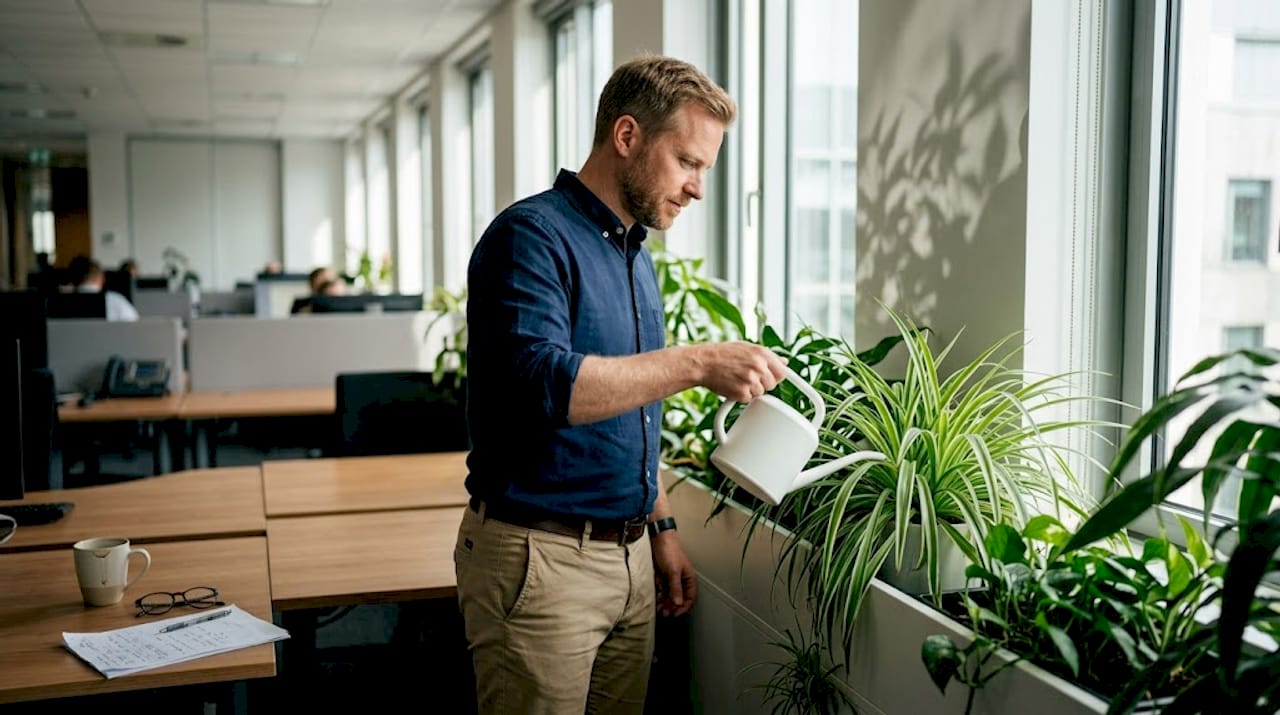
First, the air quality question. You would need hundreds of plants in a typical office to match what a basic HVAC filter does. An air purification critique from indoor air quality researchers confirms that ventilation dominates any chemical-removal effect plants might provide. So stop expecting your pothos to fix your air. That is not its job.
What plants do deliver is far more interesting. According to biophilic design researchclean version FINAL with tables and figures included.pdf), plants increase perceived attention, creativity, and productivity while reducing stress and sick days by 1.6 days per year, with productivity gains of up to 15%.
| Benefit | Measured effect |
|---|---|
| Productivity | Up to 15% increase |
| Sick days | 1.6 fewer days per year |
| Stress levels | Measurably reduced |
| Creativity and focus | Improved in plant-rich environments |
| Job satisfaction | Higher in offices with greenery |
Those numbers are not trivial. A 15% productivity boost across a team of ten people is essentially like gaining an extra team member for free. And reducing sick days has a direct, calculable cost benefit for any organization.
The effects on well-being are rooted in how our brains respond to natural elements. Seeing greenery lowers cortisol, the stress hormone, and activates the parasympathetic nervous system, which is the one responsible for calm and focus. You can also explore science-backed indoor plant benefits for a deeper look at the research behind these effects.
“Plants do not clean your air. They clean your headspace.”
That reframe is what separates managers who get real results from those who buy a few ferns and wonder why nothing changed.
Choosing for your unique office: Light, space, and maintenance
Now, let’s translate all this knowledge into a practical decision based on your own office conditions.
Every office is different. A south-facing open-plan floor is not the same as a basement conference room with one small window. Before you buy anything, run through this checklist:
- Assess your light: Stand in your office at midday. Is the light bright enough to read a book comfortably without turning on overhead lights? If yes, you have medium to bright indirect light. If not, stick to low-light species.
- Measure your space: Note available surface area on desks, shelves, windowsills, and floor space in corners. Compact plants work for desks; trailing or floor plants suit corners.
- Estimate your maintenance bandwidth: Be honest. If your team struggles to water plants weekly, choose species that need watering every two to three weeks.
- Check for toxicity concerns: If clients bring children, or if office pets are a thing, rule out toxic species like Peace Lily around those zones.
- Match plant to purpose: Want a statement piece? Go for a large Aglaonema or ZZ Plant. Want subtle texture? Cluster small Pothos on a shelf.
NASA recommends 1 plant per 100 sq ft for sealed environments, but real offices should prioritize aesthetics and routine care over hitting a specific density target.
| Plant | Light needs | Watering frequency | Toxic to pets? |
|---|---|---|---|
| Snake Plant | Low to bright indirect | Every 2-3 weeks | Mildly toxic |
| ZZ Plant | Low to medium | Every 2-3 weeks | Toxic |
| Pothos | Low to bright indirect | Weekly | Toxic |
| Peace Lily | Low to medium | Weekly | Toxic |
| Spider Plant | Medium to bright | Weekly | Non-toxic |
| Aglaonema | Low to medium | Every 1-2 weeks | Toxic |
| Philodendron | Medium to bright indirect | Weekly | Toxic |
For ongoing care once you have made your picks, our indoor plant care tips and guidance on plant care will keep your office greenery thriving long-term.

The real secret: Why office plants matter more for people than air
Stepping back, here is what years of research and real-world offices have taught us about why these plants actually matter.
The air-purification story is compelling marketing. It gives people a rational, measurable reason to buy plants. But it is the wrong reason, and it sets up the wrong expectations. When the air does not feel dramatically cleaner, people assume the plants failed. They did not. You just measured the wrong thing.
The psychological and morale benefits over measurable air cleaning in ventilated spaces are what science actually supports. Smart managers understand this. They bring in plants not to hit a sustainability checkbox but because greenery signals that the workplace cares about the people in it. That signal matters more than any toxin-removal claim.
Offices that invest in thoughtful plant placement consistently report better retention, higher engagement, and a culture that feels more human. Explore the personal value of plants and you will see this pattern repeat across industries and office sizes. The payoff is in spirit, creativity, and connection — not in parts per million of benzene removed.
Ready to bring your office to life?
If you are inspired to refresh your workspace, Lushy Gardens has everything you need to get started with confidence. Our indoor house plants guide walks you through selecting plants that genuinely improve your environment, while our curated list of easy office plant picks takes the guesswork out of choosing species that will actually survive the Monday-to-Friday grind. Once your plants are in place, our plant care tips ensure they stay healthy and vibrant all year long. A greener office is not a luxury. It is a practical investment in your team’s well-being and your workplace culture.
Frequently asked questions
Which office plants are best for low-light spaces?
Snake Plant, ZZ Plant, and Aglaonema thrive in low-light offices and require minimal attention, making them the safest picks for windowless or dim work areas.
Do office plants actually improve air quality?
In ventilated offices, plants do little to purify air because mechanical ventilation dominates any chemical-removal effect, but they greatly enhance morale and psychological well-being.
How many plants should an average office have?
NASA suggests 1 plant per 100 sq ft for sealed environments, but in open offices the benefit is primarily aesthetic and psychological, so 1 to 3 visible plants per workspace is a great starting point.
Do plants really boost productivity at work?
Yes. Studies show up to 15% higher productivityclean version FINAL with tables and figures included.pdf) and 1.6 fewer sick days per year when offices incorporate greenery into their design.
Recommended
- The Essential Guide to Benefits of Indoor Plants – Lushy Gardens
- Houseplants Cut Indoor Pollutants by 70% & Boost Well-Being – Lushy Gardens
- 7 Best Air Purification Plants for Healthier Indoor Air – Lushy Gardens
- Best Plants for Small Spaces to Brighten Your Home – Lushy Gardens
- Office Art Inspiration: Elevate Your Workplace Aesthetic

I’m Eleanor, a seasoned gardener with over three decades of experience tending to Mother Nature’s creations. Through Lushy Gardens, I aim to share my wealth of knowledge and help fellow plant enthusiasts uncover the wonders of gardening. Let’s dive into this journey together, one leaf at a time.


