
Table of Contents
TL;DR:
- Indeterminate vegetables grow continuously throughout the season, producing fruit at multiple stages until halted by frost or pests. They require sturdy support systems and careful management to maximize yields and maintain plant health. Most common vegetables like tomatoes, cucumbers, and peppers are indeterminate and benefit from early planning and regular pruning.
Indeterminate vegetables are plants genetically programmed to keep growing, flowering, and producing fruit throughout the entire growing season, stopping only when frost, disease, or pests intervene. Unlike their determinate counterparts, these plants never reach a fixed mature size. They just keep going. Tomatoes, cucumbers, and certain squash varieties are the most familiar examples. Understanding this growth habit before you plant changes everything about how you plan spacing, trellising, and harvest schedules. This guide breaks down what are indeterminate vegetables, how they differ from determinate types, and exactly how to grow them well.
What are indeterminate vegetables, exactly?
Indeterminate vegetables are defined by one core trait: continuous, open-ended growth driven by genetic programming. The plant produces new vegetative growth and flower clusters at the same time, meaning you get fruit at multiple stages simultaneously rather than all at once.
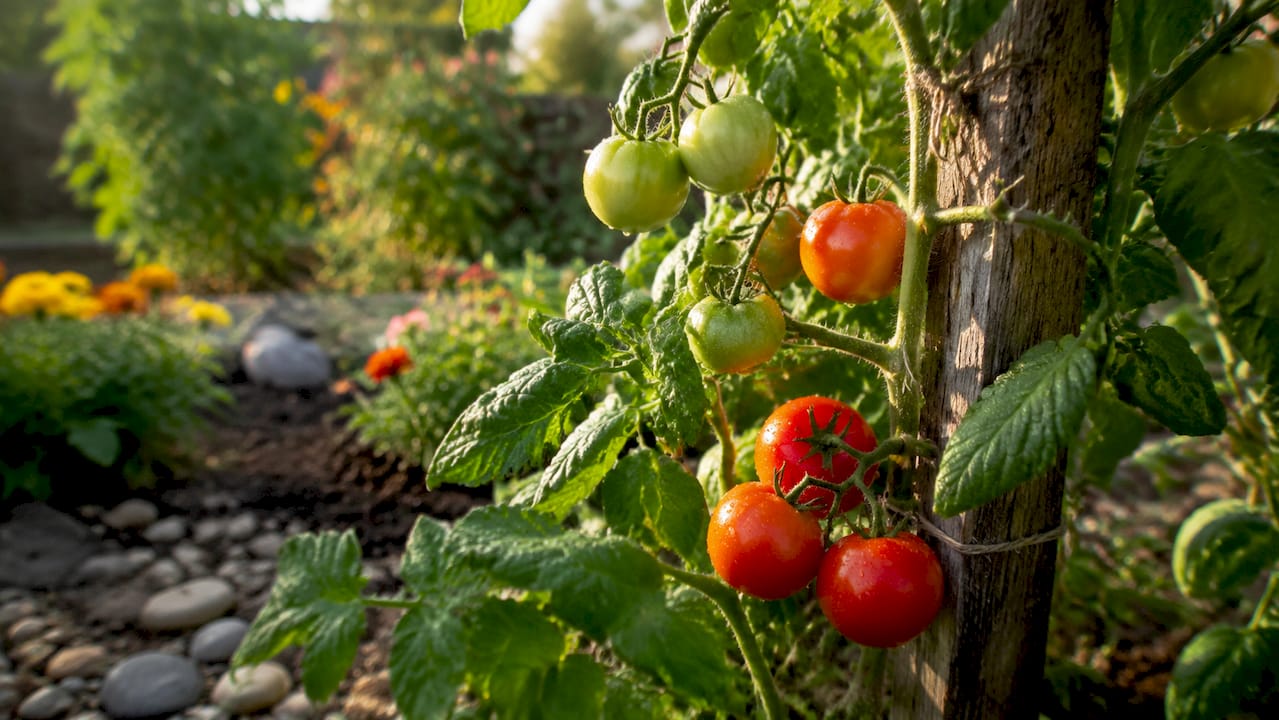
The technical term for this growth pattern is “indeterminate habit,” and it is controlled by developmental signals within the plant. Research published in Frontiers in Plant Science identifies the SELF-PRUNING (SP) gene as a key regulator. Mutations in this gene push plants toward determinate growth. Indeterminate cultivars, by contrast, generate flower clusters indefinitely, regulated by antiflorigen signals that suppress the “stop growing” command.
Washington State University Yakima County confirms that indeterminate tomato vines grow until frost or disease stops them, reaching 12–15 feet tall in temperate zones and up to 60 feet in tropical climates. That is not a typo. These plants are not just “tall.” They are structurally committed to indefinite extension.
Indeterminate vs. determinate vegetables: key differences
The contrast between indeterminate and determinate vegetables comes down to three things: size ceiling, flowering pattern, and harvest window.
Determinate vegetables grow to a genetically fixed size of 2–4 feet and concentrate most of their fruit production into a tight 4-week window before stopping growth entirely. This makes them ideal for canning, preserving, or any situation where you want a large volume of produce at one time. Indeterminate types spread that production across the whole season, giving you a steady trickle rather than a single surge.
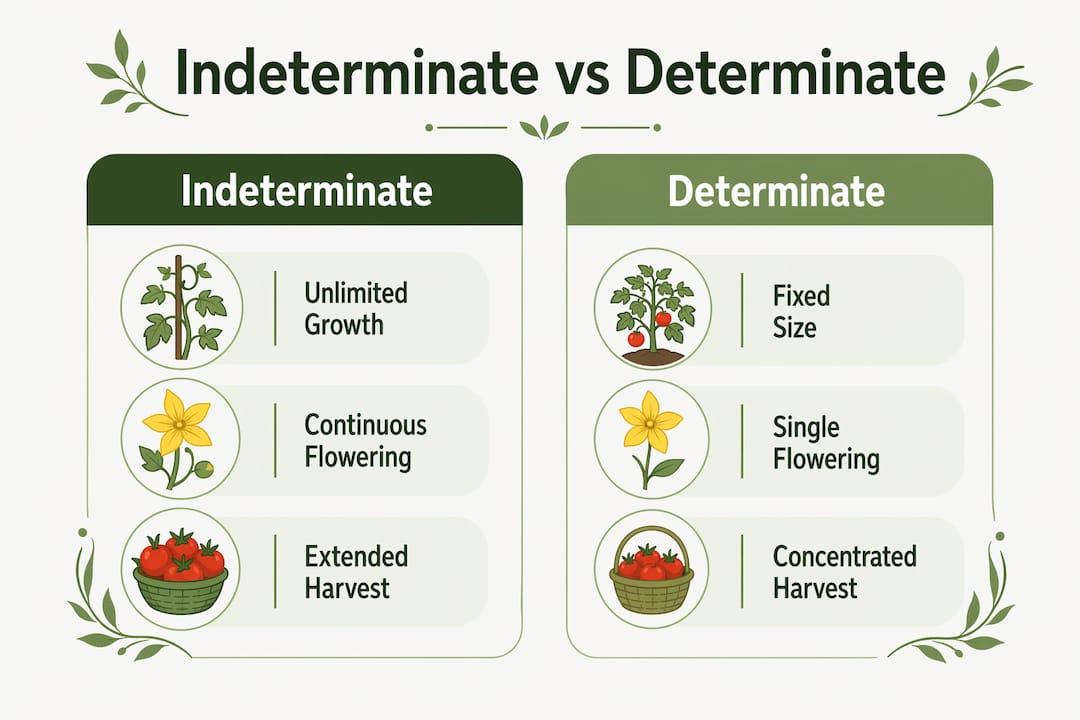
Here is a direct comparison of the two growth habits:
| Trait | Indeterminate | Determinate |
|---|---|---|
| Plant size | Unlimited, vine-like | Fixed, compact (2–4 feet) |
| Flowering pattern | Continuous throughout season | Concentrated, then stops |
| Harvest window | Extended, weeks to months | Short, roughly 4 weeks |
| Support needed | Sturdy trellis or cage required | Minimal staking often sufficient |
| Best use case | Fresh eating, steady supply | Preserving, batch harvesting |
Pro Tip: If you want tomatoes for canning, choose a determinate variety like Roma or Celebrity. If you want fresh tomatoes on your table from july through october, go indeterminate.
Growth habit is controlled by a developmental flowering program, not by anything you do in the garden. No amount of pruning or staking converts a determinate plant into an indeterminate one, or vice versa.
Which vegetables are indeterminate? common examples
Indeterminate growth shows up across a wide range of vegetables. Knowing which ones carry this trait helps you plan your garden layout before anything goes in the ground.
- Tomatoes (heirloom and large slicing types): Varieties like Brandywine, Cherokee Purple, and Beefsteak are classic indeterminate types. They produce fruit continuously and are the most common type grown by home gardeners. Cherry tomato varieties like Sungold and Sweet 100 are also indeterminate and can reach extraordinary vine lengths by late summer.
- Cucumbers: Most slicing cucumber varieties, including Straight Eight and Marketmore, grow indeterminately. They vine aggressively and benefit from vertical trellising to keep fruit off the ground and improve air circulation.
- Peppers: Most pepper varieties, including bell peppers, jalapeños, and banana peppers, grow indeterminately. They do not reach a fixed size and will continue producing new flowers and fruit until cold temperatures shut them down.
- Eggplant: Standard eggplant varieties like Black Beauty grow indeterminately, producing fruit steadily across a long season. They need staking as the fruit load increases.
- Certain squash and melons: Vining squash types such as butternut and spaghetti squash grow indeterminately. Cantaloupe and watermelon also fall into this category, spreading across significant ground space.
- Dolichos beans (hyacinth beans): Research on near-isogenic lines shows indeterminate bean lines produce roughly twice the fresh pod yield compared to determinate counterparts, though they flower about a week later.
Within any given species, variety matters. Some tomato breeders have developed compact indeterminate types that stay shorter but still produce continuously. Always check the seed packet or plant tag for the specific growth habit listed.
How to grow indeterminate crops: practical tips
Growing indeterminate vegetables successfully requires planning for their growth before it happens, not after vines are already out of control. Follow these steps to stay ahead of the season.
- Install sturdy support structures before planting. WSU Yakima County warns that indeterminate vines require very sturdy trellising due to their length and ongoing growth. A flimsy tomato cage collapses by august. Use heavy-gauge wire cages at least 5 feet tall, or build a trellis system with T-posts and horizontal wire runs.
- Space plants generously. Indeterminate vegetables need room for airflow and lateral spread. For tomatoes, 24–36 inches between plants is the standard recommendation. Cucumbers on a trellis can be spaced 12 inches apart vertically. Check Lushygardens’ guide on vegetable spacing for yield for crop-specific numbers.
- Harvest on time, every time. The University of Georgia Extension advises harvesting as soon as fruit ripens to prevent overmaturity from halting production. Leaving ripe fruit on the vine signals the plant to stop producing. Pick cucumbers before they yellow. Pull tomatoes at first blush if needed and let them ripen indoors.
- Prune for airflow and energy management, not to stop growth. Pruning suckers on indeterminate tomatoes redirects energy to existing fruit clusters and improves airflow. However, pruning cannot override the plant’s genetic growth drive. The plant will keep growing regardless. Prune to manage shape, not to control size.
- Use succession planting to extend your harvest window. Planting a second round of fast-maturing indeterminate crops three to four weeks after the first gives you overlapping production. Lushygardens covers this strategy in detail in their succession planting guide.
- Treat trellis management as an ongoing task. Managing support systems for indeterminate vegetables is a seasonal process, not a one-time setup. Vines need to be tied in, redirected, or pruned back every one to two weeks as the season progresses.
Pro Tip: Map your garden before planting using a garden layout planner to allocate dedicated zones for indeterminate crops. Mixing them randomly with compact plants leads to shading and crowding problems by midsummer.
Benefits and challenges of indeterminate vegetables
The biggest benefit of growing indeterminate vegetables is a steady, extended harvest. Instead of 40 pounds of tomatoes arriving in one week, you get a consistent supply from july through the first frost. The University of Georgia Extension confirms that indeterminate plants produce a harvest trickle spread across the season, which suits fresh eating far better than batch harvesting.
The tradeoffs are real, though. Here is an honest breakdown:
Benefits:
- Extended fresh produce supply across the full growing season
- Higher total yield potential over time compared to determinate types
- Flexibility to harvest at multiple stages of ripeness
- Indeterminate dolichos bean lines produce roughly twice the pod yield of determinate lines, showing the productivity advantage extends beyond tomatoes
Challenges:
- Requires significantly more space, especially for vining types like squash and melons
- Demands ongoing maintenance including weekly tying, pruning, and monitoring
- Later flowering times mean you may wait longer for the first harvest compared to determinate varieties
- Trellis infrastructure adds upfront cost and setup time
- Garden layout becomes more complex when accommodating plants that grow unpredictably
The right choice depends on your goals. If you want a low-maintenance garden that delivers a big harvest for preserving, determinate varieties win. If you want fresh produce on your table all season long and you are willing to put in the weekly work, indeterminate vegetables are the better fit.
Key takeaways
Indeterminate vegetables deliver a season-long harvest, but they require dedicated space, sturdy support, and consistent weekly management to perform at their best.
| Point | Details |
|---|---|
| Continuous growth habit | Indeterminate vegetables keep growing and producing until frost or damage stops them. |
| Genetic, not cultural | The SP gene controls growth habit; pruning and staking cannot change a plant’s indeterminate status. |
| Support structures matter | Install heavy-gauge cages or trellis systems before planting, not after vines take over. |
| Harvest timing is critical | Pick fruit as soon as it ripens to prevent overmaturity from signaling the plant to stop producing. |
| Plan your layout early | Use a garden map to allocate dedicated zones for indeterminate crops before the season starts. |
Why i think most gardeners underestimate indeterminate plants
Most gardeners I talk to treat indeterminate vegetables as just “the tall ones.” They buy a tomato cage, drop it over a Brandywine seedling, and figure that is enough. By august, the cage is on its side and the vine is sprawling across two neighboring beds.
The real insight is this: indeterminate vegetables do not respect your garden plan. They follow their own genetic schedule, and your job is to build a management system around that schedule before the season starts. I have seen small-space gardeners get outstanding results from indeterminate crops by going vertical aggressively, using T-post and wire trellis systems instead of cages, and committing to a weekly 20-minute vine management session.
The other thing I would push back on is the idea that indeterminate plants are only for large gardens. A single indeterminate cucumber on a 6-foot trellis takes up less ground space than a bush variety sprawling across the bed. Vertical growing changes the math entirely. Pair that with a solid vegetable garden planning guide and you can fit more production into a small space than most people think possible.
My honest recommendation: grow at least one indeterminate variety alongside your determinate crops every season. The contrast in harvest pattern alone teaches you more about garden planning than any article can.
Start growing smarter with Lushygardens
If this guide sparked ideas for your next growing season, Lushygardens has the resources to take you further. The Gardening Basics for Beginners complete guide covers everything from soil preparation to seasonal maintenance, with specific sections on managing long-season crops like indeterminate tomatoes and cucumbers. You will also find practical advice on when to plant vegetables to maximize your production window, which matters especially for indeterminate crops that need a full season to deliver their best yields. Lushygardens is built for gardeners who want real answers, not generic tips.
FAQ
What makes a vegetable indeterminate?
A vegetable is indeterminate when its genetics program it to grow, flower, and produce fruit continuously throughout the season. The SELF-PRUNING (SP) gene regulates this trait, and it cannot be changed by pruning or training.
Do indeterminate vegetables produce more than determinate ones?
Indeterminate vegetables typically produce a higher total yield over the full season. Research on dolichos beans shows indeterminate lines produce roughly twice the fresh pod yield of determinate counterparts, though they flower about a week later.
How tall do indeterminate tomatoes grow?
Indeterminate tomato vines reach 12–15 feet tall in temperate zones and can grow up to 60 feet in tropical climates, according to Washington State University Yakima County. Sturdy trellising is non-negotiable.
Can you stop an indeterminate plant from growing?
You cannot stop the growth habit itself since it is genetically fixed. Frost, disease, or pests will terminate growth. Pruning manages shape and energy allocation but does not override the plant’s continuous growth programming.
Are peppers and cucumbers indeterminate?
Yes. Most pepper varieties, including bell peppers and jalapeños, and most slicing cucumber varieties grow indeterminately. Both continue producing new flowers and fruit until cold temperatures or damage end the season.
Recommended
- Growing Vegetables Indoors: Sustainable Food for City Living – Lushy Gardens
- Master Vegetable Gardening Indoors: Grow Fresh Produce at Home – Lushy Gardens
- Container Gardening for Veggies: Grow Fresh Produce Anywhere – Lushy Gardens
- Master Winter Vegetable Gardening for Abundant Harvests – Lushy Gardens

I’m Eleanor, a seasoned gardener with over three decades of experience tending to Mother Nature’s creations. Through Lushy Gardens, I aim to share my wealth of knowledge and help fellow plant enthusiasts uncover the wonders of gardening. Let’s dive into this journey together, one leaf at a time.


