
Table of Contents
TL;DR:
- Direct sowing involves planting seeds directly into outdoor soil without starting them indoors, reducing effort and equipment needs. It promotes stronger root development and extends growing seasons for crops like carrots, beets, and beans. However, it requires careful timing, soil preparation, and weed management to ensure successful germination and crop growth.
Direct sowing is defined as planting seeds directly into outdoor garden soil, where they will grow to maturity without ever being started indoors. This method skips seed trays, grow lights, and the hardening-off process entirely. For home gardeners, that means fewer steps, lower costs, and plants that build stronger root systems from day one. Understanding what is direct sowing, and when to use it, gives you a real edge in planning a productive garden season.
What are the benefits of direct sowing for home gardeners?
Direct sowing cuts spring setup time by 30–40% compared to transplanting by eliminating trays and hardening-off. That time savings adds up fast when you are managing a full garden bed. You also skip the daily seedling care routine indoors, which reduces both labor and physical strain.
The root system benefit is the one most gardeners underestimate. Plant roots grow deeper and more extensive when seeds germinate in permanent soil, which improves drought resistance and nutrient uptake. A transplanted seedling always experiences some root shock. A direct-sown plant never does.
Direct sowing also increases planting density by 15–20% and extends productive growing periods by 2–3 weeks annually. More plants per square foot and a longer harvest window both translate directly to higher yields. For crops like carrots, beets, and radishes, those gains are especially noticeable.
Here are the core benefits at a glance:
- No transplant shock. Seeds germinate where they will live, so roots never get disturbed.
- Lower cost. No seed trays, potting mix, grow lights, or heating mats needed.
- Stronger plants. Taproots reach 3–4 feet deep, giving plants better access to water and nutrients.
- More planting flexibility. You can sow in succession every 2–3 weeks for a continuous harvest.
- Less equipment. A packet of seeds and a prepared bed are all you need to get started.
Pro Tip: Pair direct sowing with succession planting to stagger harvests across the season and avoid a single glut of produce.
What are the common challenges and limitations of direct sowing?
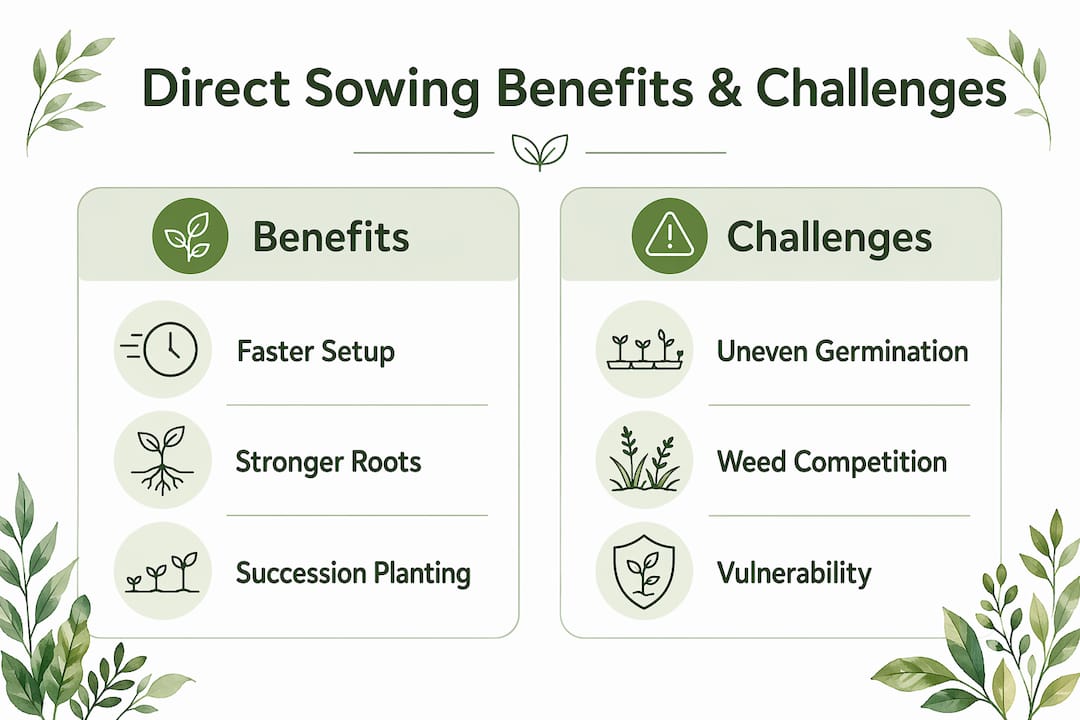
Direct sowing has real risks that gardeners need to plan around. Uneven germination, early weed competition, and vulnerability to weather are the three most common problems. Each one is manageable, but none can be ignored.
Weeds are the biggest day-to-day challenge. Seeds and weed seedlings germinate at the same time, and young seedlings look nearly identical in the first week. If you do not know what your crop seedlings look like, you will pull the wrong plants. Sowing in rows rather than broadcasting makes identification much easier.
Weather is the second major risk. A late frost, heavy rain, or dry spell right after sowing can wipe out an entire bed. Transplants are more resilient to these events because they are already established. Direct-sown seeds have no buffer. Timing your sow date to match your local last frost date is not optional.
Here is what to watch for and how to address each challenge:
- Weed pressure. Sow in rows and mulch lightly between them to suppress weeds without blocking germination.
- Soil crusting. Hard soil surfaces prevent seedlings from pushing through. Careful soil preparation and interplanting quick-germinating radishes with slow crops like carrots breaks the crust naturally.
- Pest exposure. Slugs, birds, and insects target seeds and seedlings. Use row covers or fine mesh netting in the first few weeks.
- Uneven germination. Old or low-quality seed performs poorly outdoors. Always use fresh seed with a known germination rate.
Pro Tip: Interplant radish seeds with carrots. Radishes germinate in 3–5 days, break the soil crust, and mark your carrot rows clearly. Pull the radishes when they mature and the carrots take over.
How to direct sow seeds successfully: techniques and best practices
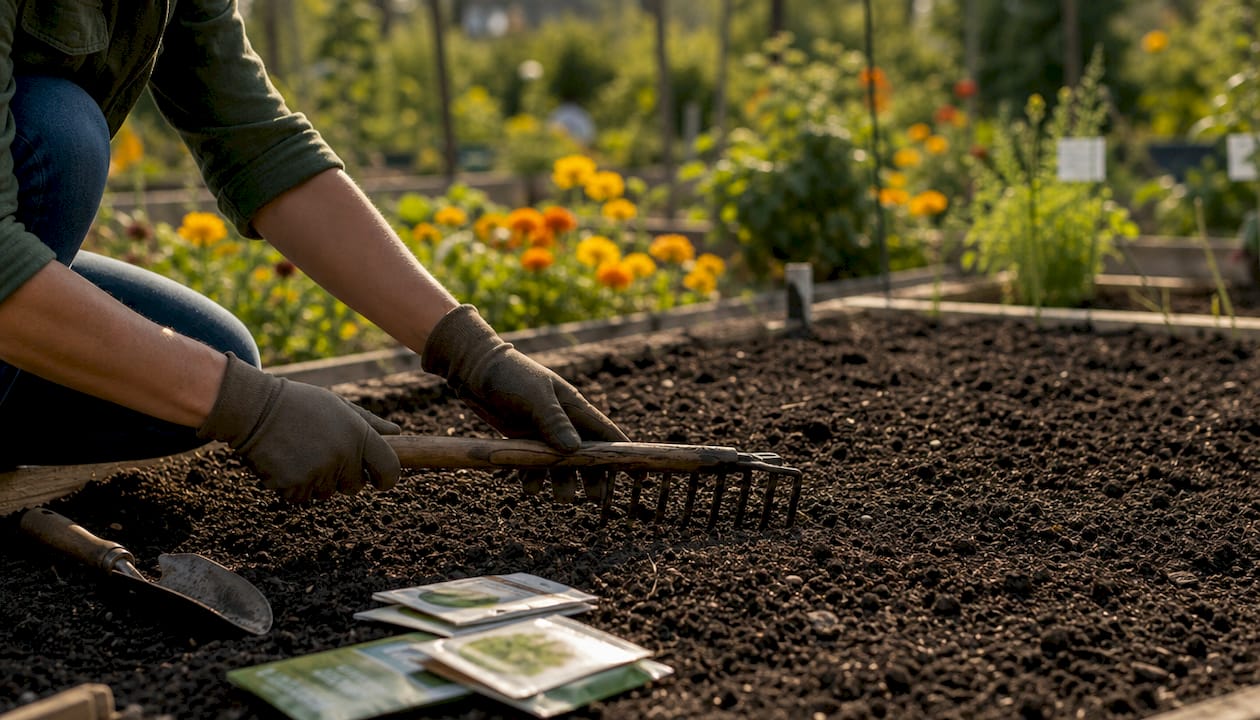
Success with direct sowing starts with the soil. Thorough soil preparation and attention to environmental factors like temperature and moisture are what separate a good germination rate from a patchy one. Loose, weed-free, and well-drained soil is the baseline requirement. Start by reviewing Lushygardens’ guide on preparing soil for planting before you sow a single seed.
Planting depth and spacing rules
Follow this sequence for every direct sow:
- Loosen the soil to at least 6 inches deep. Break up clumps and remove stones and debris.
- Set your planting depth. Plant seeds at 2–3 times the seed’s diameter. Fine seeds like lettuce go on the surface and get pressed in lightly. Large seeds like beans go 1 inch deep.
- Choose your sowing method. Rows (drills) work best for most vegetables. Broadcasting suits cover crops and dense greens like arugula.
- Space correctly. Check the seed packet for final spacing, then thin seedlings to that distance once they reach 2 inches tall.
- Water gently. Use a fine rose head on your watering can to avoid washing seeds out of position.
- Label every row. Mark the crop name and sow date so you can track germination timing.
Sowing methods compared
| Method | Best for | Key advantage |
|---|---|---|
| Row sowing (drills) | Vegetables, herbs | Easy weed identification |
| Broadcasting | Greens, cover crops | Fast coverage of large areas |
| Hill planting | Squash, cucumbers, melons | Better air circulation, higher yields |
For vining crops like squash, hill planting with 4–6 seeds per hill and then thinning to 2–3 plants gives the best results. Space hills 4–8 feet apart depending on the variety. Crowded hills increase disease risk and reduce fruit size.
Pro Tip: Mix tiny seeds with sand before sowing. The sand gives you visual feedback on where seeds have landed and helps you distribute them evenly across the row.
For a full walkthrough on seed depth and handling, Lushygardens’ beginner’s guide to planting seeds outdoors covers every step in plain language.
Which plants and crops are best suited for direct sowing?
The best plants for direct sowing are those with taproots or those that grow so fast that starting them indoors offers no real advantage. Crops that resent root disturbance must be direct sown. Crops that are slow to mature or need a head start in cold climates are better transplanted.
Direct sow these crops without hesitation:
- Root vegetables. Carrots, beets, radishes, parsnips, and turnips all develop taproots that break when transplanted. Direct sowing is the only practical method.
- Legumes. Beans and peas germinate quickly and grow fast. Starting them indoors wastes time and risks root damage at transplant.
- Cucurbits. Cucumbers, squash, melons, and zucchini are best for crops intolerant to root disturbance and establish quickly from seed in warm soil.
- Fast-growing greens. Arugula, spinach, and lettuce germinate in 5–10 days and are ready to harvest in 4–6 weeks. Direct sowing suits them perfectly.
- Corn and sunflowers. Both have large seeds that germinate reliably outdoors and do not transplant well.
Crops that benefit from transplanting include tomatoes, peppers, eggplant, and brassicas like broccoli and cabbage. These need a long growing season and gain weeks of head start when started indoors. The smart approach is to combine direct sowing with transplanting to balance labor savings and gardening flexibility across the full season.
Cool-season crops like spinach, peas, and radishes go in the ground 4–6 weeks before your last frost date. Warm-season crops like beans, cucumbers, and squash wait until soil temperature reaches at least 60°F. Sowing at the wrong soil temperature is the single most common reason for poor germination outdoors.
For quick-growing options that work especially well with direct sowing, Lushygardens’ list of quick-growing vegetables is a practical starting point.
Key Takeaways
Direct sowing is the most effective planting method for root crops, legumes, and fast-growing greens because it builds stronger root systems and cuts setup time by 30–40%.
| Point | Details |
|---|---|
| Definition | Direct sowing means planting seeds straight into outdoor soil, skipping indoor starting entirely. |
| Root system advantage | Direct-sown plants develop taproots up to 3–4 feet deep, improving drought resistance and yield. |
| Time and cost savings | Eliminating trays and hardening-off cuts spring setup time by 30–40% and reduces equipment costs. |
| Best crops to direct sow | Carrots, beets, beans, cucumbers, squash, arugula, and corn all perform best when direct sown. |
| Combine both methods | Pairing direct sowing with transplanting maximizes seasonal yields and gives you more scheduling flexibility. |

Why I think most gardeners underuse direct sowing
Most gardeners I talk to default to transplanting for almost everything. They start seeds indoors in february, tend them under grow lights for weeks, then carefully harden them off before planting out. That process works, but it is a lot of effort for crops that would do just as well, or better, sown straight into the ground.
The taproot depth point changed how I plan my garden. A carrot or beet grown from direct sowing sends roots down 3–4 feet into undisturbed soil. That same plant started in a cell tray and transplanted will never fully recover its natural root architecture. The difference shows up in drought years, when direct-sown plants keep producing and transplanted ones wilt by midday.
What I have found is that soil preparation matters far more than most gardeners realize. A well-loosened, weed-free bed with good moisture retention will give you germination rates that rival anything you could achieve indoors. Skip that step and you will blame the seeds when the real problem was the soil.
My honest recommendation: direct sow at least half your garden. Use transplants for tomatoes, peppers, and brassicas where the head start genuinely matters. Let everything else go straight into the ground. You will spend less time on setup, and your plants will reward you with stronger growth all season.
Grow with confidence using Lushygardens
Getting direct sowing right is a skill that builds season by season. Lushygardens has put together a full gardening basics guide for beginners that covers soil preparation, seed planting, watering, and seasonal care in one place. Whether you are sowing your first row of carrots or refining a full planting calendar, the guides there give you the practical detail you need without the guesswork. You can also check the seasonal garden maintenance guide to keep your garden productive from the first sow date through the final harvest.
FAQ
What is direct sowing in gardening?
Direct sowing is the practice of planting seeds directly into outdoor garden soil rather than starting them indoors in trays. Seeds germinate and grow to maturity in their permanent location from the start.
Which vegetables should always be direct sown?
Carrots, beets, radishes, parsnips, beans, peas, and cucumbers should always be direct sown because their taproots do not survive transplanting well. Disturbing these roots at transplant time reduces yields and plant health.
How deep should I plant seeds when direct sowing?
Plant seeds at a depth of 2–3 times the seed’s diameter. Fine seeds like lettuce go on the soil surface and get pressed in lightly, while large seeds like beans go about 1 inch deep.
What is the difference between direct sowing and transplanting?
Direct sowing places seeds straight into outdoor soil, while transplanting moves seedlings started indoors into the garden. Direct sowing builds stronger root systems; transplanting gives slow-maturing crops a head start in short growing seasons.
When is the best time to direct sow seeds?
Cool-season crops like peas and spinach go in 4–6 weeks before the last frost date. Warm-season crops like beans and squash wait until soil temperature reaches at least 60°F to germinate reliably.
Recommended
- How to plant seeds outdoors: a beginner’s guide for 2026 – Lushy Gardens
- Succession Planting Explained: Maximize Your Garden Yields – Lushy Gardens
- Growing Microgreens at Home Naturally: Easy Step-by-Step Guide – Lushy Gardens
- Square Foot Gardening Explained: Benefits and Methods – Lushy Gardens

I’m Eleanor, a seasoned gardener with over three decades of experience tending to Mother Nature’s creations. Through Lushy Gardens, I aim to share my wealth of knowledge and help fellow plant enthusiasts uncover the wonders of gardening. Let’s dive into this journey together, one leaf at a time.


