
Table of Contents
TL;DR:
- Photosynthesis is the process by which plants convert sunlight, water, and carbon dioxide into glucose and oxygen, sustaining life on Earth. It involves two stages within chloroplasts: light-dependent reactions produce energy carriers, and the Calvin cycle synthesizes glucose using this energy. Understanding these mechanisms helps optimize plant growth, especially when accounting for environmental factors like light, water, and temperature.
Photosynthesis is defined as the biological process by which plants convert sunlight, water, and carbon dioxide into glucose and oxygen, making it the single most important chemical reaction sustaining life on Earth. Every leaf, stem, and root owes its existence to this process. Plants use the glucose produced as fuel for growth, reproduction, and repair, while the oxygen released becomes the air you breathe. Whether you are a student studying biology or a gardener trying to understand why your tomatoes need six hours of sun, knowing how photosynthesis works changes how you see every plant around you.
What is photosynthesis in plants and how does it work?
Photosynthesis is the process by which plants, algae, and certain bacteria capture sunlight to convert water and carbon dioxide into oxygen and glucose for growth. The reaction happens primarily inside the leaves, within specialized organelles called chloroplasts. Think of chloroplasts as tiny solar panels packed inside each leaf cell, absorbing light and running a two-stage energy conversion system.
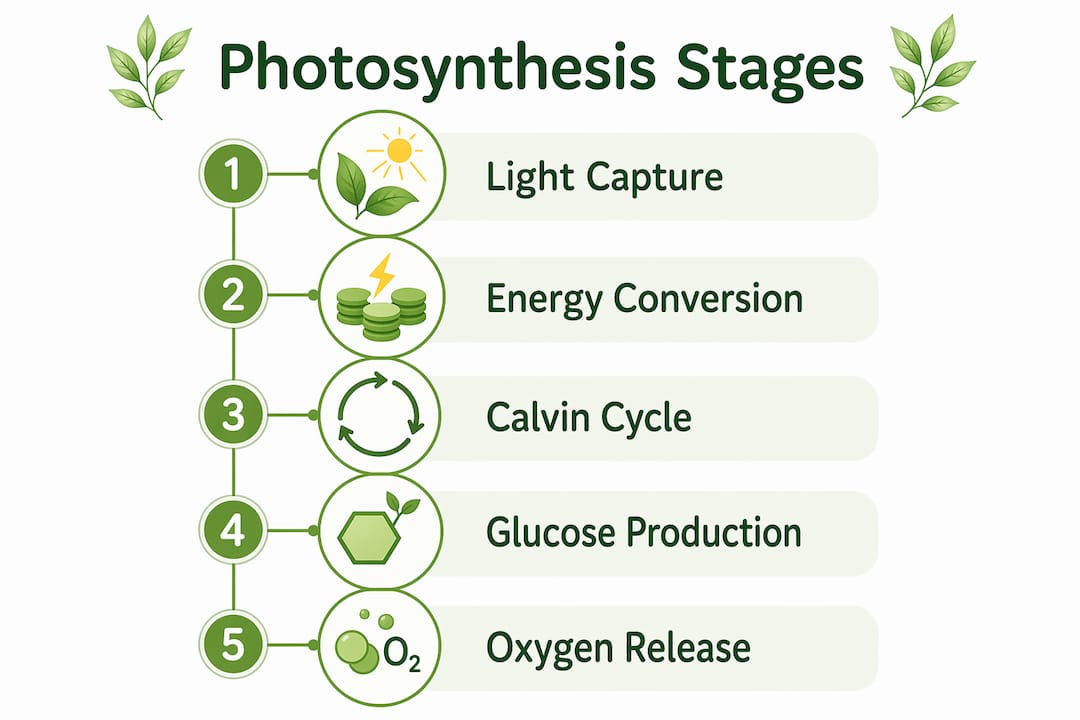
The process breaks down into two distinct stages, each happening in a different part of the chloroplast.
- Light-dependent reactions occur in the thylakoid membranes, the stacked, pancake-like structures inside the chloroplast. Here, light energy splits water molecules, releasing oxygen as a byproduct and generating two energy carriers: ATP and NADPH. These carriers are essentially charged batteries that power the next stage.
- The Calvin cycle (also called light-independent reactions) runs in the stroma, the fluid surrounding the thylakoids. It uses the ATP and NADPH from stage one to fix carbon dioxide from the air into stable sugar molecules, primarily glucose.
A common misconception is that the Calvin cycle can run without light. In practice, the Calvin cycle depends on the ATP and NADPH produced during light-dependent reactions, so continuous sunlight is required for the full process to function. Remove the light, and both stages stall.
| Stage | Location | Inputs | Outputs |
|---|---|---|---|
| Light-dependent reactions | Thylakoid membranes | Sunlight, water | Oxygen, ATP, NADPH |
| Calvin cycle | Chloroplast stroma | CO2, ATP, NADPH | Glucose |
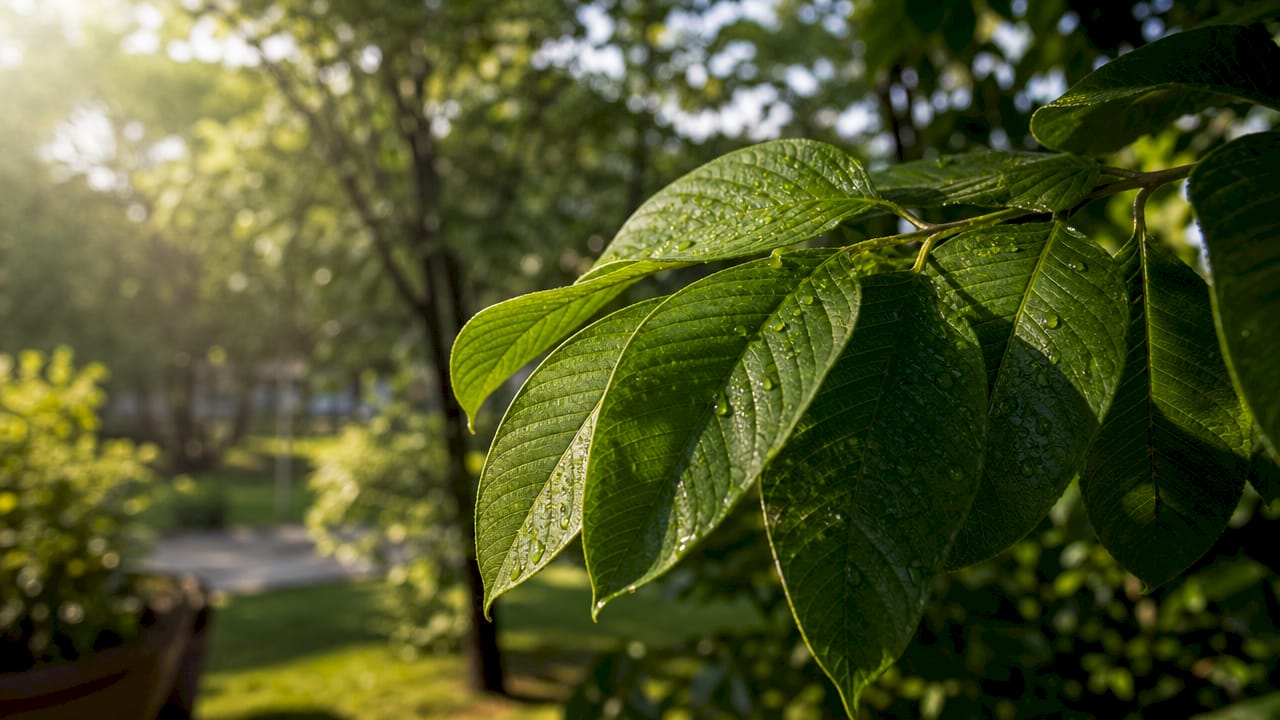
Chlorophyll is the pigment responsible for capturing light energy and gives plants their green color. It absorbs blue and red light wavelengths most effectively, which is why those wavelengths matter most for plant growth. Green light is largely reflected, which is why leaves appear green to your eyes.
Pro Tip: If you grow plants indoors, prioritize light sources that emit blue and red wavelengths. Full-spectrum LED grow lights are designed around exactly this principle.
How do different plant types adapt photosynthesis to their environments?
Not all plants photosynthesize the same way. Evolution has produced at least two major pathways, and understanding them helps explain why some plants thrive in a sunny Arizona garden while others wilt within hours.
C3 plants use the most common photosynthetic pathway, where carbon dioxide is fixed directly in the mesophyll cells. Most garden plants fall into this category, including wheat, rice, soybeans, and the majority of houseplants. C3 plants work efficiently in mild temperatures with adequate water and moderate light.
C4 plants take a different approach. C4 photosynthesis spatially separates carbon fixation to increase efficiency under stress, concentrating CO2 around the enzyme that fixes it and minimizing a wasteful side reaction called photorespiration. This is a complex adaptation with real ecological and agricultural implications. Corn, sugarcane, and sorghum are classic C4 examples. They outperform C3 plants in hot, dry, or high-light conditions because they lose less water and waste less energy.
Here is a side-by-side comparison:
| Feature | C3 plants | C4 plants |
|---|---|---|
| Carbon fixation location | Mesophyll cells only | Mesophyll and bundle sheath cells |
| Best environment | Cool, moist, moderate light | Hot, dry, high light intensity |
| Water efficiency | Lower | Higher |
| Common examples | Wheat, rice, soybeans | Corn, sugarcane, sorghum |
For gardeners, this distinction is practical. Choosing a C4 crop like corn for a hot, sunny bed makes more sense than planting a C3 crop that will struggle with heat stress. Understanding photosynthesis pathways helps you select plants better suited for specific environmental conditions, which directly improves your gardening success rate.
- C3 plants are better suited for shaded or temperate garden spots.
- C4 plants handle summer heat and drought with far less stress.
- Matching plant type to your local climate reduces water use and increases yield.
Why is photosynthesis important for plants and the environment?
Photosynthesis powers 99% of Earth’s ecosystems, with its energy stored in the covalent bonds of carbohydrates that fuel metabolic processes across food webs. That is not an exaggeration. Every calorie you eat traces back to a plant that captured sunlight. Herbivores eat plants, carnivores eat herbivores, and decomposers break everything down. Photosynthesis is the entry point for all of that energy.
For the plant itself, glucose produced during photosynthesis fuels every metabolic function: cell division, root growth, flower production, and seed formation. Without a steady supply of glucose, a plant cannot grow, reproduce, or defend itself against disease.
The atmospheric contribution is equally significant. Photosynthesis and cellular respiration are complementary cycles that maintain Earth’s oxygen-rich atmosphere and feed ecosystems. Plants release oxygen as a byproduct of splitting water molecules during light-dependent reactions. That oxygen is what aerobic organisms, including humans, depend on for survival.
“The chemical energy produced in photosynthesis is stored in stable covalent bonds in sugar molecules, effectively acting as a battery for entire ecosystems.” — Photosynthesis, Wikipedia
There is also a historical dimension worth knowing. Fossil fuels, including coal, oil, and natural gas, are ancient stored energy from photosynthesis. Millions of years ago, plants and algae captured sunlight and stored it as organic carbon. When we burn fossil fuels, we are releasing that stored photosynthetic energy back into the atmosphere. This connection makes photosynthesis relevant not just to biology class but to every conversation about climate and energy.
- Photosynthesis is the foundation of all food chains, from grass to apex predators.
- It produces the atmospheric oxygen that aerobic life requires.
- It drives plant metabolism, enabling growth, reproduction, and resilience.
- Fossil fuels represent billions of years of accumulated photosynthetic energy.
How do environmental factors influence photosynthesis efficiency?
Photosynthesis does not run at full speed all the time. Several environmental variables act as throttles, speeding the process up or slowing it down. Understanding these factors is directly useful for anyone growing plants, whether in a backyard garden or on a windowsill.
Light intensity and wavelength are the most obvious controls. Chlorophyll absorbs blue and red light most efficiently, so low-light conditions directly reduce the rate of light-dependent reactions. Indoors, this is why artificial grow lights matter. A north-facing windowsill may not deliver enough photons to keep a sun-loving plant healthy. You can also explore LED efficiency for home grows to understand how modern lighting technology matches plant light needs.
Stomata and water availability are equally critical. Stomata regulate gas exchange, balancing carbon dioxide uptake for photosynthesis against water loss through transpiration. Located primarily on leaf undersides, stomata open to let CO2 in and close when the plant is water-stressed to prevent dehydration. The problem is that closed stomata also block CO2, which halts the Calvin cycle. This is why drought-stressed plants stop growing even when sunlight is abundant.
Temperature affects enzyme activity throughout both photosynthetic stages. Most plants photosynthesize most efficiently between 65°F and 85°F (18°C to 30°C). Above or below that range, enzyme performance drops and photosynthetic rate falls. Mesophyll cells in leaves are the primary photosynthesis site, and stomatal regulation explains plant sensitivity to heat and drought.
For gardeners, these factors translate into three practical priorities: give plants the right light, water consistently to keep stomata open, and protect plants from temperature extremes. Lushygardens covers plant light requirements in detail if you want to match specific plants to your available light conditions.
Pro Tip: Water your plants in the morning. This gives leaves time to absorb moisture before peak daytime heat, keeping stomata open longer during the most productive photosynthesis hours.

Key takeaways
Photosynthesis is the foundation of plant life and all ecosystems, converting sunlight into glucose through two sequential stages that require light, water, carbon dioxide, and chlorophyll.
| Point | Details |
|---|---|
| Two-stage process | Light-dependent reactions produce ATP and NADPH; the Calvin cycle uses them to build glucose. |
| Chlorophyll’s role | Chlorophyll absorbs blue and red light, making those wavelengths critical for plant growth. |
| C3 vs. C4 pathways | C4 plants are more efficient in heat and drought; match plant type to your climate for best results. |
| Environmental controls | Light intensity, water availability, and temperature all directly regulate photosynthesis rate. |
| Ecological significance | Photosynthesis supplies atmospheric oxygen and is the energy source for every food chain on Earth. |
Why photosynthesis is the one concept every plant lover should actually understand
Most people treat photosynthesis as a school topic they survived once and never revisited. That is a mistake, and I say that as someone who has spent years watching gardeners struggle with problems that a basic understanding of this process would have prevented.
Here is what I have found: the gardeners who understand that plants need light to produce energy, not just to “look healthy,” make fundamentally better decisions. They do not put a sun-loving pepper plant in a shaded corner and wonder why it produces nothing. They do not overwater a drought-adapted C4 plant and then blame the soil when it rots. They understand that a wilting plant in heat has closed its stomata to survive, and that watering it at the right time, not just more of it, is the fix.
The misconception I see most often is treating all plants as identical light consumers. A corn plant and a fern are running completely different photosynthetic programs. Treating them the same way is like expecting a diesel engine and a gasoline engine to run on the same fuel. The biology is different, and the care should be too.
For students, photosynthesis is also the concept that unlocks everything else in ecology. Once you understand that solar energy enters the biosphere through this one process, food webs, carbon cycles, and even climate change start making intuitive sense. It is not just a chemistry equation. It is the operating system of the living world.
Start applying what you know about photosynthesis
Understanding how plants photosynthesize gives you a real advantage as a gardener. If you want to put this knowledge to work, Lushygardens has a beginner gardening guide that connects plant science to practical care decisions, covering light, watering, and soil fundamentals in plain language. You can also go deeper on photosynthesis and houseplants to see how these principles apply specifically to indoor growing. Whether you are starting your first container garden or troubleshooting an underperforming plant, the science you just learned is the foundation every good gardening decision is built on.
FAQ
What is photosynthesis for plants in simple terms?
Photosynthesis is the process plants use to turn sunlight, water, and carbon dioxide into glucose for energy and oxygen as a byproduct. It is how plants feed themselves without eating anything.
What do plants need for photosynthesis to occur?
Plants need sunlight, water, carbon dioxide, and chlorophyll to carry out photosynthesis. Without any one of these four inputs, the process slows or stops entirely.
Where does photosynthesis take place in a plant?
Photosynthesis occurs primarily in the leaves, inside organelles called chloroplasts. The light-dependent reactions run in the thylakoid membranes, while the Calvin cycle runs in the surrounding stroma.
What is the difference between C3 and C4 photosynthesis?
C3 plants fix carbon directly in mesophyll cells and work best in cool, moist conditions, while C4 plants use a two-cell system that concentrates CO2 and performs better in hot, dry environments. Corn and sugarcane are C4; wheat and rice are C3.
Why is photosynthesis essential for life on Earth?
Photosynthesis produces the atmospheric oxygen that aerobic organisms breathe and serves as the energy entry point for virtually all food chains. Without it, complex life on Earth would not exist.
Recommended
- Light Requirements for Plants: Complete Guide – Lushy Gardens
- Plant nodes explained: The key to healthier, bushier plants – Lushy Gardens
- Why Plants Need Pollinators: Ecology and Reproduction – Lushy Gardens
- What Is Photosynthesis and How It Impacts Houseplants – Lushy Gardens

I’m Eleanor, a seasoned gardener with over three decades of experience tending to Mother Nature’s creations. Through Lushy Gardens, I aim to share my wealth of knowledge and help fellow plant enthusiasts uncover the wonders of gardening. Let’s dive into this journey together, one leaf at a time.


