
Table of Contents
Watching your vibrant tomato plant suddenly develop yellow leaves can be alarming for any home gardener. This confusing symptom doesn’t point to just one problem, making it tough to know where to start. This expert guide will help you accurately identify the specific cause behind your yellowing tomato leaves and apply the right solution, whether it’s a watering issue, nutrient deficiency, disease, or environmental stress.
Key takeaways
| Point | Details |
|---|---|
| Multiple causes exist | Yellow tomato leaves result from overwatering, nutrient deficiencies, diseases, or environmental stress. |
| Diagnosis matters most | Proper identification of the specific cause ensures you apply the correct treatment for recovery. |
| Prevention is powerful | Choosing resistant varieties, rotating crops, and monitoring soil conditions prevent most yellowing issues. |
| Soil temperature impacts health | Tomatoes planted in soil below 60°F experience stress that manifests as yellow leaves. |
Understanding why tomato leaves turn yellow
Chlorosis, the technical term for leaf yellowing, occurs when plants can’t produce enough chlorophyll. This green pigment is essential for photosynthesis and healthy growth. When tomato leaves lose their green color, it signals that something is interfering with the plant’s normal biological processes.
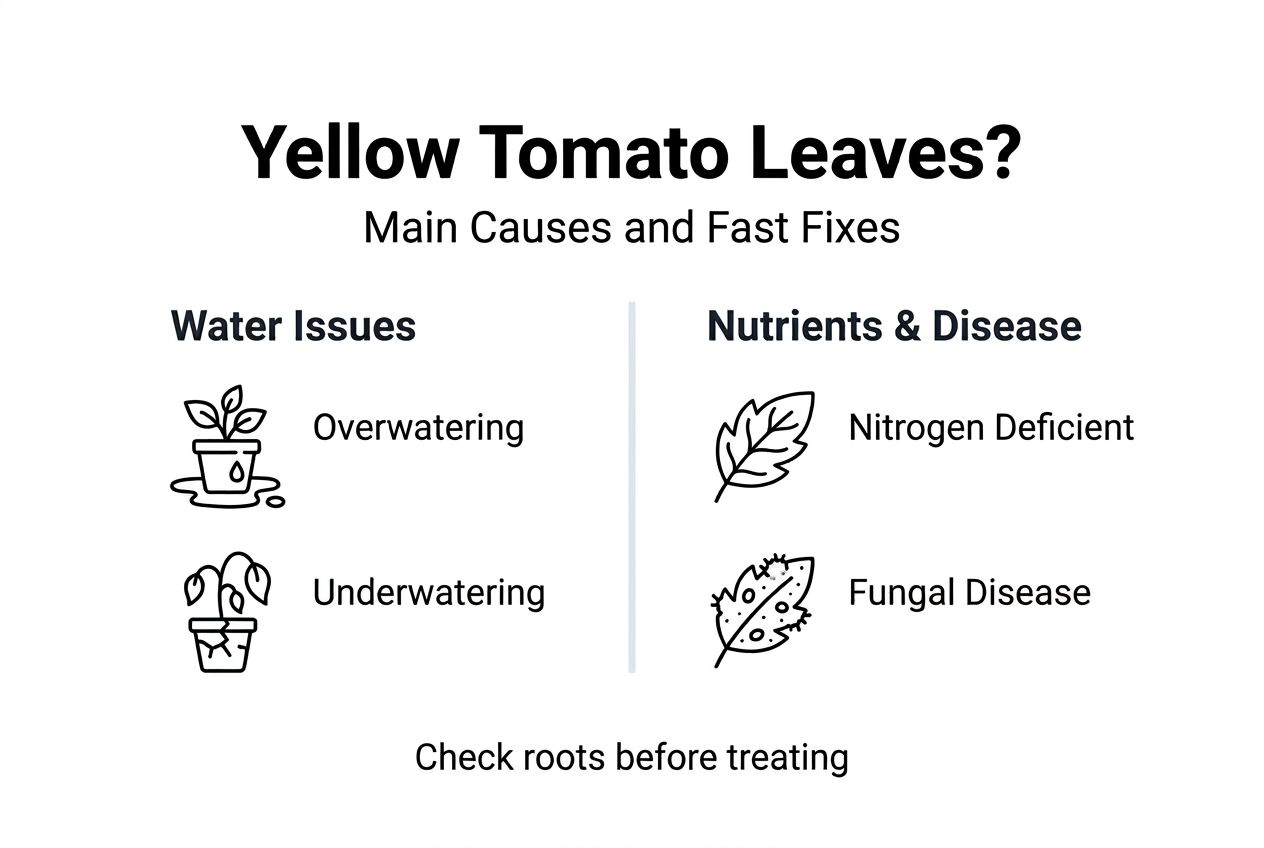
Overwatering leads to yellow leaves because waterlogged soil deprives roots of oxygen. Without adequate oxygen, roots can’t absorb nutrients effectively, even if those nutrients are present in the soil. This creates a cascade effect where the entire plant suffers, starting with yellowing in the lower leaves that gradually moves upward.
Soil temperature plays a crucial but often overlooked role in tomato health. Tomatoes planted in soil below 60°F face multiple problems including stunted growth, poor nutrient uptake, and characteristic yellowing. These tropical plants simply can’t function properly in cool conditions, and cold soil disrupts their ability to absorb water and minerals efficiently.
Several environmental and care factors commonly trigger yellowing:
- Inconsistent watering patterns that stress root systems
- Poor drainage causing persistent soil saturation
- Extreme temperature fluctuations between day and night
- Compacted soil limiting root oxygen access
- Transplant shock from moving seedlings too early
Understanding these foundational causes helps you recognize patterns in your garden. For broader context on plant yellowing, explore yellowing leaves causes and solutions that apply across different plant types.
Common diseases causing yellowing in tomato plants
Several serious diseases produce yellow leaves as a primary symptom. Accurate identification is critical because each requires different management strategies.
Verticillium and Fusarium wilts attack through soil, with fungi entering through roots and colonizing the plant’s vascular system. Both cause progressive yellowing and wilting, but they differ in one key way: Fusarium prefers warm temperatures while Verticillium thrives in cooler conditions. This temperature preference helps distinguish between them when symptoms appear.
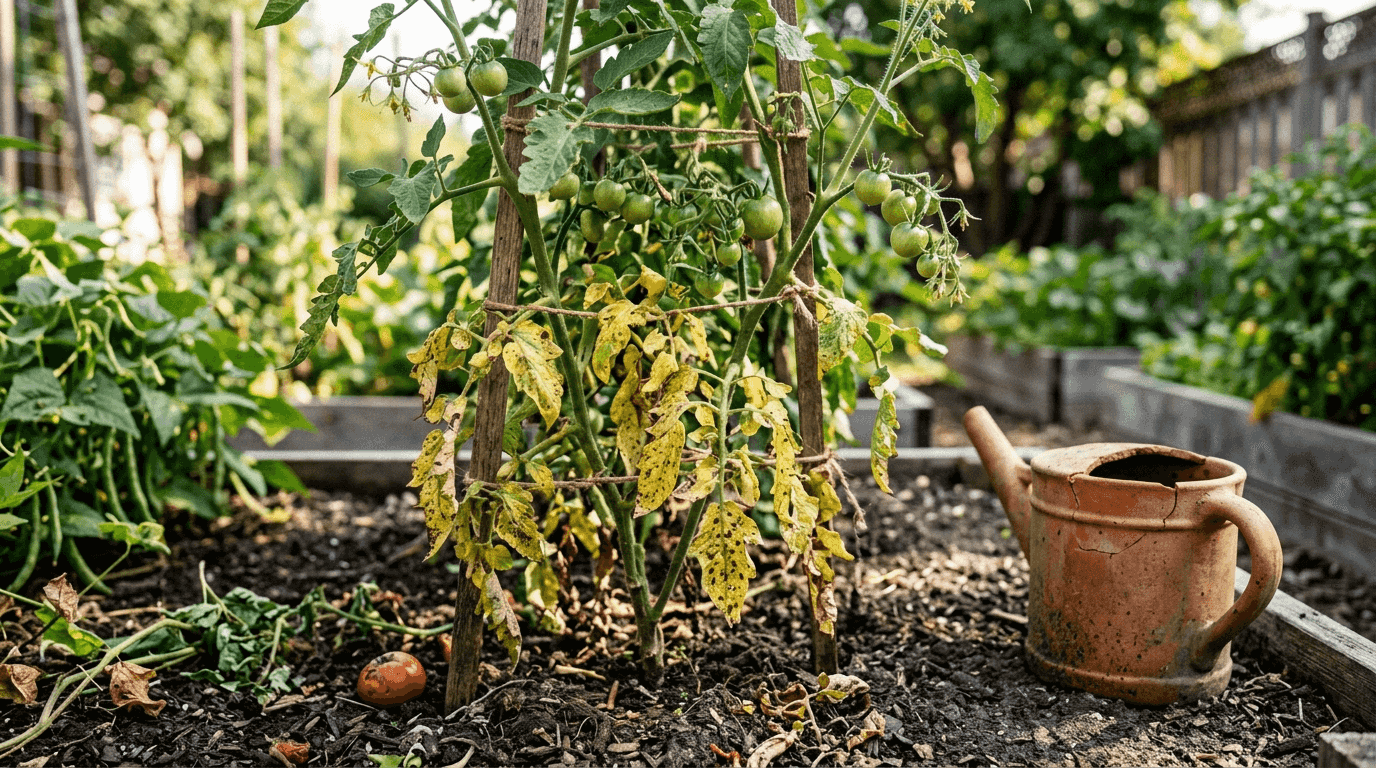
Bacterial wilt causes rapid yellowing as bacterial slime produced by Ralstonia solanacearum clogs the water-conducting vessels. Affected plants wilt during hot days and may initially recover at night, but the condition progresses quickly to complete collapse. Cutting a stem reveals brown, slimy vascular tissue, a diagnostic sign of this devastating disease.
Early blight creates distinctive yellow zones surrounding brown lesions with characteristic concentric rings that look like bullseyes. This fungal disease typically starts on older, lower leaves and works upward as spores spread through water splash and wind.
| Disease | Key Symptoms | Temperature Preference | Prevention Method |
|---|---|---|---|
| Verticillium Wilt | Progressive yellowing, V-shaped lesions on leaf margins | Cooler (70-75°F) | Resistant varieties, 4-year rotation |
| Fusarium Wilt | Yellow leaves on one side, brown vascular tissue | Warm (80-90°F) | Resistant varieties, soil solarization |
| Bacterial Wilt | Rapid wilt, slimy stem interior, quick collapse | Warm and humid | Rotation with non-hosts, remove infected plants |
| Early Blight | Concentric ring spots, yellowing around lesions | Warm with moisture | Mulch, proper spacing, remove debris |
Each disease demands specific treatment approaches. Misidentifying the problem wastes time and allows the condition to worsen. For comprehensive tomato care that builds disease resistance, check out tips for growing tomatoes naturally.
Nutrient deficiencies and care mistakes that cause yellow leaves
Yellow leaves often signal that your tomato plant isn’t getting the nutrients it needs, even if you’re fertilizing regularly. The issue might be nutrient availability rather than absence.
Nitrogen deficiency produces yellowing that starts in older, lower leaves and progresses upward. The plant redistributes nitrogen from older tissue to support new growth. Magnesium deficiency creates a different pattern with yellowing between leaf veins while veins remain green. Iron deficiency shows up in new growth rather than old, with young leaves turning pale yellow or white.
Paradoxically, excessive nitrogen harms plants by promoting lush foliage at the expense of fruit production. High nitrogen synthetic fertilizers can burn roots and leaves, causing yellowing and brown edges. This demonstrates why balanced nutrition matters more than simply adding more fertilizer.
Overwatering ranks among the most common care mistakes causing yellow leaves. When soil stays constantly wet, roots suffocate and can’t absorb nutrients. This mimics nutrient deficiency symptoms even when soil contains adequate minerals. Learn to recognize signs of overwatering to catch this problem early.
Proper care practices prevent most nutrient-related yellowing:
- Test soil every 2-3 years to understand baseline nutrient levels
- Use balanced organic fertilizers that release nutrients slowly
- Water deeply but infrequently to encourage strong root growth
- Apply mulch to moderate soil temperature and moisture
- Avoid fertilizing during extreme heat or drought stress
Pro Tip: Before adding any fertilizer to yellowing tomato plants, squeeze a handful of soil from 6 inches deep. If water drips out, your problem is overwatering, not nutrient deficiency. Let the soil dry to barely moist before watering again.
Proper diagnosis distinguishes between nutrient problems and disease or watering issues, which require completely different solutions. Understanding broader patterns helps, so review yellowing leaves caused by care mistakes for additional troubleshooting guidance.
Preventive measures and practical solutions for healthy tomato plants
Preventing yellow leaves is far easier than treating established problems. Strategic planning and consistent care create conditions where tomato plants thrive naturally.
Disease-resistant varieties reduce problems by carrying genetic resistance to common pathogens. Look for codes like V, F, or VFN on seed packets, indicating resistance to Verticillium wilt, Fusarium wilt, and nematodes. These varieties aren’t immune but handle disease pressure much better than susceptible types.
Crop rotation with non-susceptible plants for at least three years helps control bacterial wilt and reduces soilborne fungal populations. Avoid planting tomatoes, peppers, eggplants, or potatoes in the same spot, as these nightshade family members share many diseases. Rotate to beans, corn, or brassicas instead.
Soil solarization uses sun power to heat soil and kill pathogens. Cover moist soil with clear plastic during the hottest six weeks of summer. Soil temperatures under the plastic reach 140°F or higher, effectively pasteurizing the top 6-8 inches. This method works well in warm climates and controls many soilborne diseases without chemicals.
| Prevention Strategy | Benefits | Implementation | Best Timing |
|---|---|---|---|
| Resistant Varieties | Genetic protection against specific diseases | Choose varieties marked V, F, or VFN | Seed selection phase |
| Crop Rotation | Breaks disease cycles, improves soil | Move tomatoes to new bed every 3-4 years | Annual planning |
| Soil Solarization | Kills pathogens, weed seeds, pests | Cover moist soil with clear plastic 6 weeks | Mid-summer (hottest period) |
| Proper Sanitation | Removes disease reservoirs | Clean tools, remove debris, destroy infected plants | Weekly during season |
Follow this prevention checklist for healthiest tomato plants:
- Test soil temperature and wait until it reaches 60°F before transplanting to avoid cold stress. Timing matters, so consult best time to plant tomatoes for your region.
- Space plants 24-36 inches apart to ensure good air circulation that reduces fungal disease pressure.
- Apply 2-3 inches of organic mulch around plants to moderate soil temperature and prevent soil splash onto lower leaves.
- Water at soil level early in the morning so foliage dries quickly, reducing fungal and bacterial infection risk.
- Remove yellowing leaves promptly to prevent disease spread and improve air flow through the plant canopy.
- Fertilize based on soil test results rather than guessing, using moderate amounts of balanced organic fertilizer.
- Monitor plants weekly for early signs of problems when intervention is most effective.
Pro Tip: Water tomato plants early in the morning rather than evening. This timing allows foliage to dry completely during the day, significantly reducing fungal disease development that thrives on wet leaves overnight.
Building strong gardening fundamentals supports all these preventive measures. Explore gardening basics for beginners guide to strengthen your foundation and create conditions where problems rarely develop.
Enhance your garden with expert guidance from Lushy Gardens
Successfully growing tomatoes requires more than addressing yellow leaves when they appear. It demands a comprehensive approach to garden planning, soil preparation, and seasonal maintenance that keeps plants vigorous from transplant to harvest.
Lushy Gardens offers targeted resources for every stage of your gardening journey. Whether you’re just starting out or refining advanced techniques, our gardening basics for beginners guide builds the foundation for success. Complement this knowledge with our seasonal garden maintenance step by step guide to stay ahead of problems throughout the year.
For tomato-specific strategies that prevent yellowing and maximize harvest, explore our tips for growing tomatoes naturally. These expert insights help you create ideal growing conditions where healthy, productive plants become the norm rather than the exception.
FAQ
What causes tomato leaves to turn yellow?
Yellow tomato leaves result from overwatering, nutrient deficiencies, diseases like Fusarium or Verticillium wilt, bacterial infections, or environmental stress including cold soil temperatures. Identifying the specific cause requires examining the yellowing pattern, soil moisture, temperature conditions, and presence of other symptoms like spots or wilting. Proper diagnosis ensures you apply the correct treatment rather than wasting time on ineffective solutions.
How can I tell if my tomato plant is overwatered?
Overwatered tomato plants display wilting despite having moist or soggy soil, with yellowing typically starting in lower leaves and progressing upward. The soil feels constantly wet several inches below the surface and may develop a sour smell from anaerobic conditions. Root suffocation from excess water prevents nutrient uptake, causing the yellowing even when minerals are present in the soil.
What are effective ways to prevent tomato diseases that cause yellow leaves?
Use disease-resistant tomato varieties marked with V, F, or VFN codes on seed packets to gain genetic protection against common wilts. Practice crop rotation by moving tomatoes to a different garden bed every three to four years, avoiding other nightshade family members. Remove all plant debris at season end, sterilize tools between plants, and water at soil level early in the morning to keep foliage dry. Never plant tomatoes in soil below 60°F, as cold stress weakens plants and increases disease susceptibility.
When is the best time to plant tomatoes to avoid yellowing issues?
Plant tomatoes only after soil temperatures consistently stay above 60°F, typically two weeks after your last expected frost date. Cold soil below this threshold causes stress that manifests as yellow leaves, stunted growth, and poor nutrient absorption. Check best time to plant tomatoes for specific timing in your region, as planting dates vary significantly based on climate zone and local weather patterns.
Recommended
- Why Is My Plant Turning Yellow and Brown? – Lushy Gardens
- Why Plant Leaves Turn Yellow—Causes and Solutions – Lushy Gardens
- Why Plants Turn Yellow: Common Causes and Easy Fixes – Lushy Gardens
- Why Are My Plants Leaves Turning Yellow? Solutions That Work – Lushy Gardens

I’m Eleanor, a seasoned gardener with over three decades of experience tending to Mother Nature’s creations. Through Lushy Gardens, I aim to share my wealth of knowledge and help fellow plant enthusiasts uncover the wonders of gardening. Let’s dive into this journey together, one leaf at a time.


