
Table of Contents
You water your plants, give them sunlight, and still those leaves turn yellow. 60% of indoor plant owners confuse overwatering and underwatering symptoms, making treatment harder. This guide cuts through the confusion, helping you identify real causes, avoid common mistakes, and apply fixes that actually work. You’ll learn to read your plant’s signals and restore healthy green growth.
Key takeaways
| Point | Details |
|---|---|
| Yellow leaves have multiple causes | Overwatering, nutrient deficiency, light issues, and pests each create distinct yellowing patterns. |
| Pattern observation is critical | Uniform yellowing differs from speckled spots, revealing whether the issue is watering, nutrition, or pests. |
| Common mistakes worsen problems | Confusing overwatering with underwatering leads to incorrect treatments that harm plants further. |
| Systematic diagnosis prevents errors | Step by step checks of soil, light, and leaves isolate the true cause before treatment begins. |
| Corrective actions vary by cause | Adjusting watering, adding fertilizer, improving light, or treating pests depends on accurate diagnosis. |
Understanding why leaves turn yellow
Leaves turn yellow when chlorophyll degradation and leaf yellowing begins, stripping away the green pigment that masks underlying yellow compounds. Chlorophyll loss causes green color to fade, revealing carotenoids and xanthophylls naturally present in leaf tissue. This happens for several reasons, some normal and others signaling distress.
Environmental stress disrupts chlorophyll production in plant cells. When roots lack oxygen from soggy soil or leaves receive insufficient light, the plant cannot maintain green pigments. Nutrient shortages, especially nitrogen and iron, also limit chlorophyll synthesis since these elements are building blocks for the molecule.
Natural aging, called senescence, causes older leaves to yellow before dropping. Plants redirect nutrients from aging leaves to new growth, so some yellowing is expected. Understanding these processes helps you separate normal seasonal changes from problems requiring intervention.
Key factors behind yellow leaves include:
- Chlorophyll breakdown exposing yellow pigments beneath
- Nutrient deficiencies blocking pigment production
- Environmental stress reducing cellular function
- Natural leaf aging as part of growth cycles
- Root damage limiting water and nutrient uptake
Common causes of yellowing leaves and how to identify them
Different causes create unique yellowing signatures. Learning to read these patterns transforms guesswork into confident diagnosis, saving time and preventing wrong treatments.
Overwatering causes root oxygen deprivation and uniform yellowing starting on lower leaves. Soil stays wet for days, roots turn brown and mushy, and the entire lower canopy shifts to pale yellow. You might smell rot near the base. This pattern differs sharply from underwatering, where leaves wilt and crisp before yellowing.
Nitrogen deficiency results in uniform yellowing beginning from oldest leaves with possible leaf drop. The plant pulls nitrogen from mature foliage to feed new growth, leaving bottom leaves pale and weak. Poor soil, infrequent fertilizing, or rapid growth without nutrient replenishment trigger this condition. New leaves stay green while older ones fade systematically.
Insufficient light causes pale, washed out yellow leaves on shaded plant sections. Growth slows, stems stretch toward light sources, and the entire plant appears weak. Moving the pot closer to a window or adding a grow light usually reverses symptoms within weeks.
Pests cause spotty or speckled yellow patterns rather than uniform yellowing. Spider mites, aphids, and thrips pierce leaf cells, leaving stippled yellow dots. Inspect undersides with a magnifying glass to spot tiny insects or webbing. This damage differs from disease spots, which often have dark borders.
| Cause | Yellowing Pattern | Additional Signs | Environmental Clue |
|---|---|---|---|
| Overwatering | Uniform on lower leaves | Wet soil, root rot smell, mushy roots | Soil wet days after watering |
| Nitrogen deficiency | Oldest leaves first, uniform | Leaf drop, stunted growth | Poor or depleted soil |
| Low light | Pale yellow, weak growth | Leggy stems, slow growth | Plant far from windows |
| Pests | Speckled, spotty dots | Visible insects, webbing, sticky residue | Indoor environment, new plants |
Identification tips:
- Check soil moisture depth with your finger or a moisture meter
- Compare yellowing location (bottom, top, or random)
- Look for pests under leaves using magnification
- Note if yellowing is uniform or patchy
- Consider recent care changes or environmental shifts

Common misconceptions about yellow leaves
Misunderstanding yellow leaves leads to treatments that worsen problems. Clearing up these myths protects your plants from unnecessary stress and helps you respond correctly.
Yellow leaves always mean neglect, but some yellowing is natural as 10 to 15% of older leaves turn yellow annually before dropping. Plants shed mature foliage to make room for fresh growth, especially during growing seasons. If only one or two bottom leaves yellow while the rest stay vibrant, you’re likely seeing normal aging, not a care problem.
Overwatering and underwatering are often confused, causing treatment errors. Both make leaves droop and yellow, but overwatered roots suffocate in wet soil while underwatered roots dry out. Adding more water to an overwatered plant accelerates root rot. Check soil moisture before adjusting watering frequency.
Nutrient deficiencies develop slowly over months, not overnight. You won’t see immediate yellowing after one missed feeding. Deficiency symptoms appear gradually as stored nutrients deplete, making early detection through regular observation critical. Soil tests reveal nutrient levels before visible symptoms emerge.
Pro Tip: Use a soil moisture meter to eliminate guessing about watering needs. Insert the probe several inches deep and water only when readings show dry conditions in the root zone.
Common misconceptions corrected:
- Myth: All yellow leaves signal neglect. Reality: Some aging is normal and expected.
- Myth: Yellow leaves always need more water. Reality: Overwatering causes yellowing too; check soil first.
- Myth: Fertilizer fixes all yellow leaves. Reality: Pests, light, and watering issues need different solutions.
- Myth: Yellow leaves turn green again with treatment. Reality: Damaged leaves stay yellow; focus on new growth.
- Myth: Nutrient deficiency appears quickly. Reality: Deficiencies build over weeks or months, requiring patience to detect.
Misdiagnosis costs plants energy and delays real solutions. Taking time to observe patterns, test soil, and check environmental factors prevents these mistakes.
A framework to diagnose yellowing leaves accurately
Systematic diagnosis removes confusion and pinpoints causes fast. Follow this framework every time you notice yellowing to build confidence and accuracy.
- Observe the yellowing pattern closely. Note whether yellowing affects old leaves, new leaves, or scattered throughout. Uniform color changes suggest nutrition or water issues, while spots indicate pests or disease.
- Check soil moisture at root depth. Stick your finger two inches into the soil or use a moisture meter. Wet soil days after watering points to overwatering, while bone dry soil indicates underwatering.
- Inspect leaves for pests under magnification. Look for tiny insects, webbing, or sticky residue on undersides. Pests leave telltale signs like stippled dots or curled edges alongside yellowing.
- Evaluate light exposure and intensity. Measure how many hours of bright light your plant receives daily. Insufficient light creates pale yellow leaves and leggy growth toward light sources.
- Compare symptoms to nutrient deficiency charts. Distinguishing patterns and environmental factors helps isolate yellow leaf causes effectively. Nitrogen shortage yellows oldest leaves first, while iron deficiency affects new growth with green veins.
- Test soil if symptoms remain unclear. Home soil test kits measure pH and nutrient levels, revealing deficiencies invisible to the eye. Adjust fertilizer based on results.
Pro Tip: Keep a plant journal noting watering dates, fertilizer applications, and leaf changes. Patterns emerge over weeks that single observations miss, making diagnosis faster next time.
| Yellowing Pattern | Likely Cause | Recommended Test |
|---|---|---|
| Uniform, lower leaves | Overwatering or nitrogen deficiency | Soil moisture check, fertilizer review |
| Pale yellow, new growth | Low light or iron deficiency | Light meter reading, soil pH test |
| Speckled, random spots | Pests or disease | Magnified leaf inspection, quarantine |
| Uniform, older leaves only | Nitrogen or magnesium deficiency | Soil nutrient test, fertilizer adjustment |
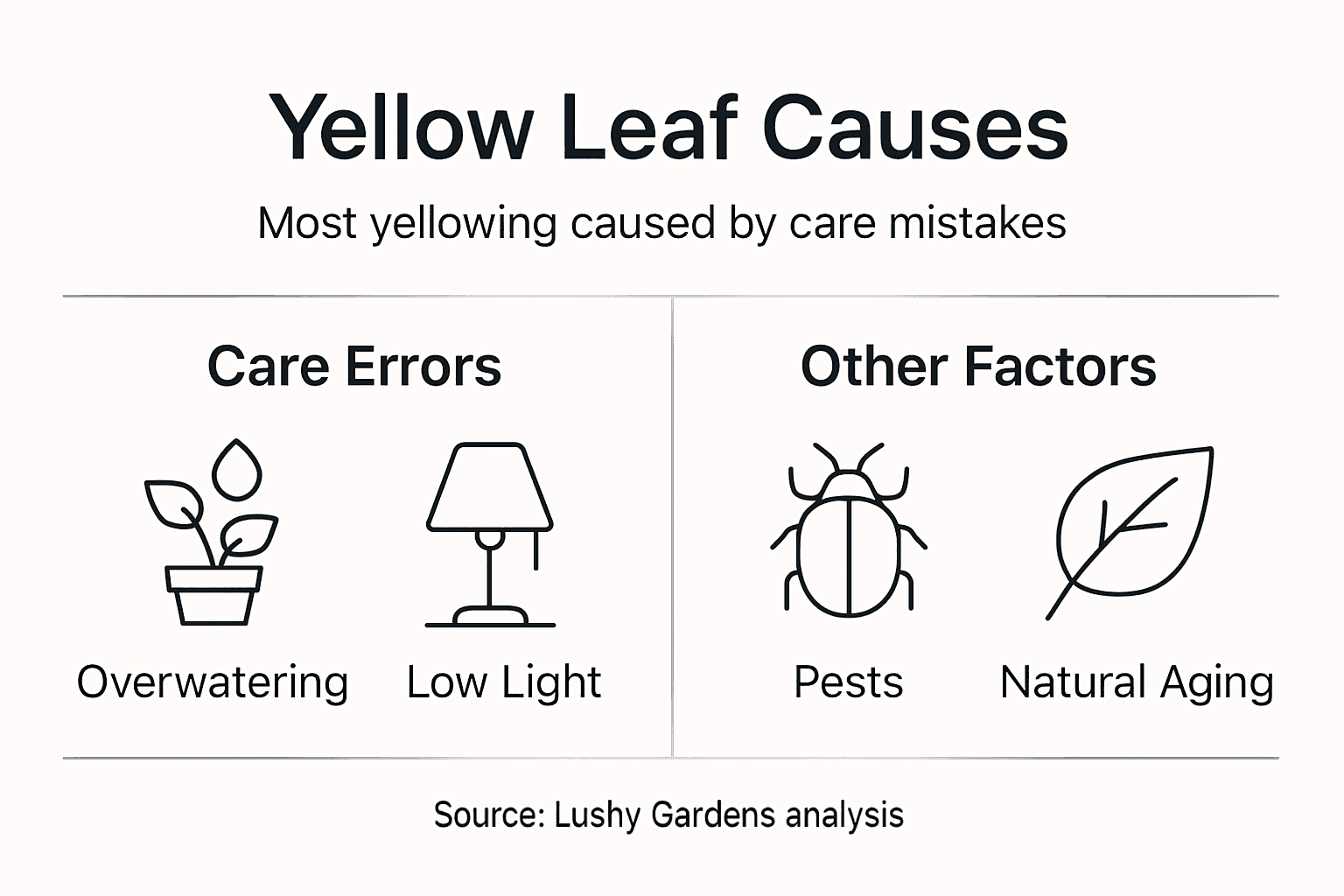
This framework works because it separates observation from action. You gather evidence before treating, preventing knee jerk responses that harm plants. Multiple observations across days provide clearer pictures than single checks.
Practical steps to fix and prevent yellowing leaves
Once you’ve diagnosed the cause, targeted action restores plant health. Each yellowing trigger requires specific treatment, so matching your response to the diagnosis prevents wasted effort.
Adjust watering habits immediately if soil moisture is wrong. For overwatered plants, stop watering until the top two inches of soil dry completely. Improve drainage by repotting in soil with added perlite or bark. For underwatered plants, water thoroughly until moisture reaches root depth, then establish a consistent schedule based on soil dryness, not calendar days.
Apply appropriate fertilizers when nutrient deficiency appears. Use balanced liquid fertilizer diluted to half strength for nitrogen shortages, applying every two weeks during growing season. For specific deficiencies like iron chlorosis, use chelated iron supplements following package directions. Avoid fertilizing dormant plants in winter.
Improve light exposure by moving plants closer to bright windows or adding supplemental grow lights. Most houseplants need six to eight hours of bright, indirect light daily. LED grow lights provide consistent intensity without heat damage, especially helpful in winter or north facing rooms.
Use safe pest control methods as soon as you spot insects. Rinse leaves with room temperature water to dislodge pests, then apply insecticidal soap or neem oil spray covering all leaf surfaces. Repeat treatments weekly for three weeks to break pest life cycles. Quarantine affected plants to prevent spread.
Proper watering, balanced fertilization, increased light, and pest control restore plant health and reduce yellow leaves. Remove heavily yellowed leaves by cutting stems at the base with clean shears. This redirects plant energy toward healthy foliage and new growth. Leave partially yellow leaves unless they’re mostly damaged, as they still photosynthesize.
Pro Tip: Make one change at a time and observe for two weeks before adjusting further. Plants respond gradually, and multiple simultaneous changes make it impossible to identify what worked.
Corrective actions by cause:
- Overwatering: Stop watering, improve drainage, check for root rot
- Underwatering: Water thoroughly, establish moisture based schedule
- Nitrogen deficiency: Apply balanced fertilizer biweekly during growth
- Low light: Move plant or add grow lights for six to eight hours daily
- Pests: Rinse leaves, apply insecticidal soap, quarantine plant
- Natural aging: Remove heavily yellow leaves, allow gradual drop
Prevention beats treatment. Water based on soil moisture, not fixed schedules. Fertilize regularly during active growth but stop in dormancy. Rotate plants monthly for even light exposure. Inspect new plants for pests before bringing them near your collection. These habits keep leaves green and problems rare.
Explore more gardening tips and guides at Lushy Gardens
You’ve learned to diagnose and fix yellow leaves, but successful gardening goes deeper. Whether you’re starting your first indoor jungle or expanding outdoor beds, we’ve got step by step guides to support every stage. Our gardening basics for beginners covers essential skills from soil preparation to seasonal care, giving you confidence to grow anything. For indoor plant enthusiasts, our indoor plant care basics guide walks through light requirements, humidity control, and common houseplant challenges. Master one of the most crucial skills with our watering indoor plants guide, which eliminates guesswork and prevents the overwatering mistakes that cause yellow leaves. Explore these resources to build knowledge that keeps your plants thriving year round.
Frequently asked questions about yellowing leaves on plants
What is the fastest way to stop leaves from turning yellow?
Adjust watering immediately by checking soil moisture and correcting overwatering or dryness. Improve light conditions if plants sit in dim areas, moving them closer to windows or adding grow lights. Identify and treat causes of yellow leaves like pests promptly using insecticidal soap if insects are present.
Can yellow leaves recover or should they be removed?
Yellow leaves rarely regain green color once chlorophyll breaks down completely. Removing them helps the plant redirect energy toward healthy new growth instead of maintaining damaged tissue. Leaves yellowing from natural aging can be left to drop on their own without harm.
How often should I water to prevent yellowing?
Water only when the top inch of soil feels dry to your touch for most indoor plants. Avoid fixed schedules since water needs change with seasons, humidity, and growth rates. Assess soil moisture regularly using your finger or a moisture meter rather than watering by calendar.
Does low light always cause yellow leaves?
Low light can produce pale or yellow leaves but many other factors cause similar symptoms. Fixing yellow leaves requires assessing watering habits, nutrient levels, and pest presence alongside light conditions. Combine multiple observations for accurate diagnosis before changing care routines.
Are yellow leaves a sign of pest infestation?
Pest damage typically creates speckled or spotty yellow patterns rather than uniform yellowing across entire leaves. Check leaf undersides closely with a magnifying glass for tiny insects, eggs, or webbing. Pests leave additional clues like sticky residue or curled leaf edges that distinguish them from water or nutrient issues.
Recommended
- Yellowing Leaves: 50% of Gardeners Misdiagnose the Cause – Lushy Gardens
- Problems With Yellowing Leaves – Causes and Solutions – Lushy Gardens
- Why Plant Leaves Turn Yellow—Causes and Solutions – Lushy Gardens
- Why Are My Plants Leaves Turning Yellow? Solutions That Work – Lushy Gardens

I’m Eleanor, a seasoned gardener with over three decades of experience tending to Mother Nature’s creations. Through Lushy Gardens, I aim to share my wealth of knowledge and help fellow plant enthusiasts uncover the wonders of gardening. Let’s dive into this journey together, one leaf at a time.


