
Table of Contents
Half of all home gardeners mistake underwatering symptoms for overwatering when leaves turn yellow. This confusion leads to treatments that worsen plant health instead of fixing the problem. You need to identify the real cause behind yellowing leaves to apply the right care. This guide walks you through recognizing symptoms, diagnosing accurately, and taking steps to restore your plants.
Key Takeaways
| Point | Details |
|---|---|
| Watering mistakes cause most yellowing | Misreading soil moisture leads to overwatering or underwatering stress |
| Nutrient deficiencies show specific patterns | Nitrogen deficiency affects 70% of nutrient-related cases |
| Symptom patterns guide diagnosis | Leaf texture, soil condition, and yellowing location reveal true causes |
| Environmental stress accelerates yellowing | Temperature and light extremes disrupt chlorophyll production |
| Regular inspection prevents problems | Early pest detection and timely care adjustments keep plants healthy |
Understanding Why Leaves Turn Yellow
Yellowing leaves signal stress, not always a fatal problem. Your plant’s roots need oxygen to absorb nutrients. When you overwater, waterlogged soil suffocates roots, blocking nutrient uptake and turning leaves yellow.
Nitrogen deficiency is the most common nutrient cause, typically showing as uniform yellowing starting on older leaves within 1 to 3 weeks without supplementation. This happens because nitrogen is mobile, so plants pull it from older leaves to feed new growth. You’ll see the oldest leaves turn yellow first while newer foliage stays green.
Light intensity extremes break down chlorophyll, the green pigment responsible for photosynthesis. Too much direct sun bleaches leaves, while too little light prevents chlorophyll production. Both scenarios result in yellowing.
Temperature stress near cold drafts or heat can increase leaf yellowing rates by 30% in sensitive species over 1 to 2 weeks. Extreme temperatures disrupt chloroplasts and speed up leaf aging. Your plant responds by dropping affected leaves to conserve energy.
Recognizing these physiological stressors helps you target the right yellowing leaves causes and solutions. Consider these common triggers:
- Root oxygen deficiency from waterlogged soil
- Mobile nutrient shortages like nitrogen or magnesium
- Light exposure that’s too intense or insufficient
- Temperature swings outside the plant’s comfort zone
- Natural aging as older leaves complete their life cycle
Common Misconceptions About Yellow Leaves
You might assume yellow leaves always mean overwatering. That’s wrong. Underwatering, nutrient shortages, or pest damage can produce identical symptoms. 50% of home gardeners misidentify underwatering yellowness as overwatering per survey data.
Excess fertilizer causes yellowing through salt buildup and osmotic stress. You might think more fertilizer helps a struggling plant, but it often makes things worse. Salts draw moisture out of roots, creating drought-like conditions even in wet soil.
Underwatering mimics overwatering because both stress roots and impair nutrient transport. Check soil moisture before treating. Dry soil with crisp leaf edges signals underwatering. Damp soil with soft yellow leaves points to overwatering.
Some believe yellow leaves always indicate disease, but environmental and care factors are usually responsible. Fungal or bacterial infections do cause yellowing, but they come with other signs like spots, mold, or foul odors. Pure yellowing without these extras suggests care issues, not pathogens.
Diagnosing requires observing multiple clues:
- Soil moisture level when you stick your finger two inches deep
- Leaf texture, whether crisp, soft, or spotted
- Yellowing pattern, such as uniform, patchy, or starting at leaf tips
- Presence of pests like spider mites or aphids
- Recent care changes like repotting or fertilizing
Pro Tip: Take photos of your plant weekly. Comparing images helps you spot gradual changes you might miss day to day.
Diagnosing Yellowing Leaves by Symptom Patterns
Old leaf yellowing indicates nutrient remobilization or nitrogen deficiency. Your plant strips nitrogen from mature leaves to support new growth. If only the oldest, lowest leaves turn yellow while upper leaves stay green, nitrogen shortage is likely.
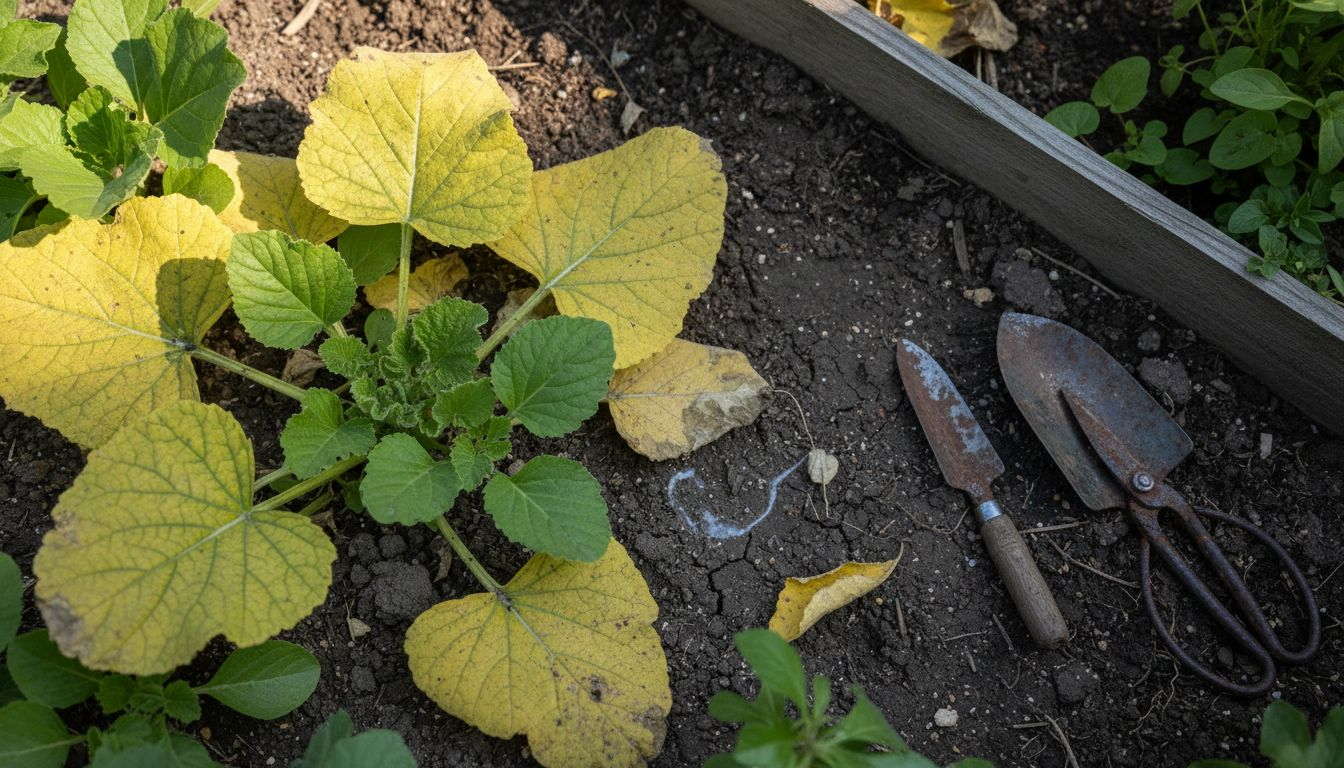
Speckled or spotty yellowing signals pest infestations. Tiny insects like spider mites suck cell contents, leaving yellow dots or stippling. Inspect leaf undersides with a magnifying glass. You’ll often find webs or moving specks.
Dry soil plus crisp leaf edges reveal underwatering stress. The leaf margins turn brown and brittle because water can’t reach the extremities. Rehydrate gradually to avoid shocking the roots.
Uniform yellowing with damp soil suggests overwatering causing root hypoxia. The entire leaf turns pale yellow, and the soil stays wet for days. Roots can’t breathe, so nutrient uptake stops.
Observing these symptom patterns narrows down causes before you apply care changes. Use this checklist:
- Check soil moisture first by feeling two inches below the surface
- Note which leaves turn yellow, old or new
- Examine leaf texture and edges for crispness or softness
- Look for pests, webbing, or sticky residue
- Review recent watering and fertilizing frequency
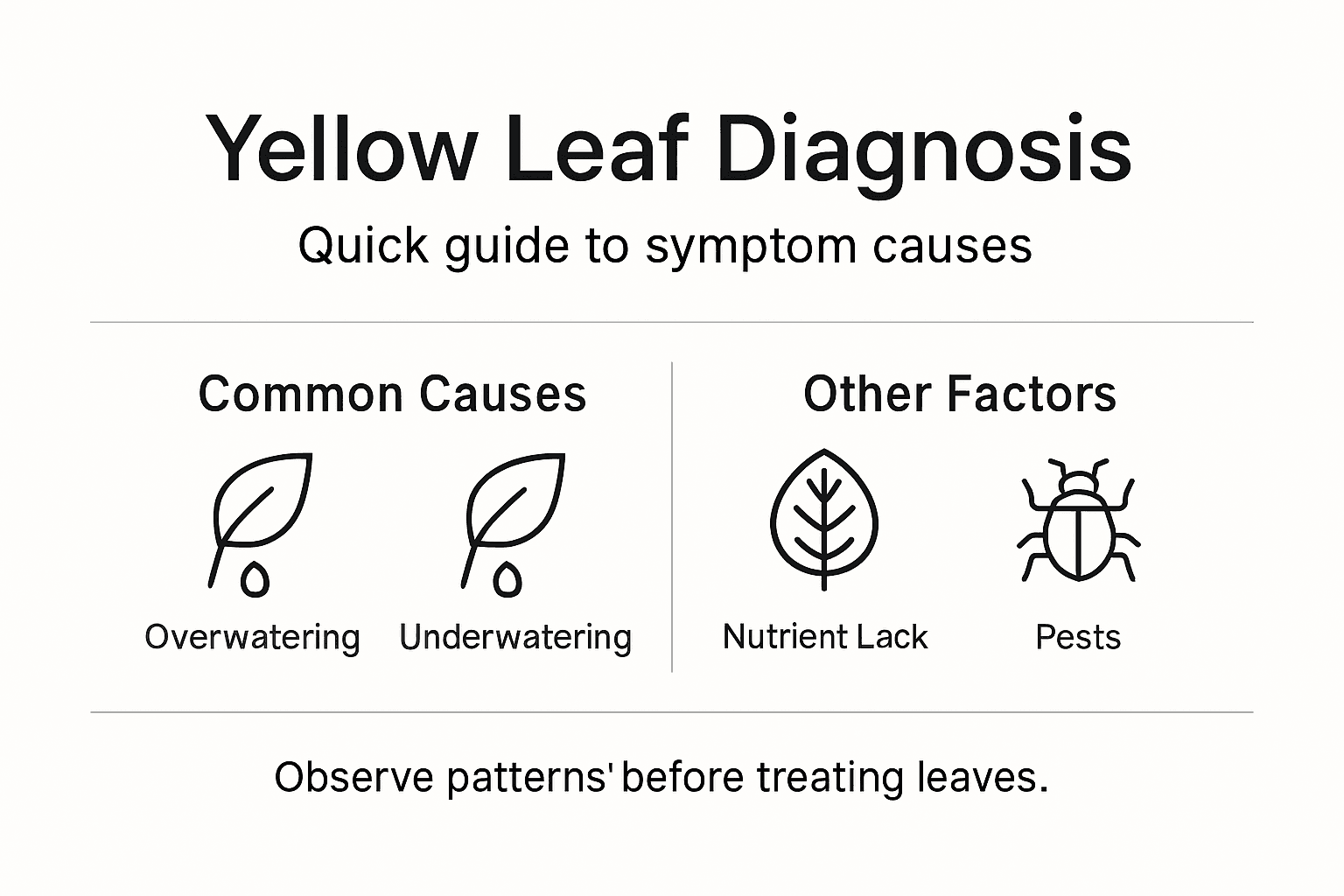
Matching symptoms to causes prevents guesswork. If you see yellow leaves with brown, crispy tips in dry soil, you’re underwatering. If leaves are uniformly pale with soggy soil, you’re overwatering. Spotted yellowing with tiny bugs means pests. This detailed yellowing leaf symptom guide breaks down each scenario.
Comparison of Watering-Related Yellowing Causes and Treatments
Underwatering and overwatering produce different symptoms despite both causing yellow leaves. Knowing the distinctions saves your plant.
| Cause | Symptoms | Soil Condition | Leaf Texture | Treatment |
|---|---|---|---|---|
| Underwatering | Lower leaves yellow, brown crispy edges | Dry, pulls away from pot | Crisp, brittle | Water thoroughly until it drains, then adjust schedule |
| Overwatering | Uniform yellowing, possible leaf drop | Damp, stays wet for days | Soft, wilted, mushy | Reduce watering, improve drainage, check for root rot |
Underwatering symptoms develop slowly as the plant conserves water by shedding older leaves. You’ll notice soil pulling away from the pot’s edge. Treatment involves gradual rehydration. Water thoroughly until it drains from the bottom, then let the top inch dry before watering again.
Overwatering symptoms appear faster because roots suffocate quickly in saturated soil. Leaves turn yellow uniformly, feel soft, and may drop easily. Treatment requires improving drainage and reducing watering frequency. If roots smell rotten, you may need to repot in fresh soil.
Prevention strategies keep watering issues from recurring:
- Check soil moisture before every watering session
- Use pots with drainage holes to prevent water accumulation
- Adjust watering frequency based on season and humidity
- Water deeply but less often to encourage strong root growth
- Monitor plant weight by lifting the pot to gauge moisture
Pro Tip: Use a moisture meter for accurate watering decisions. Stick the probe two inches deep and water only when it reads dry. This eliminates guesswork and prevents both under and overwatering.
Practical Steps to Recover and Prevent Leaf Yellowing
Adjust watering frequency according to soil moisture rather than fixed schedules. Your plant’s water needs change with temperature, humidity, and growth stage. Stick your finger two inches into the soil. If it feels dry, water thoroughly. If it’s damp, wait.
Use balanced fertilizers tailored to diagnosed nutrient deficiencies. For nitrogen shortage, apply a fertilizer with higher nitrogen content, like a 10-5-5 ratio. For general feeding, use a balanced 10-10-10 formula at half strength monthly during the growing season.
Modify environmental factors to reduce stress. Increase light exposure by moving plants closer to windows or adding grow lights. Protect from temperature extremes by keeping plants away from drafts, heating vents, and air conditioners. Most houseplants prefer temperatures between 65°F and 75°F.
Inspect plants regularly for pests and treat early. Check leaf undersides weekly for spider mites, aphids, or scale insects. Wipe leaves with a damp cloth or spray with insecticidal soap at the first sign of infestation. Early intervention prevents yellowing from biotic stress.
Maintain plant health through proper care practices:
- Repot every 1 to 2 years to refresh soil and prevent root binding
- Prune dead or yellowed leaves to redirect energy to healthy growth
- Improve airflow by spacing plants apart and using fans if needed
- Clean leaves monthly to remove dust and improve photosynthesis
- Rotate plants weekly for even light exposure on all sides
These steps help you save dying plants naturally and build resilience. Recovery takes time, typically 2 to 4 weeks for new growth to appear. Be patient and consistent.
Pro Tip: Keep a plant care journal to track symptoms and changes. Note watering dates, fertilizer applications, and any yellowing you observe. Over time, patterns emerge that improve your diagnosis accuracy and help you fine tune care for each plant’s needs. Review entries monthly to spot trends and adjust your approach. This simple habit transforms you from a reactive gardener into a proactive plant parent who catches problems before they escalate. You’ll also remember what worked and what didn’t, saving time and reducing plant stress. Visit indoor plant care tips for more detailed guidance.
Discover Expert Gardening Guides and Tools at Lushy Gardens
Lushy Gardens offers detailed guides and practical tools to help you master plant care. Whether you’re troubleshooting yellowing leaves or learning to water correctly, you’ll find beginner friendly resources that build your gardening confidence. Explore our gardening basics guide to establish a strong foundation in plant care principles. Access expert advice on watering schedules, fertilizing techniques, and preventing common plant problems through our step-by-step watering guide. Join the Lushy Gardens community to keep your garden thriving year round with tried and tested strategies from experienced gardeners. Our indoor plant care tips cover everything from light requirements to pest management, giving you the knowledge to grow healthy, vibrant plants at home.
Frequently Asked Questions About Yellowing Leaves
Can yellow leaves turn green again?
No, yellow leaves won’t regain their green color. Once chlorophyll breaks down, it doesn’t regenerate in that leaf. Focus your energy on preventing new yellowing by correcting the underlying cause. Remove fully yellow leaves so the plant redirects nutrients to healthy foliage.
How often should I fertilize to prevent yellow leaves?
Fertilize during the growing season, typically spring and summer, every 4 to 6 weeks with half strength balanced fertilizer. Most houseplants need little to no fertilizer in fall and winter when growth slows. Overfertilizing causes salt buildup and yellowing, so less is often more.
Is it normal for some leaves to turn yellow?
Yes, older leaves naturally yellow and drop as plants age and redirect resources to new growth. This is normal if only a few lower leaves turn yellow while the rest of the plant looks healthy. Worry when multiple leaves yellow rapidly or new growth shows discoloration.
Should I remove yellow leaves immediately?
Remove fully yellow leaves to improve appearance and prevent fungal growth on decaying tissue. If a leaf is only partially yellow, leave it until it’s mostly discolored. The plant may still extract remaining nutrients. Use clean scissors to cut at the base of the leaf stem.
Can yellow leaves indicate root rot?
Yes, uniform yellowing with soft, mushy leaves and perpetually damp soil often signals root rot from overwatering. Check roots by gently removing the plant from its pot. Healthy roots are white or tan and firm. Rotten roots are brown, black, and slimy. Trim diseased roots, repot in fresh soil, and reduce watering.
What’s the fastest way to diagnose yellowing causes?
Check soil moisture first by feeling two inches deep. Dry soil with crispy leaves means underwatering. Wet soil with soft leaves suggests overwatering. Then inspect for pests and review your recent fertilizing schedule. This quick assessment narrows down the most likely cause in under five minutes.
Recommended
- Problems With Yellowing Leaves – Causes and Solutions – Lushy Gardens
- Why Plant Leaves Turn Yellow—Causes and Solutions – Lushy Gardens
- Why Are My Plants Leaves Turning Yellow? Solutions That Work – Lushy Gardens
- Why Is My Plant Turning Yellow and Brown? – Lushy Gardens

I’m Eleanor, a seasoned gardener with over three decades of experience tending to Mother Nature’s creations. Through Lushy Gardens, I aim to share my wealth of knowledge and help fellow plant enthusiasts uncover the wonders of gardening. Let’s dive into this journey together, one leaf at a time.


