
Table of Contents
Humidity is the one factor most indoor plant owners never think to check, yet it quietly drives some of the most frustrating plant problems you’ll face. Brown leaf tips, drooping stems, and stunted growth are rarely about watering mistakes alone. Most indoor plants prefer 40-60% RH, but the average home, especially in winter, often falls well below that. This guide walks you through exactly what your plants need, how to measure it accurately, and which solutions actually work in a real home environment.
Key Takeaways
| Point | Details |
|---|---|
| Know your plant’s needs | Different indoor plants thrive at different humidity ranges—identify yours for best results. |
| Measure, don’t guess | Use a hygrometer and monitor multiple areas to understand your home’s real humidity levels. |
| Boost humidity safely | Try grouping plants, pebble trays, or a humidifier, and always provide proper airflow. |
| Avoid common mistakes | Don’t over-mist, ignore ventilation, or use hard water—these can harm your plants over time. |
Why indoor plant humidity matters: The science behind healthy plants
To understand what drives plant problems, you first need to grasp why humidity is so fundamental. Relative humidity, or RH, is the percentage of moisture in the air compared to the maximum it can hold at a given temperature. Plants constantly pull water from their roots and release it through tiny pores called stomata in a process called transpiration. When the air around them is too dry, that water escapes too fast, and the plant struggles to keep up.
Low RH increases water loss, stressing plants even when the soil feels moist. This is why you can water correctly and still see wilting. The basics of humidity for houseplants are often overlooked, but they explain a huge portion of common care failures. Understanding this connection also helps you separate overwatering vs underwatering from humidity stress, which look surprisingly similar.
Too much humidity creates its own set of problems, including mold, fungal disease, and root rot. The sweet spot is balance, and humidity’s effect on plants is well documented across horticultural research.
Empirical extension trials show 40-60% RH is optimal for most indoor plant health.
Signs your plant is suffering from humidity stress:
- Brown, crispy leaf tips
- Drooping or wilting despite moist soil (see why your plant is drooping)
- Yellowing or dropping leaves
- Slowed or stunted growth
- Curling leaf edges
Classifying plant humidity needs: Comparing tropical, temperate, and arid species
Now that you know why humidity matters, discover how much your specific plants actually need. Not all houseplants want the same environment, and grouping them by humidity preference is one of the smartest things you can do for your collection.
Tropical plants like Calathea and Boston Fern need 50-80% RH, while Philodendron and Monstera do well at 40-70%. Succulents, ZZ Plants, and Snake Plants are comfortable at just 20-50%. Mixing a Calathea next to a cactus on the same shelf is a recipe for one of them struggling constantly. Check the plant humidity chart to quickly look up your specific varieties.
| Plant type | RH range | Examples |
|---|---|---|
| Tropical | 50-80% | Calathea, Boston Fern, Anthurium, Peace Lily |
| Mid-range | 40-70% | Monstera, Philodendron, Pothos |
| Temperate | 35-55% | Spider Plant, English Ivy, Rubber Plant |
| Arid/Succulent | 20-50% | Snake Plant, ZZ Plant, Cactus, Aloe |
Popular plants by humidity category:
- High humidity (50-80%): Calathea, Ferns, Orchids, Anthurium
- Medium humidity (40-70%): Monstera, Pothos, Philodendron, Peace Lily
- Low humidity (20-50%): Snake Plant, ZZ Plant, Succulents, Cacti
Your home also has natural microclimates. Bathrooms and kitchens tend to run more humid, while bedrooms and living rooms near heating vents dry out fast. Placing humidity-loving plants near indoor air quality zones like kitchens can give them a passive boost. For beginners building a collection, easy-care tropical tips can help you start with forgiving varieties.
Measuring humidity indoors: Tools, methods, and microclimates
With your plant types classified, here’s how to actually keep tabs on your home’s humidity. Guessing by feel is unreliable. A room that feels comfortable to you might be sitting at 25% RH, which is dangerously dry for most tropical plants.
A hygrometer is a small device that measures relative humidity in real time. Digital hygrometers cost $10-20 and are accurate to within a few percentage points, making them the most practical tool for home growers. Analog versions are cheaper but less precise. Smart sensors connect to your phone and log data over time, which is useful if you want to track seasonal shifts. For measuring indoor humidity accurately, a basic digital model is all most people need.
| Tool | Cost | Accuracy | Best for |
|---|---|---|---|
| Digital hygrometer | $10-20 | High | Most home growers |
| Analog hygrometer | $5-10 | Moderate | Budget option |
| Smart sensor | $25-60 | Very high | Tracking trends over time |
| Weather app | Free | Low | General reference only |
Place your hygrometer at plant level, not on a high shelf or near a window. Readings near vents or cold glass will be skewed. Bathrooms typically read 55-70% RH, while bedrooms often sit at 30-38%. These differences matter when you’re deciding where to place your plants. For more on working with home environments, urban gardening humidity tips covers practical placement strategies.
Pro Tip: Stability matters more than perfection. A plant kept at a steady 50% RH will thrive far better than one swinging between 30% and 70% throughout the week.
Proven ways to increase and balance humidity for indoor plants
Once you know your home’s numbers, try these expert-backed solutions for steady growth. The good news is that most methods are low-cost and easy to maintain.
Humidifiers typically raise RH by 10-15%, making them the most reliable single tool for dry homes.
- Group your plants together. Plants release moisture through transpiration, so clustering them creates a shared microclimate with higher humidity. This is free and surprisingly effective.
- Use a pebble tray. Fill a shallow tray with pebbles and water, then set your pot on top. As the water evaporates, it raises humidity around the plant without waterlogging the roots.
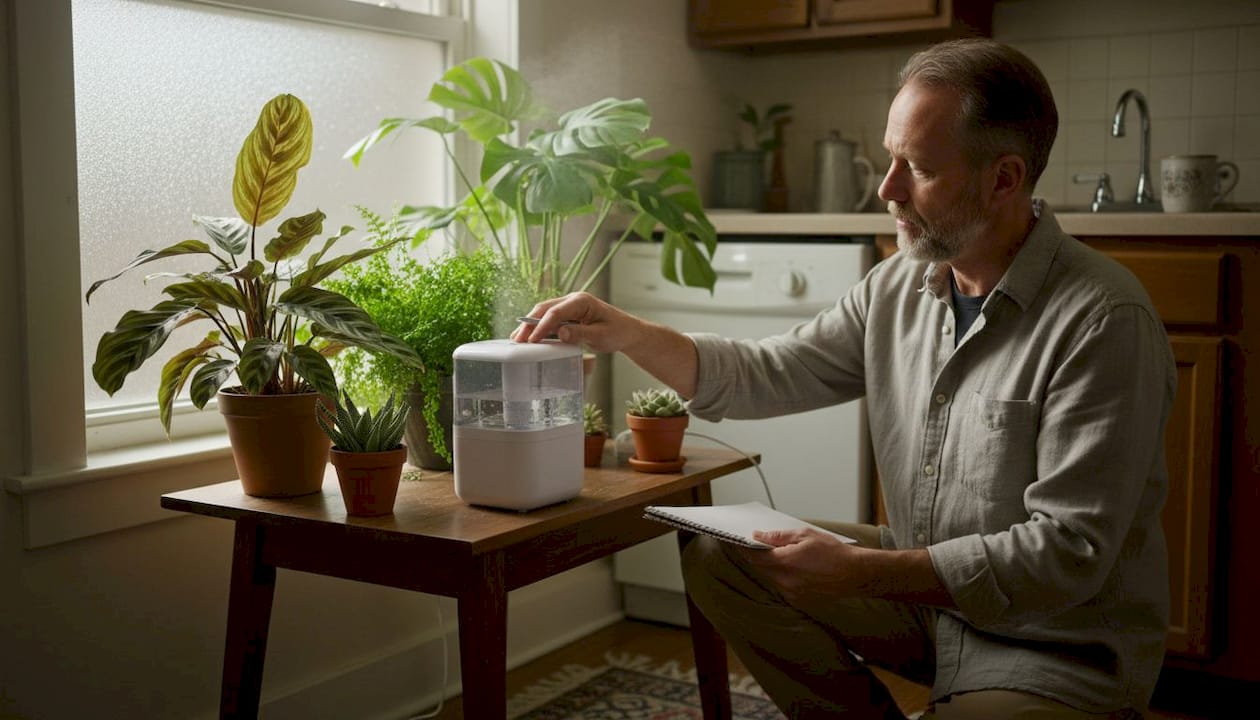
- Run a humidifier nearby. A cool-mist humidifier placed near your plant shelf is the most consistent solution for dry climates or winter heating. For indoor vegetable growing, this is especially useful.
- Relocate plants to naturally humid rooms. Bathrooms and kitchens offer passive humidity boosts. Just make sure light levels are adequate.
- Use a terrarium or cloche. Enclosing moisture-loving plants traps humidity effectively. Great for ferns and orchids.
Misting gets a lot of attention, but it only raises humidity for a few minutes before the water evaporates. It’s not a reliable long-term strategy. In winter or in HVAC-heavy homes, stack two or three of these methods to increase humidity together for the best results. Grouping plus a pebble tray plus a small humidifier is a powerful combination. For microclimate strategies in tighter spaces, small adjustments go a long way.
Pro Tip: Clean your humidifier every week. Stagnant water inside the tank breeds mold and bacteria, which then gets dispersed into the air around your plants.
Humidity mistakes to avoid: Common pitfalls and advanced nuances
Even the best strategies can backfire. Here’s what expert growers watch for when managing indoor humidity.
Common mistakes that hurt your plants:
- Over-misting, especially on plants with hairy or fuzzy leaves like African Violets or Begonias. Water sitting on leaf surfaces invites fungal disease.
- Using hard tap water for misting or trays. Mineral deposits build up on leaves and block stomata. Use rainwater or filtered water instead.
- Poor air circulation combined with high humidity. Stagnant, moist air is where disease thrives.
- Ignoring seasonal shifts. Summer often brings enough natural humidity, while winter heating strips moisture from the air fast.
RH above 80% risks Phytophthora and powdery mildew without adequate airflow. These are serious fungal diseases that spread quickly and are hard to reverse. The risks of high humidity are just as real as the risks of low humidity, so balance is everything. If you notice soft, mushy stems or a musty smell near your pots, check for root rot immediately.
Pro Tip: Always pair humidity boosting with a small fan or open window nearby. Moving air prevents the moisture pockets that lead to mold and rot, especially in tightly grouped plant arrangements.
Seasonal adjustments are non-negotiable. In summer, especially in humid climates, you may need to reduce your efforts or even run a dehumidifier. In winter, ramp everything up. Use your hygrometer readings to guide those decisions rather than guessing. For a broader look at what else might be going wrong, the indoor plant troubleshooting guide covers the full picture.
Continue your indoor gardening success
You now have the tools to diagnose, measure, and fix humidity issues with confidence. But humidity is just one piece of the indoor gardening puzzle. At Lushy Gardens, we’ve built a full library of guides to help you tackle every challenge your plants throw at you. Explore our indoor plant care tips for a complete overview of what your plants need season to season. If something still looks off after adjusting humidity, our troubleshooting guide for indoor plant problems helps you pinpoint the cause fast. Ready to grow your collection? Our propagating houseplants guide walks you through multiplying your favorites step by step.
Frequently asked questions
What is the best humidity level for most indoor plants?
Aim for 40-60% relative humidity for most common houseplants. Tropical species need 50-80% RH, so always check your specific plant’s preference before setting a target.
How can I tell if my plant needs more humidity?
Brown leaf tips, wilting despite moist soil, and slow growth are the clearest signals. These humidity stress signs often appear before any other visible damage, so catching them early saves the plant.
Is misting my houseplants effective for humidity?
Misting gives only a brief boost that evaporates within minutes. Misting is ineffective long-term, so rely on grouping, pebble trays, or a humidifier for lasting results.
What’s the safest way to increase humidity without causing mold?
Combine moderate humidity boosting with good air circulation. High RH needs airflow to prevent mold and root rot, so never seal plants in a humid space without ventilation.
Recommended
- Humidity for Houseplants: Creating Healthy Indoor Environments – Lushy Gardens
- 8 Essential Indoor Plant Care Tips for Every Gardener – Lushy Gardens
- Pruning Indoor Plants Naturally for Healthy Growth – Lushy Gardens
- Houseplants for beginners: easy care tips (68% saved) – Lushy Gardens

I’m Eleanor, a seasoned gardener with over three decades of experience tending to Mother Nature’s creations. Through Lushy Gardens, I aim to share my wealth of knowledge and help fellow plant enthusiasts uncover the wonders of gardening. Let’s dive into this journey together, one leaf at a time.


