
Table of Contents
TL;DR:
- Light is the most critical factor for indoor plant health, measured in foot-candles.
- Water plants based on soil moisture, not on a fixed schedule, to prevent root rot.
- Regular observation of plant behavior and environment helps diagnose problems early and promotes thriving plants.
Most people assume watering is the hardest part of keeping indoor plants alive. Water too much, the plant dies. Water too little, same result. So we obsess over schedules, set reminders, and still watch leaves turn yellow. The truth is, watering is rarely the real problem. Light and observation are the two factors that separate thriving plants from struggling ones. This guide walks you through the science-backed essentials of indoor plant care, from measuring light correctly to building a weekly observation routine that catches problems before they become disasters.
Key Takeaways
| Point | Details |
|---|---|
| Light is essential | Most indoor plants need much more light than people assume, and matching plants to available light is the foundation for healthy growth. |
| Observation beats schedules | Check soil, light, and humidity regularly rather than sticking rigidly to fixed watering or care routines. |
| Healthy roots prevent problems | A well-draining mix and proper pots protect your plant’s root system and reduce the risk of root rot. |
| Environment matters | Stable temperatures, good air flow, and moderate humidity are crucial for indoor plant success. |
| Most mistakes are fixable | Quick observation and evidence-based corrections can help struggling plants recover and thrive indoors. |
Understanding indoor light: The #1 plant success factor
Here’s something most plant labels won’t tell you: your home is probably much darker than you think. Even a bright, sunny room delivers far less light than the outdoors, and that gap matters enormously for plant health. Light is the most critical factor for indoor plant growth, measured in foot-candles (ft-c): low light sits at 50-250 ft-c, medium ranges from 250-1000 ft-c, bright indirect light runs 1000-2000+ ft-c, and high-light plants need 500+ ft-c while avoiding direct sun that causes leaf scorch.
The good news? You don’t need expensive equipment to measure this. Free smartphone apps like Lux Meter or Light Meter convert your phone’s camera sensor into a usable light reader. Hold the phone at plant level during the brightest part of the day and take a reading. This one step alone will change how you think about plant placement and help you avoid common light mistakes that trip up even experienced growers.
Matching your plant to its actual light environment is the single most impactful decision you’ll make. A snake plant can survive in low light. A fiddle-leaf fig will slowly decline there. Before buying any plant, check its evaluating plant lighting needs and compare them to your measured readings.
| Light category | Ft-c range | Example plants |
|---|---|---|
| Low light | 50-250 | Pothos, ZZ plant, cast iron plant |
| Medium light | 250-1000 | Peace lily, spider plant, dracaena |
| Bright indirect | 1000-2000+ | Fiddle-leaf fig, monstera, orchids |
| Direct sun | 2000+ | Cacti, succulents, herbs |
Pro Tip: Rotate your plants a quarter turn every week so all sides get equal light exposure. If your window light is too harsh, hang a sheer curtain to diffuse it into bright indirect light without blocking it entirely.
Watch for these signals that your light situation needs adjusting:
- Insufficient light: Leggy stems, small new leaves, pale color, leaning toward the window
- Excessive light: Scorched brown patches, bleached or washed-out leaves, crispy leaf edges
Watering wisdom: Observation over schedule
Once you’ve matched your plants to their light needs, the next major challenge is watering them correctly. And the most important rule here is this: throw out the schedule.
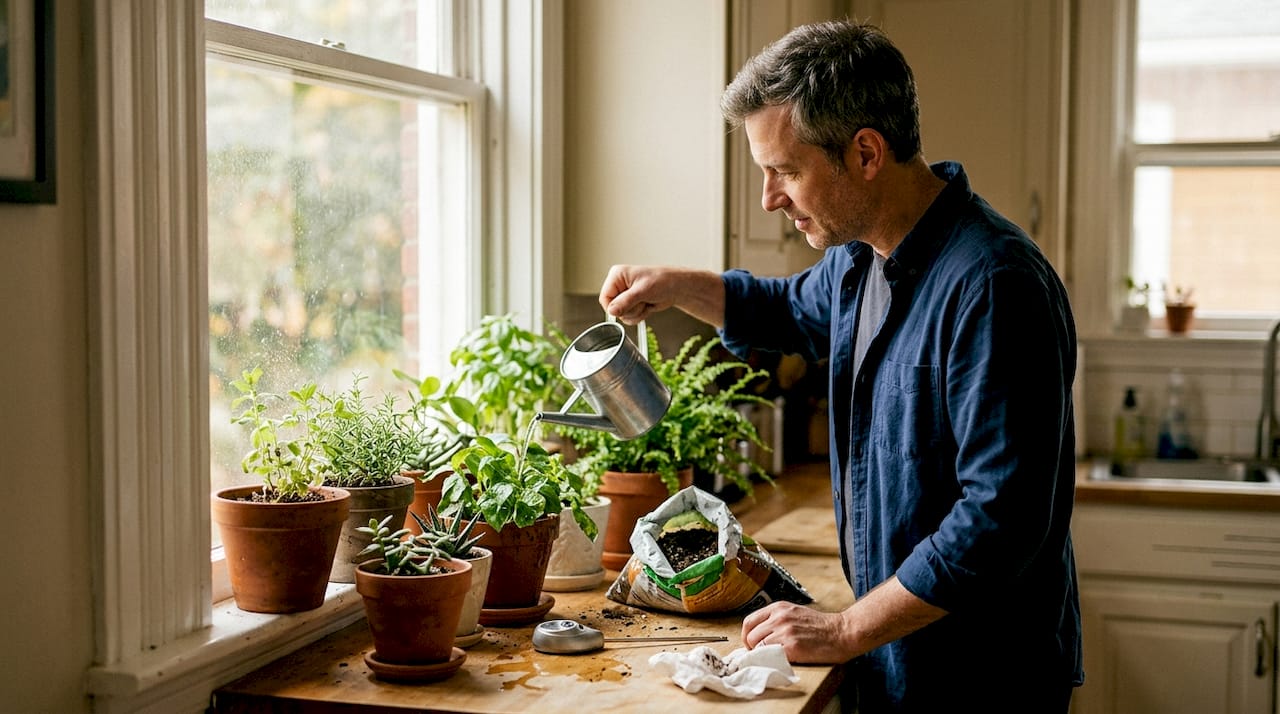
The soil tells you when to water, not the calendar. Stick your finger one to two inches into the soil. If it feels dry, water thoroughly until it drains from the bottom. If it still feels damp, wait another day or two and check again. This simple habit prevents the most common plant killer: root rot.
Root rot from overwatering is far more common than damage from underwatering, and it’s much harder to reverse. When roots sit in soggy soil, they suffocate and decay, cutting off the plant’s ability to absorb water or nutrients. The cruel irony is that an overwatered plant often looks like it needs more water, with drooping, yellowing leaves that trick owners into watering even more.
Research consistently shows that overwatering causes more plant death indoors than underwatering. Most houseplants evolved in environments where dry periods between rains were normal and expected.
Signs your plant is getting too much water:
- Yellowing lower leaves
- Mushy or black stem base
- Soil that stays wet for more than a week
- Fungus gnats hovering around the pot
Signs your plant needs more water:
- Drooping or wilting leaves that perk up after watering
- Dry, pulling-away soil edges
- Lightweight pot when lifted
- Crispy brown leaf tips
Pro Tip: Always use pots with drainage holes. A decorative pot without drainage is a slow death sentence for most plants. If you love a particular pot, use it as a cachepot (outer cover) and keep the plant in a plain nursery pot with holes inside it.
For beginners, a moisture meter (a simple probe you insert into the soil) removes all the guesswork. Self-watering pots are another solid option for plants that prefer consistent moisture, like peace lilies.
Creating the ideal environment: Temperature, humidity, and air flow
While watering gets the most attention, environmental conditions like temperature and humidity require equal diligence. Most common houseplants prefer a temperature range of 58-82°F, avoiding drafts from windows, vents, and air conditioners. High temperatures speed up respiration, and when combined with low light, they can stunt growth significantly.
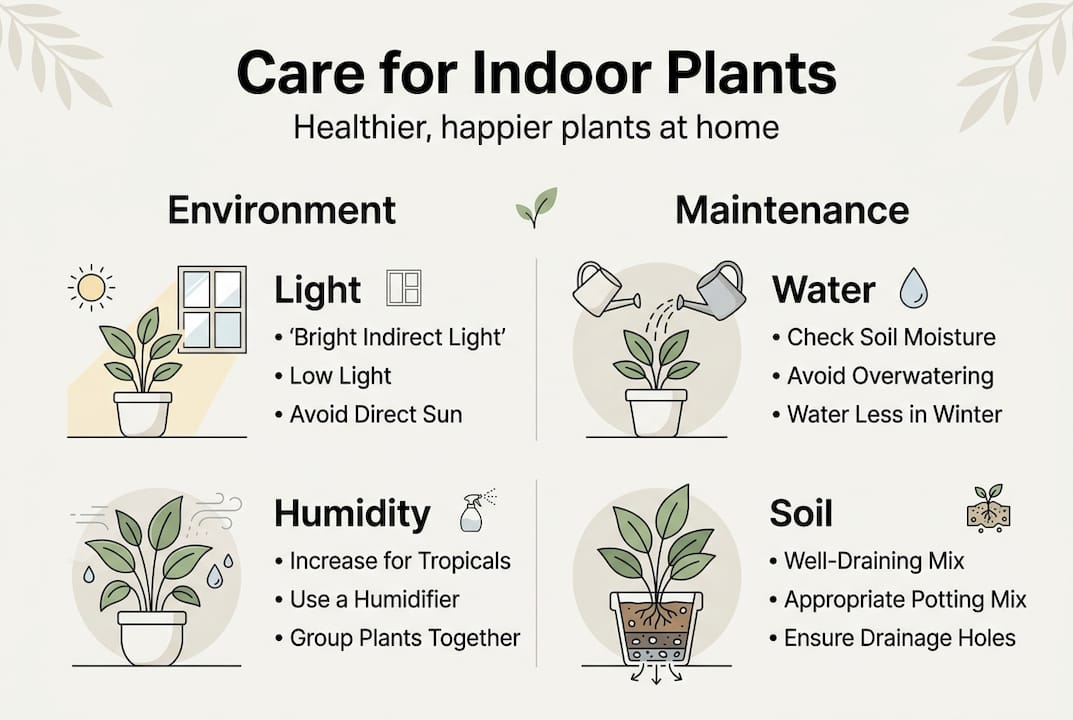
Humidity is the other invisible factor. Most homes run at 30-40% relative humidity (RH), but tropical plants like ferns, calatheas, and orchids prefer 50-70% RH. Desert plants like cacti and succulents are happy at lower levels.
| Plant type | Preferred temp (°F) | Preferred humidity |
|---|---|---|
| Tropical (pothos, monstera) | 65-80 | 50-70% RH |
| Desert (cacti, succulents) | 60-85 | 20-40% RH |
| Temperate (ferns, peace lily) | 60-75 | 50-60% RH |
| Orchids | 65-80 | 50-70% RH |
Here’s how to monitor and adjust your home environment:
- Buy a hygrometer (a small, inexpensive device that reads both temperature and humidity) and place it near your plants.
- Check readings morning and evening for a week to understand your baseline.
- If humidity is too low, group plants together (they release moisture through transpiration), use a pebble tray with water, or run a small humidifier nearby.
- Keep plants away from heating vents, radiators, and cold drafts near windows in winter.
- Use a small fan on low to improve air circulation without creating a direct draft.
Good air flow prevents fungal issues and strengthens stems. You can find more detail on managing humidity for houseplants and the ideal indoor plant humidity range for healthy growth. For a broader look at monitoring greenhouse conditions, the same principles apply at home scale.
Soil, pots, and nutrients: Building a healthy root system
With a stable environment established, attention moves below the surface. Healthy roots depend on the right foundation, and that starts with your potting mix.
Generic garden soil is too dense for indoor pots. It compacts over time, blocks drainage, and suffocates roots. A well-draining potting mix containing peat-free materials, perlite, and bark gives roots the air pockets and drainage they need. Acid-loving plants like azaleas and gardenias need ericaceous compost specifically formulated for lower pH. Repot every one to two years, or sooner if you spot roots circling the bottom or pushing out of drainage holes.
Look for these materials when choosing or mixing your own indoor potting blend:
- Perlite: Improves drainage and aeration
- Bark chips: Adds structure and slows compaction
- Coco coir: A sustainable peat-free base that holds moisture without waterlogging
- Worm castings: Gentle, slow-release nutrients
- Sand (coarse): Useful for succulents and cacti mixes
Nutrients matter too, but less than most people think. During the growing season (spring through summer), a balanced liquid fertilizer applied monthly is enough for most houseplants. In fall and winter, most plants slow down and don’t need feeding at all. Over-fertilizing causes salt buildup in the soil and can burn roots.
Pro Tip: Never reuse old potting soil for a new plant. Old soil can harbor pathogens, pests, and depleted nutrients. Fresh mix gives every new plant the cleanest start. Avoid indoor plant care mistakes like skipping drainage holes or using heavy garden soil indoors. If a plant is struggling with no obvious cause, your indoor plant troubleshooting guide can help you work through the possibilities systematically.
Applying the science: Observation and troubleshooting for thriving plants
Bringing all these pieces together means making regular care second nature, with ongoing validation from science and experience. We spend 90% of our time indoors, which means the plants around us are constantly part of our environment, purifying air through CO2-to-oxygen conversion and absorbing pollutants. That makes their health genuinely impactful to our daily lives, not just decorative.
The key is building a simple weekly routine that integrates everything: measure light, check soil, monitor RH with a hygrometer, and observe plant behavior rather than sticking to a fixed schedule.
Here’s a practical weekly plant check routine:
- Walk around each plant and look at leaf color, posture, and new growth.
- Check soil moisture with your finger at 1-2 inches depth.
- Look under leaves for pests like spider mites or scale.
- Note any yellowing, browning, or unusual spots.
- Check the pot weight (light pot often means dry soil).
- Glance at your hygrometer and adjust humidity if needed.
- Record anything unusual so you can track patterns over time.
Most plant problems are fixable when caught early. A yellowing leaf spotted today is a clue. Ten yellowing leaves next week is a crisis. The health benefits of indoor plants are well documented, and a consistent observation habit is what keeps those benefits working in your favor. When something does go wrong, structured plant troubleshooting steps make it much easier to identify the cause and act fast.
A fresh perspective: Why observation and not just routine separates thriving from struggling plants
Here’s an uncomfortable truth most plant care content skips: routines can breed neglect. When you water every Sunday out of habit, you stop actually looking at your plants. You stop noticing that the monstera’s newest leaf is smaller than the last three, or that the pothos is leaning hard toward the window. Those are signals. Routines mute them.
The plants that thrive in our care aren’t the ones on the strictest schedule. They’re the ones we pay attention to. Leaf posture changes before wilting sets in. Growth rate slows before a plant visibly struggles. These early signals are only visible if you’re actually watching, not just following a checklist.
I’ve seen this play out with a peace lily that sat on a shelf for months, watered faithfully every week, slowly declining. The fix wasn’t a new product or a different fertilizer. It was moving it three feet closer to the window and switching to soil-based watering checks. Within a month, it was producing new growth again.
For more strategies that build on this mindset, the thriving indoor plants tips at Lushy Gardens offer practical, experience-backed guidance that goes well beyond the basics.
Ready to see your indoor plants thrive?
You now have the framework: match light to plant needs, water based on soil cues, maintain the right temperature and humidity, choose the right soil and pot, and observe consistently. The next step is putting it into practice with the right resources by your side. Explore more indoor plant care tips to build on what you’ve learned here. If something’s already going wrong, the indoor plant troubleshooting guide walks you through diagnosing and fixing the most common issues. And if you want to maximize the benefits of your green space, discover which plants for better air quality make the biggest difference in your home.
Frequently asked questions
How often should indoor plants be watered?
Water only when the top 1-2 inches of soil feel dry to the touch. Root rot from overwatering is far more common than drought damage, so always check before you pour.
What’s the best way to measure indoor light for my plants?
Use a foot-candle measuring app on your smartphone, held at plant level during peak daylight hours. Light is the most critical factor in indoor plant success, and most homes are darker than owners realize.
How do I know if my house is too dry or cold for plants?
A hygrometer and thermometer placed near your plants will give you accurate readings. Most houseplants prefer 58-82°F and 40-60% RH to stay healthy and grow steadily.
What kind of soil is best for indoor plants?
Choose a well-draining mix with perlite, bark, and peat-free materials for most houseplants. Acid-loving plants like azaleas need ericaceous compost formulated for lower pH conditions.
Why do indoor plant leaves turn yellow?
Yellow leaves are most often caused by overwatering, low light, or poor drainage. Light levels and watering practices are the two biggest drivers of leaf color and overall plant health.
Recommended
- Get thriving indoor plants: expert tips for home gardeners – Lushy Gardens
- 8 Essential Indoor Plant Care Tips for Every Gardener – Lushy Gardens
- Indoor House Plants: Enhance Air Quality Safely – Lushy Gardens
- Indoor Plant Care Basics: Everything You Need to Know – Lushy Gardens
- 6 Beispiele für Dachbegrünung: Nachhaltige Tipps für Sie

I’m Eleanor, a seasoned gardener with over three decades of experience tending to Mother Nature’s creations. Through Lushy Gardens, I aim to share my wealth of knowledge and help fellow plant enthusiasts uncover the wonders of gardening. Let’s dive into this journey together, one leaf at a time.


