
Table of Contents
TL;DR:
- Houseplants produce some oxygen and remove VOCs but have minimal impact outdoors.
- Effective air purification relies more on ventilation and air filters than on houseplants alone.
- Plants add aesthetic, psychological, and humidity benefits, enriching indoor environments beyond air quality.
You’ve probably arranged a few leafy greens on your windowsill and felt better about the air you breathe. That feeling is real, and it’s not entirely wrong either. Plants do produce oxygen and can pull certain chemicals from the air. But the story between houseplants and indoor air quality is richer and more nuanced than the popular headlines suggest. This article walks you through the actual science, introduces the best plants to choose, and shows you how to build a healthier, more beautiful indoor space with realistic expectations and genuine plant love.
Table of Contents
- The science behind indoor plants and oxygen production
- Top indoor plants for oxygen and air purification
- Limitations and real-world effectiveness: What studies reveal
- Maximizing air quality and oxygen: Practical tips for plant lovers
- Why loving plants goes beyond pure oxygen: Our take
- Ready to transform your indoor oasis?
- Frequently asked questions
Key Takeaways
| Point | Details |
|---|---|
| Plants offer some air benefits | Houseplants can remove certain air pollutants and produce oxygen, but their overall effect is modest in most homes. |
| Best species identified | Snake Plant, Spider Plant, Peace Lily, Pothos, and Boston Fern are top choices for indoor oxygen and cleaner air. |
| High numbers needed for big results | Scientific studies show that significant air quality improvements require dozens or even hundreds of plants per room. |
| Pair plants with ventilation | Combining houseplants with smart ventilation and air purifiers is the most effective way to improve indoor air quality. |
| Plants add beauty and joy | Beyond air quality, indoor plants create a calming, attractive home environment and support overall well-being. |
The science behind indoor plants and oxygen production
Understanding what plants actually do inside your home starts with photosynthesis. During daylight hours, plants absorb carbon dioxide and light energy to produce glucose and release oxygen as a byproduct. Inside a typical home, though, light levels are far lower than outdoors, which means oxygen output is considerably reduced. A plant sitting a few feet from a north-facing window is not performing the same level of photosynthesis as a plant thriving in full sun on a summer afternoon.
The landmark NASA Clean Air Study (1989) tested indoor plants in sealed chambers and found they remove VOCs like formaldehyde, benzene, trichloroethylene, xylene, toluene, and ammonia. This research was genuinely exciting and remains the most cited work on houseplants and air quality. NASA was looking for ways to clean the air in space stations, which are sealed environments with no natural ventilation. Their results were impressive within those conditions.
The problem is that your living room is not a sealed space station.
“Removing VOCs with plants in real buildings requires 10 to 1,000 plants per square meter, a target completely impractical for most homes.” — Drexel University 2019 review
That same Drexel University analysis calculated you would need roughly 680 plants in a 1,500-square-foot home to match NASA’s results, and it concluded that normal ventilation outperforms plants for VOC removal in any real-world setting.
Here is a simple comparison of air cleaning approaches:
| Method | VOC removal rate | Practical for homes? |
|---|---|---|
| Houseplants (single plant) | Very low (0.02–0.1 m³/h) | Yes, but minimal effect |
| HEPA air purifier | High (100–400 m³/h) | Yes, very effective |
| Natural ventilation | Moderate to high | Yes, most underused |
| Activated carbon filter | High for certain gases | Yes, widely available |
So where does this leave you? The good news is that the indoor house plants and air quality relationship is still meaningful. Plants do remove some VOCs. They add humidity through transpiration, which benefits respiratory health in dry environments. They produce measurable oxygen during daylight. The key is understanding that plants are one layer of a healthy home environment, not the entire solution.
For a deeper look at how to combine plants with ventilation and filtration, the indoor air optimization process offers practical guidance on layering these strategies for genuinely cleaner indoor air.
Top indoor plants for oxygen and air purification
Now that you have the scientific foundation, choosing the right plants becomes much easier. The NASA top plants summary identifies several standouts: Peace Lily removes all five major VOCs tested, Spider Plant removed 95% of formaldehyde in chamber studies, Pothos targets formaldehyde and benzene, Boston Fern ranked highest for formaldehyde removal, Aloe Vera, English Ivy, and Snake Plant all demonstrated strong results.
Each of these plants brings something different to your space.
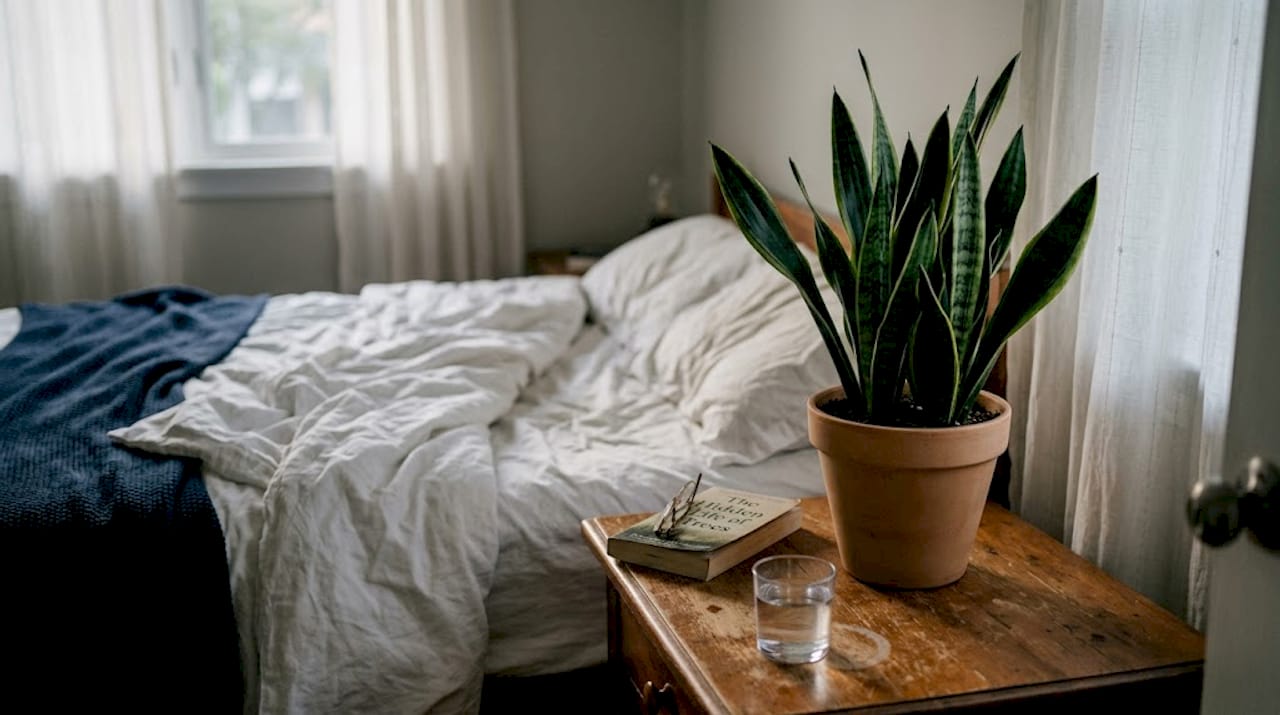
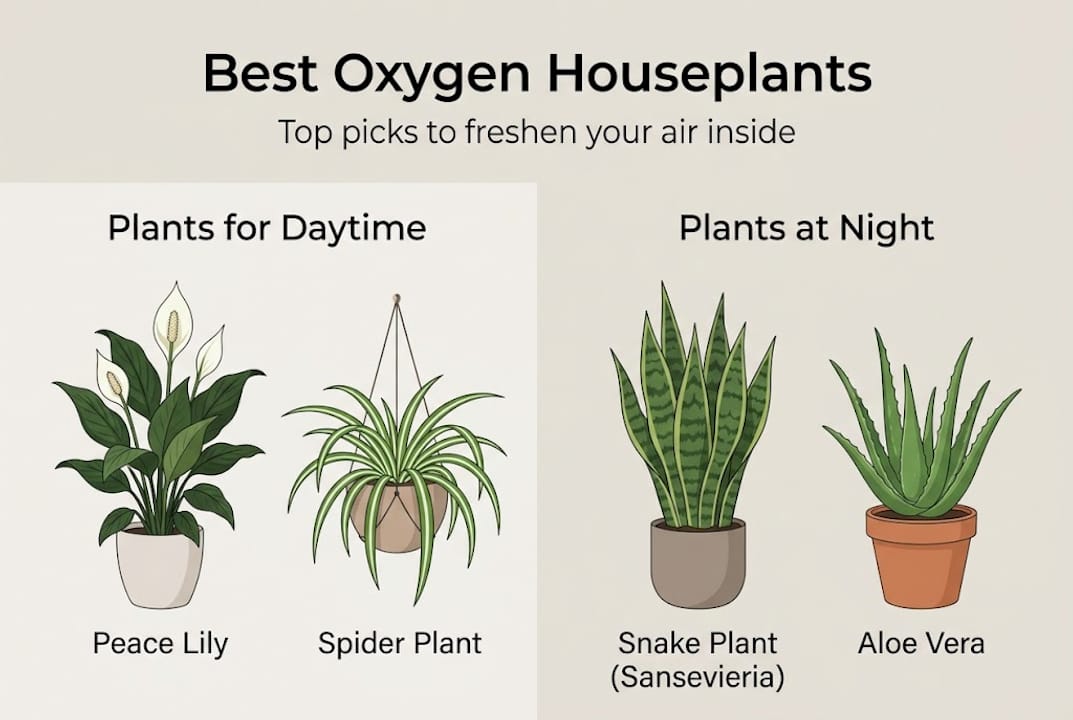
Snake Plant is arguably the most interesting pick for indoor spaces. Most plants photosynthesize during the day and stop releasing oxygen at night. Snake Plant uses a process called CAM photosynthesis, which means it opens its pores at night instead of during the day. The result: it releases oxygen while you sleep, making it a smart choice for bedrooms. The Snake Plant benefits go even further, as it also targets formaldehyde, benzene, xylene, toluene, and nitrogen oxides. It thrives on neglect, tolerates low light, and rarely needs watering. For anyone who has ever killed a plant through over-attention, this one is practically built for you.
Here is a quick comparison of the top performers:
| Plant | Key VOCs removed | Light need | Care level | Night oxygen? |
|---|---|---|---|---|
| Peace Lily | Formaldehyde, benzene, ammonia, xylene, toluene | Low to medium | Easy | No |
| Snake Plant | Formaldehyde, benzene, xylene, toluene | Low to bright | Very easy | Yes |
| Spider Plant | Formaldehyde, carbon monoxide | Indirect | Easy | No |
| Boston Fern | Formaldehyde, xylene | High humidity | Moderate | No |
| Pothos | Formaldehyde, benzene | Low to medium | Very easy | No |
| Aloe Vera | Formaldehyde, benzene | Bright | Easy | Yes |
Key things to look for when choosing your air-purifying plants:
- Leaf surface area matters. Larger, broader leaves mean more surface area for gas exchange and photosynthesis.
- Soil microbes help too. Much of the VOC removal in NASA’s study came from microorganisms in the potting soil, not just the leaves.
- Matching light to plant needs directly affects how much oxygen a plant actually produces.
- Pet safety is essential. Peace Lily, Pothos, and English Ivy are toxic to cats and dogs. If you have pets, prioritize Spider Plant, Boston Fern, or Areca Palm.
Pro Tip: Group three to five plants of different heights on a bright surface near a window. This increases combined leaf surface area and creates a layered, lush effect without overcrowding any single plant.
For a fuller breakdown of which plants to bring home, check out top air purification plants and the deep dive into benefits of snake plants to decide whether this all-star fits your lifestyle.
Limitations and real-world effectiveness: What studies reveal
Here is where honest plant enthusiasm requires a reality check. The studies referenced in popular media are almost always conducted in small, sealed chambers with carefully controlled conditions. Real homes have drafts, open windows, cooking fumes, foot traffic, and constantly fluctuating air movement. All of this changes the math significantly.
Consider this striking example: one real-world study examined a space with 900 plants and still found no significant improvement in indoor VOC levels. In fact, VOCs actually increased in some measurements. Plants have a Clean Air Delivery Rate (CADR) of roughly 0.02 to 0.1 cubic meters per hour. A standard HEPA filter delivers 100 to 400 cubic meters per hour. That is a difference of three to four orders of magnitude.
Key realities to keep in mind:
- You would need 10 to 100 plants per square meter to approach NASA’s sealed-chamber results, according to the Drexel University 2019 review.
- Normal ventilation, including simply opening a window, removes VOCs faster than any collection of houseplants.
- Overwatered plants can increase mold and mildew in the air, which is worse for your health than many VOCs.
- Plant soil can off-gas compounds in certain conditions, slightly counteracting the purification effect.
- The biggest benefits from plants in real spaces appear to be psychological, aesthetic, and humidity-related rather than measurable air chemistry changes.
That said, newer research keeps pushing the story forward. Recent chamber studies show genuinely impressive numbers under controlled conditions, with Aglaonema removing 92% of benzene and Cordyline eliminating 87.5% of tested VOCs. These results matter because they confirm plants have real biological mechanisms for removing pollutants. The limitation is scale and context, not capability.
The takeaway for plant lovers is this: plants are a genuine part of your air quality toolkit, but they work best alongside ventilation and filtration, not instead of them. For a broader look at what contributes to poor indoor air, exploring the relationship between indoor versus outdoor air pollution helps frame how indoor plant care fits into the bigger picture.
Looking at houseplants and indoor pollutant reduction alongside how indoor plants and wellbeing affect mood and stress levels gives a more complete picture of what your green collection is actually doing for you every day.
Maximizing air quality and oxygen: Practical tips for plant lovers
Since the Drexel University 2019 review makes clear that plants alone cannot do all the work, the smart approach is to use them strategically as part of a layered system. Here is how to get the most out of your plants for both air quality and living space enjoyment.
Set up your plant environment for success:
- Place oxygen-producing plants like Snake Plant and Aloe Vera in bedrooms, where nighttime oxygen release has the most benefit.
- Put Spider Plants and Boston Ferns in kitchens or bathrooms, where formaldehyde sources from cleaning products are more common.
- Group plants near windows for maximum photosynthesis output. Even indirect bright light significantly boosts oxygen production compared to dim corners.
- Water correctly. Overwatered plants develop mold in the soil, which releases spores into the air you breathe. Let the soil dry between waterings for most tropical houseplants.
Combine plants with smart ventilation:
Opening windows for 10 to 15 minutes in the morning dramatically reduces indoor pollutant buildup, often more effectively than any number of plants. Use plants to supplement that fresh air rather than replace it. On days when outdoor air quality is poor (wildfire smoke, high pollen), an air purifier with HEPA and activated carbon filtration handles what plants cannot.
Pro Tip: Run an air purifier on a low setting overnight in your bedroom alongside one or two Snake Plants. You get mechanical filtration plus the calm visual presence of something living. Many people report sleeping better simply because the room feels more alive and peaceful.
Track what you notice:
You do not need scientific instruments to sense improvement. Pay attention to whether your throat feels drier or your eyes feel irritated on days when windows have been closed. Notice whether adding humidity from plant transpiration eases winter dryness. These qualitative signals are meaningful and give you feedback on your indoor environment.
Choose wisely for your lifestyle:
- If you travel frequently, choose drought-tolerant plants like Snake Plant, Pothos, or ZZ Plant that survive two weeks without water.
- If you have children or pets, prioritize Spider Plant, Boston Fern, Areca Palm, or Bamboo Palm, all of which are non-toxic.
- If you want the most visual impact per square foot, Peace Lily and Bird of Paradise offer dramatic foliage alongside documented air-purifying qualities.
For structured guidance on daily plant maintenance, the indoor plant care guide walks through everything from watering schedules to fertilizing. And if you want to understand the full spectrum of what plants contribute to your health and happiness, the indoor plant benefits guide covers the science and the soul of living with plants.
For a complete overview of actionable strategies to improve the air inside your home, the indoor air quality improvement guide pairs perfectly with a growing plant collection.
Why loving plants goes beyond pure oxygen: Our take
Here at Lushy Gardens, we have spent a lot of time in the weeds (literally and figuratively) on the oxygen debate. And our honest opinion is this: people who dismiss houseplants because they “don’t significantly boost oxygen” are missing the point entirely.
Yes, you would need hundreds of plants to match a mechanical air purifier’s filtration power. But no air purifier has ever made someone smile when they walked through the door. No HEPA filter has ever taught a child about photosynthesis, encouraged a slow morning ritual of watering and noticing growth, or made a studio apartment feel like somewhere worth coming home to.
Plants create a sensory environment. They add texture, color, gentle movement, and life to otherwise static rooms. Tending them builds patience and attentiveness. The wellbeing with indoor plants research consistently shows reduced cortisol, lower reported stress, and improved focus in plant-filled spaces. That is real medicine, even if it does not show up in a VOC meter reading.
We think the smartest plant lovers are the ones who keep both perspectives alive: use the science to choose well and set realistic expectations, then let the joy of growing things fill in the rest.
Ready to transform your indoor oasis?
If this article has sparked the urge to rethink your indoor setup, you are in the right place. At Lushy Gardens, we have everything you need to move from inspiration to action. Start by exploring our full guide to air quality houseplants to find the varieties best suited to your home’s light conditions and lifestyle. When you are ready to build consistent care habits, our plant care checklist makes daily and weekly tasks easy to follow. And for the definitive list of plants that pull double duty on beauty and air purification, our roundup of top air purification plants is the best place to start shopping your next green addition.
Frequently asked questions
Do houseplants really increase indoor oxygen levels?
Houseplants do produce oxygen through photosynthesis, but the overall boost to indoor oxygen levels is minimal without a very large number of plants. According to the Drexel University review, you would need up to 680 plants in a typical home to match controlled study results.
Which houseplants release oxygen at night?
Snake Plant, Aloe Vera, and other CAM plants release oxygen at night because they open their pores after dark rather than during daylight hours. The NASA top plants summary confirms Snake Plant’s nighttime oxygen release, making it a popular choice for bedrooms.
Can plants eliminate all indoor air pollutants?
Plants can remove certain pollutants in sealed laboratory settings, but in real homes they are far less effective than mechanical filtration or simple ventilation. Real-world studies show plants deliver a CADR of only 0.02 to 0.1 m³/h, while HEPA filters achieve 100 to 400 m³/h.
How many houseplants do I need to improve air quality?
Scientific research suggests you would need 10 to 100 plants per square meter for measurable VOC removal, which amounts to hundreds of plants for an average-sized home. The Drexel University 2019 review puts the figure at around 680 plants for a 1,500-square-foot space.
Is there a best plant for people new to indoor plants?
Snake Plant and Spider Plant are both excellent starter choices because they are forgiving, low-maintenance, and among the top performers identified in the NASA study for VOC removal and overall air-purifying qualities.
Recommended
- 7 Best Air Purification Plants for Healthier Indoor Air – Lushy Gardens
- Indoor Plants for Wellbeing: Enhancing Air Quality and Healthy Living – Lushy Gardens
- Indoor House Plants: Enhance Air Quality Safely – Lushy Gardens
- Get thriving indoor plants: expert tips for home gardeners – Lushy Gardens

I’m Eleanor, a seasoned gardener with over three decades of experience tending to Mother Nature’s creations. Through Lushy Gardens, I aim to share my wealth of knowledge and help fellow plant enthusiasts uncover the wonders of gardening. Let’s dive into this journey together, one leaf at a time.


