
Table of Contents
TL;DR:
- Indoor plants can significantly improve air quality, humidity, and mental wellbeing.
- Certain species like Cordyline fruticosa and snake plants are highly effective at VOC removal and oxygen release.
- Proper placement, grouping, and maintenance maximize their health benefits and aesthetic impact.
Indoor plants return up to 97% of the water they consume back into the air through a process called transpiration, making them far more than decorative objects. Most people choose a pothos or a peace lily because it looks good on a shelf, never realizing their new roommate is actively scrubbing the air, steadying humidity levels, and quietly improving their mental state every single day. The ten benefits covered in this article are grounded in current research and actionable for any home gardener, whether you have one small windowsill or an entire sunroom to work with.
Table of Contents
- The science behind indoor plants: Why they matter
- 10 impactful benefits of indoor plants
- Choosing the right plants for your needs
- Real-life applications: Tips to maximize indoor plant benefits
- Our perspective: Why indoor plant benefits go deeper than you think
- Unlock more indoor plant potential with expert guidance
- Frequently asked questions
Key Takeaways
| Point | Details |
|---|---|
| Boost indoor air quality | Indoor plants filter harmful pollutants and increase fresh oxygen in your living space. |
| Enhance humidity naturally | Through transpiration, plants maintain healthy humidity levels for skin and respiratory comfort. |
| Reduce stress, improve mood | Caring for indoor plants fosters relaxation, focus, and a sense of connection with nature. |
| Better sleep environments | Some plant species improve nighttime air quality, supporting restful, uninterrupted sleep. |
| Versatile for any room | With the right plant choice, any space can benefit—whether air quality, mood, or decor is your focus. |
The science behind indoor plants: Why they matter
Now that you know there’s more to houseplants than meets the eye, let’s uncover the foundational science that powers these impressive benefits. Three key mechanisms sit at the core of everything plants do for your indoor environment.
Phytoremediation is the process by which plants remove harmful compounds from the air. It happens through the leaves, the roots, and the microbes living in the soil. Those microbes, called rhizodegradation communities, actually break down volatile organic compounds (VOCs, meaning airborne chemicals from paint, furniture, and cleaning products) at the root level. Transpiration is how plants release water vapor through their leaves, acting like a natural humidifier. Biophilic design is the architectural and psychological principle that says humans instinctively feel better when surrounded by natural elements, including living plants. Each of these mechanisms is well documented, and recent research on VOC removal shows all three working together inside a single room.
Here is a quick breakdown of what each process does for you:
- Phytoremediation: Pulls VOCs from the air through leaf surfaces and root microbes
- Transpiration: Releases moisture, raising humidity and reducing dry air complaints
- Biophilic response: Triggers psychological calm, lowers cortisol, and sharpens focus
- Oxygen exchange: Converts carbon dioxide into fresh oxygen during daylight hours
- Particulate capture: Leaf surfaces trap dust and fine particles before they circulate
“Plants don’t just sit there. They interact with the air, the soil, and the people around them in ways that genuinely change the quality of a space.”
Understanding indoor air quality basics makes it much easier to appreciate why specific plants perform better in kitchens versus bedrooms, or why a single plant in a sealed office feels noticeably different from one near an open window. This foundation matters before you pick your first plant.
For a broader look at how plants connect to personal health outcomes, the indoor plants for wellbeing guide on this site breaks down the research in plain language with practical takeaways.
10 impactful benefits of indoor plants
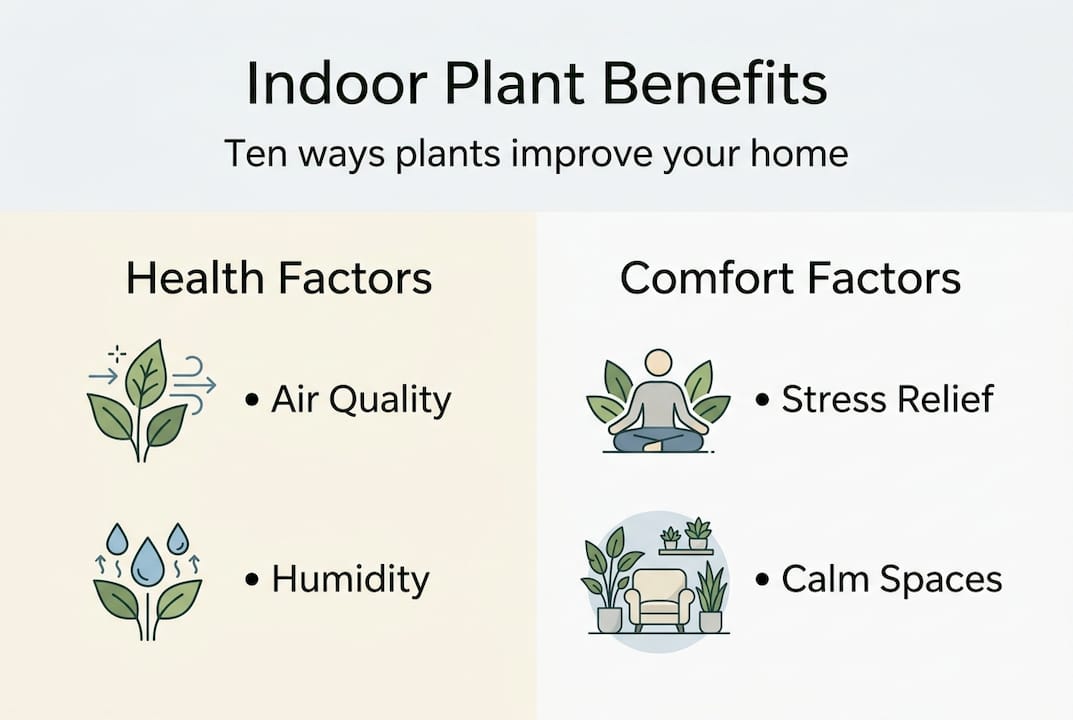
With the scientific foundation in place, here are the ten ways indoor plants can genuinely transform your space and your wellbeing. These are not abstract claims. Each one connects directly to the mechanisms described above.
-
Air purification. Plants remove formaldehyde, benzene, and other VOCs through phytoremediation. Cordyline fruticosa removes 87.5% VOCs within 40 minutes in controlled studies, a figure that should shift how seriously you take a single well-chosen plant.
-
Humidity regulation. Through transpiration, plants return up to 97% of consumed water back into the air. This directly reduces dry skin, sore throats, and cold-like symptoms that spike in winter when heating systems strip moisture from indoor air.
-
Improved sleep quality. Not every plant works the same at night. Snake plants (Sansevieria) are among the rare species that continue to release oxygen after dark, making them a smart choice for bedrooms where air quality during sleep hours matters most.
-
Stress reduction. Biophilic contact with plants measurably lowers cortisol. Even the act of watering a plant for five minutes interrupts a stress cycle in ways that scrolling through your phone simply does not.
-
Better focus and productivity. Studies in workplace settings consistently show that employees surrounded by plants perform better on concentration tasks. A few plants near your home desk can replicate this effect without any renovation.
-
Noise reduction. Dense-leafed plants absorb and scatter sound waves. In apartments or rooms near busy streets, a cluster of large-leafed species along a wall acts as a soft acoustic buffer.
-
Faster recovery from illness. Research in healthcare settings shows patients recovering near plants or with plant views report lower perceived pain and shorter hospital stays. At home, this translates to a more restorative environment when you are sick.
-
Aesthetic enhancement and space definition. Plants add vertical dimension, color, and texture without the permanence of furniture. A tall fiddle-leaf fig or a trailing pothos can visually separate a living area from a workspace in an open-plan room.
-
Improved mood and reduced anxiety. Caring for a living thing creates a sense of purpose and routine. This is especially relevant during periods of low motivation or seasonal mood dips, where a daily plant check becomes an anchoring ritual.
-
Reduced indoor pollutants. Beyond VOCs, plants help lower carbon dioxide concentrations and capture particulate matter on their leaves. The combination of these effects means the indoor vs outdoor air pollution gap is smaller in plant-filled rooms.
Here is a quick reference for which plants lead in each area:
| Benefit | Top plant options |
|---|---|
| Air purification | Cordyline fruticosa, Spider plant |
| Humidity boost | Pothos (Epipremnum aureum), Peace lily |
| Sleep support | Snake plant, Aloe vera |
| Stress relief | Lavender, English ivy |
| Noise reduction | Rubber plant, Weeping fig |
| Focus improvement | Rosemary, Bamboo palm |
Pro Tip: Cluster three or more plants in a corner near your work area rather than spreading single plants across a room. Grouped plants create a stronger humidity microzone and a more noticeable biophilic effect than isolated specimens.
You can find a curated list of top performers in the air purification plants guide, and there is also a dedicated resource on enhancing air quality with houseplants for anyone who wants to go deeper. For those struggling with dry air specifically, the humidity for houseplants guide explains the relationship between plant care and household moisture in detail.
Choosing the right plants for your needs
Knowing the benefits is empowering, but to make the most of them, you need to match plants to your actual goals, space, and lifestyle. Not all plants perform equally for every purpose, and picking the wrong one is the fastest way to end up with a neglected pot in the corner.
Research published in 2025 confirmed significant species variability in VOC removal, with Cordyline fruticosa outperforming many commonly recommended species. This means the plant on your windowsill may or may not be earning its place depending on what you need it to do.
Use this comparison table to match your priority to the right plant:
| Your priority | Recommended plant | Care level |
|---|---|---|
| Air quality | Cordyline fruticosa, Spider plant | Moderate |
| Humidity | Pothos, Boston fern | Low to moderate |
| Sleep improvement | Snake plant | Very low |
| Stress and anxiety | Lavender, Peace lily | Low |
| Low maintenance | Pothos, ZZ plant | Very low |
| Aesthetic impact | Fiddle-leaf fig, Bird of paradise | Moderate to high |
| Pet safety | Spider plant, Calathea | Low |
Before you buy, ask yourself these quick questions:
- How much natural light does your space actually get? Not the light you wish it got. A north-facing apartment window is very different from a south-facing sunroom.
- How often will you realistically water? If you travel frequently, low-water plants like snake plants or ZZ plants will survive neglect far better than ferns.
- Do you have pets or small children? Many attractive plants like pothos and peace lilies are toxic if ingested. Knowing this upfront saves you a stressful trip to the vet.
- What is the primary problem you want to solve? Dry air, poor focus, or noisy neighbors each point toward different species.
- How large can the plant get? Some species that start small become room-dominating over a few years.
The types of indoor plants guide covers seven categories of houseplants organized by their primary strengths, and the benefits of indoor plants resource provides a deeper breakdown of how each benefit maps to specific care requirements. For those focused purely on air quality, indoor air quality improvement offers practical context on what plants can and cannot realistically achieve.
Real-life applications: Tips to maximize indoor plant benefits
You have picked the perfect plants. Now here is how to optimize their impact and avoid the common mistakes that keep plants from delivering on their promise.
-
Position air-purifying plants near pollution sources. Place a spider plant or pothos near your printer, new furniture, or freshly painted walls. These areas off-gas VOCs most heavily, and proximity matters for effective phytoremediation.
-
Use bedroom plants that work overnight. The snake plant releases oxygen at night, making it one of the few plants genuinely suited to sleeping spaces. Aloe vera does the same. Most flowering plants do the opposite after dark, so species selection here matters.
-
Group plants together for a stronger humidity effect. A single pothos adds minimal moisture. A group of five to seven plants creates a measurable increase in local humidity, which you will notice most during winter heating months.
-
Rotate plants quarterly. Moving a plant to a slightly different location every three months prevents uneven growth and encourages fuller, healthier foliage, which means more leaf surface area for air purification.
-
Clean leaves regularly. Dusty leaves absorb less light and purify air less effectively. A damp cloth run across large leaves once a month keeps the plant working at capacity. This is one of the most overlooked maintenance steps.
-
Match watering frequency to the season. Most houseplants need less water in winter when growth slows. Overwatering is the single most common cause of indoor plant death, and it also creates soil conditions that promote mold.
-
Use plant placement to reduce noise. Along walls shared with noisy neighbors or facing a busy street, dense plants with large leaves absorb and scatter sound more effectively than smaller, sparse varieties.
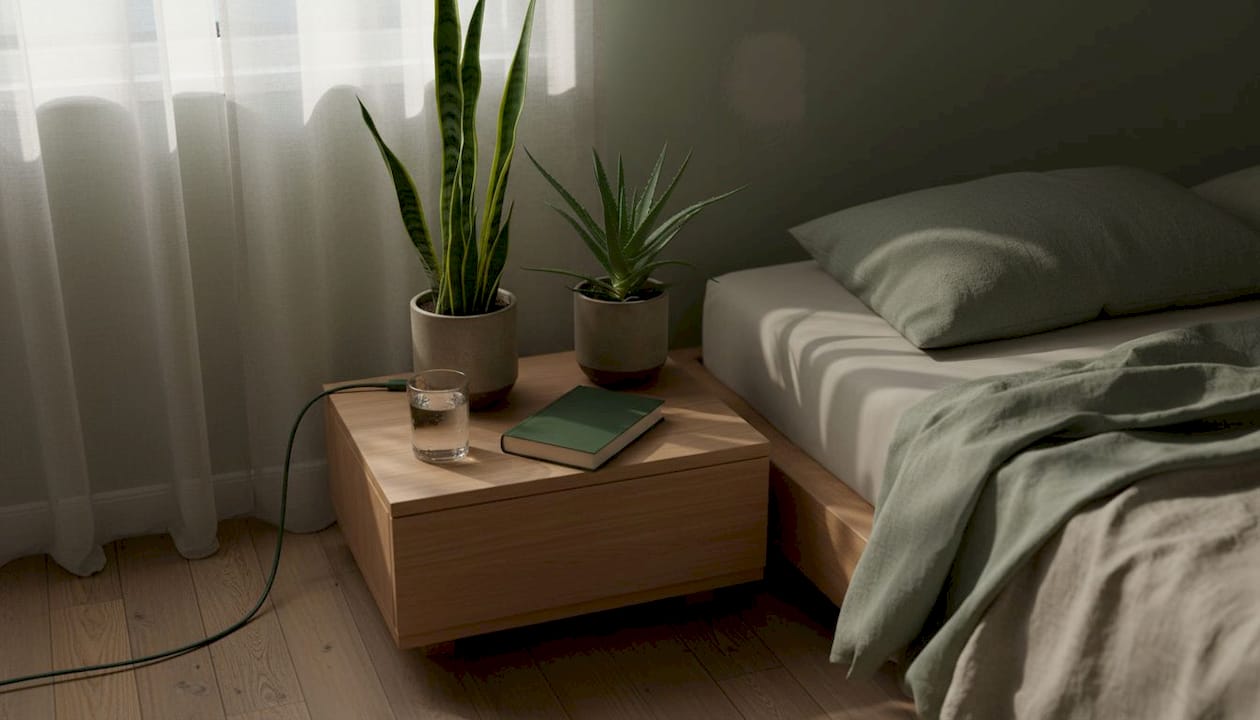
Pro Tip: Place a snake plant or aloe vera on your nightstand or dresser within three feet of where you sleep. This distance is close enough to benefit from the nighttime oxygen release without crowding the space.
Key stat to remember: Cordyline fruticosa can strip up to 87.5% of certain VOCs from a room in under 40 minutes. That is the kind of performance that makes plant selection a real decision, not just a decorative one.
For a complete breakdown of what to do once your plants are home, the expert indoor plant tips guide covers everything from soil selection to troubleshooting yellowing leaves. The indoor plant care guide is equally useful for building a simple, consistent routine that keeps your plants thriving long-term. Practical guidance on the air optimization process can also help you think about plants as one part of a broader healthy-home strategy.
Our perspective: Why indoor plant benefits go deeper than you think
Most articles stop at air quality and leave it there. That is the safe, measurable answer. But after years of working with home gardeners and watching how plants change people’s daily lives, we are convinced the most significant benefits are the ones that happen when you are not even thinking about them.
Tending a plant creates a small but consistent loop of attention and reward. You notice the soil is dry. You water. The plant responds with new growth. This feedback loop, quiet as it is, trains a kind of patience and observation that is genuinely rare in a world built around instant results. People who care for plants regularly report lower stress levels not just because of the air they breathe but because of the ritual itself.
There is also something worth saying about how plants change your relationship with your home. A room with living things in it feels occupied in a different way. It feels cared for. That perception shifts how you treat the space, how long you spend in it, and how you feel when you return to it. This is not poetic fluff. It connects directly to houseplants cutting indoor pollutants by 70% while simultaneously boosting well-being, which is a combined physical and psychological outcome.
The uncomfortable truth most guides skip is this: passive placement is not enough. A plant sitting ignored in a corner delivers a fraction of the benefit of one that is actively tended, moved around, and integrated into your daily routine. The science supports the chemistry. But the real transformation happens through the interaction.
Unlock more indoor plant potential with expert guidance
At Lushy Gardens, we have built resources specifically for home gardeners who want more than a surface-level introduction. Whether you are just getting started with your first houseplant or you are ready to optimize an established indoor collection, our indoor house plants guide walks you through the air quality connection in practical detail. If you want a broader view of what plants can do for your everyday life, the more indoor plant benefits resource covers the full picture with plant-specific recommendations. And when it comes to keeping your collection healthy and thriving long-term, our indoor plant care tips give you exactly the kind of straightforward, tested advice that makes the difference between a plant that survives and one that genuinely thrives.
Frequently asked questions
What indoor plant improves air quality the most?
Plants like Cordyline fruticosa are exceptionally effective, removing up to 87.5% of certain VOCs within 40 minutes, though many species offer varying purifying strengths depending on the specific compounds present in your space.
Can indoor plants help with allergies?
Yes, by increasing humidity through transpiration and reducing airborne dust that settles on leaf surfaces, indoor plants can ease allergy symptoms and keep airways more comfortable, particularly during dry winter months.
Do indoor plants really improve sleep?
Certain plants like the snake plant release oxygen at night, supporting higher-quality sleep when placed in bedrooms, unlike most plant species that pause oxygen production after dark.
How many indoor plants are ideal for a typical room?
A good rule is one medium-sized plant per 100 square feet, which balances air quality, humidity contribution, and visual comfort without overcrowding the space.
Which plant is easiest to care for indoors?
Epipremnum aureum, commonly called pothos, is among the easiest indoor plants because it has the highest transpiration rate among common houseplants and thrives with minimal sunlight and infrequent watering.
Recommended
- The Essential Guide to Benefits of Indoor Plants – Lushy Gardens
- Houseplants Cut Indoor Pollutants by 70% & Boost Well-Being – Lushy Gardens
- Indoor Plants for Wellbeing: Enhancing Air Quality and Healthy Living – Lushy Gardens
- Indoor plants for health: science-backed benefits 2026 – Lushy Gardens

I’m Eleanor, a seasoned gardener with over three decades of experience tending to Mother Nature’s creations. Through Lushy Gardens, I aim to share my wealth of knowledge and help fellow plant enthusiasts uncover the wonders of gardening. Let’s dive into this journey together, one leaf at a time.


