
Table of Contents
TL;DR:
- Supporting native wild bees is essential for optimal pollination and overall garden health beyond honey bees alone. Creating habitat, planting diverse native plants, and reducing pesticides significantly enhance local bee populations and crop yields. Observing bee activity and tailoring practices regionally yields the greatest benefit for sustainable, bee-friendly gardens.
Most gardeners know they need bees, but almost everyone is thinking about the wrong ones. The conversation around pollinators tends to center on honey bees, yet approximately 4,000 species of native wild bees live across the U.S., each contributing to pollination in ways that honey bees simply cannot replicate alone. These wild bees are the unsung workers behind your tomato yield, your cucumber set, and the riot of wildflowers that makes a garden feel alive. Understanding the full picture of how bees function in a garden ecosystem changes not just what you plant, but how you think about every inch of your outdoor space.
Table of Contents
- Why bees matter: The backbone of a thriving garden
- How bees boost garden productivity: What real studies show
- Creating bee-friendly gardens: Habitat, plants, and pitfalls
- Challenges and nuances: Pesticides, bee diversity, and real-world tradeoffs
- A gardener’s perspective: Moving beyond “save the bees”
- Grow your bee-friendly garden with expert support
- Frequently asked questions
Key Takeaways
| Point | Details |
|---|---|
| Native bees matter | Wild bees play a crucial role in garden pollination and biodiversity, not just honey bees. |
| Pollination boosts yields | Bee-pollinated plants produce more and higher-quality fruits, vegetables, and seeds than those without bee access. |
| Habitat is essential | Providing undisturbed soil, dead wood, and plant diversity attracts and supports more bee species. |
| Reduce pesticides | Minimizing chemical use helps ensure your garden supports thriving, diverse pollinators. |
| Nuance beats one-size-fits-all | Tailoring your garden to local conditions and bee types delivers the best pollinator results. |
Why bees matter: The backbone of a thriving garden
Bees are not optional accessories in a garden. They are the mechanism that makes fruit happen. When a bee moves from flower to flower collecting pollen and nectar, it transfers pollen between blooms, triggering fertilization and the development of seeds and fruit. Without that transfer, many plants simply fail to produce. It is that direct.
The scale of this contribution is staggering. Insect pollination services add more than $34 billion in value to U.S. agricultural crops every year, with honey bees alone responsible for up to $5.4 billion of that figure. But the remaining value comes from wild and native bees, butterflies, moths, and other insects. In your backyard, the math is simpler but just as real: more bees means more fruit, more seed, and a garden that feeds itself forward.
Here is where most gardeners miss something important. Honey bees and native bees do not do the same job.
| Feature | Honey bees | Native wild bees |
|---|---|---|
| Nesting behavior | Managed hives | Ground, stems, wood |
| Foraging range | Up to 5 miles | Often under 1 mile |
| Pollination style | Carry pollen externally | Buzz pollinate, more contact |
| Crop specialization | Generalist | Many are specialists |
| Cold/wet activity | Limited | Some species active early |
| Garden dependence | Managed populations | Dependent on local habitat |
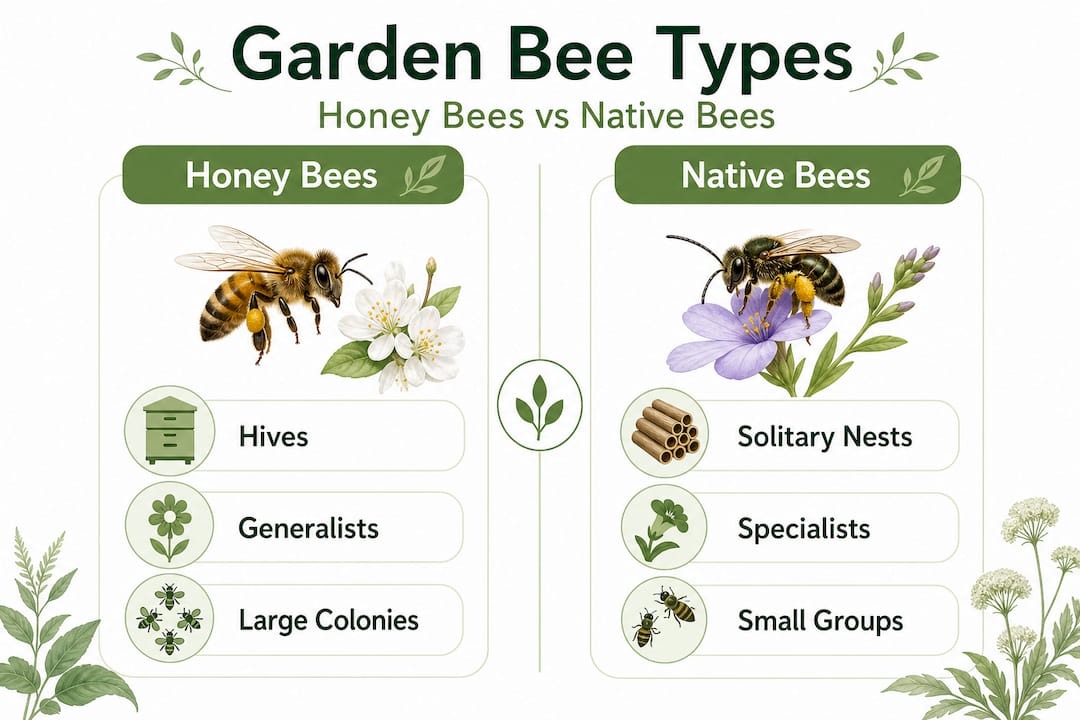
Native bees like bumblebees, mason bees, and sweat bees can buzz pollinate (a technique called sonication) where they vibrate their bodies at a specific frequency to shake pollen loose. Tomatoes, peppers, and blueberries require this. Honey bees cannot do it. So even if you have a beekeeper neighbor, your vegetable garden may still be underperforming without native bee support.
Beyond productivity, bees prop up the broader pollinator benefits that ripple through your garden ecosystem. When bee populations are healthy and diverse, you see more seed-eating birds, more beneficial insects, and a self-sustaining loop of life that reduces your workload over time.
“A garden without native bees is a garden working at a fraction of its potential, no matter how carefully you plant or water.”
The key takeaway: honey bees matter, but they are not the whole story. Wild bees fill ecological niches that managed pollinators cannot, and supporting them is one of the highest-leverage things a home gardener can do.
How bees boost garden productivity: What real studies show
Numbers make the case clearly. Researchers studying carrot seed production found that open pollination by bees increases seed yield nearly fourfold and germination rates by more than double compared to conditions where pollinators were excluded. That is not a marginal improvement. That is the difference between a productive garden and a frustrating one.
The study compared three conditions: open pollination (all wild bees and honey bees could visit), honey bee only pollination, and complete pollinator exclusion. Open pollination consistently outperformed the other conditions, which tells us something practical. The diversity of bee species visiting your flowers matters just as much as the presence of any single species.
How this translates to your vegetable beds:
- Squash and pumpkins need multiple bee visits per flower to set full-sized fruit. Fewer visits mean smaller, misshapen vegetables.
- Tomatoes benefit from bumblebee buzz pollination, producing heavier, more uniform fruit.
- Strawberries visited by multiple bee species develop fewer misshapen berries and larger overall fruit size.
- Apple trees pollinated by diverse bee communities show significantly better fruit set than those relying on a single species.
To maximize bee benefit in your garden based on what research actually shows, take these steps in order:
- Identify what you grow. Vegetables like tomatoes and blueberries that need buzz pollination benefit most from native bees. Understand which crops need the most help.
- Add diversity near vegetable beds. Plant flowers that attract a range of species. Single-species flower patches tend to attract one or two bee types.
- Time plantings carefully. Stagger bloom periods so flowers are available from early spring through late fall. Bees need food across the full season, not just during summer.
- Reduce disturbance at bloom time. Avoid spraying or digging near flowering plants during peak foraging hours (usually 9 a.m. to 3 p.m.).
- Track what you see. Observing which bees visit which plants helps you refine your approach over time.
The research on planting for pollinators consistently shows that plant diversity is the single strongest predictor of bee diversity. And bee diversity is the strongest predictor of reliable pollination across a wide range of crops. Check out the best pollinator plants to get specific with your selections.
Statistic to know: Gardens and farms with three or more bee species visiting a single crop consistently outperform those with one dominant species, regardless of the total number of bee visits.
Creating bee-friendly gardens: Habitat, plants, and pitfalls
Here is the part most gardening advice skips: where bees live matters as much as what they eat. You can plant a gorgeous flower garden and still have very few native bees if you have eliminated all their nesting sites.
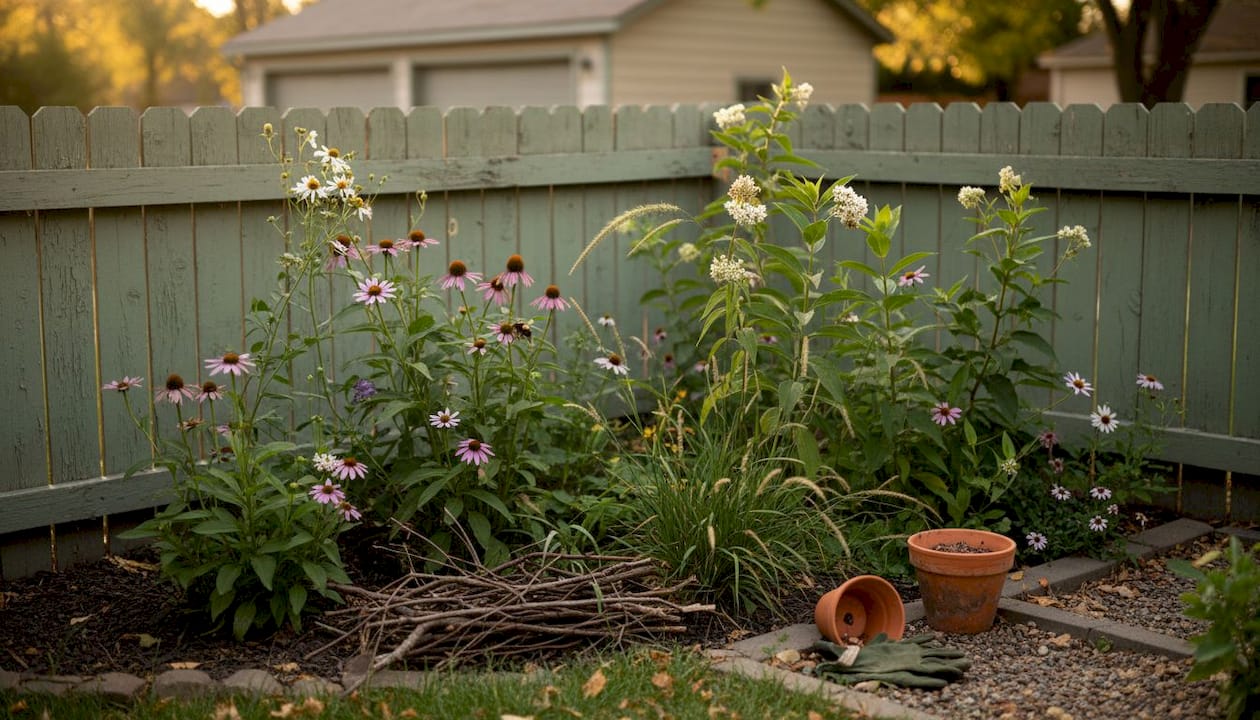
About 70% of native bees nest underground, while the remaining 30% use hollow stems, pithy wood, or crevices. A perfectly manicured garden with bark mulch covering every square inch and every dead stem cut to the ground leaves native bees nowhere to live. You are setting a table with no chairs.
What native bees actually need in your garden:
- Patches of bare, undisturbed soil (especially south-facing slopes that warm up early)
- Dead flower stems left standing through winter and into spring
- Sections of log or untreated wood with varying diameters
- Leaf litter in sheltered corners for overwintering
- Sunny spots that are not covered with landscape fabric or heavy mulch
- A shallow water source with landing spots (pebbles or cork in a dish works well)
The modestly messy garden is not a failure. It is prime habitat. Think of it as creating wildlife habitats intentionally, not accidentally.
For plants, the goal is layers and seasons. Use a mix of pollinator-friendly plants with different flower shapes, since tube-shaped flowers attract long-tongued bees while flat, open flowers suit short-tongued species. Aim for:
- Spring bloomers: Crocuses, willows, fruit tree blossoms, lungwort
- Summer bloomers: Coneflowers, black-eyed Susans, monarda, lavender
- Fall bloomers: Goldenrod, asters, native sunflowers, sedum
Pro Tip: Skip the landscape fabric entirely if you can. It blocks soil-nesting bees from reaching the ground and prevents volunteer plants from filling in naturally. A 2-inch layer of wood chip mulch in pathways is far better than fabric under beds.
The pitfalls to avoid are predictable but worth naming directly. Pesticides are the biggest single threat, and we will dig into that in the next section. Beyond that, the two most common garden mistakes are excessive tidiness and monocultures. A garden with one type of flower and zero ground disturbance is landscaping, not a living ecosystem. Plant diversity for healthy gardens is not just an aesthetic choice; it is functional infrastructure for your bees.
“Every bare patch of soil you preserve is a potential nest site. Every stem you leave standing is winter shelter. The cost to you is nearly zero, and the payoff for your garden is enormous.”
Challenges and nuances: Pesticides, bee diversity, and real-world tradeoffs
Let’s not pretend this is all straightforward. Supporting bees in real gardens comes with genuine complications, and the most helpful thing we can do is name them honestly.
The pesticide issue is more serious than most gardeners realize. Research published in Nature Ecology & Evolution found that pesticides reduce wild bee abundance and diversity, and that increased habitat alone does not fully offset these risks. This is a significant finding. It means you cannot plant a pollinator garden and then spray the rest of your yard and expect balanced results. Habitat and pesticide reduction have to happen together.
Even products labeled “organic” or “natural” can harm bees. Pyrethrin, spinosad, and neem oil can all affect bee behavior and reproduction at certain concentrations. The timing and method of application matter enormously. Spraying at dusk when bees are not foraging, avoiding flowering plants during bloom, and using targeted applications rather than broadcast spraying all reduce harm significantly.
The key strategies for reducing pesticide risk:
- Switch to organic pest control methods as your first line of defense
- If you must spray, do it after sunset and never on open flowers
- Remove weeds by hand rather than with herbicides, which can indirectly harm bees by eliminating food sources
- Choose pest-resistant plant varieties to reduce the need for intervention in the first place
There is also a tension that the “save the bees” movement rarely acknowledges. Adding managed honey bee hives near wild habitat can actually compete with native bees for floral resources, especially in urban environments where forage is limited. Research from OSU Extension on honey bees and native bees makes clear that progress comes from targeted habitat restoration and reducing pesticides, not from placing more managed hives in areas that already lack enough flowers to support existing wild populations.
Pro Tip: Instead of trying to “save all the bees” in the abstract, focus on supporting the species already present in your local area. Observe what bees are visiting your garden, look up which native plants they prefer, and build habitat that matches your region’s specific native bee community.
The gardener who grows five different native flowering plants, leaves a corner of bare ground undisturbed, and stops using synthetic pesticides will do more for local bee populations than the one who installs an elaborate bee hotel and continues to spray everything else.
A gardener’s perspective: Moving beyond “save the bees”
After years of watching gardens evolve, the pattern that stands out most is this: the gardeners who make the biggest difference for pollinators are rarely the ones doing the most. They are the ones doing the right things in the right order.
The “save the bees” framing, while well-intentioned, has created a market for bee hotels, seed packets of generic wildflower mixes, and managed honey bee hives dropped into urban settings. Most of these interventions range from mildly helpful to actively counterproductive. A bee hotel filled with bamboo tubes may attract some cavity-nesting species, but if the surrounding garden has no food and the soil is covered with landscape fabric, it is essentially an empty building.
What actually works, in our experience, is simpler and harder. Stop spraying. Leave things a little messier. Plant locally native plants, not just “pollinator-friendly” imports. Observe your garden in July and notice which bees are visiting which flowers. Then do more of what is working.
The regional piece matters more than most guides admit. A native bee community in Arizona is completely different from one in Vermont. The plants that support bees in the Pacific Northwest are not the same ones that serve bees in the Gulf Coast. Boosting biodiversity in your specific context means doing the homework for your region, not following a generic national list.
Every gardener who observes, adapts, and stays patient creates a measurable local impact. The compound effect of thousands of thoughtful backyard gardens across the country adds up to real, lasting change for wild bee populations. Your garden is part of that.
Grow your bee-friendly garden with expert support
Building a truly bee-friendly garden is an ongoing practice, not a one-time project. At Lushy Gardens, we have put together practical resources to help you at every stage, whether you are just getting started or refining a garden you have been building for years. Explore our beginner gardening guide for a solid foundation, follow our seasonal garden maintenance plan to keep habitat available year-round, and use our plant care checklist to stay on top of what your pollinator plants need each month. Your bees will thank you with every flower they visit and every fruit they help set.
Frequently asked questions
What types of bees are best for backyard pollination?
Native wild bees are usually the most effective pollinators for a variety of garden plants because many specialize in local plant species and can buzz pollinate crops that honey bees cannot. With approximately 4,000 native bee species in the U.S., there is likely a rich local community already near your garden that rewards habitat support.
How can home gardeners attract more bees naturally?
Leave patches of bare or undisturbed soil, keep dead stems standing through spring, and grow flowers with varied shapes and bloom times across the seasons. Native bees need undisturbed ground and structural diversity to nest and overwinter successfully.
Do pesticides affect bees in home gardens?
Yes, significantly. Even small applications can reduce wild bee abundance and species diversity, and adding more habitat does not fully make up for ongoing pesticide use. Switching to organic methods and timing any necessary applications carefully are essential steps.
Should gardeners focus on helping honey bees or native bees?
Supporting diverse native bees through habitat restoration is more effective than prioritizing one group. Research on honey bees and native bee conflicts shows that regionally focused habitat support and pesticide reduction produce better outcomes than advocating for any single bee type.
How do I know if my garden is bee-friendly?
If you are seeing several different bee species visiting your flowers throughout the season, have areas of natural habitat like bare ground or dead wood, and have reduced or eliminated pesticide use, your garden is genuinely supporting pollinators. Variety in what visits is the clearest sign that your habitat is working.
Recommended
- Importance of Pollinators: Boosting Garden Health and Yield – Lushy Gardens
- Planting for Pollinators: Boost Your Garden Biodiversity – Lushy Gardens
- How plant diversity builds a healthier home garden – Lushy Gardens
- Heirloom vs Hybrid Seeds: Impact on Your Garden – Lushy Gardens

I’m Eleanor, a seasoned gardener with over three decades of experience tending to Mother Nature’s creations. Through Lushy Gardens, I aim to share my wealth of knowledge and help fellow plant enthusiasts uncover the wonders of gardening. Let’s dive into this journey together, one leaf at a time.


