
Table of Contents
TL;DR:
- Skipping plant acclimation causes stress symptoms like leaf drop, overwatering, and pest vulnerability.
- Gradually adjusting light, temperature, and watering minimizes these issues, promoting healthy adaptation.
Most gardeners know to water, feed, and repot their plants. But there’s a critical step that gets skipped constantly: acclimation. Moving a plant from a nursery shelf, a shipping box, or even your outdoor garden directly into its new home without any transition period puts it through invisible stress that can show up days or weeks later as yellowing leaves, sudden wilting, or total collapse. This guide walks you through exactly what acclimation is, why it matters more than most care routines, and how to do it in a way that actually works for real home gardeners.
Table of Contents
- What is plant acclimation and why does it matter?
- Common risks of skipping acclimation
- How to acclimate plants: step-by-step guide
- Troubleshooting acclimation challenges
- Why conventional plant advice often misses the importance of acclimation
- Get expert support for thriving plant transitions
- Frequently asked questions
Key Takeaways
| Point | Details |
|---|---|
| Acclimation prevents stress | Gradually transitioning plants reduces risk of shock and supports healthy growth. |
| Check soil, not schedule | Water based on soil moisture, not a routine, to avoid overwatering during acclimation. |
| No fertilizer until new growth | Wait to fertilize until plants show signs of new growth for best acclimation results. |
| Spot issues early | Identify and address leaf drop, yellowing, or wilting quickly to help plants recover. |
What is plant acclimation and why does it matter?
Plant acclimation is the process of gradually introducing a plant to new environmental conditions rather than moving it abruptly from one setting to another. Think of it like adjusting to a new time zone. If you fly across the world overnight, your body struggles to catch up. Plants go through a similar process when their light levels, temperature, humidity, and airflow change suddenly.
At a physiological level, plants regulate their internal processes based on their current environment. The stomata (the tiny pores on leaves that control gas exchange) are tuned to specific humidity and light levels. The root system adapts to the moisture and nutrient availability in a particular soil. When those conditions shift dramatically all at once, the plant has to reorganize all of those systems simultaneously, which costs it energy and puts it at risk.
As the team at Plant Vault explains, acclimation reduces stress from environmental changes and decreases the risk of overwatering and fertilizer mis-timing during the critical adjustment period.
Here’s what makes this especially tricky for indoor gardeners:
- Nurseries use greenhouse conditions with high humidity, consistent temperatures, and carefully managed light
- Your home has lower humidity, fluctuating temperatures near windows or vents, and different light spectrums
- Online orders arrive after days in a dark, often temperature-stressed box
- Outdoor-to-indoor moves expose plants to dramatically reduced light levels almost instantly
The result is that even a healthy, well-rooted plant can appear to fall apart in the first week or two after a move. Without acclimation, you might find yourself saving dying plants that were actually fine to begin with. The stress was entirely avoidable.
“Acclimation is about doing less and allowing time. The gardener’s instinct is to intervene, but the plant just needs space to adjust.”
This mindset shift is huge. Most plant care advice tells you to act. Acclimation tells you to wait, observe, and adjust gradually. That patience is the foundation of everything covered below.
Common risks of skipping acclimation
Understanding what goes wrong when you skip acclimation makes the whole concept click much faster. The problems are real, and they often look like care mistakes rather than transition mistakes.
The most common risks include:
- Leaf drop: Sudden light changes cause plants to shed leaves they can no longer sustain. A fiddle-leaf fig moved from a bright nursery window to a dim apartment corner might drop half its leaves within a week.
- Water stress: The same watering schedule that worked in a humid greenhouse will overwater a plant in a drier indoor environment. Roots sit in wet soil too long and begin to rot.
- Fertilizer shock: Applying fertilizer to a stressed, transitioning plant pushes it to grow when it should be recovering. This worsens the overall stress load dramatically.
- Pest outbreaks: Stressed plants produce weaker cell walls and are significantly more vulnerable to spider mites, fungus gnats, and scale insects.
- Stunted development: A plant that spends weeks recovering from acclimation shock develops much more slowly than one that was transitioned gradually.
Did you know: Up to 65% of indoor plant problems trace back to improper acclimation and soil imbalance during the critical first weeks after a move or delivery.
Overwatering and fertilizer mis-timing during transition can compound stress in ways that are genuinely hard to reverse without significant recovery time. When you water on a fixed schedule before the plant has settled into its new environment, you’re essentially guessing. And fertilizing a stressed plant is like asking someone running a fever to go for a jog.
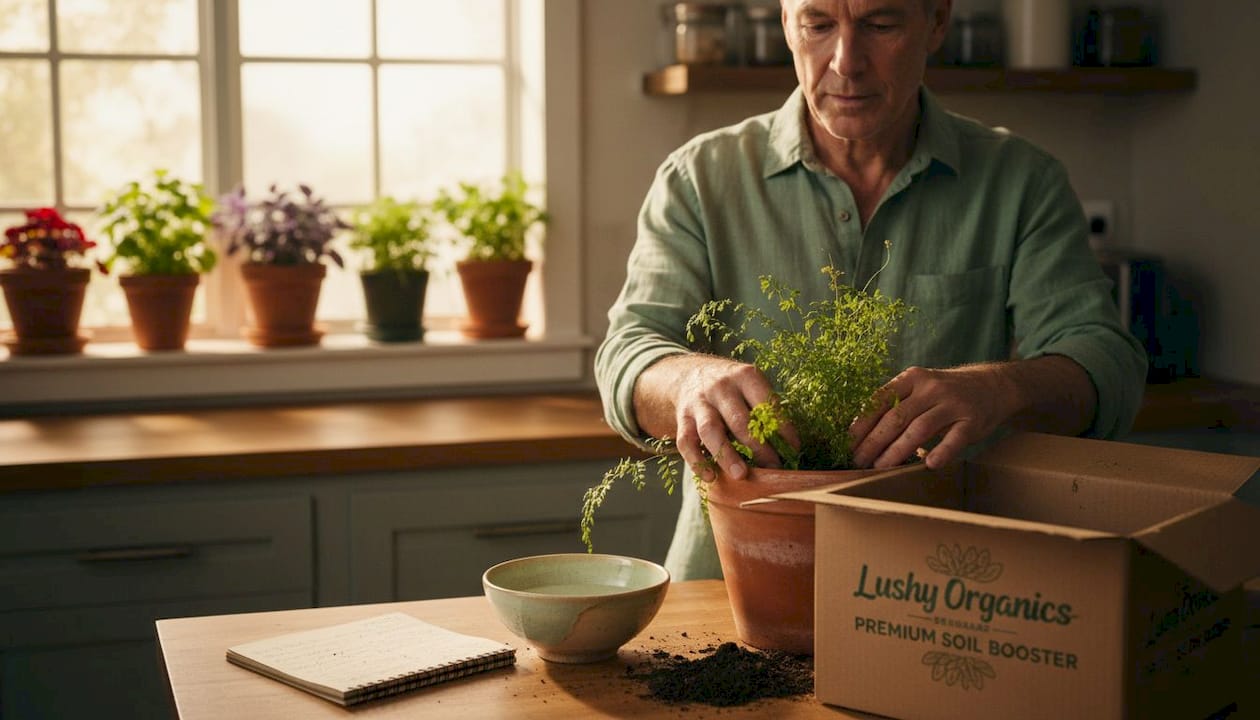
Soil pH imbalance problems can also flare up during this period, especially if you’re moving plants into new containers with different soil mixes. And if you’re tempted to fertilize early to “help” the plant settle in, reviewing some fertilizing timing tips first will save you a lot of heartache.
How to acclimate plants: step-by-step guide
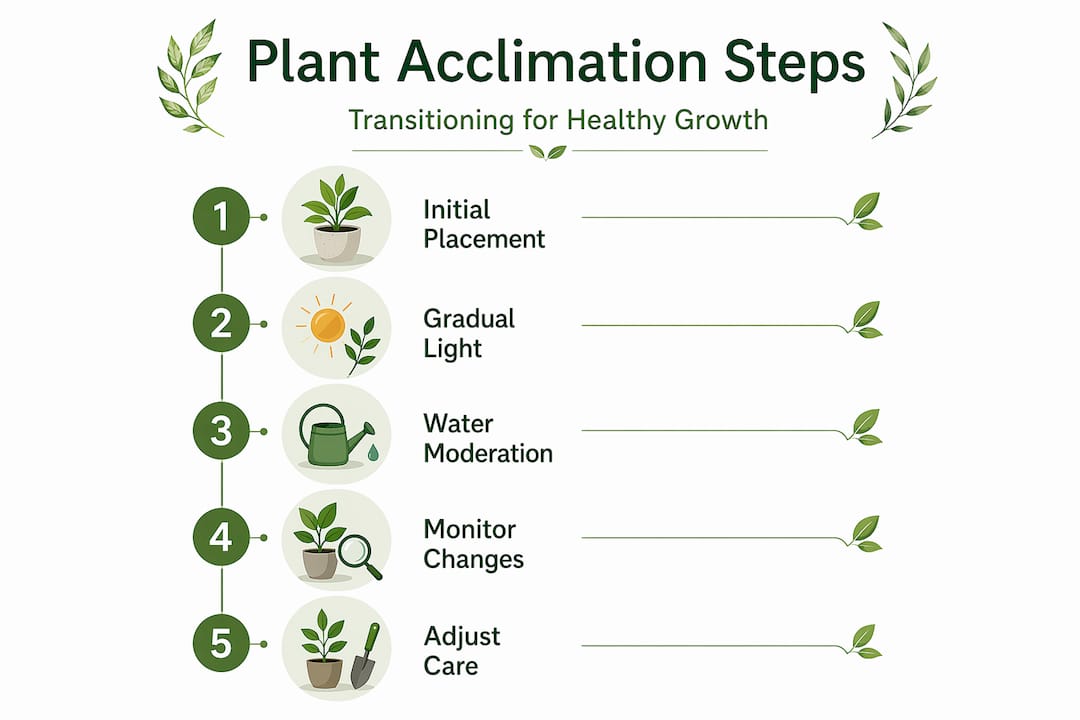
With the risks in mind, let’s walk through practical steps that help your plants thrive year-round. This process works whether you’re bringing home a new purchase, receiving a shipped plant, or transitioning something from outdoors to indoors.
-
Unbox or transport carefully. If the plant was shipped, remove it from packaging gently and inspect for damage or pests. Let it breathe in a stable, mid-light area for the first 24 hours without doing anything else.
-
Start with indirect light. Even if the plant’s final destination is a bright sunny windowsill, begin with indirect or filtered light for the first one to two weeks. Direct sun on an unadjusted plant causes leaf scorch and rapid water loss.
-
Keep temperatures stable. Avoid placing new plants near heating vents, air conditioners, drafty windows, or exterior doors. Aim for a consistent range between 60 and 75 degrees Fahrenheit during the adjustment period.
-
Check soil moisture before every watering. Don’t water on a schedule. Stick your finger two inches into the soil. If it’s still moist, wait. This is the single most important habit you can build during acclimation. Many guides emphasize watering by soil moisture rather than a schedule and withholding fertilizer until new growth begins.
-
Withhold fertilizer entirely. Don’t feed the plant until you see new growth emerging, which signals it has settled into the new environment. This usually takes two to four weeks.
-
Gradually increase light exposure. After two weeks of indirect light with no visible stress, begin moving the plant incrementally closer to its intended spot. If it’s going outside, add one to two hours of outdoor exposure per day rather than leaving it out all day immediately. Setting up the right outdoor planting setup can help you manage this process more systematically.
-
Monitor, don’t hover. Check the plant daily but resist the urge to change things constantly. Give each adjustment at least three to five days before deciding it isn’t working.
Pro Tip: Keep a simple plant journal during acclimation. Note the date, light conditions, whether you watered, and any visible changes. You’ll start seeing patterns that help you make better decisions much faster.
Gradual acclimation vs. immediate transition
| Factor | Gradual acclimation | Immediate transition |
|---|---|---|
| Light adjustment | Indirect first, increase weekly | Full exposure from day one |
| Watering | Based on soil moisture | Fixed schedule |
| Fertilizer | Withheld until new growth | Applied on arrival |
| Risk of leaf drop | Low | High |
| Recovery time if stressed | Days | Weeks to months |
| Long-term growth rate | Faster | Slower |
For container-grown plants, container gardening tips can also inform how you set up the transitional environment. And if you’re starting from seed and moving seedlings outside for the first time, the principles of planting seeds outdoors cover the specific hardening-off process you’ll want to follow.
Understanding watering tips beyond the basics will also help you calibrate your approach during this sensitive period, especially for plants that have different moisture needs depending on season and pot size.
Troubleshooting acclimation challenges
After you’ve started the acclimation process, it’s crucial to spot problems early and make adjustments for optimal results. Even when you do everything right, some plants still show signs of stress. Here’s how to read those signs and respond without making things worse.
Common signs a plant is struggling:
- Leaf drop: Especially with tropical plants like ficus and schefflera, dropping a few leaves is normal. Dropping many leaves rapidly is a red flag.
- Yellowing leaves: This often signals overwatering or a root system not yet adapted to the new soil and moisture levels.
- Wilting despite moist soil: This counterintuitive symptom usually means root stress, not dehydration. The roots can’t uptake water efficiently while under stress.
- No new growth after 6+ weeks: The plant is likely still stressed or the conditions aren’t right for recovery.
- Sudden browning tips: Often caused by low humidity, inconsistent watering, or fertilizer salts from pre-existing soil.
Acclimation symptoms and solutions
| Symptom | Likely cause | Action |
|---|---|---|
| Leaf drop | Light shock or temperature fluctuation | Move to more stable, indirect light |
| Yellowing leaves | Overwatering | Let soil dry out, check drainage |
| Wilting with moist soil | Root stress | Reduce watering, avoid fertilizer |
| Brown leaf tips | Low humidity or salt buildup | Mist leaves, flush soil with plain water |
| No new growth after 6 weeks | Ongoing stress or wrong conditions | Reassess light, temperature, and watering |
Pro Tip: Take a photo of your plant the day it arrives or moves, then again every seven days. Visual comparison over time reveals trends that are almost impossible to notice in day-to-day observation.
As the Plant Vault acclimation guide points out, acclimating is about doing less and giving time to adjust. Avoid fertilizing a stressed or just-unboxed plant, and hold off on feeding until you see active growth returning.
If you grow multiple species together, interplanting tips can help you manage different acclimation needs without letting one plant’s stress affect others nearby. And if a plant continues to struggle despite your best efforts, reviewing plant propagation methods gives you a backup plan for rescuing healthy cuttings before the parent plant is lost.
Why conventional plant advice often misses the importance of acclimation
Here’s an observation worth sitting with: most plant care content focuses heavily on what to do (water this much, fertilize with this product, prune at this time) but barely touches on when not to act. Acclimation is almost entirely about restraint. And that’s uncomfortable advice to give in a culture that equates care with action.
The truth from years of gardening experience is that the plants that thrive long-term are usually the ones that were left alone the most during their first weeks in a new home. The ones that get fussed over, watered out of anxiety, fed “just in case,” and shuffled from spot to spot trying to find the perfect location often never fully recover their initial momentum.
There’s also a deeper issue: most gardening guides assume a static environment. They tell you how to care for a pothos in indirect light, but they don’t account for the fact that your pothos just arrived from a bright greenhouse in Florida after four days in a cardboard box. The baseline conditions are completely different, and standard care advice doesn’t apply until the plant has had time to re-establish its internal rhythms.
Patient observation is genuinely more powerful than any prescribed schedule. A healthier indoor plant guide will always circle back to this point: learning to read your specific plant in your specific environment beats following generic rules every time.
The gardeners who struggle most are often the ones who need to see immediate results. They want the plant to look perfect by week two. But plant health isn’t measured in days. A plant that looks a little rough at week two but is putting out a new leaf by week five is doing exactly what it’s supposed to do. Track changes over several weeks, not several days, and you’ll make far smarter decisions.
Get expert support for thriving plant transitions
Navigating plant acclimation gets easier when you have the right resources at your fingertips. At Lushy Gardens, we’ve put together practical guides that take the guesswork out of every stage of plant care, from the first day your plant arrives through its long-term maintenance. Start with our plant care checklist to build a daily routine that supports healthy acclimation without overdoing it. Our in-depth hydration tips help you master soil-moisture-based watering, which is the cornerstone of successful transitions. And if you’re newer to growing, our gardening basics guide gives you the foundational knowledge to make every move count.
Frequently asked questions
How long should you acclimate a new plant?
Most plants benefit from two to four weeks of acclimation before resuming a regular care routine, since managing first-weeks risk through gradual adjustment leads to healthier, longer-term adaptation.
Can you fertilize plants during acclimation?
No. Avoid fertilizing during acclimation entirely, and hold off until active growth appears, which signals that the plant has stabilized enough to use nutrients productively.
What signs show a plant is struggling with acclimation?
Watch for leaf drop, yellowing, wilting, or stunted growth, all of which indicate stress. As acclimation guides note, these are warning signs to ease up on watering and hold off on feeding rather than intensify care.
Is acclimation necessary for all plants?
While some hardy plants adapt quickly with minimal support, most houseplants benefit from gradual acclimation because common problems like leaf drop and wilting are significantly reduced when the transition is managed carefully.
Recommended
- Interplanting: Boost Garden Health and Yields Today – Lushy Gardens
- Master Plant Propagation Techniques for Thriving Gardens – Lushy Gardens
- Master Plant Propagation Methods for Thriving Gardens – Lushy Gardens
- Proven strategies for thriving indoor houseplants – Lushy Gardens

I’m Eleanor, a seasoned gardener with over three decades of experience tending to Mother Nature’s creations. Through Lushy Gardens, I aim to share my wealth of knowledge and help fellow plant enthusiasts uncover the wonders of gardening. Let’s dive into this journey together, one leaf at a time.


