
Table of Contents
TL;DR:
- Edible landscaping combines ornamental garden design principles with food-producing plants, creating beautiful and productive outdoor spaces.
- It emphasizes perennial plants, vertical structures, and strategic zoning to maximize yield while maintaining curb appeal and sustainability.
Edible landscaping is the practice of integrating food-producing plants, including fruits, vegetables, herbs, and edible flowers, into ornamental garden designs to create outdoor spaces that are both beautiful and productive. Also called “foodscaping” in gardening circles, it treats your yard as a canvas where a blueberry bush can anchor a border bed and nasturtiums can trail along a pathway. Edible landscapes can range from just a few culinary herbs tucked among perennials to fully edible yards where nearly every plant serves your table. For homeowners and gardening newcomers, it offers a practical way to grow food without sacrificing curb appeal.
What is edible landscaping and why does it matter?
Edible landscaping applies formal landscape design principles to food-producing plants, treating them with the same attention to form, texture, color, and layering that you would give any ornamental garden. This is what separates it from a traditional vegetable patch. A raised bed of tomatoes in the backyard is functional. An edible landscape uses those same tomatoes as a vertical accent on a trellis, framed by lavender and bordered with strawberries as ground cover.
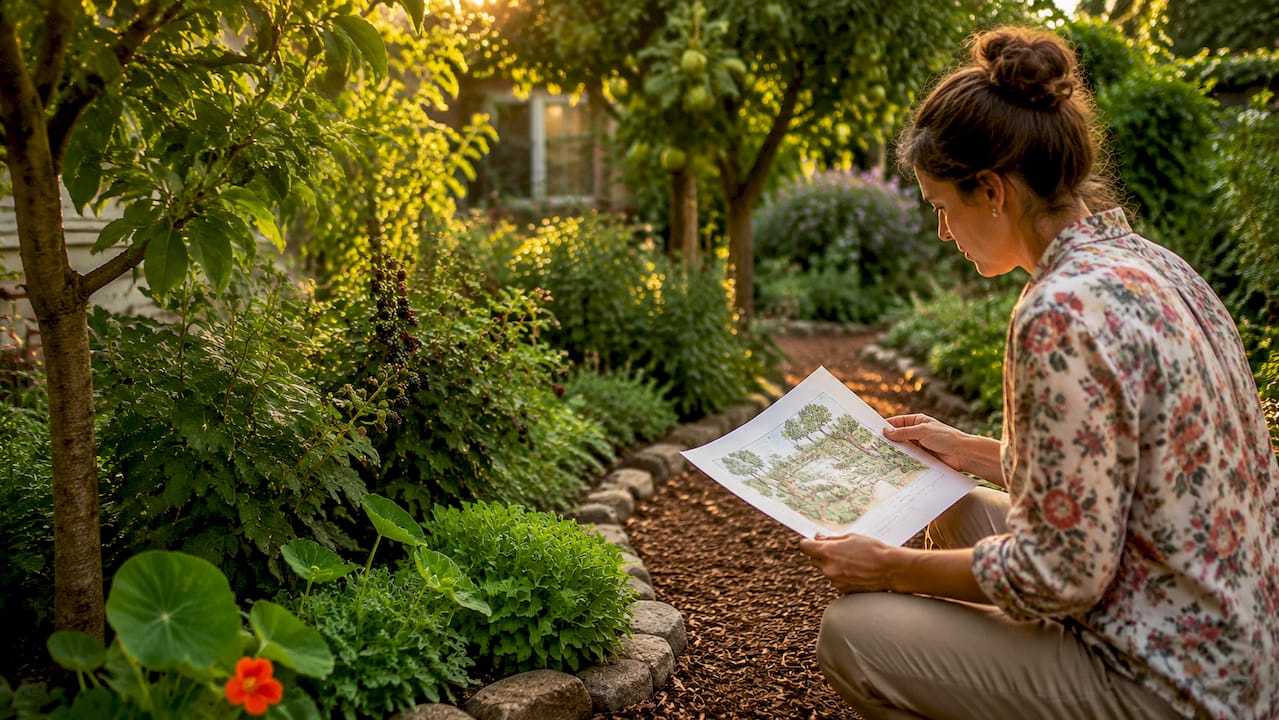
The plants involved span a wide range. Fruit trees like apple, fig, and persimmon provide canopy structure. Berry bushes such as blueberries, currants, and gooseberries fill the mid-layer. Culinary herbs like rosemary, thyme, and sage work as low borders or ground covers. Edible flowers, including calendula, borage, and nasturtiums, add seasonal color while attracting pollinators. Each plant earns its place twice: once for what it looks like, and once for what it produces.
The density of edible plants in your yard is entirely your call. Some homeowners replace only their front foundation shrubs with blueberry bushes and call it done. Others go further. Highly productive edible landscapes can reach around 90% edible plant density by incorporating vertical structures like arbors and trellises. That level of integration means your yard is essentially a working food system that still looks intentional and well-designed.
What are the core benefits of edible landscaping for homeowners?
The benefits of edible landscaping reach well beyond the harvest bowl. Here is what homeowners consistently gain from making the switch:
- Food security and nutrition. Growing your own fruit, herbs, and vegetables reduces dependence on grocery supply chains and puts fresher food on your table.
- Space efficiency. Edible landscaping combines food and ornamental planting in the same square footage, so you are not sacrificing garden space for a separate vegetable plot.
- Support for pollinators and biodiversity. Flowering edibles like borage, fennel, and fruit tree blossoms attract bees, butterflies, and beneficial insects that support the broader local ecosystem.
- Lower lawn maintenance. Replacing sections of turf with productive plantings reduces mowing frequency, water use, and the need for synthetic fertilizers.
- Property value and curb appeal. A well-designed edible landscape reads as a premium garden feature to prospective buyers, not a neglected vegetable patch.
- Reduced chemical use. Edible gardens commonly exclude harsh chemical pesticides to keep harvests safe, which benefits soil health and local wildlife over time.
Pro Tip: Start by replacing one ornamental shrub with a fruiting equivalent. Swap a boxwood hedge for a row of dwarf blueberries. The visual impact is similar, the maintenance is comparable, and you gain a harvest every summer.
Is edible landscaping sustainable? The answer is yes, by design. Choosing plants adapted to your local climate and soil conditions, a principle known as “right plant, right place,” reduces irrigation, fertilizer, and pesticide needs significantly. That makes the approach inherently lower-impact than conventional ornamental gardening.
How does edible landscaping differ from traditional vegetable gardening?
The clearest way to understand the difference is to picture two yards side by side. One has a fenced rectangular plot in the backyard with rows of tomatoes, beans, and squash. The other has a front yard where a dwarf apple tree anchors the corner, rosemary lines the front path, and a pergola draped in kiwi vine shades the porch. Both yards produce food. Only one is an edible landscape.
| Feature | Edible landscaping | Traditional vegetable garden |
|---|---|---|
| Design priority | Aesthetics and food production equally | Food yield primarily |
| Plant types | Perennials, trees, shrubs, herbs, flowers | Mostly annual vegetables |
| Location | Integrated throughout the yard | Separate dedicated plot |
| Maintenance style | Seasonal, lower-labor perennial care | Intensive seasonal replanting |
| Curb appeal | High, intentional design | Functional, not decorative |
Edible landscaping relies heavily on perennial plants, meaning plants that return year after year without replanting. Fruit trees, berry bushes, asparagus, and perennial herbs like sage and chives are the backbone. This reduces the annual labor of starting seeds, transplanting seedlings, and turning over beds that defines traditional vegetable gardening. You invest more effort upfront in design and planting, and less effort in subsequent years.
Pro Tip: Use basic garden design principles like layering (tall canopy, mid-layer shrubs, low ground covers) when planning your edible landscape. The same structure that makes ornamental gardens look professional works perfectly with edible plants.
What are the key design considerations for an edible landscape?
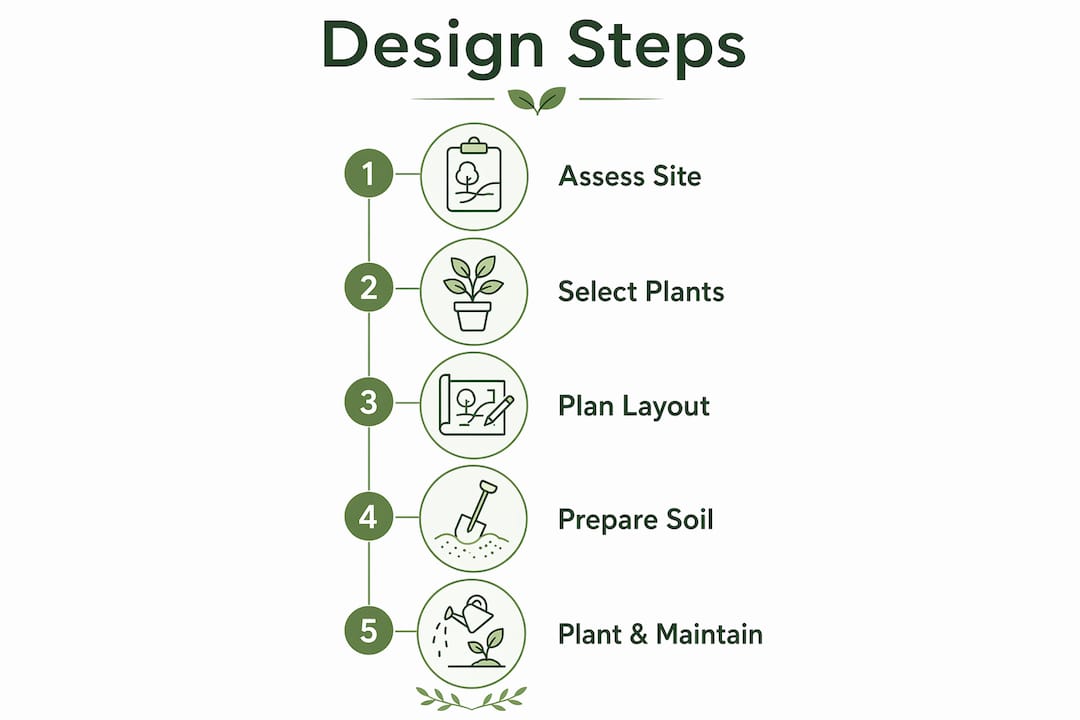
Good edible garden design ideas start with honest site assessment before you buy a single plant. Follow these steps to set your layout up for long-term success:
- Map your sunlight. Walk your yard at different times of day and note which areas receive full sun, partial shade, and deep shade. Most edible plants require at least 6 hours of direct sunlight daily. Place your highest-priority food plants in your sunniest spots.
- Assess your soil and microclimates. Test soil pH and drainage before planting. Note areas that stay wet after rain, spots sheltered from wind, or south-facing walls that trap heat. These microclimates determine which plants will thrive where.
- Zone your plants by use frequency. Plant zoning groups edible plants by how often you need to access them. Zone 1, closest to your kitchen door, is for daily-use crops like herbs, salad greens, and cherry tomatoes. Zone 2, farther out, is for fruit trees and berry bushes you harvest weekly or seasonally.
- Plan your pathways first. Access is not an afterthought. Avoid planting spreading or thorny crops like raspberries in large beds without built-in paths. Without clear access, harvesting becomes difficult and plants get damaged.
- Incorporate vertical structures. Arbors, trellises, and pergolas do double duty. They add architectural interest to the design and support climbing edibles like grapes, kiwi, cucumbers, and pole beans.
- Consider seasonal interest. A well-designed edible landscape looks good in every season, not just at harvest time. Choose plants with spring blossoms, summer fruit, fall color, and winter structure. A persimmon tree with bright orange fruit in November is as ornamental as any flowering tree.
Use a step-by-step garden planning guide to work through site assessment systematically before committing to a layout.
Which edible plants work best for landscaping?
Selecting the right edible plants for landscaping means finding species that earn their place visually and practically. The best choices serve both roles without demanding excessive maintenance.
- Fruit trees. Apple, pear, fig, persimmon, and dwarf citrus provide canopy structure, seasonal flowers, and annual harvests. Dwarf and semi-dwarf varieties suit smaller yards.
- Berry bushes. Blueberries offer spring flowers, summer fruit, and brilliant fall foliage. Currants and gooseberries tolerate partial shade, making them useful in spots where other edibles struggle.
- Culinary herbs. Rosemary, lavender, thyme, and sage function as low-maintenance border plants with ornamental texture and fragrance. Lavender in particular doubles as a pollinator magnet.
- Edible flowers. Nasturtiums, calendula, borage, and violets add seasonal color and are entirely edible. They also attract beneficial insects that support the rest of your garden.
- Climbing edibles. Grapes, kiwi, and scarlet runner beans cover vertical structures with lush foliage and productive harvests.
| Plant | Ornamental value | Edible use | Maintenance level |
|---|---|---|---|
| Blueberry | Fall foliage, spring flowers | Fresh fruit | Low |
| Lavender | Fragrance, purple flowers | Culinary, teas | Very low |
| Fig | Bold tropical foliage | Fresh and dried fruit | Low |
| Nasturtium | Bright seasonal color | Flowers and leaves | Very low |
| Grape vine | Dense canopy coverage | Fresh fruit, juice | Moderate |
The principle of choosing plants adapted to local conditions applies directly here. A fig tree thrives with minimal care in a warm climate but struggles in Zone 5 without winter protection. Selecting drought-tolerant edible plants for dry climates reduces your irrigation load and keeps the garden sustainable year-round.
How to implement and maintain your edible landscape
Getting your edible landscape established and keeping it productive requires a clear sequence of actions, especially in the first two years.
- Amend your soil before planting. Add compost to improve drainage in clay soils and water retention in sandy soils. Most edible plants prefer a slightly acidic to neutral pH between 6.0 and 7.0.
- Plant perennials first. Trees, shrubs, and perennial herbs form the permanent structure of your landscape. Get these in the ground first and build annual or seasonal plants around them.
- Set up irrigation early. Hand watering is inconsistent and time-consuming. A drip irrigation system delivers water directly to root zones, reduces evaporation, and keeps foliage dry to limit fungal issues.
- Mulch generously. A 3-inch layer of wood chip mulch around trees and shrubs suppresses weeds, retains moisture, and gradually improves soil as it breaks down.
- Manage pests without harsh chemicals. Edible gardens exclude chemical pesticides to keep harvests safe. Use organic pest management techniques like neem oil, insecticidal soap, and companion planting instead. Expect to share some produce with local wildlife. That is part of the ecological trade-off.
- Prune and harvest on schedule. Perennial-centered edible gardens still need seasonal pruning, mulching, and irrigation to stay productive and attractive. Skipping annual pruning on fruit trees reduces yield and creates structural problems over time.
Pro Tip: Keep a simple garden journal in your first year. Note what bloomed when, which plants struggled, and where you had pest pressure. That record is worth more than any planting guide when you plan your second season.
Key takeaways
Edible landscaping works because it applies ornamental design principles to food-producing plants, creating yards that are productive, sustainable, and visually appealing at the same time.
| Point | Details |
|---|---|
| Definition is design-first | Edible landscaping uses landscape design principles, not just food yield, as its organizing logic. |
| Zoning improves efficiency | Place daily-use herbs near the kitchen and fruit trees farther out to reduce wasted effort. |
| Sunlight is non-negotiable | Most edible plants need at least 6 hours of direct sun daily. Assess your site before planting. |
| Perennials reduce labor | Trees, shrubs, and perennial herbs return each year, cutting the replanting work of annual vegetable gardens. |
| Maintenance is still required | Even low-labor edible landscapes need seasonal pruning, mulching, and irrigation to stay productive. |
Why I think most beginners overcomplicate this
When I first started working with edible landscapes, I made the same mistake most newcomers make. I tried to plan everything at once. I sketched out a full-yard design, researched 30 plant species, and ordered more than I could reasonably plant in a season. The result was a chaotic first year and a few dead fruit trees I had placed in the wrong spots.
The honest truth about how to create edible landscapes successfully is that your yard teaches you more than any article can. The microclimate near your south-facing fence, the spot that stays wet two days after rain, the corner where nothing seems to grow well. You only learn these things by observing across seasons. My advice is to plant your Zone 1 herbs and one or two fruit trees in year one. Watch what happens. Let the site show you where it wants to go before you commit to a full design.
Wildlife interaction also surprised me. Once I stopped using chemical sprays, birds and insects moved in fast. I lost some cherries to robins and some strawberries to slugs. But I also had more bees than I had ever seen, and my fruit set on the apple tree improved noticeably. The ecological trade-off is real and worth accepting. A garden that supports wildlife is a garden that works.
Start small. Observe carefully. Adjust without frustration. That is the actual practice of edible landscaping, and it is more rewarding than any perfectly executed plan.
Start your edible garden with Lushygardens
Lushygardens has the resources to take you from concept to a thriving edible yard. If you are just getting started, the beginner gardening guide covers foundational skills every new gardener needs before putting plants in the ground. Once your edible landscape is established, the seasonal maintenance guide walks you through year-round care routines that keep your garden productive and looking its best. For design inspiration, explore simple garden design ideas tailored to homeowners who want beautiful, functional outdoor spaces without professional help. Every guide is written with beginners in mind and grounded in practical, real-world gardening experience.
FAQ
What is edible landscaping in simple terms?
Edible landscaping is the practice of designing a yard or garden using food-producing plants, including fruits, herbs, vegetables, and edible flowers, as ornamental elements. The goal is a space that looks beautiful and produces food at the same time.
Is edible landscaping sustainable?
Yes. Edible landscaping is sustainable by design because it favors perennial plants, reduces lawn area, eliminates harsh chemical use, and selects species adapted to local climate and soil conditions, all of which lower water and resource consumption.
What plants are best for edible landscaping?
Blueberries, lavender, fig trees, nasturtiums, rosemary, and grape vines are among the most effective edible plants for landscaping because they offer strong ornamental value alongside reliable harvests and low maintenance needs.
How is edible landscaping different from a vegetable garden?
A traditional vegetable garden prioritizes food yield in a dedicated plot. Edible landscaping integrates food-producing plants throughout the entire yard using formal design principles like layering, texture, and seasonal interest.
How much sun does an edible landscape need?
Most edible plants require a minimum of 6 hours of direct sunlight daily. Site assessment for sun patterns is the most critical first step before designing or planting an edible landscape.
Recommended
- Vegetable gardening basics: step-by-step guide for beginners – Lushy Gardens
- What Is Raised Bed Gardening? A Beginner’s Guide – Lushy Gardens
- Simple Garden Design Ideas for Beginners – Lushy Gardens
- What Is Keyhole Gardening? a Practical Eco Guide – Lushy Gardens

I’m Eleanor, a seasoned gardener with over three decades of experience tending to Mother Nature’s creations. Through Lushy Gardens, I aim to share my wealth of knowledge and help fellow plant enthusiasts uncover the wonders of gardening. Let’s dive into this journey together, one leaf at a time.


