
Table of Contents
TL;DR:
- Proper watering techniques are essential for indoor plant health, especially avoiding overwatering which causes most plant deaths.
- Checking soil moisture before watering using the finger or lift test prevents root rot and ensures plants grow strong roots.
Proper watering technique is the single most important skill in indoor plant care. Overwatering causes approximately 70% of houseplant deaths, making it far more dangerous than neglect. The core rule is simple: water only when the top 1–2 inches of soil feel dry. This applies whether you use top watering, bottom watering, a finger test, or a moisture meter. Getting this right means your plants grow stronger roots, resist disease, and stay green year after year.
1. How to check soil moisture before watering
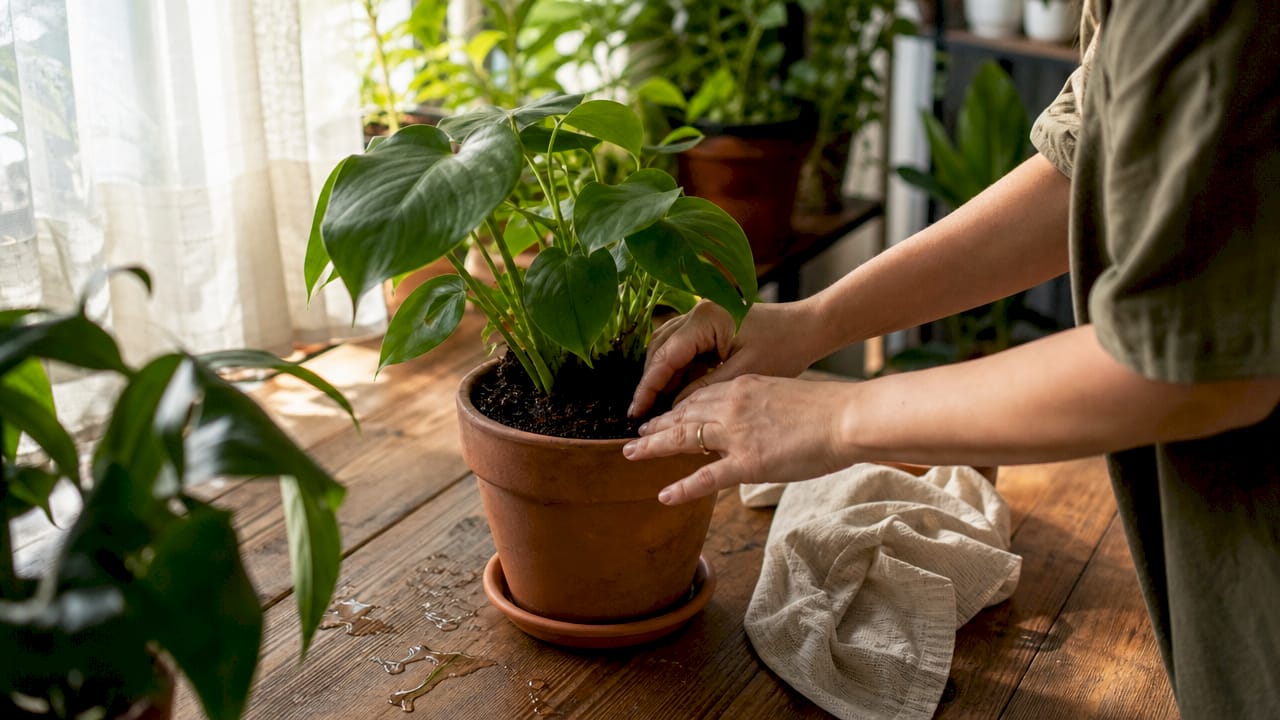
Checking soil moisture beats any fixed watering schedule. Fixed schedules ignore environmental factors like temperature, humidity, and seasonal light changes. Your plant does not care what day of the week it is.
The three most reliable methods are:
- Finger test. Push your finger 1–2 inches into the soil. If it feels dry at that depth, water the plant. If it still feels damp, wait another day or two.
- Lift test. Pick up the pot. A dry pot feels noticeably lighter than a freshly watered one. With practice, this becomes second nature.
- Moisture meter. Tools like the XLUX T10 or any basic analog moisture meter give you a numbered reading. This is the best option for beginners or for plants in deep pots where the finger test falls short.
Pro Tip: Check soil moisture in the morning. Soil that feels borderline dry in the morning will be ready to water by the time you get home. Checking at night can lead you to water too early.
Factors like low humidity, high heat, and terracotta pots all speed up drying. A plastic pot in a cool room holds moisture far longer than a terracotta pot near a sunny window. Adjust your checks based on your home environment, not a calendar.
2. Top watering vs. bottom watering: which method works best?
Both top watering and bottom watering are valid techniques. The best way to water houseplants depends on the plant type and what you are trying to achieve.
| Feature | Top watering | Bottom watering |
|---|---|---|
| How it works | Pour water over soil until it drains from the bottom | Set pot in 1–2 inches of water for 15–40 minutes |
| Best for | Most houseplants, regular maintenance | African violets, succulents, fuzzy-leaved plants |
| Key benefit | Flushes mineral salts from soil | Hydrates roots without wetting leaves |
| Risk | Can wet leaves and cause rot if done carelessly | Root rot if left soaking beyond 60 minutes |
| Frequency | Every watering session | Rotate with top watering |
Top watering flushes excess mineral salts from the soil, which is a real benefit that bottom watering alone cannot provide. Salt buildup from fertilizer and tap water causes leaf tip burn and stunted growth over time.
Bottom watering requires 15–40 minutes of soaking in shallow water, with a hard limit of 60 minutes. Leaving a pot sitting in water beyond that point creates the exact conditions that cause root rot. Set a timer.
The smartest approach is to alternate both methods. Use bottom watering for plants with sensitive or fuzzy leaves like African violets and Streptocarpus. Use top watering every few sessions to flush out accumulated salts. This combination keeps roots healthy and soil chemistry balanced.
3. How often to water indoor plants throughout the year
Watering frequency is not fixed. It shifts with the seasons, the plant type, and your home conditions.
Most tropical houseplants, including Monsteras, Pothos, and Peace Lilies, need watering roughly once a week during summer. In winter, reduce watering frequency by about 25% to match slower plant growth and lower light levels. Roots sitting in wet soil during dormancy rot quickly.
Here is a general seasonal guide:
- Spring and summer. Check soil every 3–4 days. Most plants need water weekly or more often in heat.
- Fall. Extend the gap between waterings as light decreases. Check every 5–6 days.
- Winter. Water sparingly. Many plants need water only every 10–14 days. Always check the soil first.
- Drought-tolerant plants (cacti, succulents, snake plants). Water every 2–4 weeks in summer, monthly or less in winter.
- Ferns and moisture-loving plants. Check every 2–3 days. These plants dry out fast and wilt quickly.
Pro Tip: When you do water, water thoroughly. Pour slowly until water drains freely from the drainage holes. Shallow watering encourages roots to stay near the surface, making plants weaker and more vulnerable to drought.
The volume of water matters less than the frequency. Infrequent, deep waterings promote healthier roots than frequent light sprinkles. Deep watering pulls roots downward, building a stronger, more resilient root system. You can also build a personalized watering schedule based on your specific plant lineup and home conditions.
4. Common watering mistakes and how to avoid them
Most plant problems trace back to a handful of repeatable errors. Recognizing them early saves plants before damage becomes permanent.
- Watering on a rigid schedule. Ignoring soil moisture before watering causes root rot more reliably than almost anything else. Always check the soil, not the calendar.
- Using cold water. Cold water shocks plant roots, especially in winter and for tropical species. Use room temperature water every time.
- No drainage holes. Pots without drainage trap water at the bottom, creating a waterlogged zone that suffocates roots. Always use pots with drainage holes.
- Leaving water in saucers. Empty saucers 30 minutes after watering. Standing water in a saucer keeps the bottom of the pot permanently wet.
- Soaking a severely wilted plant all at once. Rehydrate underwatered plants gradually over several days. A sudden flood of water after extreme dryness shocks the root system and can cause as much damage as the drought itself.
The most common watering mistake is not how much water you give, but how often you give it without checking whether the plant actually needs it.
Recognizing the signs of overwatering early, such as yellowing leaves, mushy stems, and a sour soil smell, gives you time to correct course before roots are lost.
5. Tips for specialized watering situations
Some plants and conditions need a different approach. Standard advice does not always apply.
- Hydrophobic soil. Soil that has dried out completely often repels water instead of absorbing it. You will see water rushing straight through the pot without soaking in. Fix this by bottom watering first, then following up with a slow top watering session once the soil has rehydrated.
- Fuzzy-leaved plants. African violets, Begonias, and Kalanchoe have leaves that trap moisture and rot when wet. Always use bottom watering for these plants. Never pour water over the foliage.
- Tap water and chlorine. Letting tap water sit for 24 hours before use dissipates chlorine effectively. Chlorine and fluoride accumulate in soil over time and cause brown leaf tips, particularly in Spider Plants and Peace Lilies.
- Compacted soil. If water pools on the surface and takes a long time to absorb, the soil is compacted. Use a chopstick or thin skewer to poke several holes 2–3 inches deep around the pot. This breaks up compaction and lets water reach the roots.
- Recovering stressed plants. For a plant that has gone bone dry and is wilting badly, water a small amount on day one, a bit more on day two, and a full watering on day three. This gradual approach prevents root shock. The Lushygardens guide on saving dying plants walks through this process in detail.
Room temperature water is particularly important in winter and for tropical species. Cold tap water in january can set back a tropical plant by weeks.
Key takeaways
Checking soil moisture before every watering session is the single most effective habit for keeping houseplants alive and healthy long term.
| Point | Details |
|---|---|
| Check soil first | Water only when the top 1–2 inches of soil feel dry to the touch. |
| Alternate watering methods | Rotate top and bottom watering to flush salts and protect sensitive leaves. |
| Adjust for seasons | Reduce watering by about 25% in winter to match slower plant growth. |
| Use room temperature water | Cold water shocks roots, especially for tropical plants in winter. |
| Water deeply, not often | Thorough, infrequent watering builds stronger roots than frequent light watering. |

What I have learned after years of watering indoor plants
The advice I wish someone had given me earlier is this: overwatering is almost never about pouring too much water at once. It is about watering too often. I used to think a generous weekly soak was responsible plant care. What I was actually doing was keeping the soil perpetually damp, which is exactly the condition roots hate most.
The shift that changed everything for me was buying a basic moisture meter. It cost less than $15 and immediately showed me that plants I thought needed water were still sitting in moist soil. I was watering Pothos and Peace Lilies at least four days too early, every single time.
I also underestimated how much bottom watering changed the health of my African violets. Switching to bottom watering stopped the crown rot I had been fighting for two seasons. Alternating it with occasional top watering kept the soil chemistry clean without any extra effort.
The hardest lesson was patience with struggling plants. When a plant looks bad, the instinct is to water it more. Nine times out of ten, that makes things worse. Read the soil, not the leaves, and give a stressed plant time to respond before changing anything.
More plant care resources from Lushygardens
Watering is one piece of a larger care routine. Lushygardens covers the full picture, from soil selection and seasonal adjustments to troubleshooting yellowing leaves and root rot. If you are building your skills from the ground up, the gardening basics for beginners guide is the best place to start. It covers foundational care principles that apply to every plant in your home. For a broader look at keeping indoor plants healthy through every season, the seasonal plant care tips guide walks through exactly how to adjust your routine as conditions change. Lushygardens also publishes a plant care routine checklist that makes it easy to stay consistent without overthinking it.
FAQ
How often should I water my houseplants?
Most tropical houseplants need water roughly once a week in summer and every 10–14 days in winter. Always check the top 1–2 inches of soil before watering rather than following a fixed schedule.
What are the signs of overwatering houseplants?
Yellowing leaves, mushy stems, and a sour or moldy smell from the soil are the clearest signs. Overwatering accounts for approximately 70% of houseplant deaths, so catching these signals early is critical.
Is bottom watering better than top watering?
Neither method is universally better. Bottom watering protects sensitive leaves and hydrates roots efficiently, while top watering flushes mineral salts from the soil. Alternating both methods gives the best results.
Can cold tap water harm my plants?
Yes. Cold water shocks plant roots, particularly for tropical species and during winter months. The Royal Horticultural Society recommends using room temperature water to avoid stress and decline.
How do I fix soil that repels water?
Hydrophobic soil needs rehydration before it will absorb water normally. Place the pot in a shallow tray of water for 20–30 minutes to let the soil soak from below, then follow with a slow top watering once the soil has softened.
Recommended
- Solve common houseplant problems: tips for healthy plants – Lushy Gardens
- Houseplants for beginners: easy care tips (68% saved) – Lushy Gardens
- Watering Indoor Plants Made Easy: Your Step-by-Step Guide – Lushy Gardens
- Top hydration tips for gardeners: optimal watering made easy – Lushy Gardens

I’m Eleanor, a seasoned gardener with over three decades of experience tending to Mother Nature’s creations. Through Lushy Gardens, I aim to share my wealth of knowledge and help fellow plant enthusiasts uncover the wonders of gardening. Let’s dive into this journey together, one leaf at a time.


