
Table of Contents
TL;DR:
- Compost improves soil structure, nourishes microbes, and provides slow-release nutrients for long-term plant health.
- Applying the right amount at appropriate times enhances soil fertility and prevents nutrient imbalances.
Compost is defined as decomposed organic matter used to amend soil, and its role in gardening is to build fertile, biologically active ground that supports strong plant growth. Healthy soil does not happen by accident. It requires consistent organic input, and compost delivers that input in a form plants and soil microbes can use immediately. The importance of composting goes beyond recycling kitchen scraps. It restores the physical structure, biological life, and nutrient availability that modern gardens lose through heavy planting, rain, and chemical use. This guide covers how compost works, how to apply it correctly, and what mistakes to avoid.
What is the role of compost in gardening?
Compost builds soil from the ground up. It does not just feed plants. It rebuilds the physical and biological foundation that makes feeding possible in the first place. The UC Master Gardener Program frames this clearly: the goal is building permanent fertility, not just feeding plants season by season.
Globally, 33% of soils are degraded and lack sufficient organic matter. That means one in three garden plots worldwide starts at a deficit before a single seed goes in. Compost directly addresses that deficit by restoring water retention, nutrient availability, and the microbial populations that drive soil health.
Compost is a soil amendment, not a replacement for native soil. This distinction matters. Mixing compost with existing soil creates a living, balanced growing medium. Using compost alone, without native soil, can cause moisture stress and drainage problems that harm roots.
The benefits of compost in gardening span three categories: physical structure, biological activity, and nutrient cycling. Each category reinforces the others. Better structure supports more microbes. More microbes release more nutrients. More nutrients produce stronger plants that improve soil further through root activity and organic debris.
How does compost improve soil structure?
Compost changes the physical properties of soil in two opposite but equally useful ways. In heavy clay soils, it loosens compacted particles, improves drainage, and creates air pockets that roots need. In sandy soils, it binds loose particles together, slowing water movement and holding nutrients that would otherwise wash away.
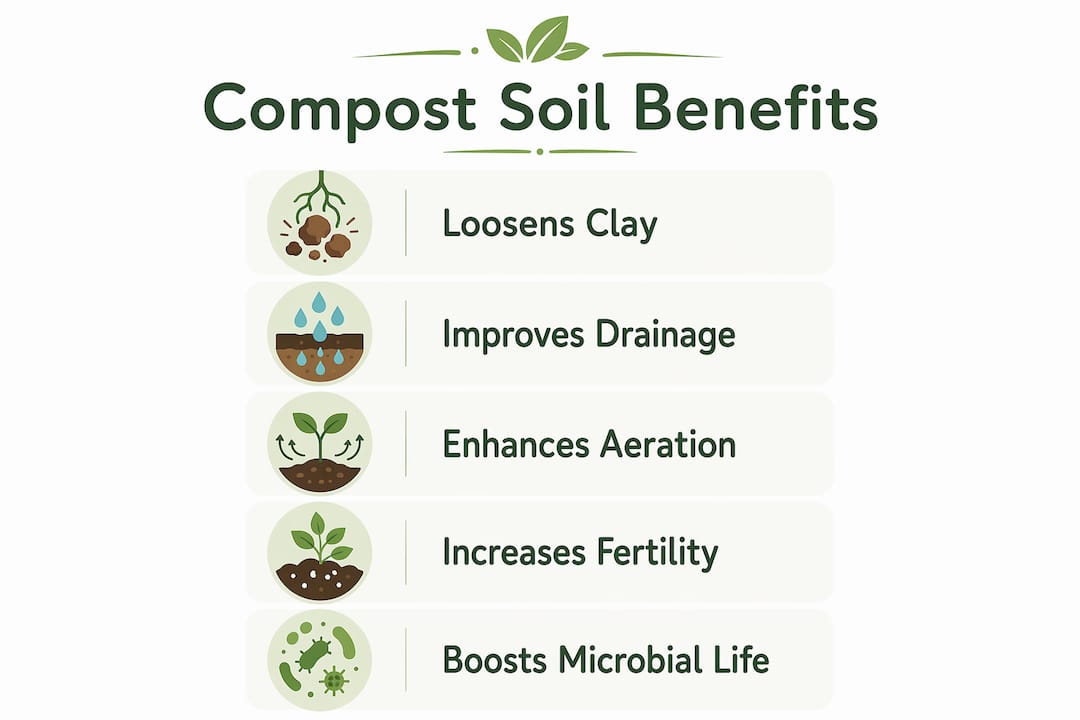
The mechanism behind this is microbial. Soil microbes fed by compost produce sticky compounds, sometimes called microbial “glues,” that bind soil particles into aggregates. These aggregates create pore space for both air and water. The result is what soil scientists call good soil tilth: a crumbly, workable texture that roots penetrate easily. Compost improves soil tilth by fostering exactly this microbial binding process.
One critical warning: mechanical tilling damages this microbial network. Heavy rototilling breaks apart the aggregates that microbes spent months building. Minimal tillage and hand tools preserve the structure compost creates.
Key physical benefits of compost in soil:
- Clay soils: Breaks up compaction, improves drainage, reduces waterlogging
- Sandy soils: Increases water retention, slows nutrient leaching
- All soil types: Creates pore space for root growth and gas exchange
- Surface application: Protects topsoil from erosion and temperature swings
Pro Tip: When preparing a new bed, work 2–4 inches of compost into the top 6–12 inches of soil. For established beds, a 1–2 inch top-dressing raked lightly into the surface is enough to maintain structure without disturbing existing roots.
How does compost feed soil microbes and cycle nutrients?
Compost is a biological engine, not just a fertilizer. Powell Gardens describes it precisely: compost introduces microbes that recycle nutrients slowly, unlike synthetic fertilizers that deliver nutrients without restoring soil life or structure. That difference defines the long-term trajectory of your garden’s health.
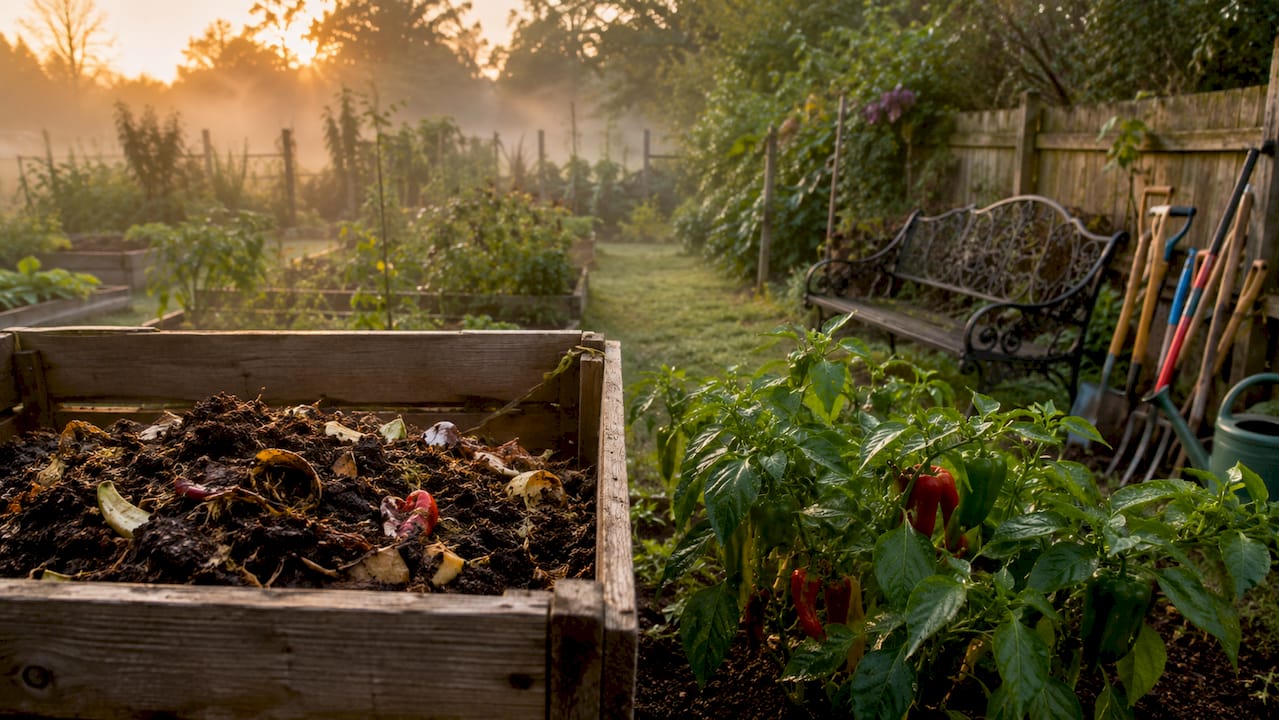
One teaspoon of finished compost contains over one billion microbes aiding nutrient recycling and soil structure. That number is worth pausing on. A single handful of good compost carries more living organisms than there are people on Earth. These bacteria and fungi break down organic matter, release locked-up nutrients, and form partnerships with plant roots that improve nutrient uptake.
This biological activity produces several downstream benefits:
- Slow-release nutrition: Microbes release nitrogen, phosphorus, and potassium gradually, matching plant uptake rates and reducing waste
- Disease suppression: Diverse microbial populations outcompete harmful pathogens, reducing fungal diseases and root rot
- Pest resistance: Plants grown in biologically active soil develop stronger cell walls and are less attractive to sap-sucking insects
- Compost tea: Steeping finished compost in water for 24–48 hours creates a liquid microbial concentrate that gardeners apply directly to soil or foliage for a fast biological boost
Synthetic fertilizers cannot replicate this. A synthetic product like Growmore delivers nutrients directly, but replacing 100g of Growmore requires about 1,300g of compost to match nitrogen levels. Compost delivers less concentrated nitrogen, but it delivers it alongside billions of organisms that transform the soil itself. That trade-off favors compost for long-term garden health.
How to use compost effectively in home gardens
Correct application is where most gardeners leave results on the table. The right amount, depth, and timing determine whether compost transforms your soil or just sits on top of it.
- New garden beds: Work 2–4 inches of compost into the top 6–12 inches of soil before planting. This depth puts organic matter where roots will grow and where microbial activity is highest.
- Established beds: Apply a 1–2 inch top-dressing each season. Rake it lightly into the top inch of soil. Deeper disturbance damages existing root systems and microbial networks.
- Transplanting: Mix soil and compost at a 1:1 ratio when backfilling transplant holes. This gives new roots immediate access to nutrients and improved structure.
- Trees and shrubs: Keep compost 6–12 inches away from trunks and stems. Compost piled against bark traps moisture and promotes rot and fungal disease.
- Vegetable gardens: Apply compost in fall after harvest to let it integrate over winter, or in early spring two to three weeks before planting. Both timings work. Fall application gives microbes more time to process the material.
Compost quality matters as much as quantity. Fine, well-decomposed compost integrates quickly and releases nutrients efficiently. Large woody chunks or unfinished compost can temporarily immobilize nitrogen as microbes work to break down the raw material, leaving plants deficient during the process.
Pro Tip: Get a soil test before applying heavy amounts of compost. Excess phosphorus from repeated applications can lock out other nutrients. A basic soil test from your local cooperative extension costs under $20 and tells you exactly what your soil needs.
Over-application is a real risk. Too much compost causes salt buildup and excess nitrogen, producing soft, lush foliage that attracts aphids and other pests. More is not always better. Stick to the recommended depths and test your soil every two to three years to track changes.
For gardeners growing vegetables specifically, Lushygardens has a detailed breakdown of the best compost for vegetables covering product types and application rates by crop.
Compost vs. synthetic fertilizers and mulch: what actually builds your garden?
| Factor | Compost | Synthetic fertilizer | Mulch |
|---|---|---|---|
| Soil structure | Improves significantly | No effect | Minimal surface effect |
| Microbial life | Feeds and multiplies | Can suppress over time | Supports surface microbes |
| Nutrient release | Slow, sustained | Fast, short-term | Negligible |
| Water retention | Increases in all soil types | No effect | Reduces evaporation |
| Weed suppression | Moderate when top-dressed | None | Strong |
| Long-term soil health | Builds permanently | Depletes without organic input | Maintains surface layer |
Synthetic fertilizers and compost serve different functions. Fertilizers are nutrient sources. Compost is a soil builder that delivers nutrients as a secondary benefit. Using only synthetic fertilizers without organic matter leads to soil that becomes progressively harder, less water-retentive, and more dependent on chemical inputs each season.
Mulch and compost work well together. A 2–3 inch mulch layer over a compost-amended bed conserves moisture, suppresses weeds, and moderates soil temperature. As the mulch breaks down, it adds organic matter to the surface, feeding the same microbial populations compost established below.
Compost cycling also reduces landfill waste by keeping nutrients local and closing the soil-to-soil loop. A garden that composts its own plant debris and kitchen scraps becomes progressively less dependent on outside inputs. That is the practical definition of sustainable organic gardening.
Key Takeaways
Compost builds soil structure, feeds soil microbes, and delivers slow-release nutrients, making it the single most effective amendment for long-term garden health.
| Point | Details |
|---|---|
| Compost rebuilds degraded soil | One in three soils globally lacks organic matter; compost directly restores water retention and nutrients. |
| Microbial life drives the benefit | One teaspoon of finished compost holds over one billion microbes that cycle nutrients and suppress disease. |
| Application depth matters | New beds need 2–4 inches worked in deep; established beds need only a 1–2 inch seasonal top-dressing. |
| Over-application causes problems | Excess compost leads to salt buildup and soft foliage prone to pest damage; soil testing prevents this. |
| Compost outperforms fertilizer long-term | Synthetic fertilizers feed plants but do not rebuild soil life or structure the way compost does. |
Why I stopped treating compost as a shortcut
Most gardeners I talk to treat compost as a quick fix. They dump a bag on a struggling bed, expect results in two weeks, and move on. That approach misses the point entirely.
The real power of compost shows up in year two and year three. The first season, you are mostly feeding microbes and improving drainage. By the second season, those microbes have built aggregates, released locked-up nutrients, and created a soil environment where plants visibly thrive without extra intervention. I have watched beds that needed weekly watering become largely self-sufficient after two consistent seasons of compost application.
The mistake I see most often is skipping the soil test. Gardeners apply compost generously for years and then wonder why their tomatoes look pale. The answer is usually excess phosphorus blocking iron uptake. A $15 soil test would have caught it in year one. Preparing soil correctly before planting is not optional if you want compost to do its job.
The other overlooked issue is compost quality. Bagged compost from a big-box store varies wildly. Some products are barely decomposed wood chips. Finished compost should smell like earth, not ammonia or rot. It should crumble in your hand. If it does not meet those standards, it is not ready, and applying it will tie up nitrogen rather than release it.
My honest advice: treat compost as a long-term investment in your soil, not a seasonal product. Apply it consistently, handle your soil gently, and test it regularly. The garden that results is one that practically takes care of itself.
More gardening resources from Lushygardens
Building healthy soil with compost is one piece of a larger gardening practice. If you are just getting started or want to strengthen your foundation, the gardening basics guide at Lushygardens covers soil preparation, planting timing, and essential techniques in one place. For gardeners who want to stay on track through every season, the seasonal garden maintenance guide walks through when and how to apply compost, amend soil, and care for plants from spring through winter. Both resources are free and written for real gardeners, not agronomists.
FAQ
What is compost used for in a garden?
Compost is used to improve soil structure, increase water retention, and supply slow-release nutrients to plants. It also introduces beneficial microbes that cycle nutrients and suppress soil-borne diseases.
How much compost should I apply to my garden?
Work 2–4 inches into new beds and apply 1–2 inches as a top-dressing on established beds each season. Mixing compost with native soil at a 1:1 ratio works well when transplanting seedlings.
Is compost better than synthetic fertilizer?
Compost builds soil structure and feeds microbial life, which synthetic fertilizers do not. Fertilizers deliver nutrients faster, but compost produces better long-term soil health and reduces chemical dependency over time.
Can you apply too much compost?
Yes. Excess compost causes salt buildup and high nitrogen levels that produce soft, pest-prone foliage. A soil test every two to three years helps you apply the right amount without creating nutrient imbalances.
When is the best time to add compost to a garden?
Fall and early spring are both effective. Fall application gives microbes the entire winter to integrate compost into the soil. Spring application two to three weeks before planting delivers nutrients just as root activity begins.
Recommended
- Difference Between Soil and Compost for Gardeners – Lushy Gardens
- Best Compost for Vegetables: Complete Guide – Lushy Gardens
- Best Compost for Vegetables: Complete Essential Guide – Lushy Gardens
- Composting at Home: Reducing Waste and Enriching Soil – Lushy Gardens

I’m Eleanor, a seasoned gardener with over three decades of experience tending to Mother Nature’s creations. Through Lushy Gardens, I aim to share my wealth of knowledge and help fellow plant enthusiasts uncover the wonders of gardening. Let’s dive into this journey together, one leaf at a time.


