
Table of Contents
TL;DR:
- Microclimates are small garden zones with distinct temperature, wind, humidity, or light conditions that impact plant growth. Recognizing and matching plants to these microclimates enables better survival, earlier harvests, and healthier plants, turning challenges into opportunities. Mapping, modifying, and intentionally designing microclimates enhances overall gardening success by working with, not against, your yard’s unique features.
Most gardeners assume their yard plays by one set of rules. Same soil, same sun, same season. But step outside on a still summer morning and you’ll notice the corner beside the brick wall is already warm while the north side of the fence is still cold with dew. That gap is your microclimate at work. As climate attention grows, understanding how conditions shift across your property is becoming one of the most powerful skills a home gardener can develop. This article breaks it all down in plain terms.
Table of Contents
- What is microclimate gardening?
- The different types of garden microclimates
- Why microclimates matter for plant selection and placement
- How to identify and manage microclimates in your own garden
- What most gardeners miss about microclimate gardening
- Take the next step with Lushy Gardens resources
- Frequently asked questions
Key Takeaways
| Point | Details |
|---|---|
| Microclimates exist everywhere | Sun, shade, structures, and terrain create unique growing spots in even the smallest gardens. |
| Tailor plant choices | Knowing your garden’s microclimates lets you match each plant to its best spot for success. |
| Manage and protect | Simple tools like shade cloths, windbreaks, and mulching help you tweak microclimates for better yields. |
| Seasonal changes matter | Microclimates shift with the seasons, so mapping throughout the year brings more planting opportunities. |
What is microclimate gardening?
A microclimate is a small zone within a larger area that experiences slightly different conditions than its surroundings. Temperature, wind, humidity, and light can all shift noticeably from one part of your yard to another, sometimes within just a few feet. Microclimate gardening is the practice of recognizing those zones and matching the right plants to each one.
Why does it matter? Because plants don’t respond to the average conditions across your whole yard. They respond to what’s happening at the exact spot where their roots sit. Shade-tolerant plants will struggle in a heat-reflecting concrete zone. Heat-loving herbs will underperform in a shaded, wind-exposed corner. The growing environment at the plant level is what determines success or failure.
Research backs this up in measurable ways. Microclimate differences in urban gardens affect temperature, vapor pressure deficit (the dryness of the air), and humidity, all of which influence how quickly plants grow, when they flower, and whether they survive stress. These aren’t small effects. In some cases, the variation from one side of a fence to the other can be as dramatic as moving your garden to a different zip code.
“Microclimates can change the practical growing environment enough to alter survival, bolting risk, and seasonal timing.”
Here are the main environmental factors that create microclimates in any garden:
- Sun exposure: South-facing beds receive far more direct light and heat than north-facing ones.
- Wind flow: Areas behind structures or dense hedges are sheltered, while open corners and fence gaps funnel wind.
- Hard surfaces: Concrete, brick, and gravel absorb and radiate heat, raising the temperature of nearby plants.
- Vegetation density: Trees and dense shrubs reduce light, increase humidity, and buffer temperature swings underneath.
- Proximity to water: Ponds, rain barrels, and wet soil areas stabilize temperature and raise local humidity.
| Factor | How it shapes the microclimate | Practical example |
|---|---|---|
| Sun angle and exposure | Drives temperature and light duration | South wall warms earlier in spring |
| Wind exposure | Increases moisture loss, dries soil | Open corner dries out twice as fast |
| Paved surfaces | Retains and radiates heat | Patio edge extends the growing season |
| Tree canopy | Creates shade and moisture buffer | Under a maple stays cool and damp |
| Raised beds | Warms faster and drains more quickly | Seedlings emerge earlier in spring |
| Proximity to water | Moderates temperature and raises humidity | Beside a pond is frost-resistant |
If you’re also experimenting with growing plants in tighter or more controlled indoor spaces, understanding environmental variables will serve you well when you explore tips for growing microgreens, where temperature and airflow are equally critical.
The different types of garden microclimates
Now that the concept is clear, let’s get specific with the main types of garden microclimates you’ll find and how to recognize them.
Every yard contains a collection of distinct mini-environments. Learning to name and identify each one puts you in control. Here are the most common types:
- Sun pockets: South-facing walls, open beds with full-day exposure, and reflective surfaces near light-colored structures. These spots run warmer and drier than the rest of the garden.
- Shade traps: North-facing beds, the ground beneath dense trees, and spots permanently blocked by tall fences. These stay cool and moist, often with limited airflow.
- Windbreak zones: Areas protected by a hedge, wall, or building. Plants here experience significantly less moisture loss and temperature fluctuation.
- Moisture sinks: Low-lying spots, areas near downspouts, or naturally clay-heavy soil sections that stay wet longer after rain.
- Hot hardscape zones: The strip between a driveway and a fence, or a paved courtyard. Radiating heat makes these spots behave like a zone warmer than they technically are.
Pro Tip: Carry your phone and take photos of your garden at 8 a.m., noon, and 5 p.m. on both a cloudy and a sunny day. Repeat this in a different season. You’ll be surprised how dramatically light and shadow shift across areas you thought were consistent.
The comparison table below helps you quickly match each microclimate type to the plants most likely to succeed there.
| Microclimate type | Main cause | Best-suited plants |
|---|---|---|
| Sun pocket | South-facing aspect, reflective walls | Tomatoes, peppers, lavender, rosemary |
| Shade trap | Dense canopy, north-facing walls | Hostas, ferns, lettuce, mint |
| Windbreak zone | Hedge, wall, fence blocking wind | Tall annuals, climbing beans, sweet peas |
| Moisture sink | Low elevation, compacted/clay soil | Willowherb, watercress, swamp milkweed |
| Hot hardscape zone | Paved areas radiating stored heat | Mediterranean herbs, succulents, eggplant |
If you garden in a region where heat and drought are persistent challenges, these distinctions matter even more. Gardening in dry climates requires the same eye for locating the cooler, more sheltered zones that protect plants from moisture stress. Every technique covered there connects directly to microclimate thinking.
Why microclimates matter for plant selection and placement
Understanding the kinds of microclimates in a garden is just the start. Here’s how they actually affect your plant choices and placement.
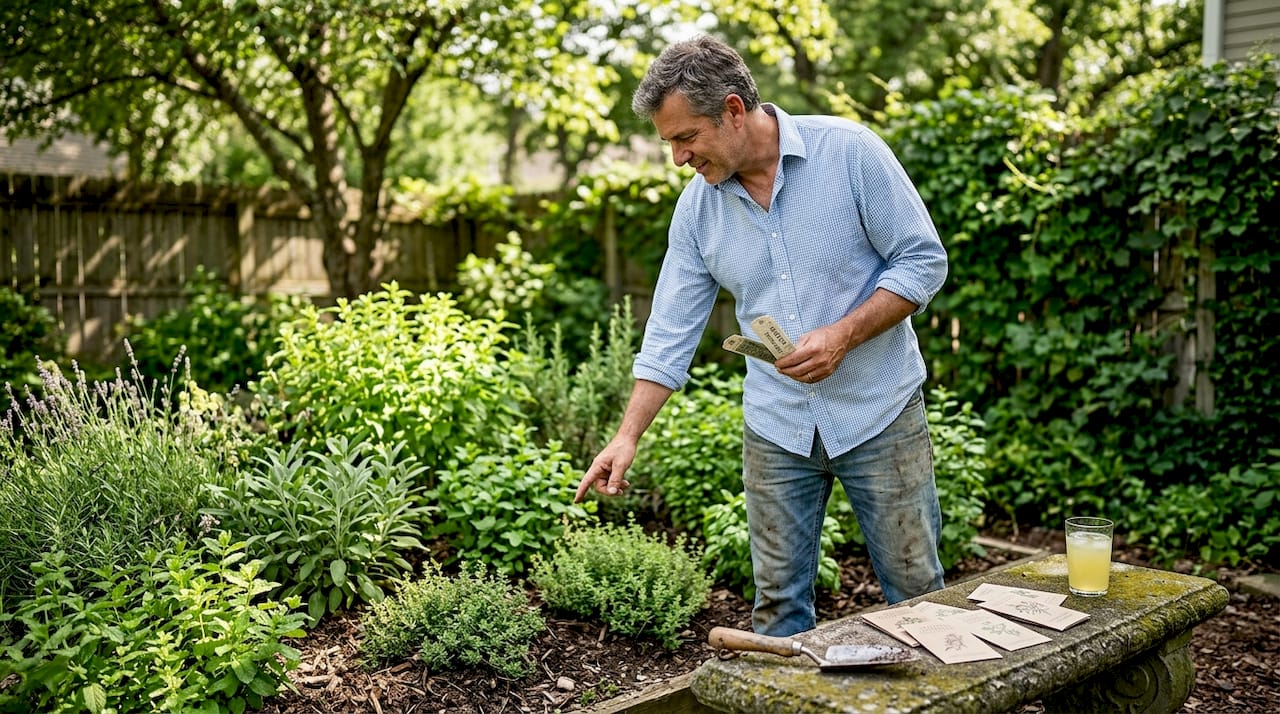
The difference between a thriving tomato plant and a stunted one can often be traced to placement rather than genetics or even soil quality. A tomato tucked into a warm, south-facing corner with reflected heat from a brick wall will outperform the same variety planted in an exposed, wind-swept bed. The microclimate does most of the work.
Microclimates affect plants in four specific ways that home gardeners should take seriously:
- Survival through extremes: A sheltered microclimate can protect frost-sensitive plants through a late cold snap, while an exposed corner can kill the same plant even when the official forecast says it’s safe to plant.
- Bolting risk in cool-season crops: Lettuce, spinach, and arugula bolt (send up flower stalks and turn bitter) when exposed to heat stress. Planting these in afternoon shade or a moisture-retaining low spot extends their edible window by weeks.
- Harvest timing: Warm microclimates push crops ahead by one to three weeks. Using a hot hardscape zone for early spring crops like peas and radishes can give you a meaningful head start on the season.
- Pest and disease pressure: Cool, damp shade traps increase risk of fungal issues like powdery mildew. Hot, dry zones reduce most fungal pressure but may increase spider mite activity. Placement affects more than just growth rate.
Managing your garden’s microclimates allows you to match each plant to the conditions it genuinely needs rather than hoping for the best.
Pro Tip: Try placing container-grown plants in different spots before committing to an in-ground location. Watch how they respond over one to two weeks. The plant itself will tell you which microclimate suits it best.
Here’s how to apply microclimate knowledge when planning your garden:
- For seasonal planting in your area, use your warmest microclimate to push cool-season crops two weeks earlier in spring and hold them two weeks longer in fall.
- Use shade traps deliberately for salad greens, herbs like cilantro and parsley, and moisture-loving flowers.
- Reserve your hottest zones for heat-lovers: basil, peppers, eggplant, and drought-tolerant herbs.
- Leverage container gardening for flexibility so you can physically move plants to the best microclimate as conditions change with the seasons.
How to identify and manage microclimates in your own garden
To reap the benefits, here’s how you can spot, harness, and even create favorable microclimates for your own gardening success.
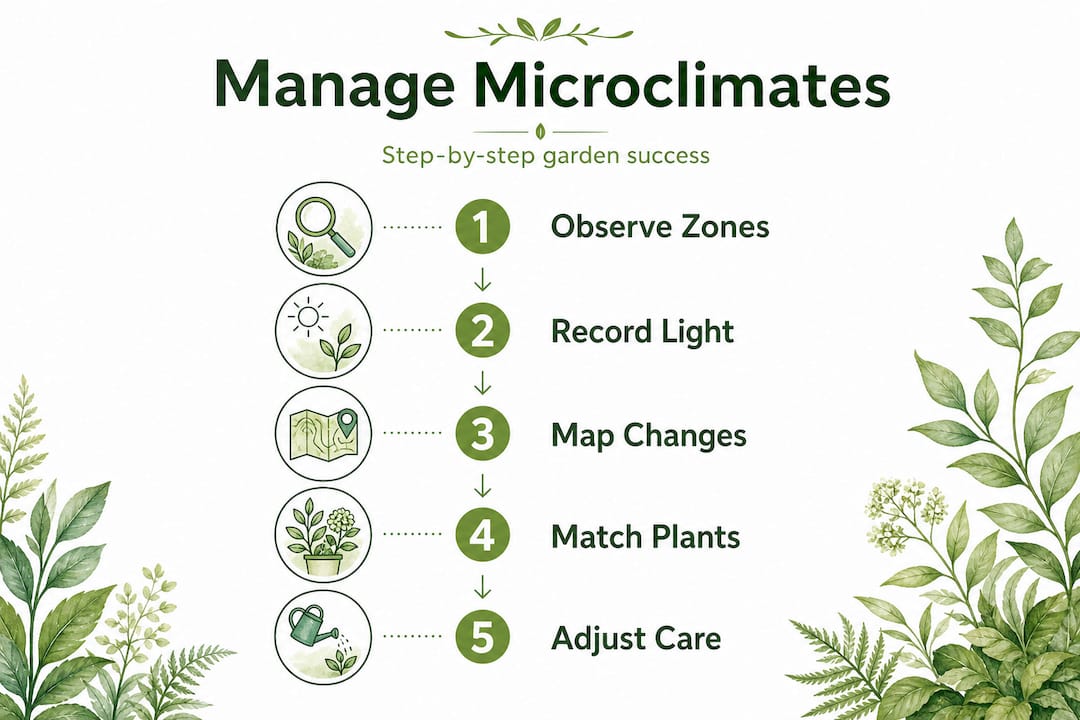
Mapping your microclimates doesn’t require any equipment beyond a notebook and your own two eyes. Start simple and build detail over time.
Steps to map your garden microclimates:
- Walk your garden at three or four different times of day and note where sunlight falls, where shade pools, and where the wind comes from.
- Check soil moisture near walls, under trees, and in low spots after rain. Mark which areas drain fast and which stay soggy for days.
- On a hot day, place your hand on paved surfaces near planted areas. If the surface is uncomfortably warm, nearby plants are absorbing that radiated heat.
- Note frost patterns in late fall and early spring. Frost settles in low spots and open areas first. Sheltered or elevated zones often escape while lower beds take damage.
- Use a basic thermometer or an inexpensive weather station to record temperature differences across your garden over several mornings.
Once you’ve mapped the zones, you can start actively modifying them to work in your favor.
“Gardeners typically use microclimates not only to choose what plants to grow, but also to decide where to place them, and sometimes whether to add protection like shade cloth, windbreaks, row covers, or greenhouses.”
How to modify challenging microclimates:
- Too hot: Add a shade cloth rated 30 to 50 percent for summer afternoons. Mulch the soil surface to keep root temperatures stable.
- Too windy: Install a permeable windbreak like a slatted fence or a hedge of native shrubs. Solid walls create turbulence, so partial barriers work better.
- Too wet: Raise beds six inches or more, or amend soil with coarse grit and compost to improve drainage.
- Too cold: Lay down black weed fabric to absorb heat, add a cloche or cold frame, or position a water barrel nearby to act as a thermal mass.
Flexible container gardening ideas can also serve as a bridge tool. Move containers to whichever zone is best suited to each plant’s current needs. In spring, that might be the warmest hardscape zone. In summer, it might be dappled afternoon shade. Containers give you control that in-ground planting doesn’t.
For difficult spots that are cold or exposed for most of the year, winter gardening for tough spots offers tested strategies that lean directly on microclimate management to keep production going.
What most gardeners miss about microclimate gardening
Moving from practical tips to expert perspective, here’s a truth rarely discussed in standard gardening guides.
Most gardening content frames microclimates as problems to solve. You have a hot spot, so you shade it. You have a cold spot, so you warm it. But this thinking misses the bigger opportunity. The real edge comes from treating every microclimate in your garden as a resource to be intentionally matched to the right plant, not neutralized.
Think about it this way. That blazing strip between your driveway and the south fence is brutal for lettuce. But it’s perfect for hot peppers, eggplant, and sun-baked Mediterranean herbs like thyme, oregano, and rosemary. The problem spot becomes a specialty zone when you stop trying to fix it and start working with it.
The most productive gardens we’ve seen aren’t the ones with the most uniform conditions. They’re the ones where the gardener has mapped every corner and intentionally placed something that thrives there. A garden with five distinct microclimates is not a headache; it’s five different growing opportunities that a uniform garden simply cannot offer.
In every garden, the greatest harvests come from working with, not against, your microclimates.
Thinking of your yard as a collection of distinct “rooms,” each with its own personality, changes how you plan. One room suits tender herbs. Another suits bold fruiting vegetables. A third stays cool enough for salad greens into early summer. That layered approach is how experienced gardeners consistently outproduce larger, more expensive setups.
For more context on how this fits into modern gardening trends, site-responsive planting is growing as a movement precisely because it produces better results with fewer inputs. Microclimate gardening is one of its most practical expressions.
Take the next step with Lushy Gardens resources
Ready to put your new knowledge into action? Lushy Gardens has the tools to get you started year-round. Whether you’re just building your gardening foundation with gardening basics for beginners or looking to refine your approach with a structured plant care routine guide, there’s a resource that fits where you are right now. For gardeners ready to plan across the full year, the seasonal garden maintenance guide connects microclimate awareness to every major task from soil prep in early spring to protecting beds before the first frost. Your garden’s microclimates are already there. Lushy Gardens helps you make the most of them.
Frequently asked questions
How do I figure out my yard’s microclimates?
Walk your garden several times a day to observe sun, shade, wind, and damp spots, and keep notes or take photos to build a clear picture of patterns over time. Even small properties show substantial variation in temperature and wind across different zones.
What can I do about a really hot or cold spot in my garden?
Use mulch, shade cloth, or windbreaks to buffer the extremes, or match the spot to plants that genuinely prefer those conditions instead of fighting the environment. Protective tools like row covers and cloches let you push plant selection further into challenging microclimates.
Can a small garden have microclimates?
Yes, even a patio or small urban yard will have different sun and wind exposures that create genuinely useful growing zones. Conditions differ substantially even across a single bed when a wall or paved surface is nearby.
Do microclimates change with the seasons?
Yes, sun angle, tree canopy, and rainfall patterns all shift throughout the year, which means your warmest or shadiest spots may change significantly between spring and fall. Bolting risk and seasonal timing both respond directly to these seasonal microclimate shifts.
What’s the main benefit of microclimate gardening?
You can grow a wider variety of plants, extend your harvest window, and reduce disease pressure by matching each plant to the conditions it actually needs. Survival, bolting, and timing all improve when plant placement reflects real on-site conditions rather than average zone data.
Recommended
- Master Plant Propagation Techniques for Thriving Gardens – Lushy Gardens
- Smart Container Gardening Ideas for Urban Gardeners – Lushy Gardens
- Master Plant Propagation Methods for Thriving Gardens – Lushy Gardens
- Growing Microgreens at Home Naturally: Easy Step-by-Step Guide – Lushy Gardens

I’m Eleanor, a seasoned gardener with over three decades of experience tending to Mother Nature’s creations. Through Lushy Gardens, I aim to share my wealth of knowledge and help fellow plant enthusiasts uncover the wonders of gardening. Let’s dive into this journey together, one leaf at a time.


