
Table of Contents
TL;DR:
- Container gardening allows growing vegetables in small spaces like balconies or windowsills.
- Selecting suitable containers, soil, and plants ensures healthy harvests and easy maintenance.
- Ideal beginner vegetables include leafy greens, herbs, cherry tomatoes, radishes, and bush beans.
If you love cooking with fresh vegetables but your outdoor space is a balcony, a patio, or just a sunny windowsill, container gardening is the answer you’ve been waiting for. Container gardening works even without yard space, making it one of the most accessible ways to grow your own food. You don’t need a sprawling backyard or raised beds. With the right containers, soil, and plant choices, you can harvest tomatoes, peppers, lettuce, and herbs just steps from your kitchen. This guide walks you through everything: what to buy, which veggies to grow, how to plant and care for them, and how to fix problems before they ruin your harvest.
Table of Contents
- What you need: Essential tools, containers, and materials
- Choosing the right veggies: Best and worst options for containers
- Step-by-step: How to plant and care for your container veggies
- Troubleshooting and expert strategies for abundant harvests
- Our take: Why container veggie gardening beats traditional beds, especially for cooks
- Start your thriving container garden with Lushy Gardens
- Frequently asked questions
Key Takeaways
| Point | Details |
|---|---|
| Use quality materials | Start with containers that have drainage holes and use a high-quality potting mix for best results. |
| Pick the right veggies | Choose crops like leafy greens or cherry tomatoes which thrive in smaller spaces and produce abundantly. |
| Maintain sun and water | Most fruiting veggies need full sun, and all containers require daily checks for moisture. |
| Troubleshoot common issues | Address wilting, poor yield, or pests early for a healthy harvest. |
| Rotate crops for full season | Practice succession planting so your containers keep producing from spring to fall. |
What you need: Essential tools, containers, and materials
Before you plant a single seed, getting your setup right makes all the difference. The good news is you don’t need much. A few well-chosen supplies will carry you through an entire growing season.
Here’s what you’ll need to get started:
- Containers with drainage holes (plastic, fabric, ceramic, or wood)
- High-quality potting mix (not garden soil)
- Slow-release granular fertilizer plus liquid fertilizer for mid-season feeding
- Seeds or seedlings of your chosen vegetables
- Saucers or trays to catch water runoff
- Bamboo stakes or a small trellis for climbing or tall plants
- A watering can or drip hose for consistent moisture
One of the most important things to understand is why garden soil fails in containers. It compacts under repeated watering, cutting off oxygen to roots and causing drainage problems. Pots must have drainage holes, quality potting mix, and consistent fertilization to keep vegetables healthy and productive. Potting mix is formulated to stay loose and drain well, which is exactly what roots need in a confined space.
Pot size matters more than most beginners expect. Here’s a quick reference for matching container size to your crop:
| Vegetable | Minimum pot size |
|---|---|
| Lettuce, herbs | 6-8 inches deep |
| Bush beans, radishes | 8-10 inches deep |
| Peppers, eggplant | 12-14 inches deep |
| Tomatoes (dwarf) | 14-18 inches deep |
| Carrots | 12-16 inches deep |
Self-watering pots are worth the investment if you travel or tend to forget watering. They have a built-in reservoir at the base that wicks moisture up to the roots as needed, reducing the risk of both over and underwatering. For anyone growing vegetables in pots for the first time, self-watering containers take a lot of stress out of the equation.
If you’re working with a small patio or tight outdoor area, small garden tips can help you arrange containers for maximum sun exposure and airflow.
Pro Tip: Always place saucers under every container, even outdoors. They prevent water stains on decks and patios, and they make it easier to spot if your pot is draining properly after each watering.
Choosing the right veggies: Best and worst options for containers
With supplies ready, your next step is selecting vegetables that will thrive in containers. Not every vegetable adapts well to life in a pot, and choosing the wrong crop is one of the most common beginner mistakes.
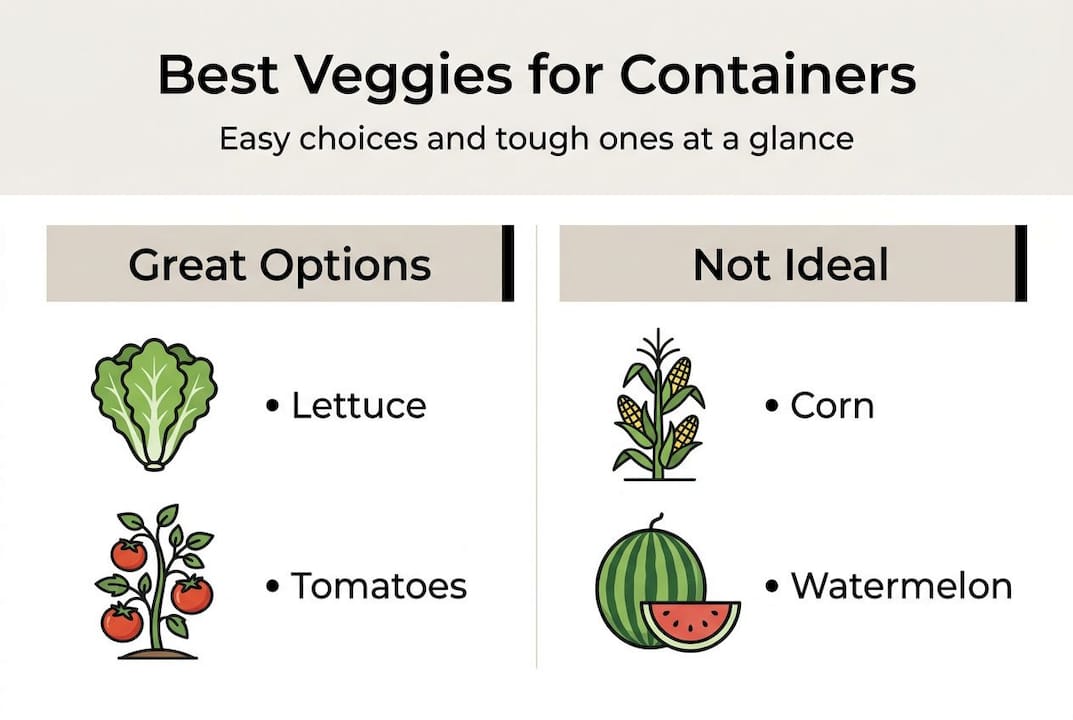
The best vegetables for containers include leafy greens, herbs, dwarf carrots, cherry tomatoes, and peppers. Corn and melons struggle in containers and are best avoided. The reason comes down to root space and plant size. Corn needs deep soil and room to form a large root system. Melons send out long vines and need more space than any container can realistically provide.
Here’s a comparison to help you plan your container garden:
| Great for containers | Poor for containers |
|---|---|
| Lettuce, spinach, kale | Corn |
| Cherry tomatoes | Watermelon, cantaloupe |
| Peppers (all types) | Pumpkins |
| Herbs (basil, parsley, mint) | Full-size winter squash |
| Radishes, bush beans | Artichokes |
| Dwarf or baby carrots | Asparagus |
For fruiting crops like tomatoes and peppers, always look for words like dwarf, patio, or bush on the seed packet or plant tag. These varieties were bred to stay compact while still producing a solid harvest. Full-size indeterminate tomatoes, for example, can grow over six feet tall and need constant staking, which makes them difficult to manage in pots.
Here are the top beginner-friendly container vegetables to start with:
- Lettuce and spinach: Fast-growing, shallow-rooted, and perfect for small pots
- Cherry tomatoes: Prolific producers that love heat and sun
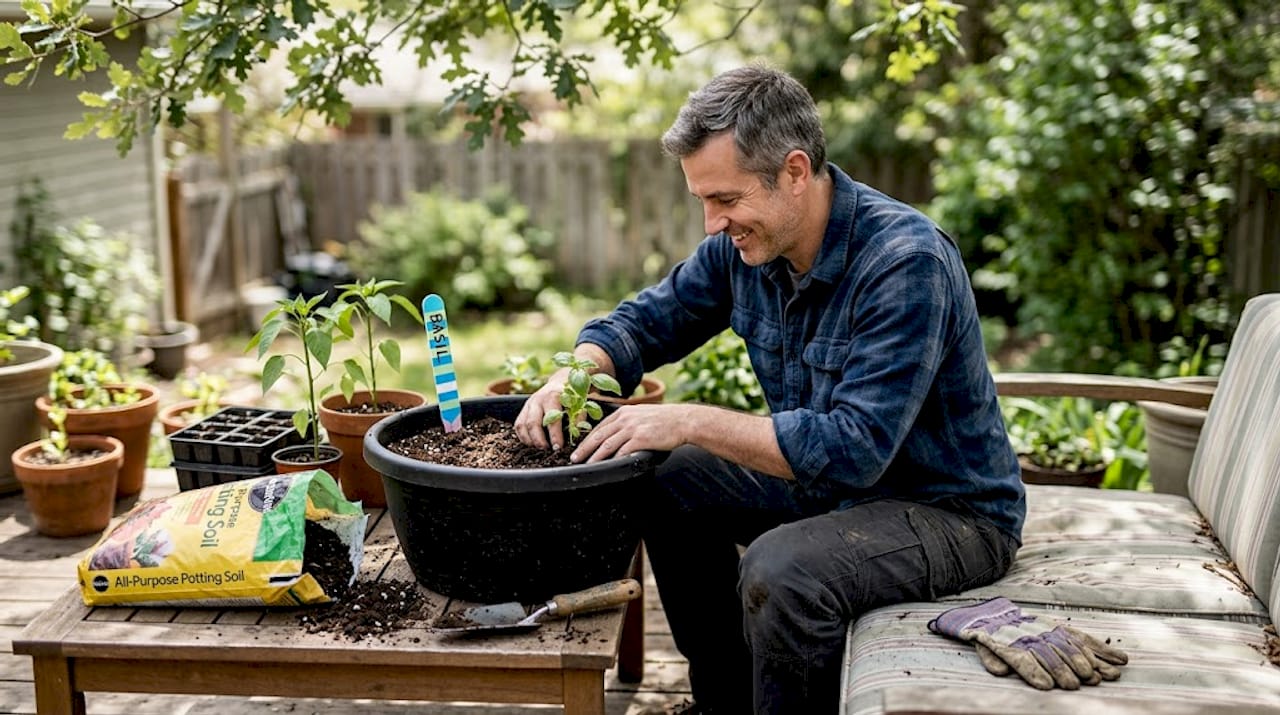
- Basil and parsley: Grow right next to your tomatoes for a ready-made pasta garden
- Radishes: Ready to harvest in as little as 25 days
- Bush beans: No staking needed and surprisingly productive in a 10-inch pot
For anyone interested in balcony veggie gardening, these crops are a natural starting point. If you want to try growing veggies indoors, stick with leafy greens and herbs since they tolerate lower light better than fruiting crops.
Pro Tip: Plant quick-maturing greens like lettuce alongside slower crops like peppers. By the time your peppers need more space, the lettuce will already be harvested and out of the way.
Step-by-step: How to plant and care for your container veggies
Once you’ve chosen the right vegetables, it’s time to get planting with these easy-to-follow steps.
- Fill your container with fresh potting mix to about one inch below the rim. This leaves room for watering without overflow.
- Plant seeds or seedlings at the depth and spacing listed on the seed packet. For seedlings, gently loosen the root ball before placing it in the hole.
- Water thoroughly right after planting until water drains from the bottom. This settles the soil and eliminates air pockets around roots.
- Place your container in the right light. Most fruiting vegetables need at least 6-8 hours of sun per day. Leafy greens and herbs can manage with 4-6 hours.
- Water consistently. Containers dry out much faster than garden beds, especially in summer heat. Check the top inch of soil daily. If it’s dry, water deeply.
- Fertilize every 1-3 weeks with a balanced liquid fertilizer once plants are actively growing. Potting mix nutrients deplete quickly, especially with frequent watering.
- Add stakes or a small trellis once tomatoes or peppers reach six inches tall. Getting support in place early prevents root disturbance later.
Sunlight placement is something many gardeners underestimate. A south or west-facing spot is usually ideal. If you’re working with a shaded balcony, focus on indoor vegetable gardening options or choose shade-tolerant crops.
For watering, consistency beats volume. Shallow, frequent watering encourages surface roots, while deep, less frequent watering builds stronger root systems. The how to grow easy container veggies resource from NC State Extension is a helpful reference for crop-specific care details.
For more structured guidance on timing and technique, container gardening tips covers the seven most important practices that keep container gardens productive all season.
Pro Tip: Water in the early morning. Soil absorbs moisture more efficiently before the heat of the day, and wet foliage dries quickly, which reduces the risk of fungal disease.
Troubleshooting and expert strategies for abundant harvests
As your veggies grow, you may encounter challenges. Here’s how to solve them and boost your yield.
Even well-maintained container gardens run into issues. Knowing what to look for early saves your plants before problems become serious.
“Do not use garden soil in containers. It compacts over time, restricts drainage, and introduces disease pathogens that thrive in the closed environment of a pot.”
Here are the most common problems and their fixes:
- Wilting despite moist soil: Usually a sign of root rot from overwatering or poor drainage. Check that holes are clear and reduce watering frequency.
- Yellow leaves: Often a nitrogen deficiency. Feed with a balanced liquid fertilizer and ensure the pot isn’t waterlogged.
- No fruit forming: Low light or lack of pollinators. Move the container to a sunnier spot or try hand pollination.
- Leggy, stretched plants: Not enough direct sunlight. Rotate containers every few days to expose all sides to sun.
- Dry, crispy leaf edges: Sun scorch or underwatering. Move to partial afternoon shade and increase watering depth.
Hand pollination is simpler than it sounds. Use a small paintbrush or cotton swab to transfer pollen from one flower to another on the same plant. This is especially useful for tomatoes and peppers on high-rise balconies where bees rarely visit. Hand-pollinate if pollinators are scarce and use succession planting for year-round harvests.
Succession planting means replacing a finished crop with a new one immediately. When your spring lettuce bolts in summer heat, pull it out and plant a fast-maturing bean or a second round of basil. This keeps your containers productive from early spring through late fall. For ideas on spacing for yield, small adjustments in how you arrange plants can meaningfully increase what you harvest from each pot.
If you’re working with a small apartment setup, small space gardening ideas offers creative strategies for squeezing more production out of limited square footage.

Our take: Why container veggie gardening beats traditional beds, especially for cooks
Here’s an honest opinion based on years of growing food in pots, raised beds, and everything in between: for home cooks, containers win.
Traditional garden beds are wonderful if you have the space, the time, and the physical ability to maintain them. But most people don’t. A raised bed requires building materials, soil by the cubic yard, and a dedicated outdoor area. Containers require none of that. You can start with two pots on a fire escape and still harvest enough cherry tomatoes and basil to make fresh bruschetta every week in summer.
The harvest-to-table speed is also unbeatable. When you need a handful of herbs or a few peppers for dinner, you walk outside and pick them. There’s no planning a trip to the garden, no washing off heavy soil, no waste from harvesting more than you need. That immediacy changes how you cook. You start building meals around what’s ready to pick, which is exactly how great home cooking works.
Some gardeners worry that containers aren’t really productive. That concern is understandable, but it’s also outdated. With the right varieties and consistent care, a single five-gallon bucket of cherry tomatoes will outperform a neglected garden bed. Explore more smart container gardening tips to see just how much is possible in a small footprint.
Start your thriving container garden with Lushy Gardens
If you’re ready to get your hands dirty, Lushy Gardens has everything you need to keep moving forward with confidence. Whether you’re just starting out or looking to refine your technique, our gardening basics guide walks you through the fundamentals in plain, practical language. As the seasons change, our seasonal maintenance tips help you know exactly what to do and when. And when you want fresh ideas for layouts, plant pairings, and creative setups, our garden inspiration section is packed with ideas from real gardeners. Your best harvests are ahead of you.
Frequently asked questions
How deep should a container be for vegetable gardening?
Most vegetables grow well in containers at least 10-12 inches deep, but root crops like carrots need slightly deeper pots. Check root depth considerations for specific crops before buying your containers.
How often should I water my vegetables in containers?
Water daily during hot weather and check soil moisture regularly, since containers dry out faster than garden beds. Consistent daily watering in heat is one of the most important habits for container success.
Can I reuse potting soil from last season?
You can reuse potting soil if you refresh it with compost and fertilizer, but avoid reusing soil if the previous plants were diseased. Quality potting mix is essential, and garden soil is never a suitable substitute.
What vegetables are easiest for beginners in containers?
Leafy greens like lettuce, spinach, herbs, radishes, and bush beans are beginner-friendly and grow well in most containers. The best beginner vegetables are fast-maturing, shallow-rooted, and forgiving of minor care mistakes.
Recommended
- Master Vegetable Gardening Indoors: Grow Fresh Produce at Home – Lushy Gardens
- Growing Vegetables Indoors: Sustainable Food for City Living – Lushy Gardens
- Smart Container Gardening Ideas for Urban Gardeners – Lushy Gardens
- Growing Vegetables in Pots: A Step-by-Step Success Guide – Lushy Gardens

I’m Eleanor, a seasoned gardener with over three decades of experience tending to Mother Nature’s creations. Through Lushy Gardens, I aim to share my wealth of knowledge and help fellow plant enthusiasts uncover the wonders of gardening. Let’s dive into this journey together, one leaf at a time.


