
Table of Contents
TL;DR:
- Green manure is a crop grown specifically to be cut down and buried in soil, enhancing fertility naturally. It reduces the need for synthetic fertilizers, suppresses weeds, and improves soil health while lowering greenhouse gas emissions. Proper timing, crop selection, and incorporation are essential for maximizing its benefits in sustainable gardening.
Green manure is defined as a crop grown specifically to be cut down and dug into the soil while still green, boosting fertility, structure, and organic matter without synthetic fertilizers. The practice falls under the broader category of cover cropping, a technique used by farmers and home gardeners alike to keep soil productive between growing seasons. Leguminous green manures like clovers and hairy vetch can return 100–200 pounds of nitrogen per acre to the soil, a figure that makes synthetic fertilizer use far less necessary. The Royal Horticultural Society (RHS) and the National Center for Appropriate Technology (NCAT) both recognize green manure as a foundational sustainable gardening practice. If you want healthier soil without a heavy chemical footprint, this is where to start.
What is green manure and why does it matter for your garden?
Green manure is not a fertilizer you buy in a bag. It is a living plant you grow, then kill and bury to feed your soil. The term covers a wide range of crops, from nitrogen-fixing legumes to fast-growing grasses, all chosen for what they contribute when they decompose underground.
The core mechanism is straightforward. You sow seeds, let the plants grow for a season, then chop them down and dig them in before they set seed. As the plant material breaks down, it releases nutrients, feeds soil microbes, and improves the physical texture of the earth. This process mirrors what happens naturally on forest floors, where fallen leaves and plant debris continuously rebuild the soil.
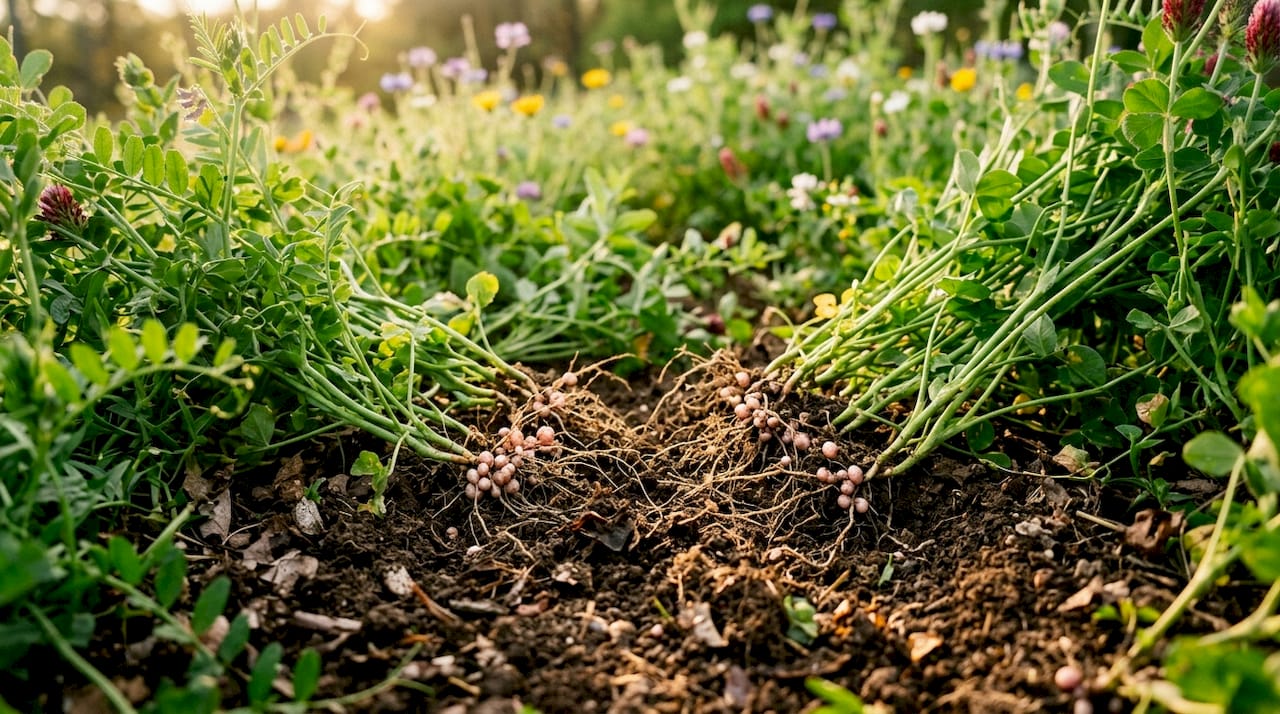
Leguminous green manures fix atmospheric nitrogen through a symbiotic relationship with soil bacteria called rhizobia. Non-leguminous types, like winter rye or buckwheat, do not fix nitrogen but still add organic matter and cycle other nutrients like phosphorus back into the soil. Understanding this distinction helps you pick the right crop for your specific garden goal.
What are the main benefits of using green manure in your garden?
Green manure delivers multiple soil benefits at once, which is something a bag of synthetic fertilizer simply cannot do. The most significant benefit is nitrogen fixation, but the advantages extend well beyond that single nutrient.
Dense green manure foliage shades out weeds before they can establish. This weed suppression effect reduces the time you spend pulling and hoeing, especially during the off-season when beds would otherwise sit bare. Cover crops protect soil from erosion and nutrient leaching during heavy rain, which is a real problem in gardens left unplanted through fall and winter.
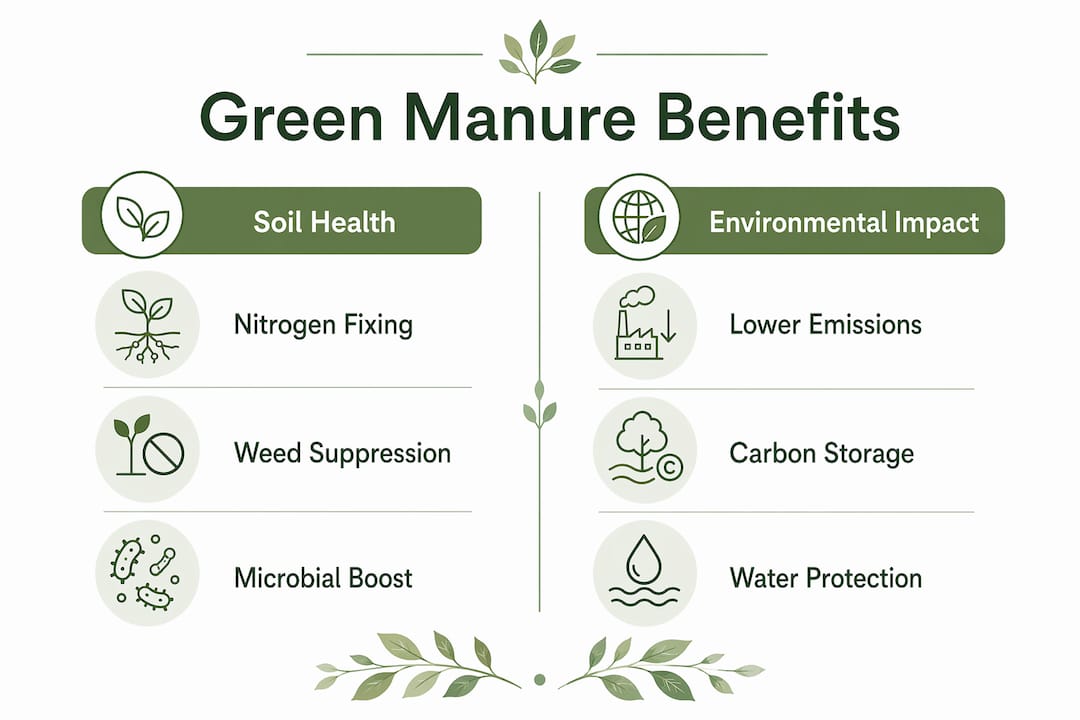
Green manure also feeds the underground ecosystem. Decomposing plant material increases microbial activity, which in turn improves soil structure, drainage, and water retention. Healthier soil biology means your vegetable crops grow stronger roots and access nutrients more efficiently the following season.
Green manures cause significantly lower greenhouse gas emissions than chemical nitrogen fertilizers. That matters if you care about the environmental footprint of your garden, not just its productivity.
Pro Tip: Combine a legume like crimson clover with a grass like winter rye for a mixed green manure. The clover fixes nitrogen while the rye adds bulk organic matter, giving you the benefits of both plant families in one sowing.
| Point | Green manure | Synthetic fertilizer |
|---|---|---|
| Nitrogen source | Biological fixation from atmosphere | Manufactured from fossil fuels |
| Soil organic matter | Adds significant organic matter | Adds none |
| Weed suppression | Yes, through dense ground cover | No |
| Erosion control | Yes, roots hold soil in place | No |
| Greenhouse gas emissions | Lower overall impact | Higher production emissions |
| Cost for small gardens | Under $10 for seeds | Variable, often higher per season |
Which green manure types are most effective and how do they differ?
Green manure crops split into two main categories: leguminous and non-leguminous. Each category serves a different primary purpose, and the best choice depends on what your soil needs most.
Leguminous green manures fix atmospheric nitrogen and are the go-to choice when your soil is nitrogen-depleted. Common examples include:
- Crimson clover and red clover: excellent nitrogen fixers, cold-tolerant, and attractive to pollinators
- Hairy vetch: one of the most productive nitrogen-fixing cover crops, winter-hardy in most American climates
- Field peas: fast-growing, good for spring or fall sowing, and easy to incorporate
- Fenugreek: quick to establish, works well in warmer seasons
Non-leguminous green manures do not fix nitrogen but contribute organic matter and help cycle other nutrients. Species like buckwheat improve phosphorus availability by releasing it from soil compounds that plants cannot otherwise access. Key non-leguminous options include:
- Winter rye: extremely cold-hardy, adds large amounts of organic matter, and suppresses weeds aggressively
- Buckwheat: fast-growing in warm weather, excellent at scavenging phosphorus, and easy to kill before frost
- Phacelia: not a food crop, but one of the best bee-friendly green manures with rapid establishment
Seed rates for green manure crops are set much higher than for vegetable crops. Higher seed density creates a dense, weed-smothering mat that outcompetes weeds from the moment germination begins. Check seed packet guidance for each species, but expect to sow two to three times more densely than you would for a food crop.
How to grow and incorporate green manure crops effectively
Growing green manure is simple, but the timing and incorporation steps matter. Follow this sequence to get the most from your crop.
- Choose your timing. Sow most green manures in late summer or early fall, after you harvest your main vegetable crops. Some fast-growing types like buckwheat work well in spring or early summer. The goal is 2–3 months of growth before you need the bed again.
- Prepare the soil lightly. Rake the surface to create a fine tilth. Green manure seeds do not need deep cultivation. Remove large weeds and stones, then broadcast or drill the seed at the recommended rate.
- Sow at the correct density. Seed rates for green manure are much higher than for edible crops. Dense sowing is the key to effective weed suppression. Rake the seeds in lightly and water if the soil is dry.
- Let the crop grow. Most green manures need 2–3 months to build enough biomass to be worth incorporating. Do not let them flower and set seed, or you will create a weed problem of your own.
- Chop or shred before digging. Chopping or shredding the plant material before you dig it in speeds up decomposition significantly. Use a spade, garden shears, or a rotary mower to cut everything down to a few inches before turning the soil.
- Dig it in to the right depth. The RHS recommends incorporating green manure into the top 25cm (10 inches) of soil. Deeper than that and decomposition slows down due to lack of oxygen.
- Wait before planting. Decomposing green manure releases compounds that temporarily inhibit plant growth. Wait at least one month after incorporation before sowing or transplanting your next crop. This is the step most beginners skip, and it causes poor germination in the following planting.
Understanding the role of nitrogen in gardening helps you time your green manure cycle to match your vegetable planting calendar. Pair this with good soil preparation practices and you will see measurable improvement in your beds within one season.
Pro Tip: If you are in a hurry to replant, use a frost-killed green manure like buckwheat. Frost kills the plant in place, the roots decompose over winter, and you can plant into the bed much sooner in spring without the full one-month wait.
What environmental and sustainability impacts does green manure have?
Green manure reduces your garden’s dependence on manufactured inputs, and that has real ecological consequences beyond your backyard. Synthetic nitrogen fertilizers require significant fossil fuel energy to produce. Replacing even part of that input with biological nitrogen fixation cuts your garden’s carbon footprint at the source.
Legumes fix nitrogen through a natural process that produces far fewer greenhouse gases than industrial fertilizer manufacturing. Research confirms that green manures produce lower overall greenhouse gas emissions than chemical nitrogen alternatives, even when accounting for the small amount of nitrous oxide released during biological fixation.
“While green manures emit some greenhouse gases during nitrogen fixation, overall environmental benefits exceed the impacts of chemical fertilizer use. The net effect on soil carbon, microbial diversity, and water quality makes green manure a clear winner for sustainable garden management.”
Soil organic carbon increases when green manure decomposes. Higher organic carbon improves water retention, which means your garden needs less irrigation during dry spells. It also feeds the microbial communities that make nutrients available to plant roots. This is a compounding benefit: better soil biology this year means even better soil next year.
Water quality benefits are also real. Bare soil leaches nitrates into groundwater during rain. A green manure cover holds those nutrients in place through the off-season, releasing them slowly as the crop decomposes. Comparing fertilizer vs. compost and organic amendments shows that organic approaches consistently outperform synthetic inputs on long-term soil health metrics.
| Environmental factor | Green manure impact |
|---|---|
| Greenhouse gas emissions | Lower than synthetic nitrogen fertilizers |
| Soil organic carbon | Increases with each incorporation cycle |
| Water retention | Improves through added organic matter |
| Erosion risk | Reduced by ground cover and root systems |
| Nitrate leaching | Reduced by nutrient capture during off-season |

Tips for integrating green manure into your existing garden routine
Adding green manure to your garden does not require a complete overhaul of how you garden. A few targeted changes to your seasonal schedule make it easy to fit in.
- Plan around your harvest dates. Sow green manure immediately after you pull out summer crops in late august or september. The soil is warm, germination is fast, and the crop has time to establish before hard frosts arrive.
- Use winter-hardy crops for cold climates. Hairy vetch and winter rye survive freezing temperatures and keep growing in early spring, giving you maximum biomass before you need to incorporate them.
- Use frost-killed crops for flexible timing. Buckwheat and field peas die at the first frost, leaving a mulch layer that protects the soil without requiring active management. You can plant into the bed earlier in spring.
- Keep seed costs low. Green manure seed costs under $10 for most small home gardens. Buying in bulk for larger plots brings the cost down further.
- Rotate your green manure species. Do not sow the same green manure in the same bed every year. Rotating legumes with non-leguminous types prevents disease buildup and delivers a broader range of soil benefits.
- Sow thickly for weed control. Thin coverage lets weeds through. Dense sowing is the single most important factor in effective weed suppression.
Pro Tip: Broadcast seed by hand on a calm day, then rake lightly to cover. Walking over the bed afterward firms the soil contact and improves germination rates without any extra equipment.
Lushygardens covers natural garden bed preparation in detail, including how to sequence green manure into your seasonal planting plan for maximum benefit.
Key Takeaways
Green manure is the most cost-effective way for home gardeners to build soil fertility, suppress weeds, and reduce synthetic fertilizer use in a single seasonal practice.
| Point | Details |
|---|---|
| Core definition | Green manure is a crop grown and dug into soil while green to add nutrients and organic matter. |
| Nitrogen return | Legume green manures can return 100–200 lb of nitrogen per acre, reducing fertilizer needs. |
| Incorporation depth | Dig green manure into the top 25cm (10 inches) of soil for effective decomposition. |
| Mandatory waiting period | Wait at least one month after incorporation before planting to avoid growth inhibition. |
| Environmental benefit | Green manures produce lower greenhouse gas emissions than synthetic nitrogen fertilizers. |
Why green manure changed how I think about soil
I spent my first few years as a gardener chasing soil problems with bags of granular fertilizer. My tomatoes would yellow mid-season, I would add nitrogen, they would green up, and the cycle would repeat. The soil itself never actually improved. It just got a temporary fix.
The first time I sowed hairy vetch in september and dug it in the following april, I noticed something different. The soil was darker, easier to work, and held moisture longer into dry spells. My next crop of brassicas barely needed supplemental feeding. That single season shifted my thinking from feeding plants to feeding soil.
The one mistake I made early on was planting too soon after incorporation. I lost a full row of lettuce seedlings to what I later understood was growth inhibition from decomposing biomass. The one-month wait feels frustrating when you are eager to plant, but it is not optional. Respect that window and the results are worth it.
For beginners, I always say start with crimson clover or field peas. They are forgiving, cheap, and visibly effective. You will see the difference in your soil within one season, and that is usually enough to make green manure a permanent part of how you garden.
Lushygardens resources for building better garden soil
Lushygardens has built a library of beginner-friendly guides that take the guesswork out of soil improvement and seasonal garden management. If green manure has you thinking more seriously about long-term soil health, the beginner’s gardening guide covers foundational practices from soil preparation to fertilization in plain language. For gardeners who want a season-by-season framework, the seasonal garden maintenance guide walks you through exactly when to sow, incorporate, and plant for the best results. Both resources are written for real gardeners working with real gardens, not idealized conditions.
FAQ
What is the green manure definition in simple terms?
Green manure is a plant crop grown specifically to be cut down and dug into the soil while still green, adding nutrients and organic matter to improve soil fertility naturally.
What plants are used as green manure?
Common green manure plants include crimson clover, hairy vetch, field peas, winter rye, buckwheat, and phacelia. Legumes fix nitrogen; non-legumes add organic matter and cycle other nutrients.
How long does green manure take to work?
Green manure crops typically grow for 2–3 months before incorporation. After digging in, you must wait at least one month before planting, so plan for roughly 3–4 months from sowing to replanting.
Is green manure the same as a cover crop?
Green manure is a type of cover crop, but not all cover crops are green manures. Cover crops protect soil from erosion and nutrient loss; green manures are specifically incorporated into the soil to add fertility.
How much does green manure seed cost for a home garden?
Seed for a small home garden typically costs under $10, making green manure one of the most affordable soil improvement methods available to home gardeners.
Recommended
- Step-by-step beginner vegetable garden setup guide – Lushy Gardens
- Vegetable gardening basics: step-by-step guide for beginners – Lushy Gardens
- Gardening Basics for Beginners: Complete Guide – Lushy Gardens
- Understanding Beginner Greenhouse Gardening Concepts – Lushy Gardens

I’m Eleanor, a seasoned gardener with over three decades of experience tending to Mother Nature’s creations. Through Lushy Gardens, I aim to share my wealth of knowledge and help fellow plant enthusiasts uncover the wonders of gardening. Let’s dive into this journey together, one leaf at a time.


