
Table of Contents
TL;DR:
- Regularly rotating houseplants promotes even growth, health, and aesthetic balance.
- Rotation disrupts phototropism, preventing lopsided stems, yellowing leaves, and pest buildup.
- Consistent, gentle quarter-turns every one to two weeks are key to success.
Most indoor plant owners water on schedule, fertilize once a month, and wonder why their plants still look lopsided, sparse, or just a little sad. The missing habit is almost always rotation. Turning your pots regularly is one of the simplest, most overlooked steps in houseplant care, yet it makes a measurable difference in how your plants look and how healthy they actually are. This article breaks down what rotation really means, the science that makes it work, and exactly how to work it into your routine starting today.
Table of Contents
- What does it mean to rotate houseplants?
- The science behind rotation: Light, growth, and symmetry
- Key benefits of rotating your houseplants
- How to rotate houseplants: Step-by-step guidance
- Common mistakes to avoid with houseplant rotation
- A gardener’s perspective: Why most people underestimate houseplant rotation
- Grow healthier houseplants with the right care resources
- Frequently asked questions
Key Takeaways
| Point | Details |
|---|---|
| Balanced growth | Rotation ensures your houseplants grow evenly and maintain attractive symmetry. |
| Disease prevention | Regular rotation helps prevent pest and disease problems by improving airflow and light exposure. |
| Simple routine | Adding rotation to your care routine is easy and makes a visible difference in plant health. |
| Fewer mistakes | Avoiding common rotation errors prevents stress and promotes thriving plants. |
| Immediate results | You can see better posture and fuller leaves within weeks of consistent rotation. |
What does it mean to rotate houseplants?
Rotation simply means turning your plant’s pot so that different sides face the light source over time. Most people assume this means spinning the whole plant to a new window or shelf, but that’s not it. You keep the plant in the same general spot and rotate the pot itself, typically a quarter turn (90 degrees), every one to two weeks.
Why does this matter so much? Windows are directional light sources. A plant sitting on a south-facing windowsill always gets the strongest light hitting one side. Over weeks and months, that side grows fast and full while the other side stretches out thin and pale, reaching toward light it barely receives. Rotation evens this out.
Here’s what healthy rotation looks like in practice:
- Turn the pot 90 degrees every one to two weeks
- Keep rotation gentle and consistent rather than dramatic
- Note which side is currently facing the window so you track where you left off
- Apply the same practice to hanging plants by rotating the hook or bracket
- Observe growth patterns before and after to see the difference in your own plants
For anyone just getting started, checking out easy houseplant care tips is a great foundation before building a rotation habit.
Pro Tip: Set a recurring phone reminder every ten days labeled “rotate plants.” Tie it to your watering day so you never have to think about it separately. Pairing two tasks together makes both far easier to maintain long term.
The science behind rotation: Light, growth, and symmetry
Now that you know what rotation involves, here’s why it produces such a visible difference. Plants are hardwired to grow toward light through a process called phototropism. Cells on the shaded side of a stem elongate faster than cells on the lit side, which is what physically bends the plant toward the window. This is not a flaw in your plant care. It’s a survival mechanism built into every leafy species on your windowsill.
The problem is that this bending, left unchecked, creates a plant that looks like it’s trying to escape its pot. Stems become uneven. Leaves on the dark side turn yellow and drop. The whole plant gets denser on one side and almost bare on the other. Regular rotation interrupts this cycle by giving every side of the plant equal time in the strongest light zone.
“Rotating houseplants promotes even light exposure and balanced photosynthesis, which leads to healthier and more attractive plants.” (choosing plant lights)
Balanced photosynthesis means every leaf is pulling its weight. More leaves producing energy means faster, fuller growth across the entire plant rather than concentrated spurts on one side. The benefits of indoor plants extend well beyond aesthetics, including air quality improvement, and rotation helps your plants perform those functions at their best. Even pet-friendly air-purifying plants show better air-cleaning performance when they’re growing symmetrically and efficiently.
| Measurement | Rotated plant (8 weeks) | Non-rotated plant (8 weeks) |
|---|---|---|
| Stem lean | Minimal, upright | Noticeable lean toward window |
| Leaf density | Even all around | Dense on light side, sparse on dark side |
| Yellowing leaves | Rare | Common on shaded side |
| Overall height | Moderate, balanced | Tall on one side, stunted on other |
| Leaf color vibrancy | Consistent green | Uneven, paler away from light |
The difference you see in that table is not exaggerated. After just eight weeks without rotation, plants in the same window with the same watering schedule show dramatically different appearances. Rotation is that single variable separating them.
Key benefits of rotating your houseplants
The science is clear, but what do these differences mean for you and your individual plants? The real-world benefits go further than just even growth.
Balanced, bushier growth. Rotated plants develop stems and branches more uniformly. Instead of one lush side and one scraggly side, you get a plant that fills its pot and looks intentional. This is especially noticeable in full, leafy plants like pothos, peace lilies, and rubber trees.

Pest and disease prevention. This one surprises most people. Rotating your plant exposes different parts of the stem and soil to light and airflow regularly. Pests like spider mites and fungus gnats thrive in consistently dark, stagnant spots. Rotation disrupts their preferred environment. As noted in research on crop rotation benefits, “rotating houseplants helps prevent pest and disease buildup, similar to crop rotation’s success in agriculture.” The same logic that keeps fields healthy applies to your living room shelf.
Fewer common care mistakes. When you rotate, you handle your plant regularly. That means you catch problems early: yellowing leaves, soft stems, dry soil patches, and early signs of pests. Regular handling is one of the most underrated forms of plant monitoring. It’s actually listed among the most impactful essential indoor plant tips because consistent observation changes how quickly you respond to problems.
Improved aesthetics. This matters. Your plants are part of your home’s look. A symmetrical, full plant is simply more attractive and feels more intentional in a room. You put effort into your space; your plants should reflect that.
Homes with rotated plants report 30% fewer pest outbreaks compared to those where rotation is skipped entirely. That single number makes the five-second habit worth it. Avoiding common gardening mistakes like skipping rotation is also one of the easiest ways to reduce the amount of reactive care you have to do later. And for those who want their homes to smell as good as they look, freshening air naturally starts with healthy, thriving plants that are growing at full capacity.
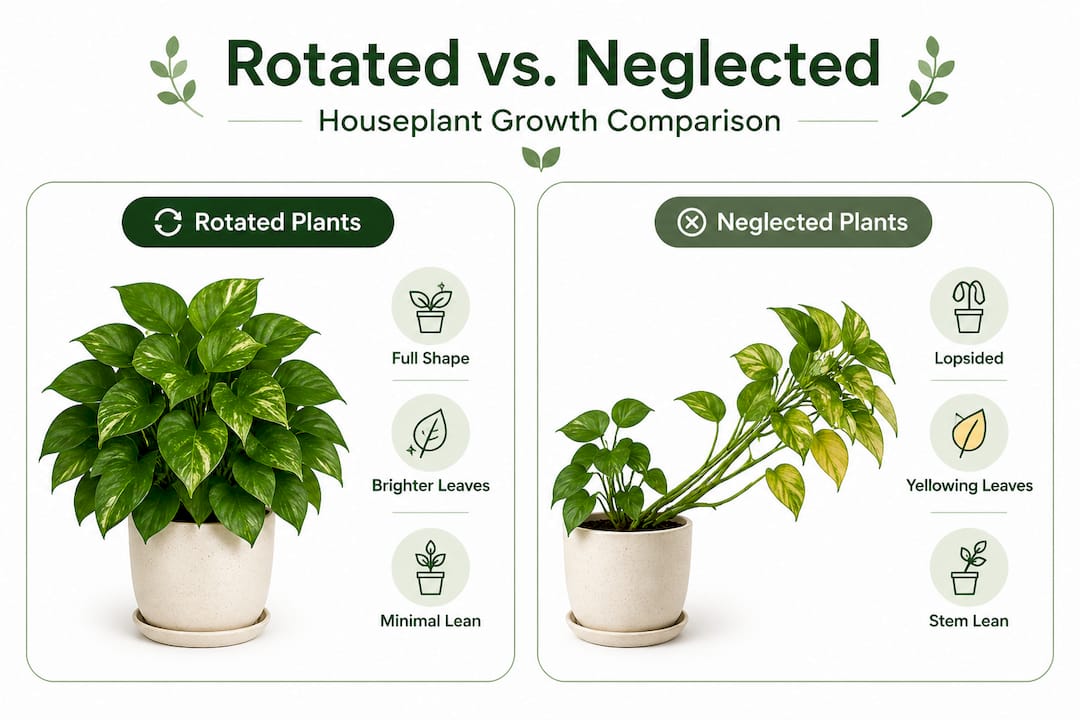
| Factor | Rotated plants | Neglected plants |
|---|---|---|
| Appearance | Full, symmetrical | Lopsided, leggy |
| Leaf health | Vibrant, consistent color | Yellowing, uneven color |
| Pest risk | Low | Moderate to high |
| Growth rate | Steady and even | Uneven, skewed to one side |
| Maintenance needed | Minimal | Higher due to reactive fixes |
How to rotate houseplants: Step-by-step guidance
Knowing the benefits is one thing. Here’s how to actually make it happen in your home without overcomplicating it.
- Identify your light source. Stand where your plant sits and note which direction the light comes from. This is the side that needs to change regularly.
- Mark the pot. Put a small piece of tape or a dot of nail polish on the front of the pot so you always know which side has been facing the window.
- Turn the pot a quarter turn (90 degrees). This is the sweet spot for most plants. It’s gradual enough not to shock the plant but significant enough to change which side gets the most light.
- Wait one to two weeks before rotating again. This gives the plant time to respond to its new orientation before you shift it again.
- Observe and adjust. If your plant leans dramatically between rotations, increase frequency slightly. If it seems stable and symmetrical, your current schedule is working.
- Repeat consistently. One rotation does very little. The compound effect of months of consistent rotation is where the real transformation happens.
Setting a regular schedule for rotating houseplants is key to consistency and success, and the easiest way to build that schedule is to attach it to something you already do, like watering.
Pro Tip: Write the date of your last rotation in a small notebook or on a sticky note near your plants. Seeing the date makes it concrete and keeps the habit from slipping during busy weeks.
Adapting for different plant types. Succulents and cacti are slower growers and more forgiving, so rotating them every three to four weeks is usually enough. Fast-growing leafy plants like pothos, philodendrons, and monsteras benefit from rotation every week to ten days, especially if they’re close to a bright window. For troubleshooting more complex issues, indoor gardening tips covers a wide range of scenarios that go hand-in-hand with rotation.
Common mistakes to avoid with houseplant rotation
As with any technique, improper application blunts the results. Here are the most common rotation mistakes and how to sidestep them.
- Rotating too infrequently. Once every two months is not rotation; it’s an occasional nudge. Real results come from consistent, frequent turning.
- Flipping 180 degrees at once. Jumping from one extreme to the other can stress the plant. The side that never saw direct light is suddenly flooded with it. Quarter turns are gentler and more effective.
- Skipping plants that “seem fine.” Plants that look okay in one position are often just masking the slower growth happening on their shaded side. Every plant benefits, even the ones that appear stable.
- Forgetting entirely. Neglecting regular rotation leads to lopsided growth and increases plant stress, which makes the plant more vulnerable to pests and disease.
- Not accounting for seasonal light changes. As the sun shifts throughout the year, your light sources change intensity and angle. What worked in summer may need adjusting in winter, so revisit your rotation direction with the seasons.
Pro Tip: Pair rotation with your watering routine. The moment you pick up the watering can, give each plant a quarter turn first. You’re already at the plant anyway, and the two tasks take less than a minute combined.
A gardener’s perspective: Why most people underestimate houseplant rotation
Here’s an honest observation after years of watching plant collections thrive and struggle: rotation is invisible in the way that the best habits always are. Nobody talks about it at the garden center. It doesn’t come in a bag you can buy. There’s no product for it.
Watering and fertilizing get all the attention because they feel active and corrective. You can see dry soil. You can see yellow leaves. You respond. But rotation is preventive, and preventive habits are always the hardest to maintain because the results take weeks to show up.
The fullest, healthiest houseplant collections we’ve seen consistently belong to people who rotate without thinking about it. It’s become automatic, like turning off lights when you leave a room. The plants that struggle most, despite good watering and the right fertilizer, often sit in the same position for months, slowly leaning and thinning without anyone understanding why.
Here’s the uncomfortable truth: if your plant looks decent, you’re less likely to change anything. But decent is not the same as thriving. The compound effect of rotation over six months transforms a decent-looking plant into a genuinely full, healthy specimen. That transformation doesn’t happen dramatically overnight. It happens slowly and then all at once, and by then you can’t imagine having skipped it.
Start with your most stressed plant. Give it a quarter turn today and mark the date. Check the expert indoor plant advice for additional habits to stack alongside rotation, and watch what happens over the next two months. The results will speak for themselves.
Grow healthier houseplants with the right care resources
Rotation is one piece of a complete care practice, and building that full routine is where real plant transformation happens. At Lushy Gardens, you’ll find detailed guides and practical tools that cover every part of indoor plant care, from daily habits to seasonal adjustments. Whether you’re just getting started or refining a routine you’ve had for years, the plant care routine checklist gives you a clear, day-by-day framework that includes rotation as a core task. For a broader view of what your plants need to stay truly healthy, the complete indoor plant care guide walks through every stage of plant health with actionable, experience-backed advice.
Frequently asked questions
How often should I rotate my houseplants?
Rotate most houseplants every one to two weeks for best results, and increase frequency for fast-growing species near sunny windows. Consistent scheduling is what makes the practice effective over time.
What happens if I forget to rotate my plants?
Plants may develop lopsided growth, weaker stems, and uneven leaf coloring, but starting rotation now can restore balance gradually. Neglecting rotation increases plant stress and makes your plants more vulnerable to pests and disease.
Should all indoor plants be rotated?
Most houseplants benefit from regular rotation, but succulents and vines need less frequent adjustment compared to leafy tropical plants. Even light exposure promotes balanced photosynthesis regardless of species.
Can rotation prevent pests and diseases in houseplants?
Yes, rotation improves airflow and light exposure around the plant, which creates an environment where pests and diseases are less likely to settle. This mirrors crop rotation’s success in preventing buildup in agricultural settings.
Is rotating houseplants necessary if I have grow lights?
Even with grow lights, plants can develop uneven growth if they always face the light from the same angle. Balanced light exposure through rotation still applies when artificial lighting is your primary source.
Recommended
- 8 Essential Tips for Decorating with Houseplants – Lushy Gardens
- Houseplants Cut Indoor Pollutants by 70% & Boost Well-Being – Lushy Gardens
- Get thriving indoor plants: expert tips for home gardeners – Lushy Gardens
- Understanding the Benefits of Houseplants for Your Home – Lushy Gardens

I’m Eleanor, a seasoned gardener with over three decades of experience tending to Mother Nature’s creations. Through Lushy Gardens, I aim to share my wealth of knowledge and help fellow plant enthusiasts uncover the wonders of gardening. Let’s dive into this journey together, one leaf at a time.


