
Table of Contents
You check on your favorite houseplant and its leaves droop like they’ve given up. Your first thought? It needs water. But here’s the twist: overwatering causes drooping just as often as underwatering, and knowing the difference is the key to saving your plant. This guide walks you through identifying the real cause behind drooping and gives you a clear path to restore your plant’s health.
Key takeaways
| Point | Details |
|---|---|
| Drooping stems from turgor pressure loss | Water imbalance at the cellular level causes plants to lose rigidity and droop. |
| Overwatering and underwatering both cause drooping | Check soil moisture and root health to distinguish between the two conditions. |
| Environmental stress contributes to drooping | Light deficiency and temperature extremes disrupt water regulation independently. |
| Root health is often the hidden culprit | Root rot or root-bound conditions prevent proper water uptake despite adequate watering. |
| Systematic diagnosis saves time and plants | A step-by-step approach efficiently pinpoints the cause and leads to effective fixes. |
Introduction to plant drooping and its symptoms
Plant drooping, often called wilting, happens when your plant loses the internal pressure that keeps its leaves and stems firm. This rigidity comes from turgor pressure, which is water inside plant cells pushing outward against cell walls. When cells lack sufficient water, they can’t maintain this pressure, and the plant visibly sags.
Plant drooping primarily results from loss of turgor pressure in cells due to insufficient water supply at the cellular level. Recognizing early signs helps you act before damage becomes severe. Common initial symptoms include:
- Leaves hanging downward instead of standing upright
- Stems bending or curving when they should be straight
- Leaf edges curling inward or wilting
- Overall loss of plant firmness when you gently touch foliage
Drooping itself is a symptom, not a disease. It signals that something has disrupted the plant’s ability to maintain water balance at the cellular level. Understanding this connection between water availability and turgor pressure forms the foundation for accurate diagnosis. Once you grasp how water moves through your plant and maintains cell structure, you can identify whether the problem originates from too much water, too little, or something else entirely.
Many indoor gardeners see drooping and immediately reach for the watering can. This instinct can worsen the problem if overwatering is the real issue. Similarly, why plants drop leaves often ties back to similar water stress mechanisms. For specific plant issues like why your snake plant droops, the same principles apply but with species-specific nuances.
How water and turgor affect drooping
Water availability directly controls turgor pressure inside plant cells. When roots absorb water from soil, it travels through the plant and fills individual cells. This water pushes against cell walls from the inside, creating the firmness you see in healthy leaves and stems. Without adequate water reaching cells, pressure drops and drooping begins.
Underwatering causes drooping in the most straightforward way. When soil dries out completely, roots can’t absorb enough water to supply cells. Turgor pressure loss becomes critical when soil moisture drops below field capacity, leading to visible wilting within hours to days. Cells deflate like balloons losing air, and leaves droop as a direct result.
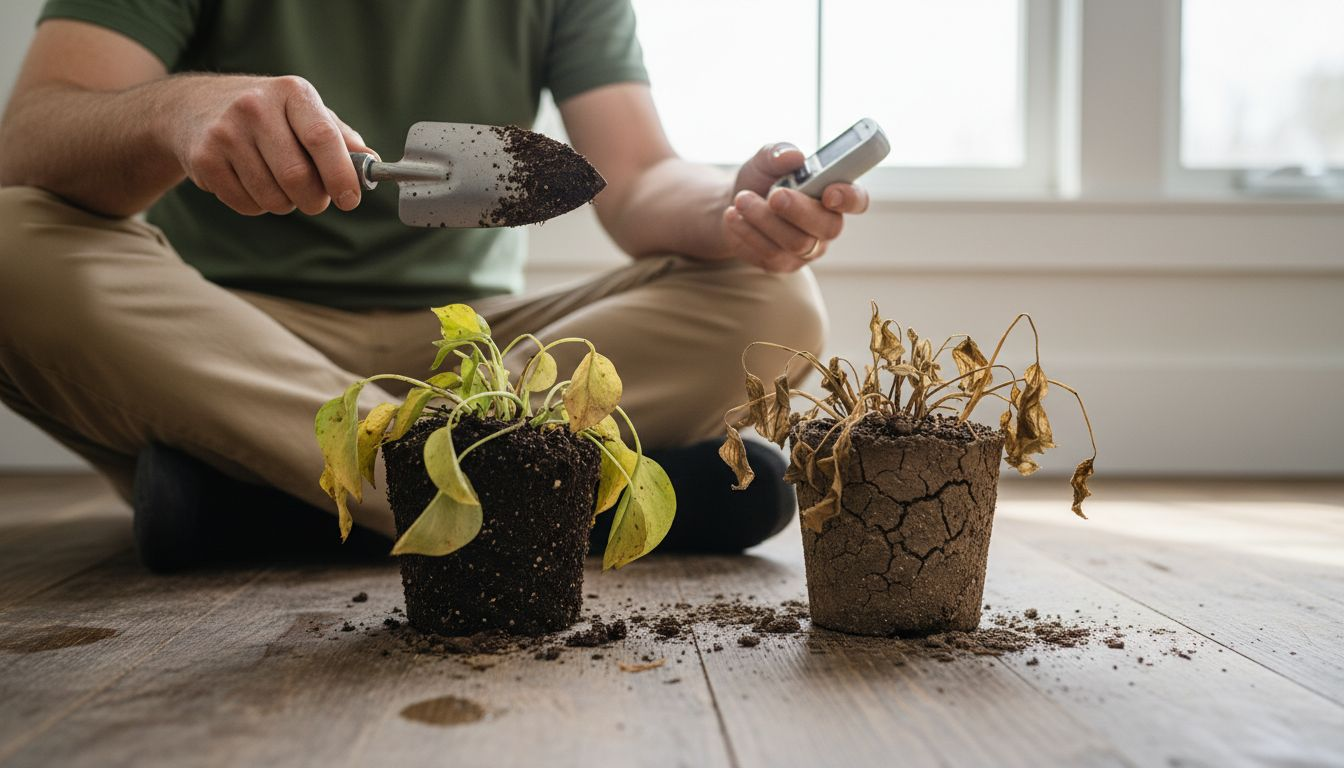
Overwatering creates a more complex problem. When soil stays waterlogged, air pockets fill with water and roots suffocate. Without oxygen, roots can’t function properly and often develop rot. Damaged or rotting roots lose their ability to absorb water, even though the soil around them is saturated. Your plant droops because roots can’t deliver water to cells, despite moisture being available.
Distinguishing between these two conditions requires checking both soil and roots. Here’s how the signs differ:
| Condition | Soil Feel | Leaf Appearance | Root Condition |
|---|---|---|---|
| Underwatering | Dry, pulls away from pot edges | Crispy, brown edges, dry texture | White or tan, firm |
| Overwatering | Wet, soggy, stays moist for days | Yellow, soft, mushy patches | Brown, black, mushy, foul smell |
Pro Tip: Before adjusting your watering routine, stick your finger 2 inches into the soil and gently inspect roots if possible. This prevents you from overwatering an already waterlogged plant or underwatering one with root rot.
Understanding signs of overwatering helps you catch problems early. The difference between overwatering vs underwatering becomes clearer when you know what to look for in both soil and plant tissue. Recognizing overwatering signs and recovery steps ensures you apply the right fix quickly.
Environmental stressors and their influence on drooping
Light and temperature create stress that impacts your plant’s water regulation, often working alongside watering issues to cause drooping. Low light reduces photosynthesis, which slows the plant’s ability to pull water from roots to leaves. Within days of insufficient light, you may notice subtle drooping even with proper watering.
Temperature extremes disrupt cellular metabolism and increase water loss through leaves. High temperatures speed up transpiration, causing plants to lose water faster than roots can replace it. Cold drafts slow metabolic processes and can damage cell membranes, leading to drooping as cells lose their structural integrity.
Common indoor scenarios that trigger environmental stress include:
- Placing plants far from windows with minimal natural light
- Positioning plants near heating vents or radiators
- Exposing plants to cold drafts from air conditioners or open windows
- Sudden temperature changes when moving plants between rooms
These stressors rarely work alone. A plant in low light might tolerate slight underwatering better than one in bright conditions because it uses less water. Similarly, a plant near a heat vent might droop faster when underwatered because it loses moisture more rapidly. Recognizing how environmental factors interact with water availability makes your diagnosis more accurate.
When you troubleshoot drooping, consider your plant’s location and recent environmental changes. Did you move it away from a window? Has the weather turned cold, making your home drier? These context clues narrow down potential causes and prevent you from focusing only on watering when the real issue involves light or temperature.
Root health: the hidden cause underlying many drooping issues
Roots are the foundation of water uptake, yet many beginners overlook them when diagnosing drooping. Healthy roots need both water and oxygen to function. When soil stays too wet for too long, air pockets disappear and roots can’t breathe. This oxygen deprivation leads to root rot, where beneficial fungi and bacteria die off while harmful pathogens thrive.
Root rot impairs the root’s ability to absorb water and nutrients. Even if you water correctly moving forward, damaged roots can’t deliver moisture to the rest of the plant. The result is drooping that persists despite your best efforts to adjust watering schedules.
Root-bound conditions present another hidden problem. When roots circle the pot’s interior with nowhere left to grow, they become densely packed. This crowding limits their ability to absorb water efficiently. You might water thoroughly, but the compacted root ball sheds water rather than absorbing it, leaving cells thirsty and drooping.
Soil drainage and aeration directly impact root health. Heavy, compacted soil holds too much water and provides too little oxygen. Over time, this suffocates roots and sets the stage for rot. Key factors that support healthy roots include:
- Well-draining potting mix with perlite, orchid bark, or coarse sand
- Pots with drainage holes to prevent water accumulation
- Periodic repotting to refresh soil and give roots space
- Avoiding soil compaction by not pressing down hard when potting
Pro Tip: When your plant droops without clear cause, gently remove it from its pot to inspect roots. Healthy roots appear white to tan and feel firm. Brown, mushy, or foul-smelling roots indicate rot and require immediate attention.
Signs of root problems often appear aboveground as drooping, yellowing, or stunted growth. But confirming root issues requires looking below the soil surface. Regular inspection catches root rot or binding early, giving you a better chance at successful recovery.
Common misconceptions about plant drooping
Misunderstandings about drooping lead to incorrect fixes that can harm your plant further. Clearing up these myths helps you make smarter care decisions based on evidence rather than assumptions.
Myth: Drooping always means your plant needs water. Many gardeners see drooping and immediately water, but overwatering causes drooping just as frequently. Waterlogged soil damages roots, preventing water uptake and creating symptoms identical to underwatering. Always check soil moisture before adding more water.
Myth: A drooping plant is dying and can’t be saved. Drooping is a stress response, not a death sentence. Plants droop to conserve energy and reduce water loss. With proper diagnosis and care adjustments, most drooping plants recover fully within days to weeks.
Myth: Low light is the main reason indoor plants droop. While insufficient light contributes to drooping, water balance and root health are far more common primary causes. Light typically plays a secondary role, compounding issues that start with watering or root problems.
These misconceptions fuel common mistakes. Overwatering a plant with root rot accelerates decay. Assuming a drooping plant is beyond help leads to premature disposal when recovery is possible. Blaming light alone overlooks the critical role of roots and water management. Each error delays effective treatment and reduces your plant’s chances of bouncing back.
Approaching drooping with a questioning mindset helps. Ask yourself what has changed recently. Check multiple factors rather than jumping to conclusions. Gardening myths debunked by science reveals other misconceptions that might be affecting your plant care routine.
When to consider pests and disease as causes
Pests and diseases damage plant tissues in ways that disrupt water regulation, leading to drooping even when environmental and watering conditions seem correct. Recognizing these biotic causes expands your diagnostic toolkit and prevents you from overlooking important factors.
Pests such as spider mites and aphids can cause drooping by damaging leaf tissues and disrupting the plant’s ability to regulate water. Common pests that contribute to drooping include:
- Spider mites: create fine webbing and cause stippling on leaves, reducing photosynthesis
- Aphids: cluster on new growth, sucking sap and weakening stems
- Thrips: leave silvery streaks and deformed leaves from feeding damage
- Fungus gnats: larvae feed on roots, impairing water uptake
Pest feeding punctures cells and creates entry points for pathogens. This damage compromises the plant’s ability to transport water efficiently, resulting in drooping as cells lose turgor pressure. Early visual signs of infestations help you catch problems before they cause severe drooping:
- Tiny specks or stippling on leaf surfaces
- Fine webbing between leaves or stems
- Sticky residue on leaves or nearby surfaces
- Visible insects clustering on stems or leaf undersides
Diseases, particularly root rot caused by fungal or bacterial pathogens, can mimic other drooping causes. Pathogens enter through damaged roots or stems and spread through vascular tissue, blocking water flow. The plant droops because water can’t reach cells, even if soil moisture and environmental conditions are ideal.
Regular inspection routines help you spot pest and disease issues early. Check leaf undersides weekly, look for unusual spots or discoloration, and watch for changes in growth patterns. Catching infestations or infections before severe drooping occurs improves your chances of successful treatment and recovery.
Diagnosis framework for drooping plants
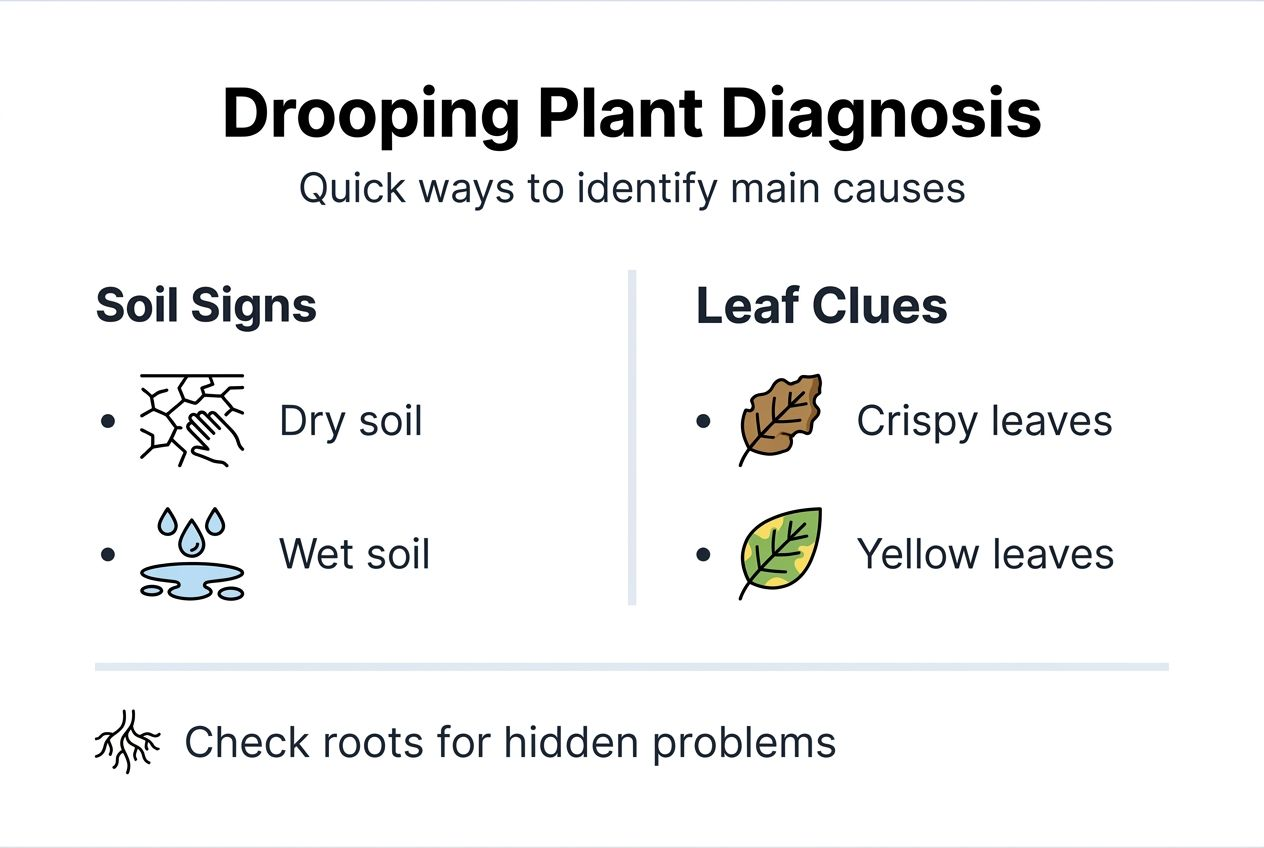
A systematic approach to diagnosing drooping saves time and increases accuracy. Following these steps in order helps you isolate the cause efficiently and avoid treating symptoms incorrectly.
- Check soil moisture first. Insert your finger 2 inches into the soil or use a moisture meter. Dry soil suggests underwatering; wet, soggy soil points to overwatering.
- Inspect roots if drooping persists. Gently remove the plant from its pot and examine root color, texture, and smell. Healthy roots are firm and light-colored; rotten roots are mushy and dark.
- Evaluate light conditions in the plant’s location. Measure how many hours of bright, indirect light the plant receives daily. Compare this to the species’ requirements.
- Assess temperature and drafts. Note if the plant sits near heating or cooling vents, windows, or doors where temperature fluctuates.
- Look for pest and disease signs. Examine leaves, stems, and soil surface for insects, webbing, spots, or unusual discoloration.
Use this diagnostic table to match your observations with probable causes:
| Symptom Combination | Likely Cause | Next Step |
|---|---|---|
| Dry soil, crispy leaf edges, firm roots | Underwatering | Water thoroughly, increase frequency |
| Wet soil, yellow leaves, mushy roots | Overwatering/root rot | Reduce watering, improve drainage, trim rotten roots |
| Adequate moisture, low light, slow growth | Light deficiency | Move to brighter location |
| Adequate moisture, near heat source, rapid wilting | Heat stress | Relocate away from heat, increase humidity |
| Stippled leaves, webbing, adequate water | Pest infestation | Treat with appropriate pest control |
Interpreting your observations involves connecting symptoms to causes logically. If soil is dry and roots are healthy, underwatering is clear. If soil is wet but roots are rotten, overwatering has progressed to root damage. When water and light seem fine but pests are present, biotic stress is the culprit.
This framework works for most indoor plants. For specific watering questions, watering indoor plants naturally offers detailed guidance tailored to different plant types and conditions.
Recovery and practical solutions
Once you’ve identified the cause, targeted actions restore your plant’s health. Recovery timelines vary depending on the severity and type of stress. Underwatering fixes show results fastest, often within 24 to 48 hours. Overwatering and root rot take longer, sometimes several weeks, because damaged roots need time to regenerate.
For underwatering, water thoroughly until water drains from the pot’s bottom. Increase watering frequency based on how quickly soil dries. Boost humidity by misting leaves or placing a tray of water near the plant to reduce moisture loss.
For overwatering, stop watering immediately and let soil dry out significantly. Improve drainage by repotting into a mix with more perlite or sand. If roots show rot, trim away mushy sections with sterile scissors and repot into fresh, dry soil. This gives healthy roots a chance to recover without competing with decay.
Root care for damaged plants requires gentle handling. Remove the plant from its pot, rinse roots under lukewarm water, and cut away any brown or slimy sections. Repot into a slightly smaller pot with excellent drainage. Avoid fertilizing until new growth appears, as damaged roots can’t process nutrients effectively.
Environmental adjustments address light and temperature stress. Move plants closer to windows for more natural light, or add a grow light if natural light is insufficient. Relocate plants away from heating vents, air conditioners, and drafty windows to stabilize temperature. Small changes often yield noticeable improvements within a week.
Pest control starts with manual removal when possible. Wipe leaves with a damp cloth to remove aphids or mites. For heavier infestations, use insecticidal soap or neem oil, applying every few days until pests disappear. Always follow product instructions to avoid damaging plant tissue.
Pro Tip: Resist the urge to change multiple variables at once. Adjust one factor, observe for a few days, then make additional changes if needed. This approach helps you identify which fix actually works.
Patience is essential during recovery. Plants need time to rebuild turgor pressure, repair damaged tissues, and regrow healthy roots. Consistent care and monitoring ensure your efforts lead to full recovery. For comprehensive recovery strategies, how to save dying plants naturally walks you through detailed steps for various conditions. If your plant seems beyond help, can you revive a dead plant explores what’s possible even in severe cases.

Ready to revive your indoor garden? Discover expert tips and products
Now that you understand why plants droop and how to fix them, take your indoor gardening skills further with trusted resources from Lushy Gardens. Our indoor plant care basics guide covers everything from light requirements to soil selection, giving you a solid foundation for healthy plants. Master the art of watering with our watering indoor plants guide, which breaks down techniques for different plant types and seasons. When pests threaten your plants, our organic pest management guide offers safe, effective solutions that protect both your plants and your home. Explore these resources today to prevent future drooping and build confidence in your plant care routine.
FAQ
How can I tell if my plant is drooping due to overwatering or underwatering?
Check the soil moisture by inserting your finger 2 inches deep or using a moisture meter. Overwatered plants droop with wet, soggy soil and often show yellowing leaves or a foul smell from root rot. Underwatered plants droop with dry soil that pulls away from pot edges and display crispy, brown leaf margins. For more detailed signs, visit our signs of overwatering guide.
How long does it take for a drooping plant to recover after correcting its care?
Recovery from underwatering typically happens within 24 to 72 hours once you water thoroughly. Overwatering or root rot recovery takes longer, often 2 to 4 weeks, because damaged roots need time to regenerate and resume normal water uptake. Consistent environmental conditions and proper care speed up the process. Learn more about expected timelines in our plant recovery timeline resource.
Can pests cause drooping even if watering and light are adequate?
Yes, pests such as spider mites and aphids can cause drooping by damaging leaf tissues and disrupting the plant’s ability to regulate water. Even with proper watering and lighting, pest feeding creates stress that leads to visible wilting. Early identification through regular inspection and prompt treatment with insecticidal soap or neem oil prevent severe drooping from biotic stress.
What should I do if my plant keeps drooping after I’ve fixed watering issues?
Inspect the roots for rot or root-bound conditions, as damaged roots can’t absorb water effectively even with correct watering. Check environmental factors like light intensity, temperature fluctuations, and drafts that may be stressing the plant. Look for signs of pests or disease that might be contributing to ongoing drooping. Adjusting these factors alongside proper watering usually resolves persistent issues.
Is it better to underwater or overwater if I’m unsure?
Underwatering is generally safer because it’s easier to correct and causes less permanent damage than overwatering. Plants can recover quickly from dry conditions once watered, but overwatering leads to root rot, which takes weeks to fix and may kill the plant. When in doubt, check soil moisture before watering and err on the side of letting soil dry slightly between waterings.
Recommended
- Why Is My Snake Plant Drooping – Uncovering the Causes and Solutions – Lushy Gardens
- How to Save Dying Plants Naturally: Step-by-Step Guide – Lushy Gardens
- Why Is My Aloe Plant Drooping? – A Comprehensive Care Guide – Lushy Gardens
- Watering Indoor Plants Made Easy: Your Step-by-Step Guide – Lushy Gardens

I’m Eleanor, a seasoned gardener with over three decades of experience tending to Mother Nature’s creations. Through Lushy Gardens, I aim to share my wealth of knowledge and help fellow plant enthusiasts uncover the wonders of gardening. Let’s dive into this journey together, one leaf at a time.


