
Table of Contents
Most houseplants release carbon dioxide at night, but snake plants do the opposite, making them uniquely suited for bedrooms. These resilient air purifiers work around the clock, removing toxins while releasing oxygen after dark. This guide explores the science behind their nighttime benefits, debunks common myths, and provides actionable care tips to help you maximize their health and sleep advantages.
Key takeaways
| Point | Details |
|---|---|
| Nighttime oxygen release | Snake plants uniquely perform CAM photosynthesis, releasing oxygen after dark unlike most houseplants. |
| Effective VOC removal | They filter harmful compounds including formaldehyde, benzene, and trichloroethylene from bedroom air. |
| Low maintenance needs | Thrive with watering every 2-3 weeks and tolerate low to moderate indirect light conditions. |
| Pet safety considerations | Mildly toxic to cats and dogs but safe when positioned out of reach to prevent ingestion. |
| Superior bedroom performance | Excel in low light and drought tolerance compared to spider plants and peace lilies. |
Introduction to snake plants and their popularity in bedrooms
Snake plants, scientifically known as Sansevieria, have earned their reputation as one of the most forgiving houseplants available. Their sword-shaped leaves and architectural presence make them visually striking, while their legendary durability appeals to both novice and experienced gardeners.
These tropical natives thrive in conditions that would challenge most houseplants. They tolerate low light environments, require minimal watering, and forgive occasional neglect without showing signs of distress. Unlike fussier varieties that demand precise humidity levels or frequent feeding, snake plants adapt to typical bedroom conditions with ease.
What truly distinguishes them from other houseplants is their unique metabolic process. While most plants absorb carbon dioxide during the day and release it at night, snake plants reverse this pattern. This nighttime oxygen production transforms them from decorative accents into functional air quality enhancers.
Their bedroom popularity stems from combining aesthetic appeal with measurable health benefits:
- Natural air filtration that works continuously without filters or electricity
- Space-efficient vertical growth that suits bedside tables and corners
- Silent operation with no noise, vibration, or maintenance disruptions
- Year-round performance without seasonal dormancy or leaf drop
- Budget-friendly care with minimal water, fertilizer, and repotting needs
This combination explains why interior designers, sleep specialists, and plant enthusiasts consistently recommend snake plants for bedroom environments.
Understanding the science behind snake plant air purification
Snake plants employ a specialized photosynthetic pathway called Crassulacean Acid Metabolism, or CAM photosynthesis. This adaptation evolved in arid environments where plants needed to conserve water by keeping their pores closed during hot days. Instead of opening stomata during daylight like most plants, CAM plants open them at night when temperatures drop and humidity rises.
During nighttime hours, snake plants absorb carbon dioxide and store it as malic acid. When daylight returns, they close their stomata and process the stored compounds internally, releasing oxygen as a byproduct. This reversal means your bedroom receives fresh oxygen precisely when you’re sleeping and breathing it in.
NASA’s Clean Air Study found snake plants remove harmful toxins including formaldehyde, benzene, and trichloroethylene from indoor environments. The research quantified removal rates, demonstrating that a single plant could process measurable volumes of volatile organic compounds in sealed chambers.
These volatile organic compounds, or VOCs, infiltrate bedrooms from multiple sources:
- Formaldehyde from pressed wood furniture, flooring, and textiles
- Benzene from synthetic fabrics, plastics, and cleaning products
- Trichloroethylene from adhesives, varnishes, and industrial materials
- Xylene and toluene from paints, markers, and printed materials
Snake plants absorb these compounds through their leaves and roots, breaking them down into harmless components or storing them in plant tissue. The microorganisms living in their root zone also contribute to this filtration process, metabolizing toxins that settle into the soil.
Positioning matters for maximizing purification efficiency. Place snake plants near air circulation paths like doorways, vents, or windows where they can intercept moving air. The more airflow passes through their leaves, the greater their filtering impact. Grouping multiple plants amplifies this effect, though even a single specimen provides measurable benefits in typical bedroom volumes.

Research from similar air purification plants suggests that one plant per 100 square feet of floor space offers optimal air quality improvement without overcrowding your space or creating humidity issues.
How snake plants promote better sleep and wellbeing
Cleaner air directly translates to better sleep quality. Airborne irritants trigger low-grade inflammation in nasal passages and airways, causing congestion, coughing, and disrupted breathing patterns. By filtering these particles continuously, snake plants reduce nighttime respiratory disturbances.
The modest oxygen boost they provide won’t dramatically increase bedroom oxygen levels, but every increment helps in enclosed spaces. Bedrooms with closed doors and windows can experience slight oxygen depletion overnight as occupants breathe. Snake plants counteract this by releasing fresh oxygen during sleep hours, maintaining more stable air composition.
Psychological benefits extend beyond measurable air quality metrics. Research in environmental psychology consistently demonstrates that viewing plants reduces cortisol levels, lowers blood pressure, and promotes parasympathetic nervous system activation. These physiological changes signal relaxation and prepare your body for restorative sleep.
Small clinical studies tracking sleep quality with bedroom plants report improvements of 10 to 15 percent in participants’ subjective sleep ratings. While these studies often involved multiple plant species, snake plants’ unique nighttime oxygen release likely contributes to these positive outcomes.
The biophilic effect, our innate connection to natural elements, plays a significant role in these benefits. Evolution programmed humans to associate greenery with safety, water availability, and resource abundance. Even in modern bedrooms, this ancient wiring triggers calm responses when we see living plants.
Pro Tip: Position your snake plant where you’ll see it first thing in the morning and last thing at night. This consistent visual contact maximizes the psychological benefits and reinforces the connection between your plant and improved wellbeing.
Common misconceptions and mythbusting about snake plants in bedrooms
The persistent myth that all plants harm bedroom air quality at night stems from oversimplified botany lessons. Yes, most plants release carbon dioxide during nighttime respiration, but the volumes are negligible compared to what humans exhale. Snake plants flip this script entirely through CAM photosynthesis, making the concern irrelevant.
Another common worry centers on pet toxicity. Snake plants contain compounds mildly toxic to cats and dogs, causing gastrointestinal upset if ingested. However, this toxicity rarely proves severe. Pets typically experience temporary vomiting or diarrhea, not life-threatening reactions.
Simple precautions eliminate this risk entirely:
- Elevate plants on tall dressers, shelves, or hanging planters beyond pet reach
- Use decorative barriers like plant stands with protective surrounds
- Train pets to avoid plant areas through consistent redirection
- Monitor young or curious pets initially until they lose interest
The snake plant benefits far outweigh these manageable concerns for most households.
Some people worry that snake plants trigger allergies or respiratory issues. In reality, they produce minimal pollen and don’t release allergenic compounds. Unlike flowering plants that distribute pollen through indoor air, snake plants rarely bloom indoors and present virtually no allergy risk.
The maintenance myth suggests snake plants need expert care to thrive. Their reputation for indestructibility isn’t marketing hype. They genuinely tolerate neglect, irregular watering, and less-than-ideal conditions better than almost any other houseplant. Beginners succeed with snake plants because they forgive mistakes that would kill more sensitive species.
For comprehensive guidance on leveraging these advantages, explore resources on urban wellness snake plants and snake plant care benefits that dive deeper into practical applications.
Comparing snake plants with other popular bedroom plants
Understanding how snake plants stack up against alternatives helps you choose the right botanical companion for your bedroom environment.
| Feature | Snake Plant | Spider Plant | Peace Lily |
|---|---|---|---|
| Light requirements | Low to moderate indirect | Bright indirect to moderate | Low to moderate indirect |
| Watering frequency | Every 2-3 weeks | Weekly | Twice weekly |
| Nighttime oxygen | Yes, through CAM process | No, releases CO2 | No, releases CO2 |
| VOC removal | Excellent for formaldehyde, benzene | Good for formaldehyde, xylene | Excellent for mold spores, VOCs |
| Humidity benefits | Minimal | Moderate moisture release | High moisture release |
| Pet toxicity | Mild gastrointestinal upset | Generally safe | Moderate to severe toxicity |
| Drought tolerance | Exceptional | Moderate | Poor |
| Maintenance level | Very low | Low to moderate | Moderate |
Spider plants excel at removing formaldehyde and xylene while adding humidity to dry bedroom air. Their cascading foliage creates visual interest, and they propagate easily through plantlets. However, they demand more consistent watering and brighter light than snake plants tolerate.
Peace lilies filter mold spores exceptionally well, making them valuable in damp climates or poorly ventilated bedrooms. They signal watering needs by drooping dramatically, recovering quickly after drinks. Their higher toxicity to pets and need for consistent moisture make them more challenging than snake plants for casual gardeners.
Choosing between these options depends on your specific circumstances:
- Select snake plants for maximum neglect tolerance and nighttime oxygen benefits
- Choose spider plants if you want humidity regulation and have brighter light
- Opt for peace lilies when mold control matters and you can maintain regular watering
Pro Tip: Consider your bedroom’s natural light exposure when deciding. North-facing rooms with limited sunlight favor snake plants, while south or west-facing bedrooms with abundant light accommodate spider plants or peace lilies more easily.
For detailed comparisons of performance metrics, review analyses of snake plant benefits comparison and broader discussions of benefits of snake plants in various indoor settings.
Practical guidance for caring for snake plants in bedrooms
Successful snake plant care revolves around restraint. Overwatering kills more snake plants than any other factor, so embrace a less-is-more philosophy with moisture.
- Check soil dryness before watering by inserting your finger two inches deep into the potting mix.
- Water thoroughly only when soil feels completely dry, typically every 2-3 weeks in most bedrooms.
- Reduce watering frequency to monthly intervals during winter when growth slows naturally.
- Pour water until it drains from bottom holes, then empty the saucer to prevent root rot.
- Use room temperature water to avoid shocking roots with temperature extremes.
Light requirements prove equally forgiving. Position plants in low to moderate indirect light near windows, but avoid direct sun that can bleach or burn leaves. North-facing windows provide ideal conditions, while east or west exposures work well if you use sheer curtains to filter intense rays.
Bedrooms without windows still support snake plants, though growth slows in very dim conditions. Rotate plants quarterly to ensure even light exposure on all sides and prevent lopsided growth.
Snake plants contain compounds that cause mild gastrointestinal issues in pets, so strategic placement protects curious animals. Elevate pots on tall furniture, use hanging planters, or place them in rooms pets don’t access. Visual barriers like decorative plant cages add protection while maintaining aesthetic appeal.
Monitor your plant’s signals for care adjustments:
- Wrinkled, soft leaves indicate severe underwatering requiring gradual rehydration
- Yellow, mushy leaves suggest overwatering and possible root rot needing immediate action
- Brown leaf tips signal fluoride sensitivity from tap water; switch to filtered or distilled water
- Slow growth or pale color indicates insufficient light exposure
Pro Tip: Use well-draining cactus or succulent potting mix combined with pots that have drainage holes. This combination prevents water retention that causes root problems. Terra cotta pots work exceptionally well because their porous walls wick excess moisture away from roots.
For comprehensive care protocols and troubleshooting guidance, consult the detailed snake plant care guide and specific pet safety resources covering snake plants toxic to cats and snake plants toxic to dogs.
Health benefits related to air purification and allergy reduction
Snake plants’ air filtration extends beyond removing chemical compounds. They reduce airborne mold spores that trigger allergic reactions and asthma attacks in sensitive individuals. Mold thrives in humid, poorly ventilated spaces, releasing microscopic spores that circulate through bedroom air and irritate respiratory systems.
By absorbing moisture through transpiration and filtering particles through their leaves, snake plants create less hospitable conditions for mold growth. This dual action reduces both the proliferation of mold colonies and the distribution of their allergenic spores.
People with asthma often notice measurable improvements in nighttime breathing when bedroom air quality improves. Fewer airborne irritants mean less bronchial inflammation, reduced coughing fits, and more restful sleep cycles. While snake plants won’t replace medical treatment, they complement asthma management strategies effectively.
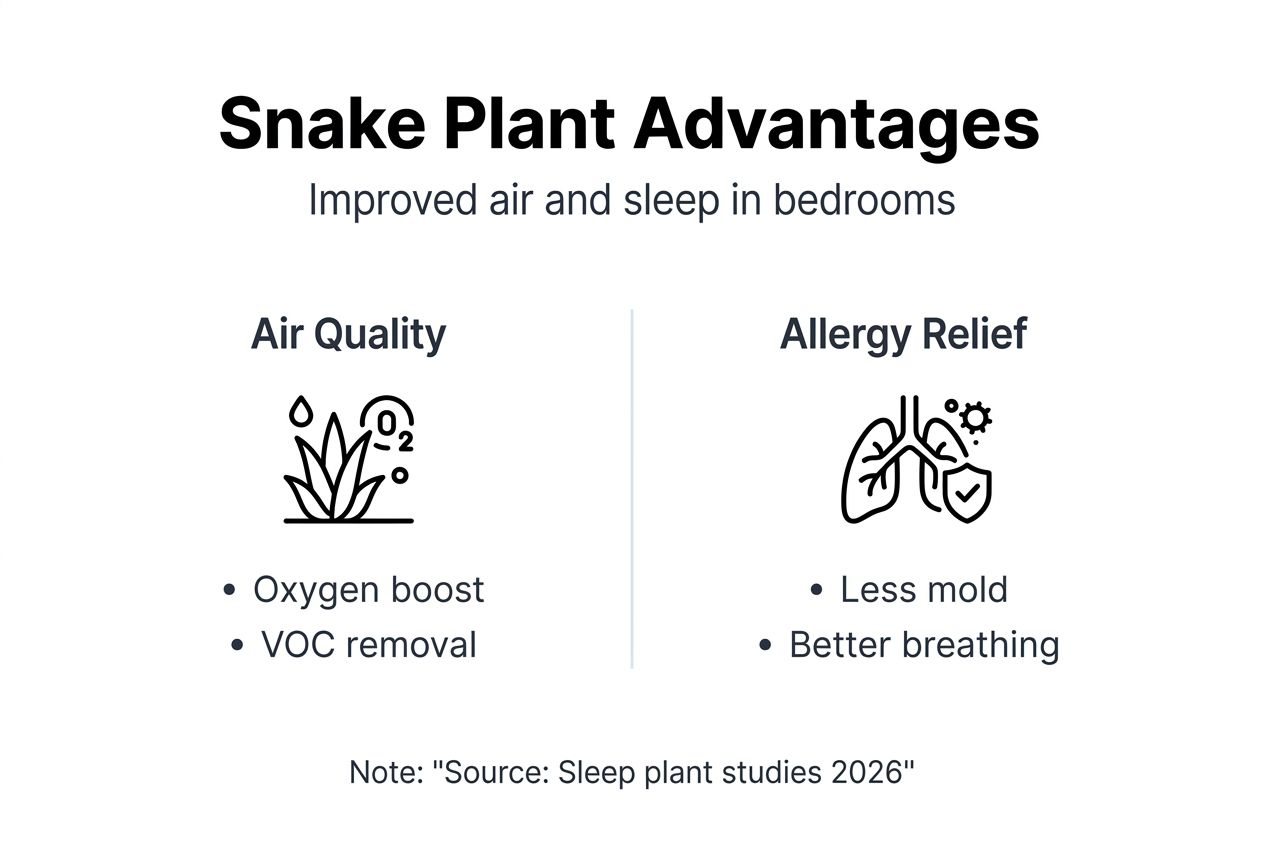
Volatile organic compound removal particularly benefits individuals with chemical sensitivities or multiple chemical sensitivity syndrome. These conditions cause exaggerated reactions to everyday chemicals that most people tolerate without symptoms. Creating a cleaner air environment through natural filtration reduces exposure triggers and symptom frequency.
Closed bedroom environments with limited air exchange amplify these benefits. Unlike living areas with open floor plans and constant traffic, bedrooms trap pollutants for extended periods. This concentration effect means bedroom air quality improvements deliver disproportionate health impacts.
The combined effects of cleaner air, better oxygen levels, and psychological wellbeing create synergistic health advantages:
- Reduced morning grogginess from improved sleep quality
- Fewer headaches associated with poor indoor air quality
- Lower respiratory infection rates from cleaner air and better immunity
- Enhanced cognitive function from better sleep and reduced toxin exposure
- Improved mood and energy levels throughout the day
These benefits accumulate over time as your bedroom environment consistently supports rather than challenges your body’s natural healing and restorative processes during sleep.
Conclusion: maximizing the benefits of snake plants in your bedroom
Snake plants stand apart from other houseplants through their unique nighttime oxygen release and exceptional air purification capabilities. Their CAM photosynthesis transforms them into 24-hour air quality systems that work hardest when you’re sleeping.
The combination of toxin removal, oxygen production, and psychological benefits creates measurable improvements in sleep quality and overall wellbeing. Scientific research validates these advantages, demonstrating quantifiable reductions in harmful compounds and subjective improvements in rest quality.
Care requirements remain refreshingly simple. Water sparingly every 2-3 weeks, provide moderate indirect light, and position plants safely away from curious pets. These minimal demands make snake plants accessible even for people convinced they lack green thumbs.
Thoughtful placement maximizes both functional and aesthetic benefits. Position plants near air circulation paths, within your sight lines for psychological impact, and at elevations that protect pets while enhancing air filtration efficiency.
With basic knowledge and minimal effort, anyone can harness the health and aesthetic advantages snake plants offer. Their resilience forgives beginner mistakes while their performance rivals sophisticated air purification systems, all without filters, electricity, or ongoing costs.
Enhance your indoor garden with Lushy Gardens
Ready to expand your indoor plant collection beyond snake plants? Lushy Gardens offers comprehensive resources to support your journey toward healthier, more vibrant living spaces. Discover expert guidance on selecting, caring for, and troubleshooting dozens of plant varieties suited to every skill level and home environment.
Explore practical indoor plant care tips that simplify maintenance and prevent common mistakes. Whether you’re just starting out or expanding an established collection, our gardening basics for beginners provide foundation knowledge that translates across plant types.
Learn how to strategically enhance air quality safely throughout your home using scientifically proven plant combinations that work synergistically to filter toxins and improve breathing environments naturally.
Are snake plants safe for pets in bedrooms?
Snake plants are mildly toxic to pets but rarely cause serious harm when proper precautions are followed. They contain saponins that irritate the gastrointestinal tract, leading to vomiting, diarrhea, and drooling if cats or dogs chew the leaves. These symptoms typically resolve within 24 hours without veterinary intervention.
Prevent ingestion by elevating plants on tall furniture, using hanging planters, or placing them in rooms pets cannot access. Most pets show little interest in snake plants after initial investigation, especially when provided with appropriate cat grass or chew toys. Monitor young or especially curious animals initially until they demonstrate disinterest. For comprehensive safety protocols, review dedicated guides on snake plants toxic to cats that detail warning signs and response strategies.
Do snake plants really improve sleep quality in bedrooms?
Yes, snake plants contribute to better sleep through multiple mechanisms that work together synergistically. Their nighttime oxygen release maintains more stable air composition in closed bedrooms, while continuous VOC filtration reduces respiratory irritants that cause congestion and breathing disruptions. The psychological benefits of viewing plants before sleep lower cortisol levels and activate relaxation responses.
Small clinical studies measuring sleep quality with bedroom plants report improvements ranging from 10 to 15 percent in participants’ subjective sleep ratings and measurable reductions in nighttime awakenings. While individual results vary based on existing air quality, bedroom ventilation, and personal sensitivity, most people notice subtle improvements in morning alertness and reduced grogginess within several weeks of adding snake plants to their sleep environment.
How often should I water my snake plant in the bedroom?
Water your bedroom snake plant every 2-3 weeks during active growing seasons, allowing soil to dry completely between waterings. Insert your finger two inches into the potting mix; water only when it feels completely dry at that depth. Overwatering causes root rot, the leading killer of indoor snake plants, so when in doubt, wait another week.
Reduce watering frequency to monthly intervals during winter when cooler temperatures and shorter days naturally slow growth. Bedroom humidity levels also influence watering needs; drier environments may require slightly more frequent watering, while humid climates support longer intervals. For detailed seasonal care adjustments and troubleshooting guidance, consult the comprehensive snake plant care guide that addresses common watering challenges and their solutions.
Recommended
- Snake Plant Benefits: Cleaner Air and Stylish Homes – Lushy Gardens
- Snake Plant Benefits: 10-15% Cleaner Air, Easy Care – Lushy Gardens
- Snake Plants Explained: Boosting Urban Home Wellness – Lushy Gardens
- Snake Plant Care: 30% Air Toxin Reduction in 24 Hours – Lushy Gardens

I’m Eleanor, a seasoned gardener with over three decades of experience tending to Mother Nature’s creations. Through Lushy Gardens, I aim to share my wealth of knowledge and help fellow plant enthusiasts uncover the wonders of gardening. Let’s dive into this journey together, one leaf at a time.


