
Table of Contents
Drooping leaves frustrate gardeners everywhere, and most assume the fix is simple: add water. This knee-jerk reaction often makes things worse because drooping stems from multiple causes, not just thirst. Overwatering, temperature swings, root suffocation, and environmental stress all trigger the same symptom. Understanding the true culprits behind drooping leaves transforms you from a reactive plant owner into a confident diagnostician who restores health instead of compounding problems. This guide reveals what really causes drooping and how to fix it correctly.
Key takeaways
| Point | Details |
|---|---|
| Underwatering and overwatering both cause drooping | Reduced turgor pressure from dehydration or oxygen-starved roots from waterlogged soil trigger identical symptoms. |
| Root health determines leaf vitality | Healthy roots with adequate oxygen maintain water uptake; damaged or suffocated roots cannot support leaves regardless of soil moisture. |
| Environmental factors stress plants | Temperature shifts, low humidity, compacted soil, insufficient light, and pests disrupt normal plant function causing leaves to droop. |
| Correct diagnosis prevents worsening problems | Testing soil moisture and inspecting roots before watering avoids the common mistake of overwatering already saturated plants. |
| Drooping is reversible with proper care | Most drooping leaves recover when you address the actual cause promptly rather than guessing at solutions. |
Understanding the primary causes: underwatering and overwatering
Water-related issues dominate drooping leaf cases, but they pull in opposite directions. Underwatering reduces turgor pressure in plant cells, causing leaves to wilt and droop as cells deflate from moisture loss. This happens when soil dries completely and roots cannot extract water to maintain cellular pressure. Plants literally deflate from dehydration, and leaves hang limp as a visible cry for moisture.
Overwatering creates a different crisis with identical symptoms. When soil stays saturated, root oxygen deprivation impairs water uptake and causes drooping even though moisture surrounds the roots. Waterlogged soil fills air pockets that roots need for respiration. Without oxygen, roots suffocate and begin rotting, losing their ability to absorb water and nutrients. The plant droops from functional drought despite wet soil.
Root health separates thriving plants from struggling ones. Healthy roots appear firm and white to tan with fine root hairs visible on newer growth. These roots efficiently pull water from soil and transport it throughout the plant. Damaged roots turn brown or black, feel mushy, and emit a foul odor. Research shows soil filled with water causes anaerobic conditions and root damage within 36 hours, making quick intervention critical.
Distinguishing between these opposite problems saves plants from incorrect treatment. Check soil moisture by inserting your finger two inches deep or using a moisture meter. Dry, crumbly soil indicates underwatering. Soggy, muddy soil that clings to your finger signals overwatering. Examine roots if possible by gently loosening soil near the pot edge. Understanding overwatering vs underwatering houseplants prevents the common mistake of watering drooping plants that actually suffer from too much moisture.
Pro Tip: Before watering any drooping plant, always test soil moisture first. Many gardeners reflexively water drooping leaves, but this worsens overwatering problems and accelerates root rot. Let evidence guide your response, not assumptions.
Recognizing signs of overwatering early makes recovery possible. Yellow lower leaves, soft stems, and persistent soil moisture despite no recent watering all point to excess water. Underwatered plants show dry, crispy leaf edges and soil that pulls away from pot sides. Both conditions cause drooping, but solutions differ completely. The key insight: drooping leaves signal stress, not a specific diagnosis. Your investigation determines the actual cause and correct remedy.
Timely intervention reverses most drooping. Underwatered plants perk up within hours of proper watering as cells rehydrate and regain turgor pressure. Overwatered plants need time for soil to dry and roots to recover oxygen access. Learning why is my plant drooping fix indoor plants techniques helps you respond appropriately to each situation.
Other environmental and cultural factors causing drooping leaves
Watering issues dominate drooping cases, but environmental stresses create similar symptoms through different mechanisms. Temperature fluctuations shock plants and disrupt normal cellular function. Moving a plant from a warm room to a cold windowsill or placing it near heating vents causes rapid temperature changes that stress foliage. Temperature swings and humidity drops significantly impact plant health, leading to drooping and leaf damage, especially in tropical species adapted to stable conditions.
Humidity levels affect transpiration rates and water balance. Low humidity increases moisture loss through leaves faster than roots can replace it, causing temporary wilting even in properly watered plants. Tropical plants like ferns, calatheas, and peace lilies suffer most in dry indoor air. Browning leaf edges often accompany drooping in low humidity environments, signaling excessive water loss through leaf surfaces.
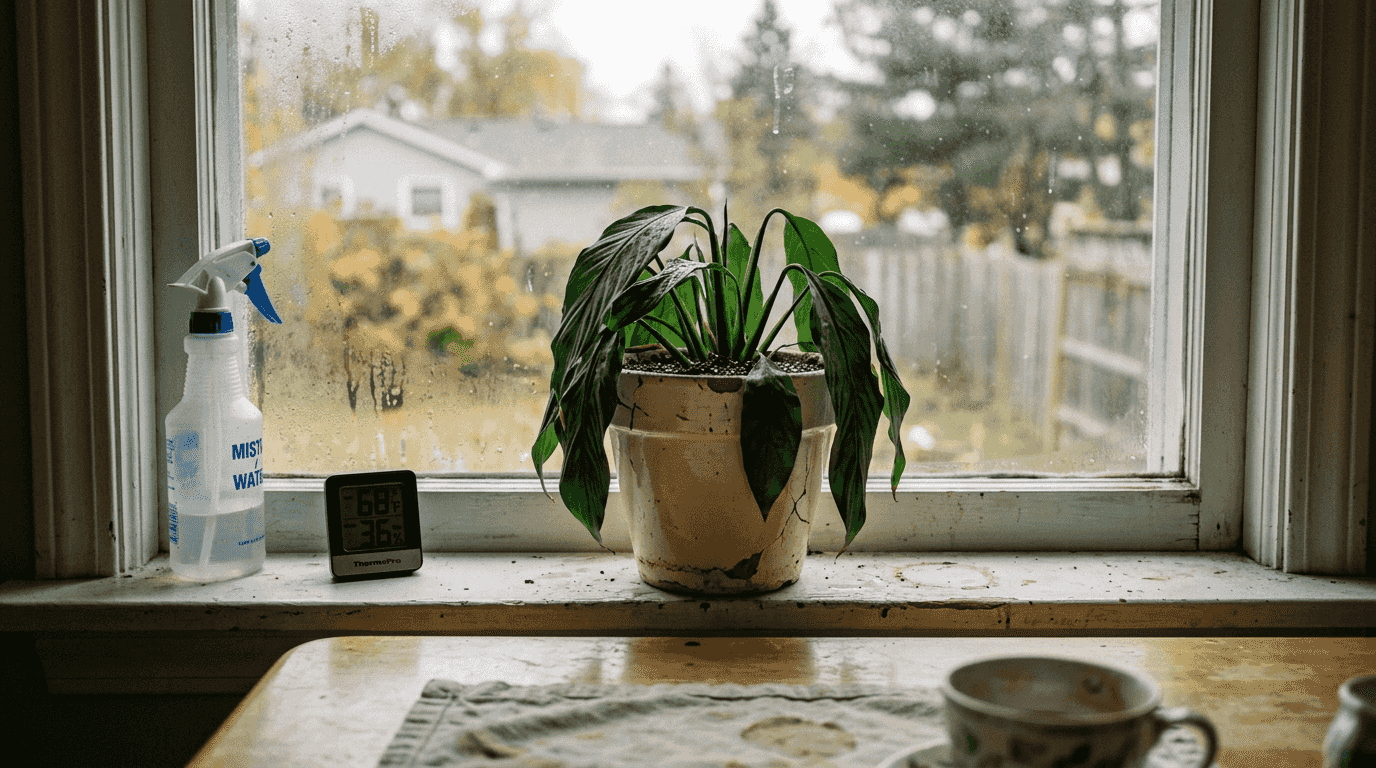
Soil compaction restricts root function in subtle but damaging ways. Over time, potting mix breaks down and compresses, reducing air spaces roots need for oxygen and water movement. Compacted soil also sheds water rather than absorbing it, creating dry pockets even after watering. This compacted potting mix restricts root function and water uptake, causing drooping that watering alone cannot fix. Repotting into fresh, well-draining mix restores proper root environment.
Light conditions influence plant vigor and structural integrity. Insufficient light weakens stems and reduces photosynthesis, leading to stretched, drooping growth as plants struggle to support themselves. Plants grown in too little light cannot produce enough energy to maintain turgor pressure and upright posture. Conversely, sudden exposure to intense direct sun can scorch leaves and cause temporary drooping from light stress.
Fertilizer burn damages roots when concentrated salts accumulate in soil from over-application. These salts draw moisture out of roots through osmosis, essentially dehydrating the plant despite adequate soil moisture. Root tips brown and die back, impairing the plant’s ability to absorb water and nutrients. Drooping follows as damaged roots cannot support normal plant function.
Pests introduce another layer of complexity. Aphids, spider mites, and thrips feed on plant sap, disrupting vascular tissue that transports water and nutrients. Heavy infestations stress plants enough to cause drooping as pests literally drain resources. Root-feeding pests like fungus gnats damage root systems directly, creating symptoms identical to root rot. Learning about organic pest management guide strategies helps you identify and address pest-related drooping.
Pro Tip: Keep a simple plant journal noting watering dates, location changes, and environmental conditions. Patterns emerge quickly, helping you connect drooping episodes to specific triggers like temperature drops or humidity changes.
Specific plants show characteristic responses to stress. Snake plants, typically drought-tolerant, droop dramatically when overwatered or exposed to cold temperatures. Understanding why is my snake plant drooping helps you troubleshoot species-specific issues. General indoor plant care tips provide foundational knowledge for preventing environmental stress across all houseplants.
Multiple stressors often combine to cause drooping. A plant in compacted soil, low humidity, and insufficient light faces cumulative stress that overwhelms its adaptive capacity. Addressing one factor may not resolve drooping if others persist. Comprehensive assessment identifies all contributing factors, allowing you to create optimal conditions for recovery.
How to diagnose and revive plants with drooping leaves
Accurate diagnosis separates successful plant care from frustrated guesswork. Start with systematic observation rather than assumptions. Follow this diagnostic sequence to identify the actual cause:
- Check soil moisture by inserting your finger two inches deep into the potting mix. Bone dry soil indicates underwatering. Saturated, muddy soil suggests overwatering. Slightly moist soil points to non-watering causes.
- Inspect roots if drooping persists despite proper watering. Gently remove the plant from its pot and examine root color and texture. Healthy roots appear white to tan and feel firm. Brown, mushy roots with foul odor indicate rot from overwatering or disease.
- Evaluate environmental conditions including temperature stability, humidity levels, and light exposure. Note any recent changes like moving the plant, seasonal shifts, or new heat sources nearby.
- Look for pest evidence including visible insects, sticky residue, webbing, or stippled leaves. Check leaf undersides where pests often hide.
- Assess soil quality by checking if water runs straight through without absorbing or if the mix appears compacted and dense. Old potting mix loses structure and water-holding capacity.
Comparing symptoms helps narrow causes. This diagnostic table clarifies differences:
| Symptom | Underwatering | Overwatering | Environmental Stress |
| — | — | — |
| Soil condition | Dry, pulls from pot sides | Saturated, stays wet days | Varies, often adequate moisture |
| Root appearance | Dry but intact | Brown, mushy, foul smell | Usually healthy unless pest damage |
| Leaf texture | Crispy edges, brittle | Soft, yellowing lower leaves | Varies with specific stressor |
| Recovery speed | Hours after watering | Days to weeks if roots viable | Variable depending on cause |
| Additional signs | Soil very light when lifted | Heavy pot, fungus gnats present | Temperature damage, pest evidence |
Research confirms that treating droopy leaves as simply needing water often worsens the problem by adding moisture to already saturated soil. This common mistake accelerates root rot and can kill plants that would have recovered with proper diagnosis.
Revival strategies match the diagnosed cause. For underwatered plants, water thoroughly until it drains from pot holes, then establish consistent watering based on soil moisture checks rather than fixed schedules. For overwatered plants, stop watering immediately and improve drainage. Remove the plant from soggy soil, trim rotted roots with sterile scissors, and repot in fresh, well-draining mix. Allow soil to dry between waterings going forward.
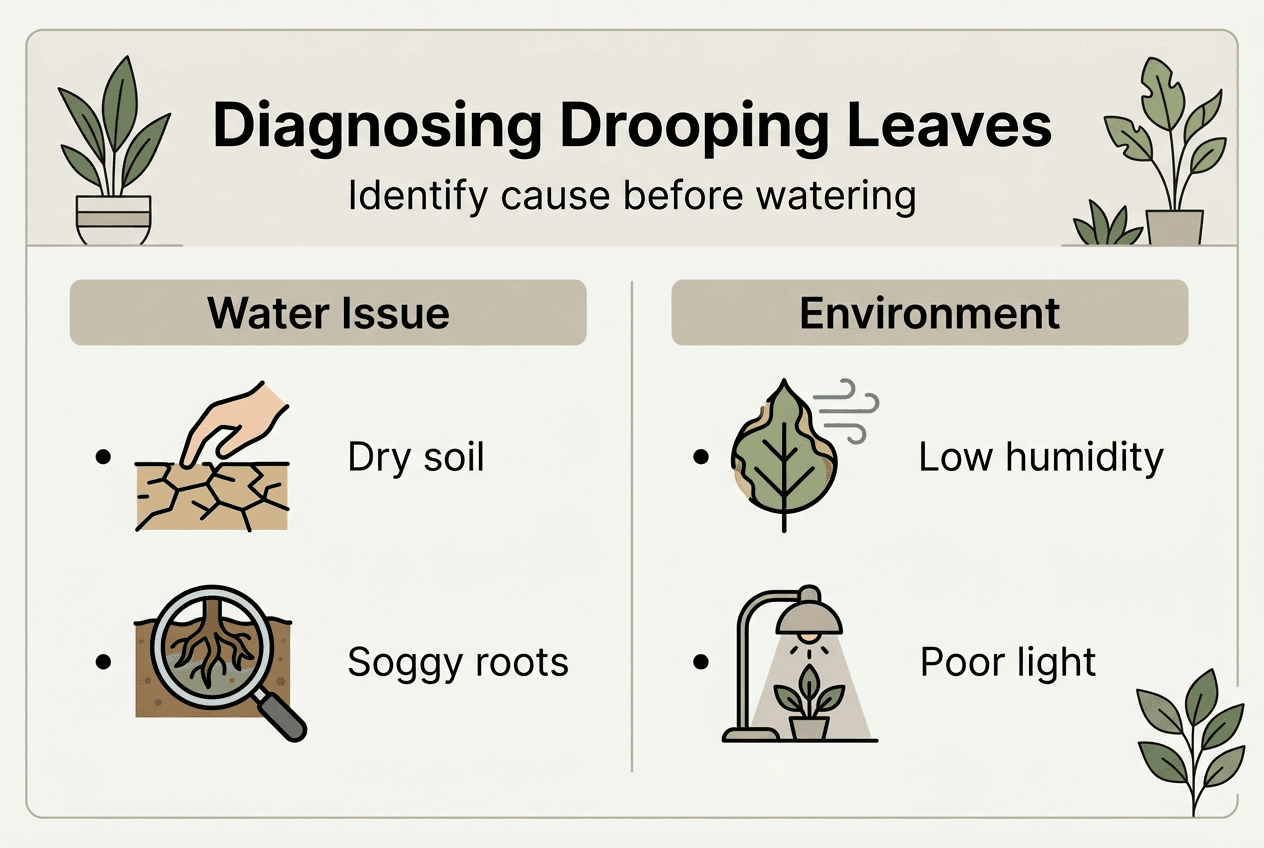
Environmental stress requires targeted adjustments. Move plants away from temperature extremes like vents, drafty windows, or heat sources. Increase humidity with pebble trays, grouping plants together, or using a humidifier. Adjust light exposure gradually to prevent shock. Address compacted soil by repotting into fresh mix with proper drainage amendments like perlite or bark.
Pro Tip: After diagnosing and treating drooping, give plants time to respond before making additional changes. Recovery takes days to weeks depending on severity. Patience prevents overcorrection that creates new problems.
The encouraging reality: drooping is a reversible cry for help, not a death sentence. Most plants recover fully when you identify and address the actual cause promptly. Learning to save dying plants naturally builds confidence for handling future issues. Mastering watering indoor plants naturally prevents the most common drooping causes. Comprehensive guides on how to fix indoor plants with drooping leaves provide additional troubleshooting support.
Prevention beats treatment every time. Establish good cultural practices including proper pot size with drainage holes, quality potting mix refreshed annually, watering based on plant needs rather than schedules, and stable environmental conditions. Monitor plants regularly for early stress signs. Small adjustments prevent major problems.
Enhance your gardening success with expert guides from Lushy Gardens
Drooping leaves represent just one challenge in the rewarding journey of plant care. Lushy Gardens offers comprehensive resources to deepen your knowledge and sharpen your troubleshooting skills. Whether you’re starting your first windowsill garden or expanding an established collection, expert guidance makes the difference between struggling and thriving.
Explore our gardening basics for beginners guide to build foundational skills in soil science, plant selection, and care routines. Understanding core principles helps you make informed decisions and avoid common pitfalls. Our indoor plant care basics guide dives deeper into creating optimal conditions for houseplants, from light requirements to humidity management.
Watering remains the most critical and challenging aspect of plant care. Our detailed watering indoor plants step-by-step guide teaches you to read plant signals, test soil properly, and develop watering intuition that keeps roots healthy. These resources transform uncertainty into confidence, helping you grow beautiful, resilient plants that rarely droop.
FAQ
What causes drooping leaves even when soil is moist?
Drooping with moist soil typically indicates root oxygen deprivation from overwatering, where saturated soil prevents roots from breathing and absorbing water effectively. Other causes include root rot, pest damage to roots, temperature stress, or compacted soil that holds moisture but lacks proper aeration. The plant cannot uptake water despite availability, creating functional drought.
Can drooping leaves recover if caused by overwatering?
Yes, overwatered plants often recover if you catch root rot early and improve conditions promptly. Stop watering immediately, improve drainage, and consider repotting into fresh mix after trimming damaged roots. Recovery takes one to three weeks as roots regenerate and regain function. Severe root rot with extensive damage may be irreversible, making early intervention critical.
How do temperature and humidity affect leaf drooping?
Rapid temperature changes stress plants by disrupting cellular function and water transport, causing temporary drooping and sometimes permanent leaf damage. Low humidity increases transpiration rates faster than roots can replace moisture, leading to wilting even in properly watered plants. Tropical species suffer most from dry air, showing drooping and brown leaf edges. Maintain stable temperatures and adequate humidity through humidifiers, pebble trays, or plant grouping.
Is watering on a schedule effective to prevent drooping?
Fixed watering schedules often cause problems because plant water needs vary with season, growth stage, temperature, and humidity. Rigid schedules lead to overwatering during cool, dormant periods and underwatering during active growth. Testing soil moisture before each watering and observing plant cues provides better results than calendar-based routines. Flexibility based on actual conditions prevents both underwatering and overwatering that cause drooping.
Recommended
- Why is my plant drooping? Fix indoor plants fast – Lushy Gardens
- Why Plants Drop Leaves – What It Means for Indoor Gardeners – Lushy Gardens
- Signs of Overwatering: What Every Gardener Should Spot – Lushy Gardens
- Plant Problems in 2026: 65% Soil pH Imbalance Hinders Growth – Lushy Gardens

I’m Eleanor, a seasoned gardener with over three decades of experience tending to Mother Nature’s creations. Through Lushy Gardens, I aim to share my wealth of knowledge and help fellow plant enthusiasts uncover the wonders of gardening. Let’s dive into this journey together, one leaf at a time.


