
Table of Contents
TL;DR:
- A plant care checklist ensures consistent, thorough maintenance by tracking watering, light, soil, feeding, pests, and seasonal needs.
- Structuring tasks by daily, weekly, monthly, and seasonal intervals simplifies routine and prevents overlooked plant issues.
- Proper tools and proactive monitoring help detect problems early, reducing plant losses and increasing gardening confidence.
Growing plants at home should feel rewarding, not stressful. Yet so many gardeners, from first-timers to seasoned hobbyists, find themselves second-guessing every decision: Did I water this week? When did I last feed the tomatoes? Is that yellowing normal? Without a structure, even the most enthusiastic plant lover can fall into cycles of overwatering, neglecting seasonal care, or catching pest problems too late. A plant care routine checklist solves this by giving you a clear, repeatable system so nothing slips through the cracks. This guide walks you through exactly what to put on yours and how to use it every single day.
Table of Contents
- Criteria for building your plant care checklist
- Daily, weekly, and seasonal plant care steps
- Monitoring plant health and spotting early issues
- Key supplies and tools for effective plant care
- Why a checklist is the secret weapon for home gardeners
- Take your plant care further with expert guides from Lushy Gardens
- Frequently asked questions
Key Takeaways
| Point | Details |
|---|---|
| Checklist boosts consistency | Using a plant care routine checklist ensures more regular attention and healthier plants. |
| Routine adapts by season | Adjust routines for daily, weekly, and seasonal tasks to match plant needs year-round. |
| Early detection prevents loss | Checking plants for subtle problems allows quick intervention and prevents irreversible damage. |
| Proper tools simplify care | Having the right tools and supplies makes regular plant maintenance easier and more effective. |
Criteria for building your plant care checklist
A checklist is only as good as what you put on it. Before you write a single task down, you need to understand what truly drives plant health and which variables you need to track. Think of your checklist as a prescription, not a to-do list. Every item should have a reason for being there.
The core categories every checklist should include are:
- Watering: How much, how often, and whether you check soil moisture before adding more water
- Light: Daily light exposure, rotation schedules, and seasonal adjustments as sun angles shift
- Soil care: Checking drainage, pH, and when soil needs refreshing or amendment
- Feeding: Fertilizer type, timing, and dosage based on plant growth stage
- Pruning: Removing dead growth, shaping plants, and encouraging new shoots
- Pest control: Weekly visual scans and preventive treatment schedules
- Health checks: Overall vigor, leaf color, root condition, and flower or fruit production
Once you have those pillars in place, you need to customize. A tropical houseplant like a monstera has completely different watering and humidity needs compared to a raised-bed vegetable garden. Checklists improve consistency and plant health when they are specific to the plant, location, and season, not generic.
Indoor plants tend to need less frequent watering but more attention to light placement and humidity. Outdoor plants require stronger attention to rainfall patterns, soil compaction, and temperature swings. Knowing which environment you are working in helps you filter out tasks that do not apply to your situation and focus on the ones that matter most.
Seasonality is the factor most gardeners forget. What works in spring rarely applies in winter. A checklist should include flags for seasonal transitions, reminding you to shift from a growth-focused routine to a maintenance or dormancy-aware routine as temperatures drop. Avoiding common gardening pitfalls like ignoring seasonal needs is one of the biggest benefits of writing things down.
Pro Tip: When you build your checklist, sort tasks by how often they need to happen. Daily, weekly, monthly, and seasonal categories make it easy to scan what you need to do on any given day without rereading everything.
Daily, weekly, and seasonal plant care steps
Once you know the criteria, it is time to structure your actual care routine. Breaking tasks by frequency is the simplest way to make a checklist manageable. Instead of feeling like you have 30 things to do every morning, you realize most tasks are only weekly or seasonal. The daily list is short and fast.
Here is a step-by-step breakdown by frequency:
- Daily: Check soil moisture with a finger or soil meter before watering. Look for visible stress signs like drooping or leaf curl.
- Daily: Observe light levels. Move plants if shadows have shifted or increase grow light duration in winter.
- Weekly: Remove dead or yellowing leaves. Check under leaves for early pest activity.
- Weekly: Wipe down large indoor plant leaves to remove dust that blocks photosynthesis.
- Monthly: Feed plants according to your fertilizing schedule based on plant type and growth stage.
- Monthly: Check root condition for signs of being pot-bound and rotate containers for even light exposure.
- Seasonally: Repot or refresh soil for plants showing root congestion. Adjust your seasonal garden maintenance plan to match current growth patterns.
- Seasonally: Scale back fertilizing in fall and winter when most plants slow down naturally.
| Task | Frequency | Indoor | Outdoor |
|---|---|---|---|
| Check soil moisture | Daily | Yes | Yes |
| Remove dead leaves | Weekly | Yes | Yes |
| Fertilize | Monthly | Yes | Yes |
| Pest inspection | Weekly | Yes | Yes |
| Soil refresh or repot | Seasonally | Yes | Less often |
| Watering system check | Weekly | No | Yes |
| Mulching or top dressing | Seasonally | Rarely | Yes |
Seasonal maintenance is critical for garden success because plant needs shift dramatically with temperature, light duration, and humidity changes. Skipping a seasonal review is one of the fastest ways to lose plants that seemed perfectly healthy just weeks before.
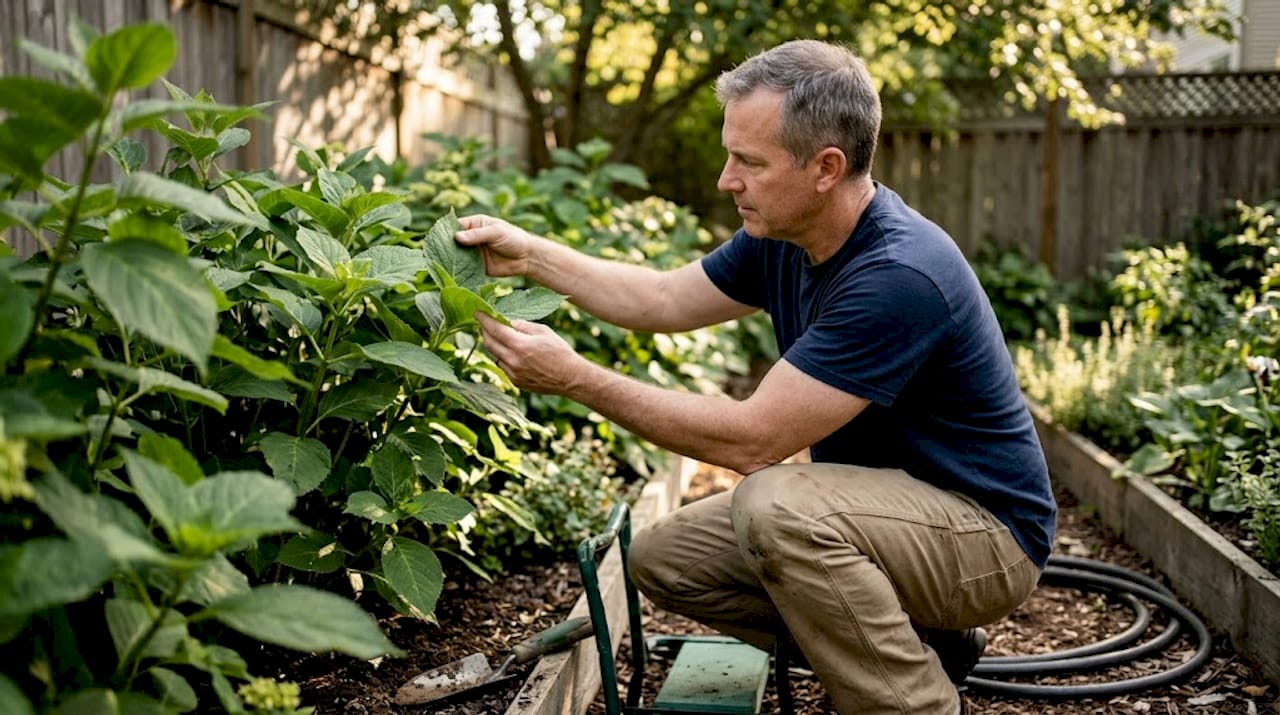
For watering specifically, optimizing how and when you water is as important as the volume. Effective watering optimization means delivering water when plants can actually absorb it, usually in the morning, and avoiding waterlogged roots from poor drainage.
Pro Tip: Photograph your plants weekly using your phone. Side-by-side comparisons are surprisingly effective at catching slow changes in color, size, and leaf texture that you might miss day to day.
Monitoring plant health and spotting early issues
Beyond following routines, effective care means watching for subtle signs your plants need help. A checklist tells you when to look. Your eyes tell you what is actually happening. Combining both is what separates gardeners who thrive from ones who constantly lose plants to preventable problems.
The key visual signals to monitor regularly:
- Leaf color: Yellowing often signals overwatering, nitrogen deficiency, or root rot. Dark spots suggest fungal infection or sunburn.
- Growth rate: Suddenly slow growth outside of a dormancy period often means a nutrient problem or compacted roots.
- Wilting: Wilting in a well-watered plant usually points to root damage, not dehydration.
- Flower and fruit production: A drop in blooms or fruit set may indicate inadequate feeding, poor pollination, or light stress.
- Soil surface: White crusty buildup on soil signals mineral accumulation from tap water or over-fertilizing.
“The sooner you catch a problem, the fewer plants you lose.” Early observation, combined with a weekly checklist, gives you a window to act before a small issue becomes a plant-ending crisis.
For pest management, the most dangerous pests are the ones you never see until the damage is severe. Spider mites, fungus gnats, and scale insects hide under leaves, in soil, and along stems. Weekly scanning under leaves and around soil edges should be a fixed item on your checklist. Organic pest management strategies work best when applied early, before populations explode.
Detecting issues early prevents plant loss, which is why reactive care always costs more time and money than proactive monitoring. A structured checklist acts as your early warning system.
Using your checklist as a log, not just a reminder, multiplies its value. When you note the date you spotted an issue alongside what you did about it, you build a personal reference that helps you solve the same problem faster next time. Essential gardening tips consistently point to documentation as one of the habits that separates successful gardeners from struggling ones.
For deeper troubleshooting plant issues, matching your observed symptoms to specific causes is a skill that builds with time and tracking.
Key supplies and tools for effective plant care
Finally, the right tools can make your checklist easy to follow day in and day out. You do not need an expensive setup to take great care of your plants. But having the right basics on hand means you never skip a task because the tool is missing.
Core tools every home gardener needs:
- Watering can with a narrow spout: Gives you control for indoor plants without splashing soil or leaves
- Soil moisture meter: Takes the guesswork out of watering by giving you a clear dry or wet reading
- Pruning shears: Sharp, clean cuts reduce disease risk and encourage healthier regrowth
- Gardening gloves: Protect your hands during soil work and pest treatment applications
- Spray bottle: Essential for misting humidity-loving plants and applying liquid pest controls
- pH test kit or meter: Helps you confirm soil conditions before adding amendments or fertilizer
Quality tools and supplies make gardening easier and genuinely more productive, especially when your checklist becomes a daily habit rather than an occasional event.
| Tool | Budget option | Premium option |
|---|---|---|
| Watering can | Basic plastic can | Haws copper watering can |
| Soil moisture meter | Simple analog probe | Bluetooth smart sensor |
| Pruning shears | Standard bypass pruners | Felco stainless steel shears |
| Gloves | Cotton garden gloves | Nitrile-coated grip gloves |
| Spray bottle | Standard trigger bottle | Pressurized pump sprayer |
Indoor setups prioritize precision, so a soil meter and a quality spray bottle matter more than heavy-duty equipment. Outdoor gardens benefit more from durable, weather-resistant tools that hold up to frequent use and exposure. Understanding plant gardening essentials helps you invest in the tools that actually get used, not the ones that sit in the shed.
Why a checklist is the secret weapon for home gardeners
Here is a truth most plant care articles skip: intuition does not scale. You might remember your fiddle-leaf fig’s watering schedule perfectly when you have two plants. Add eight plants across different rooms, and memory starts failing you. That is not a skill problem. That is just how the human brain works under complexity.
The real value of a checklist is not that it tells you what to do. It is that it removes the decision fatigue from gardening. Every time you check off a task, you free up mental energy for observing your plants instead of trying to remember what you already did.
Veteran gardeners often report that their most unexpected wins came not from rare plant knowledge but from boring consistency. Watering on schedule. Pruning regularly. Catching pests a week earlier than usual. These small, repeated actions compound. Using easy care tips for beginners as a starting framework and building your personalized checklist from there is the fastest path from struggling gardener to confident one.
The checklist does not replace your instincts. It sharpens them by giving you a record of what worked.
Take your plant care further with expert guides from Lushy Gardens
A solid checklist is just the beginning. At Lushy Gardens, we have built detailed resources for every stage of your plant care journey, whether you are just starting out or looking to refine a routine that is already working. Our gardening basics guide walks complete beginners through the fundamentals without overwhelming them. When things go wrong, our indoor plant troubleshooting guide helps you diagnose and fix issues fast. And for keeping your routine sharp through every season, our seasonal maintenance tips break down exactly what your garden needs month by month. Explore them and let your plants show the difference.
Frequently asked questions
What should be included in a plant care routine checklist?
Your checklist should cover watering, lighting, soil care, feeding, pruning, monitoring for pests, and seasonal adjustments. Structured checklists improve plant health by ensuring no critical care step is skipped week after week.
How often do I need to update my plant care routine?
Update your routine seasonally and whenever you add new plants or notice changes in plant health. Seasonal maintenance is vital for garden health because plant needs shift with every change in temperature and light.
What are early signs that my plants need extra care?
Look for yellowing leaves, stunted growth, unusual spots, or visible pests as early warning signs. Detecting issues early prevents plant loss and makes treatment far simpler and less costly.
Are there tools that make plant care easier?
Yes, tools like pruning shears, watering cans, soil meters, and pest management products simplify regular care. Quality tools make plant care easier and help you follow your checklist without unnecessary obstacles.
Can I use the same checklist for both indoor and outdoor plants?
The basic structure works for both, but adapt for plant type, location, and local climate requirements. Seasonal adjustments are especially important when the same checklist spans different growing environments.
Recommended
- Seasonal Garden Maintenance: Step-by-Step Success Guide – Lushy Gardens
- Vegetable gardening basics: step-by-step guide for beginners – Lushy Gardens
- Gardening Basics for Beginners: Complete Guide – Lushy Gardens
- Indoor plant care guide: healthier, happier plants at home – Lushy Gardens

I’m Eleanor, a seasoned gardener with over three decades of experience tending to Mother Nature’s creations. Through Lushy Gardens, I aim to share my wealth of knowledge and help fellow plant enthusiasts uncover the wonders of gardening. Let’s dive into this journey together, one leaf at a time.


