
Table of Contents
TL;DR:
- Adding native shrubs to your garden initiates a chain reaction that enhances soil health, pollinators, and pest control. Even small, deliberate plant choices and habitat features can significantly improve your garden’s ecological resilience and support a diverse community of beneficial insects and soil organisms. Focusing on manageable, strategic changes ensures sustainable biodiversity growth without risking invasive species or overwhelming effort.
Adding a single native shrub to your garden can trigger a chain reaction that benefits everything from the soil beneath your feet to the bees hovering above your flowers. Garden biodiversity enhances ecological resilience by supporting pollinators, beneficial insects, soil health, and pest control through the variety of plants and habitats you create. The good news is that you don’t need a sprawling estate or a botany degree to make it happen. This article breaks down what biodiversity really means for your home garden, why it matters more than most gardeners realize, and exactly how you can start building a richer, more resilient growing space starting today.
Table of Contents
- Understanding garden biodiversity and why it matters
- How garden biodiversity supports a resilient ecosystem
- Designing your garden for biodiversity: practical strategies
- Pitfalls and balancing acts: when more isn’t always better
- Why focusing on small, controllable changes yields big biodiversity wins
- Take your garden’s biodiversity to the next level with Lushy Gardens
- Frequently asked questions
Key Takeaways
| Point | Details |
|---|---|
| Start with small changes | Adding a few native plants or reducing mowing can rapidly boost garden biodiversity. |
| Diversity builds resilience | A mix of plant species supports pollinators, strengthens pest control, and improves soil health. |
| Tailor your design | Use simple assessments to see what your garden needs most and act for measurable results. |
| Stay vigilant | Monitor for invasive species and keep a balance between introducing new plants and maintaining natives. |
Understanding garden biodiversity and why it matters
Garden biodiversity isn’t some abstract ecological concept reserved for nature preserves. In practical terms, it means the variety of plants, insects, fungi, and soil organisms living and interacting inside your garden boundaries. The more species you have, and the more those species support each other, the more balanced and productive your garden becomes.
The core benefits show up fast once you understand what you’re looking at:
- Pollinator support: A wider range of flowering plants feeds bees, butterflies, and hoverflies across longer growing seasons.
- Natural pest control: Diverse plantings attract predatory insects like ground beetles and parasitic wasps that keep pest populations in check.
- Soil improvement: Varied root depths and plant matter feed a richer community of soil organisms, from earthworms to beneficial fungi.
- Disease resilience: Monocultures are sitting targets for disease; mixed plantings break pathogen cycles naturally.
- Climate buffering: Diverse root structures hold moisture better and reduce the impact of dry spells or heavy rain.
One of the biggest misconceptions is that biodiversity only happens at scale, that it requires woodland edges or large meadows. That simply isn’t true. A 10×10 raised bed with the right plant mix can support dozens of insect species and transform the health of your soil within a single growing season. Garden biodiversity enhances ecological resilience even in small, managed spaces when you make intentional choices about plant selection and garden structure.
“Biodiversity in the garden isn’t a luxury for large spaces. It’s a practical strategy that any gardener can use to reduce inputs and increase yields, regardless of plot size.”
If you want to get started quickly, explore our guide on planting for pollinators to see which plant combinations deliver the fastest results in home garden settings.
How garden biodiversity supports a resilient ecosystem
Once you know what biodiversity means, it’s worth looking at what it actually does inside your garden’s ecosystem. The mechanisms are fascinating, and understanding them helps you make smarter decisions about what to plant and where.
Plant variety directly strengthens what ecologists call the food web. When you grow a mix of flowering plants, shrubs, and groundcovers, you create food and shelter for a broader range of insects. Those insects, in turn, become food for birds and small mammals. The whole system becomes more stable because no single element is doing all the work. Remove one species and the rest can adapt. In a monoculture, the loss of one plant type can collapse the entire food web layer it supported.
Soil health tells a similar story. Diverse gardens improve soil fertility through nitrogen-fixing plants, mycorrhizal fungi networks, and the accumulation of organic matter that builds year over year. Plants like clover, vetch, and lupines actively pull nitrogen from the air and deposit it in the soil, reducing your need for synthetic fertilizers. Deep-rooted plants like comfrey break up compacted layers and bring minerals up from subsoil, making nutrients available to shallower-rooted neighbors.
The pollinator story is just as compelling. Floral enhancements increase pollinator visitation in urban and suburban areas, and local features like vegetation height and floral richness shape pollinator communities more than the surrounding landscape. In plain terms: what you plant in your own yard matters more than what your neighbors do. You have real control here.
| Garden type | Pollinator species supported | Soil health score | Pest pressure |
|---|---|---|---|
| Single-crop bed | Low (2 to 5 species) | Poor | High |
| Mixed annuals only | Moderate (8 to 12 species) | Moderate | Moderate |
| Native perennials + shrubs | High (20 or more species) | Good | Low |
| Layered native + annual mix | Very high (30 or more species) | Excellent | Very low |
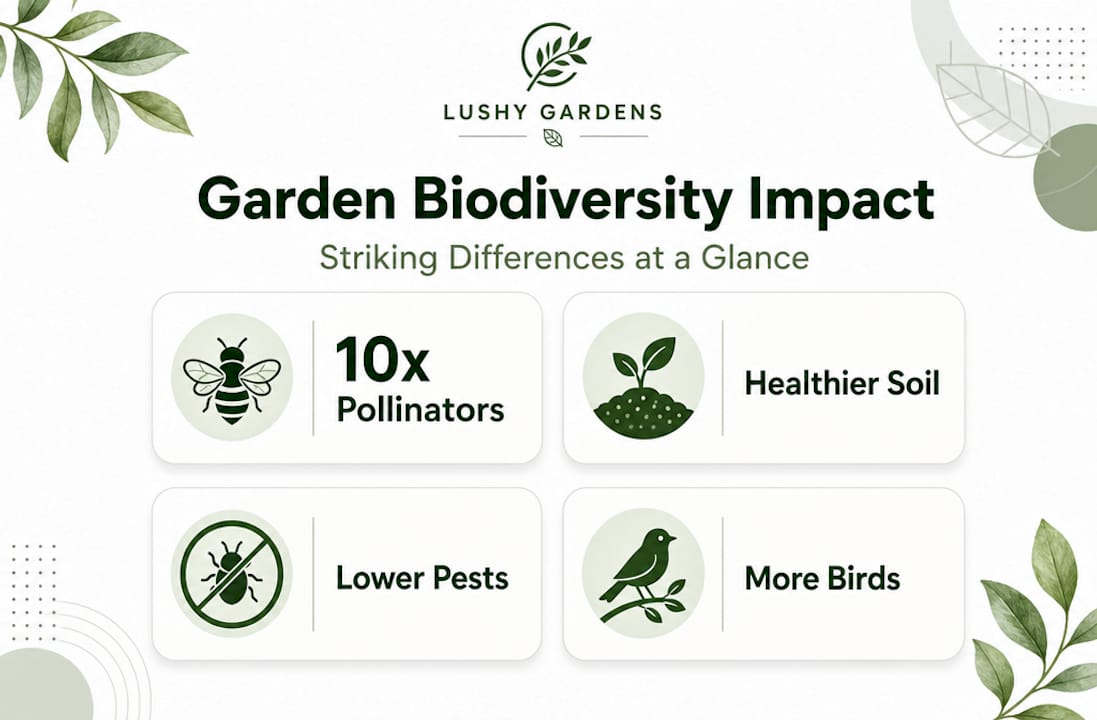
Stat callout: Gardens with layered planting structures and high floral richness can support more than 10 times the pollinator species compared to single-crop beds, based on urban garden surveys across multiple regions.
If you want to dig into which specific plants perform best, our guide on pollinator friendly plants covers the top performers for urban and suburban settings. You can also learn more about the broader role insects play in your garden through our piece on the importance of pollinators.
Pro Tip: Adding vertical structure, like tall grasses, shrubs, or climbing plants, provides nesting sites for ground-nesting bees and perching spots for predatory insects. It’s one of the most overlooked improvements a gardener can make.
Designing your garden for biodiversity: practical strategies
Turning ecological theory into real garden results doesn’t require a complete redesign. You can build biodiversity into your existing space step by step, starting with changes that take an afternoon and paying off for years.
Here’s a practical sequence to follow:
- Audit what you already have. Walk your garden and note how many distinct plant species you’re growing, including trees, shrubs, perennials, annuals, and groundcovers. Most gardens have far fewer than gardeners assume.
- Add native plants first. Native species have co-evolved with your local insects and soil organisms. Even one or two native flowering perennials can jump-start insect diversity within a single season.
- Layer your plantings vertically. Combine tall, medium, and low-growing plants in the same bed. This creates microhabitats at different heights and mimics the structure of natural plant communities.
- Include plants that bloom at different times. Aim for something in flower from early spring through late fall to feed pollinators across the whole season, not just during peak summer.
- Add habitat features. A small log pile, a patch of bare soil, or a shallow dish of water can each support entirely different communities of beneficial insects and amphibians.
- Reduce mowing frequency in parts of your yard. Letting grass grow longer even in one small section creates habitat for ground beetles, spiders, and small pollinators.
Home gardens act as urban green infrastructure, and small changes like native mixes and reduced mowing yield measurable returns for pollinators and soil health. You don’t need to rewild your entire yard to make a difference.
Assessing your current biodiversity
Assess garden biodiversity with self-tests that score your garden based on features like hedges, bare soil patches, log piles, and plant variety. Use this quick check to see where you stand:
| Feature | Score if present |
|---|---|
| 5 or more native plant species | 2 points |
| Hedge or shrub layer | 1 point |
| Bare soil patch (not just paths) | 1 point |
| Log pile or deadwood | 1 point |
| Water feature or dish | 1 point |
| Plants blooming in 3 or more seasons | 2 points |
| Reduced mowing zone | 1 point |
Score 7 to 9: High biodiversity. Score 4 to 6: Moderate. Score below 4: Room for significant improvement.
For plant selection help, our list of best pollinator plants is a great starting point. You can also pair biodiversity improvements with natural pest control strategies and browse our sustainable flower garden tips for inspiration on putting it all together beautifully.
Pro Tip: Leave a small patch of bare, undisturbed soil in a sunny corner. Over 70% of native bee species in North America nest in the ground, and they need open, uncompacted soil to build their nests. It costs you nothing and pays off every growing season.
Pitfalls and balancing acts: when more isn’t always better
Diversity is powerful, but it has to be the right kind of diversity. This is where a lot of enthusiastic gardeners stumble. Adding more plants doesn’t automatically make your garden healthier, especially if those plants are aggressive spreaders or non-native invasives.
Unmanaged diversity can favor invasives over natives in landscapes where control isn’t practiced. When invasive species establish themselves, they often outcompete the native plants that local insects actually depend on. You can end up with a garden full of greenery that wildlife largely ignores.
Watch for these red flags when evaluating new plants:
- Fast spreaders: Plants that double their coverage in a single season, like certain mints or Bishop’s weed, can crowd out everything else.
- Aggressive self-seeders: Species that drop thousands of seeds annually, like invasive knotweeds or purple loosestrife, quickly dominate disturbed ground.
- Underground runners: Bamboo, ground elder, and some ornamental grasses spread via rhizomes and are notoriously difficult to remove once established.
- Non-native lookalikes: Some plants look similar to natives but offer little ecological value. Always check the origin of a plant before you buy.
- No local insect connections: Plants from entirely different continents may produce no nectar or pollen that local insects can use, providing visual appeal but little ecological function.
“The goal isn’t maximum plant count. It’s maximum ecological function. A garden with 20 well-chosen native species will almost always outperform one with 50 mixed species that includes several invasive or ecologically empty plants.”
The solution is simple: before buying any new plant, check whether it’s native to your region or has known invasive tendencies in your climate zone. Your local cooperative extension office or native plant society will have reliable lists for free. Monitoring your garden once or twice a year and removing aggressive spreaders before they establish is far easier than trying to reclaim ground from an invasive after it’s had two or three seasons to spread. Our guide on organic pest control methods also covers how to manage problem plants alongside pests without disrupting the beneficial species you’ve worked hard to attract.
Why focusing on small, controllable changes yields big biodiversity wins
Here’s an honest take that most gardening advice skips: the biggest obstacle to biodiversity in home gardens isn’t lack of space or knowledge. It’s the feeling that you need to do everything at once.
Walk through enough gardening forums or browse enough social feeds, and you’ll see the same pattern. Gardeners who set out to “transform” their yard with massive replanting projects often end up overwhelmed, inconsistent, and back to square one within a year or two. Meanwhile, the gardener who quietly adds one native shrub each spring, stops mowing a corner of the lawn, and tucks in a few wildflower seeds between their vegetables is quietly building something real.
Local, controllable actions matter more than most people realize. Adding one well-chosen native plant to your yard can connect your garden to the surrounding urban green network, providing a stepping stone for pollinators moving through your neighborhood. Individually, a small garden seems insignificant. Collectively, front yards, back gardens, and window boxes represent a massive network of urban habitat, and every contribution counts.
The other thing that separates successful biodiversity gardeners from unsuccessful ones is observation. Walk your garden often. Notice which plants attract the most insect activity. See where birds are foraging. Check under leaves for pest populations and natural predators. This simple habit gives you better data than any gardening book, because it’s specific to your microclimate, your soil, and your local insect communities.
Consistency beats ambition every time when it comes to biodiversity. You don’t need a master plan. You need a few good choices, repeated and refined each season. Browse our collection of garden pollinator ideas to find the small, high-impact additions that fit your space and style right now.
Take your garden’s biodiversity to the next level with Lushy Gardens
Building a biodiverse garden is a process, not a one-time project, and having the right resources makes every step easier. At Lushy Gardens, we’ve put together practical, experience-backed guides to help you apply everything covered in this article. Start with our plant care routine checklist to keep your new plantings thriving through every season. If you’re newer to growing, our gardening basics guide covers the foundation you need before diving deeper into ecological design. And to keep your biodiversity gains building year after year, our seasonal maintenance guide walks you through exactly what to do and when. Your garden is already part of something bigger than your backyard. Let’s make it count.
Frequently asked questions
How do I assess the biodiversity of my home garden?
You can use simple self-tests that score your garden on plant variety, presence of different features, and habitat types such as hedges or bare soil, then tailor improvements based on scores for measurable gains over time.
What are the first plants to add for improving garden biodiversity?
Start with native flowering plants and a mix of shrubs and groundcovers, since home gardens act as urban green infrastructure and even small changes like native mixes deliver high returns for pollinators and soil health.
Can increasing biodiversity help control garden pests without chemicals?
Yes, diverse plant communities support beneficial insects that act as natural predators, because garden biodiversity enhances ecological resilience including pest control through varied plant species and habitats.
Are there risks to increasing plant diversity in my garden?
Yes, introducing non-native or invasive species can backfire because unmanaged diversity can favor invasives over natives, so always prioritize local plants and remove aggressive spreaders before they establish.
Recommended
- Fresh home garden inspiration: creative ideas & steps – Lushy Gardens
- Blog – Lushy Gardens
- Planting for Pollinators: Boost Your Garden Biodiversity – Lushy Gardens
- Common garden invaders: identify, manage, protect your property

I’m Eleanor, a seasoned gardener with over three decades of experience tending to Mother Nature’s creations. Through Lushy Gardens, I aim to share my wealth of knowledge and help fellow plant enthusiasts uncover the wonders of gardening. Let’s dive into this journey together, one leaf at a time.


