
Table of Contents
TL;DR:
- Succession planting involves staggering crop sowings throughout the season to ensure a continuous harvest.
- It helps reduce waste, improve soil health, and optimize space, making gardening more productive and enjoyable.
There is nothing more discouraging than watching your garden go from an overflowing harvest one week to practically nothing the next. You planted everything at once, it all came in at once, and now you are staring at empty beds while the growing season ticks away. That cycle of feast and famine is one of the most common frustrations home gardeners face, and the fix is simpler than you might think. Succession planting is a scheduling strategy that staggers your sowings across the season so you always have something ready to harvest, something growing, and something just getting started.
Table of Contents
- What is succession planting? Core concepts and benefits
- Successive sowing strategies: Choosing the right plants
- How to plan your garden: Frost dates, sowing schedules, and recordkeeping
- Mistakes to avoid and how to troubleshoot succession planting
- The overlooked power of simple succession schedules
- Next steps for boosting your harvests
- Frequently asked questions
Key Takeaways
| Point | Details |
|---|---|
| Succession planting basics | Carefully scheduled sowings maximize steady harvests and keep your garden productive. |
| Timing is critical | Match planting dates to your local frost calendar and crop maturity days to avoid missed harvests. |
| Choose suitable crops | Start with fast-maturing vegetables like lettuce and radishes for easiest success. |
| Recordkeeping pays off | Tracking sowing and harvest dates helps refine your plan every season. |
| Simple plans work | Even one or two staggered plantings can noticeably increase your garden yield. |
What is succession planting? Core concepts and benefits
Succession planting is the practice of sowing the same crop, or a series of different crops, at regular intervals throughout the growing season rather than all at once. Instead of dumping an entire seed packet into the ground in April and waiting, you plant a small batch every two to three weeks. By the time the first planting is ready to harvest, the second is maturing, and the third is just getting going. The result is a steady stream of fresh vegetables instead of one overwhelming glut followed by nothing.
The benefits go beyond just having more to eat. Succession planting also:
- Keeps soil covered and working, which reduces weeds and erosion
- Lets you make better use of space by replanting beds immediately after harvest
- Reduces food waste because you harvest only what you need, when you need it
- Improves your ability to plan around meals, preserving, and sharing with neighbors
- Gives you more flexibility to try new varieties without committing an entire season to them
One thing that shapes every good succession schedule is your crop’s “days to maturity,” which is the number of days from germination to harvest printed on most seed packets. Combine that with your local frost dates, and you have the two anchors of your entire plan. As outlined in guidance on scheduling vegetable plantings, planning cadence is driven by each crop’s days to maturity and your frost dates, using these bookends to schedule first and last sowings so every planting can reach harvest before conditions end production.
A lot of gardeners assume succession planting is something only large market farms bother with, or that it requires spreadsheets and complicated math. Neither is true. You can run an effective succession plan with a basic notebook and a seed catalog. Start with your vegetable planting calendar tips to see how timing maps to your specific region.
Pro Tip: Pick just one fast-maturing crop like lettuce or radishes to practice with before building out a full succession plan. One successful round will give you the confidence to expand.
A helpful starting point for spacing your garden to accommodate succession plantings is understanding vegetable spacing for yields, since leaving room for follow-on sowings is part of making the system work.
Successive sowing strategies: Choosing the right plants
Not every vegetable is a good candidate for succession planting. Crops that take a long time to mature, like winter squash or corn, are difficult to stagger effectively in a short growing season. The best candidates are vegetables that grow quickly, take up modest space, and tolerate being planted multiple times across a season.
Here is a quick comparison to help you decide which plants to prioritize:
| Crop | Days to maturity | Succession interval | Notes |
|---|---|---|---|
| Radishes | 22 to 30 days | Every 10 to 14 days | Perfect beginner crop |
| Lettuce | 45 to 60 days | Every 2 to 3 weeks | Bolt-resistant varieties for heat |
| Spinach | 40 to 50 days | Every 2 weeks | Best in cool seasons |
| Bush beans | 50 to 60 days | Every 3 weeks | Prolific and easy to freeze |
| Arugula | 30 to 40 days | Every 2 weeks | Great for spring and fall |
| Beets | 55 to 70 days | Every 3 weeks | Harvest leaves and roots |
| Carrots | 70 to 80 days | Every 3 to 4 weeks | Need longer season planning |
| Broccoli | 60 to 80 days | Once or twice per season | Better for direct planting in fall |
The key insight from this table is that the faster a crop matures, the more successions you can fit into a season. Radishes can be sown nearly every two weeks from early spring through fall, giving you an almost constant harvest from a tiny patch of ground.
Your seasonal planting chart can help you map these intervals to real calendar dates based on your region, which is especially useful if you are gardening in the Midwest where spring and fall windows shift from year to year.
Building your plant selection around frost dates is essential. A succession plan uses these bookends and schedules first and last sowings so every planting can reach harvest before conditions end production. If your first frost arrives October 1 and bush beans take 55 days, your last sowing date is around August 7. That simple math tells you exactly how many successions you can fit.
Easy starter crops for beginners include:
- Lettuce: Germinates in cool weather, matures fast, and tolerates partial shade
- Radishes: The quickest return of any vegetable, great for filling gaps
- Spinach: Thrives in spring and fall, bolts in summer heat (switch to heat-tolerant varieties)
- Bush beans: More productive than pole beans per sowing and re-sow easily
- Arugula: Grows in almost any conditions and adds flavor variety to salads
Knowing optimal planting times for each of these crops in your area is the final piece of the puzzle before you start scheduling.
How to plan your garden: Frost dates, sowing schedules, and recordkeeping
Getting your frost dates right is the single most important step in succession planning. Your last spring frost date tells you when it is safe to begin sowing warm-season crops outside. Your first fall frost date tells you when the season ends. Everything in between is your working window.
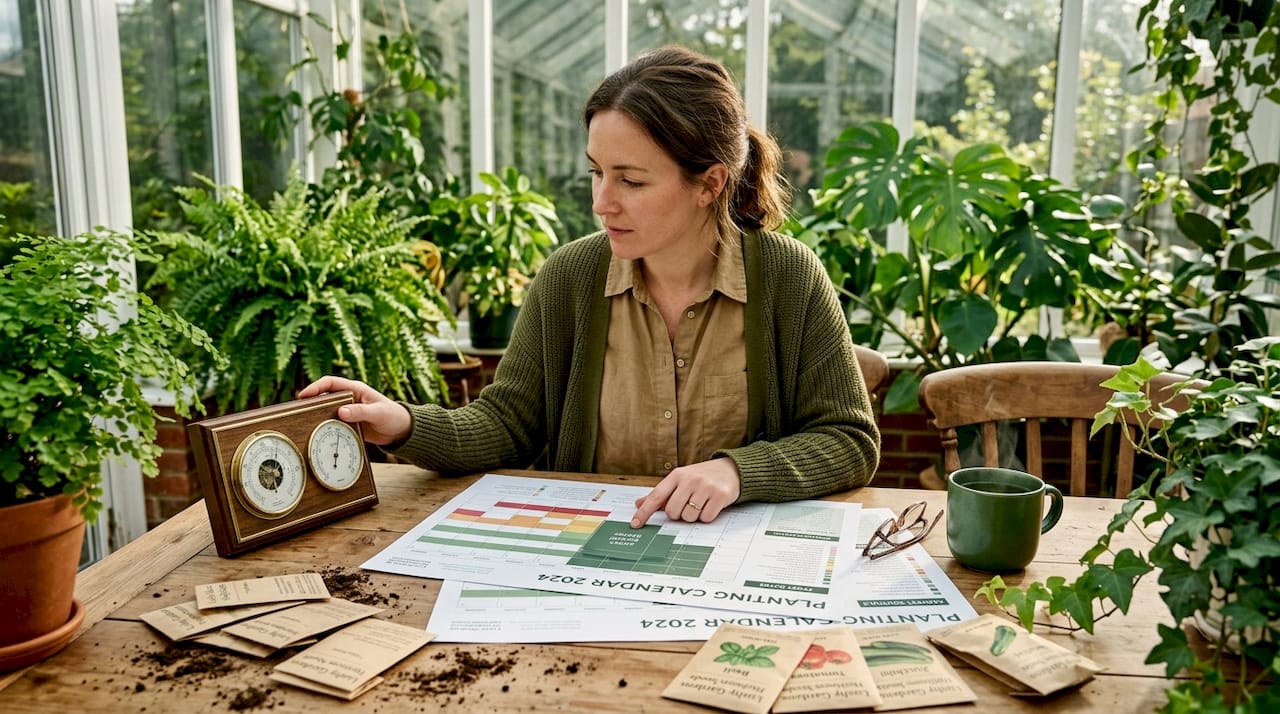
You can find your local frost dates through the USDA Plant Hardiness Zone Map, your local cooperative extension service, or by entering your zip code into a frost date calculator online. Once you have both dates, write them at the top of your planning notebook. They are the foundation of every decision that follows.
Here is a simple step-by-step planning process:
- Write down your frost dates. Example: Last frost April 15, first frost October 10.
- List the crops you want to grow and note the days to maturity for each.
- Calculate your last possible sowing date by subtracting days to maturity from your first fall frost date. For a crop with 50 days to maturity and a frost date of October 10, your last sowing is around August 21.
- Count backward from that date in your chosen succession interval (every 2 to 3 weeks) to find all your sowing dates.
- Write each sowing date on a calendar and set reminders so nothing slips by.
- Track what you planted, when, and how it performed after each harvest.
Here is how this looks in practice for a small kitchen garden:
| Crop | Days to maturity | First sowing | Second sowing | Third sowing | Last sowing |
|---|---|---|---|---|---|
| Lettuce | 50 days | April 15 | May 1 | May 15 | August 21 |
| Bush beans | 55 days | May 15 | June 5 | June 26 | August 16 |
| Radishes | 25 days | April 1 | April 15 | May 1 | September 15 |
| Spinach | 45 days | April 1 | April 15 | August 1 | August 25 |
As the guidance on calculating harvest timing makes clear, the last planting should always have enough time to reach full maturity before the first freeze date arrives.
Recordkeeping does not need to be elaborate. A simple notebook with columns for sowing date, crop, variety, and harvest date is enough. After one full season, you will have real data from your own garden to refine your schedule. You will know which varieties outperformed the catalog description, which successions produced too much at once, and where the gaps actually fell. That information is far more valuable than any generic planting guide.
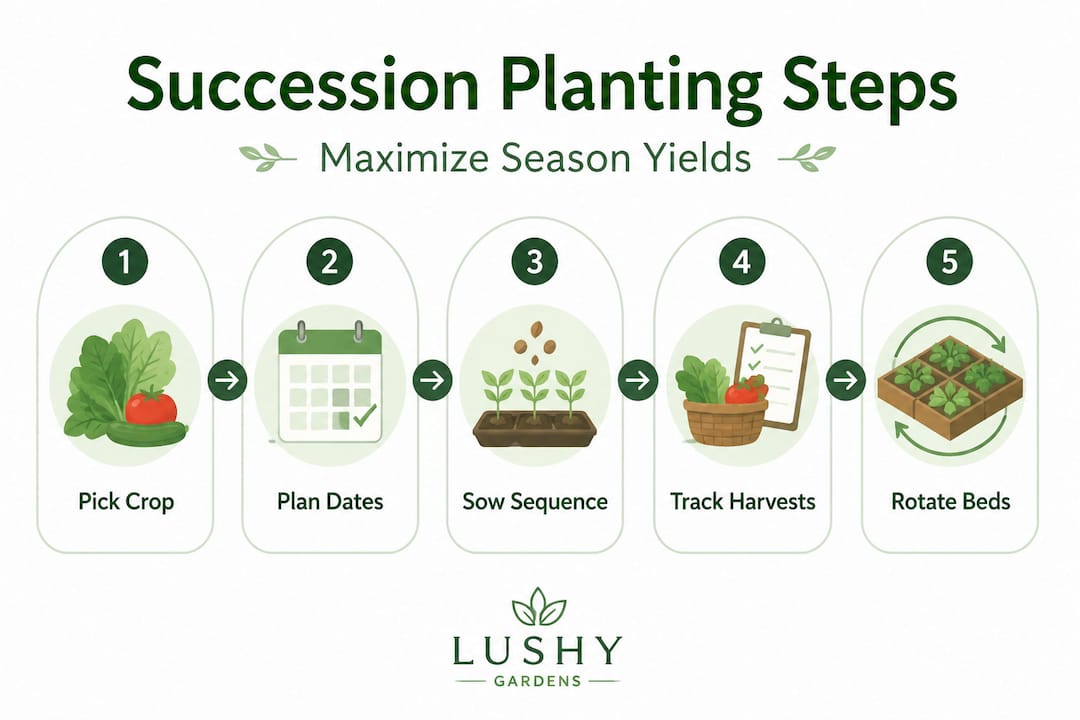
Pairing your succession plan with smart crop rotation principles also helps protect soil health across seasons, since rotating plant families prevents disease buildup and nutrient depletion in any one bed.
Mistakes to avoid and how to troubleshoot succession planting
Even experienced gardeners run into problems with succession planting. Knowing the common pitfalls before they happen can save you a lot of frustration.
The most frequent mistakes include:
- Sowing too much at once. If your first succession produces more than you can eat, halve the planting size before adding more successions.
- Ignoring days to maturity. Planting a 90-day crop when you only have 70 days left in the season is a common and costly error.
- Overcrowding beds between successions. New sowings need room, and cramming them next to a still-producing crop usually stunts both.
- Skipping the recordkeeping. Without notes, you repeat the same mistakes every season.
- Treating the schedule as fixed. Weather changes, pest pressure arrives, and plans need to flex.
The most productive gardens are not the most rigidly planned ones. They are the ones where the gardener pays attention and adjusts. A good succession schedule is a framework, not a contract.
Pro Tip: Set a recurring calendar alarm for each planned sowing date. It takes two minutes to set up and prevents the single biggest succession mistake, which is simply forgetting to plant on time.
When things go wrong, here is how to troubleshoot:
Missed a sowing window? Check whether there are still enough days left before frost for a full maturity cycle. If not, switch to a faster-maturing variety or use the space for a fall crop like spinach or kale that handles light frost well.
Unexpected heat wave? Cool-season crops like lettuce will bolt (go to seed and turn bitter) in prolonged heat. Shade cloth can extend your window by a week or two. Otherwise, pause those successions until temperatures drop in late summer.
Pest pressure wipes out a planting? Do not resow immediately into the same spot. Rotate to a different bed if possible and consider how the advantages of interplanting companion plants can deter common pests in future sowings.
The planning cadence being driven by days to maturity and frost dates means that when conditions shift, you simply recalculate from the new reality rather than scrapping the whole plan.
The overlooked power of simple succession schedules
Here is something most gardening advice misses: you do not need a full succession program for every crop in your garden to see dramatic results. Most gardeners who try succession planting for the first time get so caught up in planning every bed perfectly that they either stall out before planting anything or burn out halfway through the season.
The truth is, adding just one or two successions to a single crop can transform how your garden feels and performs. A second sowing of lettuce three weeks after the first means you are still pulling fresh salad greens when your neighbors have moved on to grocery store bags. A follow-up planting of bush beans gives you a second round of harvests in late summer when most gardens are winding down. These are not small wins. They are the kind of thing that makes gardening feel genuinely rewarding rather than like a gamble.
After years of watching home gardeners navigate this exact challenge, the consistent pattern is this: the gardeners who thrive are not the ones with the most elaborate plans. They are the ones who plant consistently, observe honestly, and adjust without drama. Two successions done well beats six successions done halfheartedly every single time.
Start small, get comfortable with the rhythm, and let the system expand naturally. Your beginner garden setup guide is a great foundation if you are still getting your beds organized. From there, layering in succession schedules feels like a natural next step rather than an overwhelming project. The gardeners who stick with it long term are the ones who gave themselves permission to start simply.
Next steps for boosting your harvests
If you are ready to put these ideas into action, Lushy Gardens has resources to support every stage of your planning. Whether you are setting up your first vegetable bed or refining a system you have been running for years, the right guidance makes all the difference. Start with the gardening basics guide to make sure your foundation is solid, then layer in succession timing using the seasonal garden maintenance guide to stay on track month by month. At Lushy Gardens, you will find practical, experience-backed advice designed to help real home gardeners grow more food with less stress, season after season.
Frequently asked questions
How do I know when to start succession planting?
Begin your first sowing after your last expected spring frost date, then use your crops’ days to maturity to space out additional sowings. Using frost dates as bookends ensures every planting has enough time to reach a full harvest.
What crops are easiest for beginners to succession plant?
Lettuce, radishes, spinach, and bush beans are ideal starting points because they mature quickly and tolerate multiple sowings across the season. Matching each crop’s days to maturity to your available season length keeps the process manageable.
What happens if a planting misses the frost date?
If a crop does not have enough days left to reach maturity before your first fall frost, it will likely fail to produce a harvest. Always calculate maturity timing before committing your last sowing of the season.
Can I use succession planting in containers or small spaces?
Absolutely. Containers and small raised beds work well for succession planting as long as you choose fast-maturing crops and stagger your sowing dates carefully. A well-timed succession plan for containers follows the same logic as a full garden bed, just on a smaller scale.
Recommended
- Spacing Vegetables in Garden for Maximum Yield Easily – Lushy Gardens
- Interplanting: Boost Garden Health and Yields Today – Lushy Gardens
- Essential Tips for Small Garden to Maximize Your Space – Lushy Gardens
- When to Plant Vegetables for Maximum Yields – Lushy Gardens

I’m Eleanor, a seasoned gardener with over three decades of experience tending to Mother Nature’s creations. Through Lushy Gardens, I aim to share my wealth of knowledge and help fellow plant enthusiasts uncover the wonders of gardening. Let’s dive into this journey together, one leaf at a time.


