
Table of Contents
TL;DR:
- Pinching is a gardening technique that removes a plant’s terminal bud to promote bushier growth and more flowers. It works by stopping hormone flow that suppresses side buds, activating lateral branches for a fuller plant. The best results occur when pinching young plants with 2 to 4 leaves, using clean tools, and timing it before the plant becomes tall or leggy.
Pinching in gardening is the practice of removing a plant’s terminal bud to redirect growth energy from a single vertical stem into multiple lateral branches. This simple act triggers a hormonal shift that produces fuller, bushier plants with more flowers and denser foliage. The Douglas County Master Gardeners identify pinching as one of the most effective low-cost techniques for improving plant structure and bloom output. Whether you grow zinnias on a sunny patio or basil on a kitchen windowsill, understanding this technique changes how you manage plant shape and productivity from the very first growing season.
What is pinching in gardening and how does it work biologically?
Pinching works by removing the apical meristem, the plant’s dominant growing tip. That tip produces a hormone called auxin, which flows downward and suppresses the growth of side buds along the stem. When you remove the tip, auxin production at that point stops. The side buds, called axillary buds, are no longer suppressed and begin pushing out new branches.
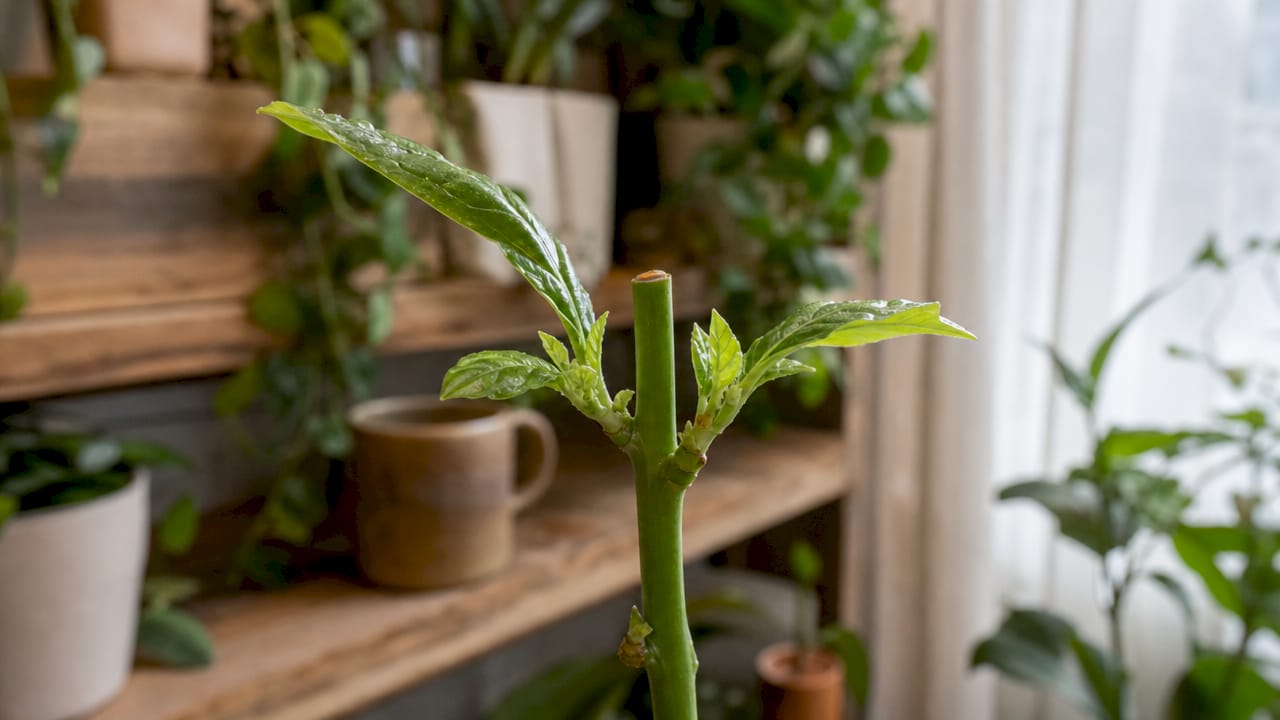
The result is a plant that grows wide instead of tall. Removing the dominant apical bud forces the plant to redirect energy from vertical growth to lateral branches, which enhances both flower production and overall plant density. One pinch can produce two to four new stems where only one existed before.
Timing is the most critical variable in this process. The first pinch at 2–4 leaf sets gives the plant strong, well-placed branching buds and allows fast healing. Pinching too late results in a weak, top-heavy central stem that struggles to support the plant’s weight.
Here is what happens at each stage when you pinch correctly:
- Auxin suppression lifts. Side buds activate within days of the terminal bud being removed.
- New stems emerge. Each axillary bud produces a new branch, multiplying the plant’s growing points.
- Energy redistributes. The plant channels nutrients into multiple stems rather than one dominant shoot.
- Flower sites multiply. More stems mean more nodes, and more nodes mean more potential blooms.
Pro Tip: Pinch in the morning when plant tissues are firm and hydrated. Stems snap cleanly, and the plant has the full day to begin healing before cooler evening temperatures set in.
Which plants benefit from pinching and which should be avoided?
Not every plant responds well to pinching. The technique works best on species that naturally branch from multiple points along their stems.
Annuals are the strongest candidates. Zinnias, cosmos, marigolds, and dahlias all produce dramatically fuller plants when pinched early. Basil is the classic herb example. Pinching basil regularly prevents it from bolting to flower, keeps leaves large and flavorful, and extends the harvest window by weeks. Chrysanthemums and petunias also respond well, producing compact mounds of color rather than leggy, sparse stems.
Plants to pinch for bushier growth include:
- Zinnias — pinch when 6 inches tall for double the stem count
- Basil — pinch above every third leaf pair to delay flowering
- Dahlias — pinch the central stem early to build a strong branching framework
- Marigolds — pinch young transplants to encourage a mounded growth habit
- Cosmos — pinch once to produce a wider, more floriferous plant
Single-stemmed plants like sunflowers and delphiniums should never be pinched. These species do not produce lateral branches from axillary buds in the same way. Removing their terminal bud does not trigger branching. It simply removes the plant’s only growing point and causes permanent damage. Poppies fall into the same category. If you are unsure whether a plant branches naturally, observe its stem structure. Plants with leaves arranged in opposite pairs along the stem almost always respond well to pinching.
How to pinch plants correctly: technique and timing
Pinching is most effective on young plants 2–6 inches tall or those with 2–4 sets of true leaves. At this stage, the stem is tender, the axillary buds are active, and the plant heals quickly. Waiting until the plant is taller or more mature reduces the technique’s effectiveness and slows recovery.
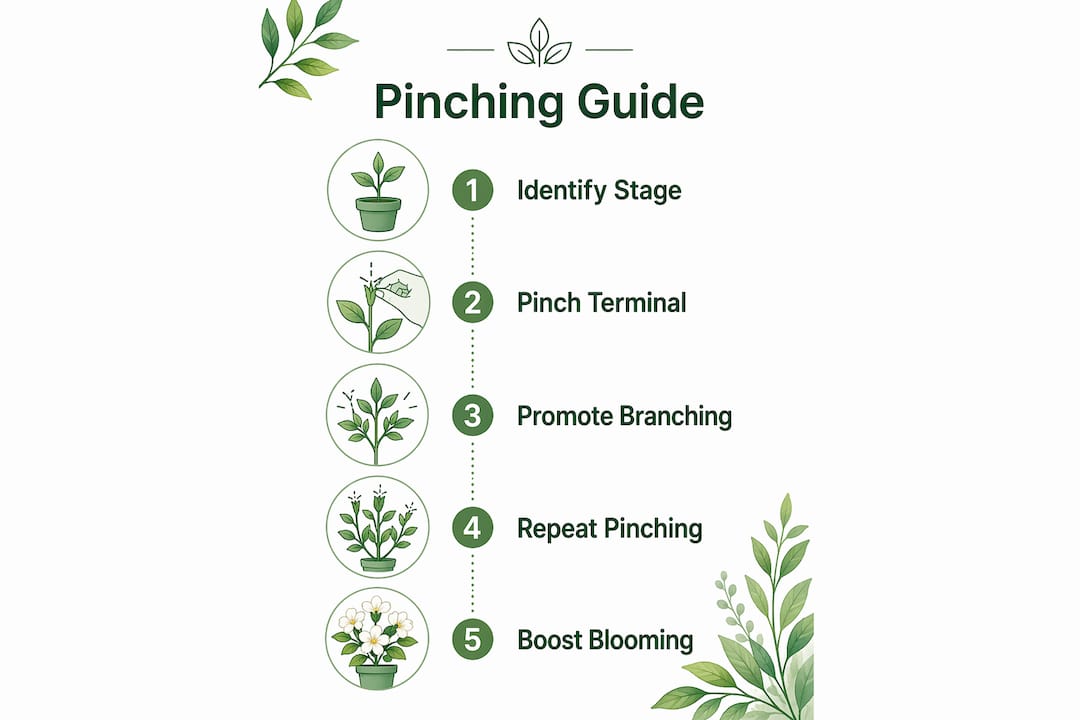
Follow these steps for a clean, effective pinch:
- Identify the terminal bud. Look for the topmost growing tip, the soft, new growth at the very center of the stem.
- Choose your tool. Use fingernails for tender young growth and sterile snips for tougher, more established stems. Clean cuts prevent infection.
- Locate the leaf node below. Find the nearest set of leaves beneath the terminal bud.
- Pinch just above the node. Leave a small stem portion above the leaf node to protect the node from disease entry and preserve the bud’s health.
- Repeat on each main stem. For a fully bushy plant, pinch every primary stem, not just the central one.
- Wait and observe. New lateral growth typically appears within 7–14 days.
Pro Tip: After the first pinch produces new branches, pinch those secondary stems once they reach 3–4 inches long. This second round multiplies your branching points again and creates a noticeably denser plant.
The most common mistake gardeners make is pinching too deep, cutting below the leaf node rather than just above it. This removes the axillary bud itself, which is the exact structure you need to produce new growth. Always cut above the node, never through it.
Pinching vs. pruning is a distinction worth understanding. Pruning typically removes larger, older growth with the goal of shaping or reducing a plant’s size. Pinching targets only the soft terminal tip of young growth. The tools, scale, and timing differ significantly, though both techniques redirect plant energy. For a deeper look at how pruning fits into overall plant care, Lushygardens covers the importance of pruning and its effect on long-term plant health.
How does pinching improve plant health and control bloom timing?
Pinching does more than create a prettier shape. Pinching improves plant structure by producing shorter, sturdier stems with better air circulation, which directly reduces the risk of fungal diseases like powdery mildew. Dense, tall plants trap moisture between leaves. Bushier, more open plants dry faster after rain or irrigation, cutting off the conditions that fungal spores need to spread.
Staggering pinching across 1/3 of stems weekly over three weeks extends bloom times and produces continuous flowering rather than one large flush that fades quickly. This approach is especially useful in cutting gardens, where a steady supply of blooms matters more than a single dramatic display.
The trade-off is real and worth planning around. Repeated pinching delays initial flowering while maximizing total bloom count. A plant that would flower in six weeks without pinching may take eight to ten weeks after two rounds of pinching. Plan your pinching schedule backward from the date you want blooms.
| Application | Benefit | Trade-off |
|---|---|---|
| Single early pinch | Doubles stem count, fuller plant | Delays first bloom by 1–2 weeks |
| Staggered pinching (1/3 weekly) | Continuous flowering over weeks | Requires consistent attention |
| Repeated pinching | Maximum total bloom yield | Longest delay before first flower |
| No pinching | Earliest blooms | Fewer stems, leggier growth |
Structural benefits extend beyond disease prevention. Bushier plants have lower centers of gravity and more stems to distribute wind load. A pinched zinnia stands upright through summer storms that flatten unpinched plants. For gardeners who want to understand how plant nodes drive this branching response, the biology behind node activation explains why pinching works so reliably across so many species.
Key takeaways
Pinching is the single most effective low-effort technique for producing bushier plants, more blooms, and stronger stems in annuals and herbs.
| Point | Details |
|---|---|
| Pinch at the right stage | Target plants with 2–4 sets of true leaves or 2–6 inches of height for best results. |
| Match tool to stem maturity | Use fingernails for soft tips and sterile snips for tougher stems to prevent infection. |
| Cut above the leaf node | Leave a small stem stub above the node to protect the axillary bud and prevent disease. |
| Plan for bloom delay | Each round of pinching delays flowering, so schedule pinching backward from your target bloom date. |
| Avoid single-stemmed species | Never pinch sunflowers, delphiniums, or poppies, as they will not branch and will be permanently damaged. |
Why I think most gardeners wait too long to pinch
The single biggest mistake I see is hesitation. Gardeners look at a healthy young plant and feel reluctant to remove any part of it. That instinct is understandable, but it works against you. The window for effective pinching is narrow. Once a plant has stretched past 6 inches and committed to vertical growth, pinching still works but delivers noticeably weaker results.
I learned this the hard way with dahlias. My first season, I waited until the plants looked established before pinching. The result was a handful of tall, floppy stems that needed staking by midsummer. The following year, I pinched at the 4-inch mark and got compact, self-supporting plants that produced more blooms with less maintenance.
The other misconception I hear often is that pinching is purely cosmetic. It is not. A pinched basil plant resists bolting longer, a pinched zinnia survives wind better, and a pinched petunia stays productive weeks longer than an unpinched one. The structural and health benefits are as significant as the aesthetic ones.
My honest advice: pinch earlier than feels comfortable, use clean tools every time, and do not skip the second pinch on those new lateral branches. The compounding effect of two rounds of pinching versus one is dramatic. Experiment with one plant pinched and one left alone in the same bed. The difference by midsummer will convince you permanently.
Lushygardens resources for mastering plant care techniques
Pinching is one piece of a larger plant care picture. Lushygardens has built a library of guides that put techniques like pinching into practical context for gardeners at every level. The beginner gardening guide covers foundational skills including when and how to apply growth-shaping techniques across common garden plants. For gardeners who want to time pinching alongside other seasonal tasks, the seasonal garden maintenance guide maps out pruning and pinching windows month by month. Both resources are free, practical, and built around the same direct, experience-backed approach you find throughout Lushygardens.
FAQ
What is pinching in gardening?
Pinching is the removal of a plant’s terminal bud to stop vertical growth and stimulate lateral branching. The technique redirects auxin hormone flow, activating side buds that produce multiple new stems.
When should you pinch plants?
Pinch plants when they are 2–6 inches tall or have 2–4 sets of true leaves. Pinching at this stage produces the strongest branching response and the fastest healing.
Does pinching delay flowering?
Yes. Each round of pinching delays the first bloom while increasing total flower count. Plan your pinching schedule backward from the date you want your garden to peak.
What plants should never be pinched?
Single-stemmed plants like sunflowers, delphiniums, and poppies should not be pinched. They do not produce lateral branches from axillary buds, so pinching removes their only growing point and causes permanent damage.
How is pinching different from pruning?
Pinching targets only the soft terminal tip of young growth using fingers or small snips. Pruning removes larger, older growth to reduce size or reshape a plant. Both redirect plant energy, but the scale, tools, and timing differ significantly.
Recommended
- Why Pinch Back Plants for Fuller, Bushier Growth – Lushy Gardens
- Gardening Basics for Beginners: Complete Guide – Lushy Gardens
- Vegetable gardening basics: step-by-step guide for beginners – Lushy Gardens
- What Is Keyhole Gardening? a Practical Eco Guide – Lushy Gardens

I’m Eleanor, a seasoned gardener with over three decades of experience tending to Mother Nature’s creations. Through Lushy Gardens, I aim to share my wealth of knowledge and help fellow plant enthusiasts uncover the wonders of gardening. Let’s dive into this journey together, one leaf at a time.


