
Table of Contents
Most indoor plant owners have lost at least one plant to a problem that was completely fixable. A drooping fern, yellowing pothos, or mysteriously crispy succulent can feel like a mystery, but the causes are almost always the same handful of issues. Most houseplants fail due to simple, preventable mistakes that are easy to correct once you know what to look for. This guide walks you through how to spot trouble, fix the root cause, and keep your indoor plants thriving year-round.
Key Takeaways
| Point | Details |
|---|---|
| Early symptom spotting | Learning to notice subtle signs can help you stop problems before they get worse. |
| Right water, light, and food | Proper amounts of water, light, and nutrients are essential for all indoor plants. |
| Act fast with pests and diseases | Quick isolation and treatment minimize damage from infestations and infections. |
| Prevention beats cure | Consistent routines with cleaning, rotating, and monitoring make plants stronger and less prone to problems. |
Spotting trouble early: Recognizing the signs
Most houseplant problems do not appear overnight. They start as small, easy-to-miss changes that slowly get worse. Catching these signals early is the difference between a quick fix and losing the plant entirely.
Yellowing leaves, brown tips, wilting, and leaf drop are the most common indicators that something is off. In fact, leaf yellowing alone accounts for over 50% of plant owner complaints. That one symptom can point to several different causes, which is why a weekly visual check matters so much.
Here is what to look for during your weekly plant check:
- Yellow or pale leaves: Often signal overwatering, low light, or nutrient deficiency
- Brown leaf tips: Usually caused by low humidity, fluoride in tap water, or underwatering
- Soft or mushy stems: A classic sign of root rot from too much water
- Leaf drop: Can indicate temperature shock, drafts, or sudden light changes
- Stunted or slow growth: Points to poor nutrition, bad lighting, or being rootbound
- White webbing or sticky residue: A strong indicator of pest activity
- Mushy or dark roots: Visible when repotting, this signals root rot
Using a leaf discoloration guide can help you match symptoms to causes faster. You can also check whether dust buildup is affecting your plant’s ability to absorb light by reviewing tips on cleaning plant leaves regularly.

Water woes: Overwatering, underwatering, and root health
After identifying the symptoms, the next critical issue is determining if water mismanagement is to blame. Water problems are the number one reason houseplants struggle indoors.
Overwatering is the leading cause of houseplant decline, with underwatering a close second. The tricky part is that both problems can look similar at first glance. Both cause drooping and leaf yellowing, which is why checking the soil is essential before drawing any conclusions.
| Symptom | Overwatering | Underwatering | Root rot |
|---|---|---|---|
| Leaves | Soft, yellow, mushy | Crispy, dry, curled | Yellow, falling off |
| Soil | Wet, possibly moldy | Bone dry, pulling from edges | Soggy, foul smell |
| Stems | Soft, collapsing | Limp but firm | Mushy at base |
| Roots | Brown, slimy | Dry, brittle | Dark, rotted |
For overwatered plants, let the soil dry out completely before watering again. Remove any standing water from saucers. For underwatered plants, give a slow, thorough soak and let excess water drain. The full breakdown of how each condition affects your plant is covered in this overwatering vs underwatering guide.
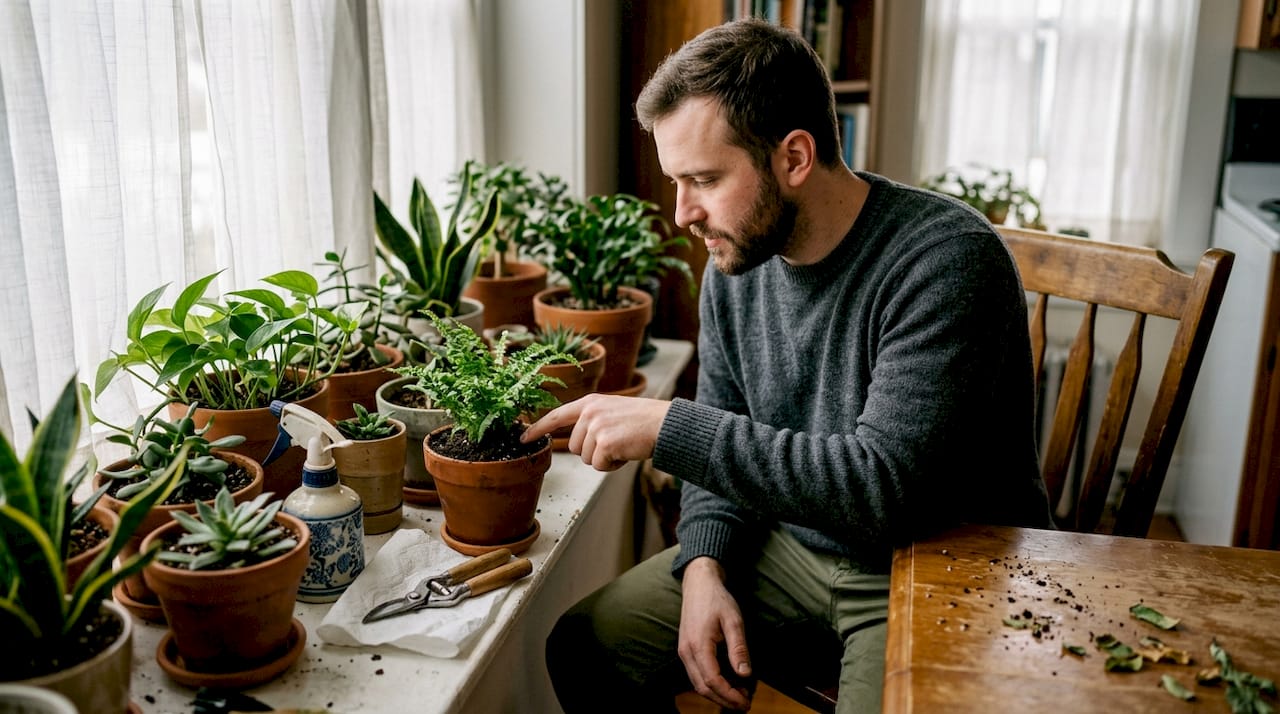
Pro Tip: Stick your finger about 1 inch into the soil before every watering. If it feels moist, wait. If it feels dry, water thoroughly. This simple habit prevents the majority of water-related plant problems. A full watering guide can help you tailor your schedule by plant type and season.
Feeding houseplants: Nutrient needs and deficiencies
Besides water problems, lack of nutrients can be an invisible culprit behind unhealthy houseplants. Plants growing in pots cannot pull nutrients from the ground the way outdoor plants can, so they depend entirely on what you give them.
Nutrient deficiencies often appear as pale leaves, poor growth, and leaf drop. The three main nutrients to understand are nitrogen, phosphorus, and potassium, each affecting a different part of plant health.
| Nutrient | Deficiency signs | How to fix it |
|---|---|---|
| Nitrogen (N) | Pale yellow leaves, slow growth | Apply a balanced liquid fertilizer |
| Phosphorus (P) | Purple or reddish leaf undersides | Use a fertilizer with higher P ratio |
| Potassium (K) | Brown leaf edges, weak stems | Feed with a potassium-rich formula |
Here is a simple fertilizing schedule to follow throughout the year:
- Spring: Start feeding monthly as growth picks up. Use a balanced, water-soluble fertilizer.
- Summer: Increase to every two to three weeks during peak growing season.
- Fall: Taper off feeding as growth slows. Once a month is enough.
- Winter: Most houseplants are dormant. Stop fertilizing or feed only once every six to eight weeks.
For product recommendations, the indoor plant fertilizer guide covers the best options for different plant types. You can also explore plant food options to find formulas suited to your specific plants.
Pro Tip: Less is more when it comes to fertilizer. Over-fertilizing causes salt buildup in the soil, which burns roots and causes brown leaf tips. When in doubt, use half the recommended dose.
Light matters: Managing sunlight and artificial light
With watering and feeding addressed, light becomes another crucial factor in your houseplants’ health. It is one of the most overlooked variables, especially in homes with limited natural light.
Insufficient or excessive light leads to leggy growth, faded leaves, or scorched foliage. The good news is that most light problems are easy to fix by simply moving your plant to a better spot.
Signs your plant needs more light:
- Leaves are pale or washed out
- New growth is small and widely spaced
- The plant leans or stretches toward the window
- Leaf drop without any other obvious cause
Signs your plant is getting too much light:
- Brown, dry patches on leaves (especially in the center)
- Leaves curl inward or look scorched
- Soil dries out extremely fast
Best spots in your home for popular houseplants:
- Bright indirect light (east or west window): Pothos, peace lily, spider plant, snake plant
- Direct sun (south window): Cacti, succulents, aloe vera
- Low light (north window or interior rooms): ZZ plant, cast iron plant, dracaena
- Artificial grow lights: Useful for basements, offices, or any room with no natural light
For a full breakdown of which plants thrive where, the easy care houseplants guide is a great starting point. You can also review indoor plant care basics for a broader overview of light and placement.
Pro Tip: Rotate your plants a quarter turn every month. This ensures all sides get equal light exposure and prevents lopsided growth.
Pests and diseases: Spotting, treating, and preventing infestations
Even with perfect care, insects and pathogens can find their way to your indoor jungle. The key is catching them early before a small problem becomes a full infestation.
Fungal diseases, spider mites, root rot, and aphids are some of the most common threats to houseplants. Each pest leaves its own calling card, so knowing what to look for speeds up treatment.
Common pests and their symptoms:
- Spider mites: Tiny dots on leaves, fine webbing on stems and undersides
- Fungus gnats: Small flies hovering around soil, larvae damage roots
- Scale insects: Brown bumps on stems, sticky residue on leaves
- Aphids: Clusters of tiny insects on new growth, distorted leaves
- Mealybugs: White cottony clusters in leaf joints and on stems
Regular inspection can reduce pest outbreaks by up to 80%. A quick weekly look at leaf undersides and soil takes less than two minutes per plant and can save you weeks of treatment.
When you spot a pest, act immediately. Move the affected plant away from others to stop the spread. Wipe leaves with a damp cloth or a diluted neem oil solution. For heavier infestations, check out proven organic pest control methods that are safe for your home and family. The plant disease guide covers fungal and bacterial issues in detail. Research on science-backed plant benefits also shows that healthy, well-maintained plants actively improve indoor air quality, making pest prevention even more worthwhile.
Prevention strategies: Keeping houseplants healthy long-term
Now that you know how to fight back when problems arise, set yourself up for year-round success with a proactive approach. A simple routine takes less than 15 minutes a week and dramatically reduces the chance of problems developing.
Consistent routines with cleaning, feeding, and proper light make houseplants more resistant to problems. Here is a practical routine to follow:
- Every week: Check leaves for pests, yellowing, or unusual spots. Test soil moisture before watering. Remove dead or damaged leaves.
- Every two weeks: Wipe down leaves with a damp cloth to remove dust. Dust blocks light absorption and attracts pests. See the full guide on cleaning plant leaves.
- Every month: Rotate plants for even light. Check if roots are escaping drainage holes, which signals it is time to repot.
- Every season: Adjust your watering and fertilizing schedule. Move plants closer to or farther from windows as light levels change.
- When buying new plants: Always inspect for pests before bringing them home. Quarantine new plants for one to two weeks before placing them near your existing collection.
Good airflow between plants also matters. Crowded plants trap humidity and create the perfect environment for fungal disease. Use clean pots with drainage holes, and never reuse old potting mix without sterilizing it first. These small habits add up to a healthier, lower-maintenance indoor garden over time.
Get more from your houseplants with Lushy Gardens resources
With these basics mastered, the journey to a lush, problem-free indoor garden is just beginning. Lushy Gardens has a full library of guides built specifically for home gardeners who want real answers without the guesswork.
Whether you are just starting out or troubleshooting a stubborn plant problem, the gardening basics guide gives you a solid foundation for every aspect of plant care. For ongoing tips, tricks, and seasonal advice, browse the full collection of indoor plant care tips to keep your plants looking their best all year long. Every guide is written with practical, hands-on advice from gardeners who have dealt with the same problems you are facing right now.
Frequently asked questions
Why do my houseplant’s leaves turn yellow?
Yellowing leaves usually indicate overwatering, nutrient deficiency, or low light. Check each condition one at a time to pinpoint the cause before making changes.
How often should I water my indoor plants?
Most houseplants prefer to dry out slightly between waterings. Overwatering causes more decline than underwatering, so always check soil moisture with your finger before adding water.
What are common houseplant pests and how do I get rid of them?
Spider mites, scale, and fungus gnats are the most frequent offenders. Wipe leaves clean, isolate the affected plant, and treat with neem oil or another organic control for best results.
How do I know if my plant is getting enough light?
Steady new growth and vibrant leaf color are good signs. Leggy or faded growth usually means your plant needs a brighter spot or a grow light.
What’s the best way to prevent houseplant diseases?
Consistent cleaning, feeding, and airflow prevent most common diseases before they start. Avoid soggy soil and always use pots with drainage holes.
Recommended
- Houseplants for beginners: easy care tips (68% saved) – Lushy Gardens
- Humidity for Houseplants: Creating Healthy Indoor Environments – Lushy Gardens
- How to repot houseplants for healthy growth in 2026 – Lushy Gardens
- Pruning Indoor Plants Naturally for Healthy Growth – Lushy Gardens
- Office Plants Science Backed Benefits –

I’m Eleanor, a seasoned gardener with over three decades of experience tending to Mother Nature’s creations. Through Lushy Gardens, I aim to share my wealth of knowledge and help fellow plant enthusiasts uncover the wonders of gardening. Let’s dive into this journey together, one leaf at a time.


